Thanks for your patience during our recent outage at scalar.usc.edu. While Scalar content is loading normally now, saving is still slow, and Scalar's 'additional metadata' features have been disabled, which may interfere with features like timelines and maps that depend on metadata. This also means that saving a page or media item will remove its additional metadata. If this occurs, you can use the 'All versions' link at the bottom of the page to restore the earlier version. We are continuing to troubleshoot, and will provide further updates as needed. Note that this only affects Scalar projects at scalar.usc.edu, and not those hosted elsewhere.
Activities for Children to Do at the Library or Take Home
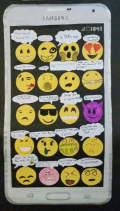
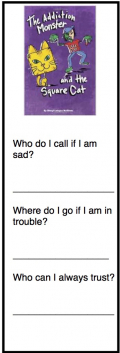
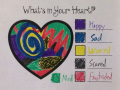
12016-12-04T18:24:02-08:00Joy Wohlman Boyce25d2c599a587d37adfbc3f0183489673ec22e174134424The focus for these activities is to support THE ADDICTION MONSTER AND THE SQUARE CATplain2016-12-10T16:57:19-08:00Joy Wohlman Boyce25d2c599a587d37adfbc3f0183489673ec22e174At this age, children love bookmarks. This one is created to pass out and allow the children to use as a reminder of who they can turn to in case of trouble. Sometimes, it's hard to remember who to trust. Sometimes the people we trust are addicts! Where do we go then? Other times, we just need reminders of what our feeling may actually look like. This handout can be done at the Library or at home. Make a heart template with boxes, but do not fill any of it in. The patron can take the "What's In My Heart" template and decide for him or herself what emotions are there, what color they are and what they look like. One project that can be done in the Library (or classroom) is the Emoji Phone. Create a bulletin board that looks like a smart phone. In a makerspace area, leave out yellow construction paper with circular templates, white paper, and other color scrap papers. Also provide markers, scissors and glue sticks. Leave direction for the patrons to create an emoji, along with a word bubble, that shows how they feel about drugs, addiction, and healthy choices. Display the artwork.
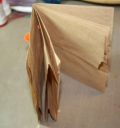
Another great activity for this (or any age) group, is this paper bag journal. The children can decorate it, add to it, and then put notes, cards, diary notes, or anything that fits into them. Once the child makes one, he or she may get the bug to continue making more. They are a great method to journal feelings and also a great gift for someone in treatment.
Any of these activities can be done in the classroom or at home as a family. Creating together gives a firm grip on staying healthy as a community.
This page has paths:
12016-12-03T19:11:21-08:00Joy Wohlman Boyce25d2c599a587d37adfbc3f0183489673ec22e174Introduction to Youth and AddictionJoy Wohlman Boyce6If adults do not understand, how can children understand...and cope?plain2016-12-10T16:21:27-08:00Joy Wohlman Boyce25d2c599a587d37adfbc3f0183489673ec22e174