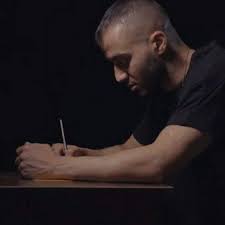
Toomaj "Mouse Hole"/"Soorakh Moosh" with English Subtitles
1 2024-11-06T10:08:37-08:00 MJ 075a4fb3105d7aa59083b8f8c02f5fb4b84bc51f 45871 1 On September 13, Iranian rapper #ToomajSalehi was arrested by the IRGC in #Iran. Many believed he was arrested because of ... plain 2024-11-06T10:08:37-08:00 MJ 075a4fb3105d7aa59083b8f8c02f5fb4b84bc51fThis page is referenced by:
-
1
media/08-26-iran-01-1.webp
2024-10-28T09:19:03-07:00
From “021-music.com” to the World Stage
14
From Underground to Mainstream: A Movement Through Music
image_header
2024-12-09T08:59:44-08:00
The music associated with the WLF freedom has been characterized by recently
emboldened artists, who feel like they can openly criticize the regime in ways that are, until now,
completely unprecedented.
Toomaj Salehi serves as an exemplar of this new wave, with his track
“Rathole.” (Siamdoust) Salehi deftly combines incendiary lyrics that present not only a call to
action but a gruesome promise to the current regime and potent rhetoric. The latter is evidence of
a clear shift where there is now not only an audience for this message but a level of discontent
that can facilitate the intensification of an already revolutionary message. It is unprecedented not
only because of the subject matter, but because of Salehi’s unique position, within the country,
rather than a part of the diaspora. This positionality lends itself well to the message, as seen below:
-Toomaj Salehi in ”Soorakh Moosh, or Rathole”“Freedom is expensive? Fine, the free will give their lives
Remember only blood washes away blood
[...]
Take from me the good news of a tomorrow with vengeance”
These lyrics mean a lot more when they come from a place of vulnerability, within Iran’s borders,
rather than the insulated position many musicians enjoy outside the country. Other artist that
have emerged since the relaxation of government repression of the Iranian underground rap
community, and diasporic voices such as Justina and rap collective Moltafet have contributed
from their advantageous point outside the Islamic regime. (Siamdoust) Besides the uniquely
Iranian essence of the preceding tracks, there is much to say about the interpolation of songs
from protest movements around the globe into the WLF movement in a stark display of
intersectionality and solidarity.
Such examples include the Chilean folk song, “There’s A Rapist
In Your Path,” and the Italian anti-fascist song, “Bella Ciao,” which are adapted and imbued with
the contemporary message singular to the WLF’s context. (Siamdoust, 2023) This explosion of protest
music is reflective of a hotbed of activism, and, more importantly, a willing and participating
audience in the movement towards real change in Iran. The adoption of global anthems of change is reciprocal; songs
closely tied to the WLF movement, such as Shervin Hajipour's Baraye have found similar worldwide audiences. The fertile
hotbed that is the Iranian underground and pop music scene both contribute to protest in very different ways. The more overt,
charged, calls to action like 'Rathole' which emerge from the anger and mistrust of the counterculture underground, and the
comparatively clean cut, polished, rhetorically-driven emotional outpourings from pop stars like Hajipour. The more renown an artist
has, the more they have to produce within the confines of the impositions surrounding music instated by the Islamic Republic.
In this way, pop stars have to thread the needle, while rappers stemming from the 021-music.com scene pull no punches,
both of which are invaluable to the impact music has had in this movement.
-Satchel Williams
References:
“Down the ‘Rathole’: How a rapper channels Iran regime change discourse,” Iran Source, 12 Oct 2021; https://www.atlanticcouncil.org/blogs/iransource/down-the-rathole-how-a-rapper-channels-iran-regime-change-discourse/Links to an external site.
Siamdoust, Nahid. 2023. “A Global Rap-e Farsi Rises to Speak Truth to Power in Iran." Hot Spots, Fieldsights, June 29. https://culanth.org/fieldsights/a-global-rap-e-farsi-rises-to-speak-truth-to-power-in-iranLinks to an external site.
“Rapper Toomaj Salehi became an icon in Iran. It could cost him his life,” Nilo Tabrizi, Washington Post, 2 May 2024; https://www.washingtonpost.com/world/2024/05/02/iran-rapper-toomaj-salehi-sentence/Links to an external site. -
1
media/Video-395 (2).mp4
2024-10-27T13:51:51-07:00
Voices of Defiance
12
The Role of Music as Resistance in Iran’s Women, Life, Freedom Movement
image_header
2024-12-06T11:40:30-08:00
Music has played an important role in the Woman, Life, Freedom uprising, serving as not only as a way for individuals to express themselves but as a tool of resistance. From dancing to traditional songs and “gher-ing” at mehmoonis to singing rap, music has been both a voice for the voiceless and a provoking “dare” in a way to the oppressive Iranian regime. Iranian rap, has become an influential element in expressing the frustrations and aspirations of Gen Z. One artist who epitomizes this is Toomaj Salehi, whose music has gained quite a bit of attention with the uprising.
Toomaj Salehi, an Iranian rapper, of Bakhtiari Lur origin gained significant media attention for his criticism of the Iranian regime through his music. His music is a blend of anger and a call for action. His music has hit many deep and hard and become an anthem of sorts to the Gen Z generation, who is fed up with systemic repression, and taking action. His songs, most notably "Soorakh Moosh" (Mouse Hole), explicitly critique the Iranian government's authoritarianism, the economic hardships endured by the people, and the lack of fundamental freedoms, including the rights of women.
Rap is a genre rooted in protest and self-expression, and it has become a popular of resistance in Iran. Its ability to convey complex social and political messages through catchy lyrics and beats has made it widespread enough for the regime to notice and take action. Salehi’s lyrics reflect the anger and defiance of Gen Z. His music embodies a revolution against not just the regimes “islamic law” but also against the silence imposed on everyday Iranians who yearn for change.
In "Soorakh Moosh," for instance, the title itself is calling out and warning the Islamic regime and its supporters to buy "Soorakh Moosh" (mouse hole) or a place to hide. This song is symbolic of how music can articulate a collective frustration, functioning as both a rallying cry for protestors and a condemnation of the regime’s abuses. In the face of severe crackdowns on free speech, Salehi uses his music to “talk back” to the regime as a collective voice for those who cannot voice their concerns and those who are voiceless now at the hands of the regime.
- MJ