Thanks for your patience during our recent outage at scalar.usc.edu. While Scalar content is loading normally now, saving is still slow, and Scalar's 'additional metadata' features have been disabled, which may interfere with features like timelines and maps that depend on metadata. This also means that saving a page or media item will remove its additional metadata. If this occurs, you can use the 'All versions' link at the bottom of the page to restore the earlier version. We are continuing to troubleshoot, and will provide further updates as needed. Note that this only affects Scalar projects at scalar.usc.edu, and not those hosted elsewhere.
Woman Life Freedom Uprising Main MenuWoman, Life, FreedomIran, Islam & the InevitableContextualizing the Islamization of IranThe Making of the Modern WomanIcons & Personas of Woman Life FreedomOrigins of the UprisingFreedom through the FemaleThe Writing in the MarginsNasleh Zed's Youthful UprisingSoundtracking Woman Life FreedomUrban Canvases of the UprisingFeminist Placemaking of a Digital UprisingAfterlives of Woman, Life, FreedomWLF ResourcesHere you will find our sources all compiled in one placeNahid Siamdoust - UT Austin Iran Collab Networka897e5b6082169b816946b1032f8b3c01e62c1ee
From “021-music.com” to the World Stage
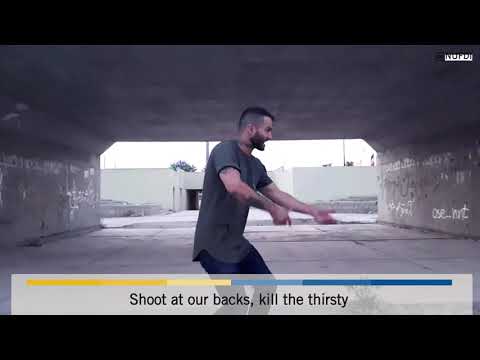
1media/08-26-iran-01-1.webp2024-10-28T09:19:03-07:00Satchel Williams2fb9169fc93471ffa261f934183654619e835f364587114From Underground to Mainstream: A Movement Through Musicimage_header2024-12-09T08:59:44-08:00Satchel Williams2fb9169fc93471ffa261f934183654619e835f36 The music associated with the WLF freedom has been characterized by recently emboldened artists, who feel like they can openly criticize the regime in ways that are, until now, completely unprecedented. Toomaj Salehi serves as an exemplar of this new wave, with his track “Rathole.” (Siamdoust) Salehi deftly combines incendiary lyrics that present not only a call to action but a gruesome promise to the current regime and potent rhetoric. The latter is evidence of a clear shift where there is now not only an audience for this message but a level of discontent that can facilitate the intensification of an already revolutionary message. It is unprecedented not only because of the subject matter, but because of Salehi’s unique position, within the country, rather than a part of the diaspora. This positionality lends itself well to the message, as seen below:
“Freedom is expensive? Fine, the free will give their lives Remember only blood washes away blood [...] Take from me the good news of a tomorrow with vengeance”
-Toomaj Salehi in ”Soorakh Moosh, or Rathole”
These lyrics mean a lot more when they come from a place of vulnerability, within Iran’s borders, rather than the insulated position many musicians enjoy outside the country. Other artist that have emerged since the relaxation of government repression of the Iranian underground rap community, and diasporic voices such as Justina and rap collective Moltafet have contributed from their advantageous point outside the Islamic regime. (Siamdoust) Besides the uniquely Iranian essence of the preceding tracks, there is much to say about the interpolation of songs from protest movements around the globe into the WLF movement in a stark display of intersectionality and solidarity. Such examples include the Chilean folk song, “There’s A Rapist In Your Path,” and the Italian anti-fascist song, “Bella Ciao,” which are adapted and imbued with the contemporary message singular to the WLF’s context. (Siamdoust, 2023) This explosion of protest music is reflective of a hotbed of activism, and, more importantly, a willing and participating audience in the movement towards real change in Iran. The adoption of global anthems of change is reciprocal; songs closely tied to the WLF movement, such as Shervin Hajipour's Baraye have found similar worldwide audiences. The fertile hotbed that is the Iranian underground and pop music scene both contribute to protest in very different ways. The more overt, charged, calls to action like 'Rathole' which emerge from the anger and mistrust of the counterculture underground, and the comparatively clean cut, polished, rhetorically-driven emotional outpourings from pop stars like Hajipour. The more renown an artist has, the more they have to produce within the confines of the impositions surrounding music instated by the Islamic Republic. In this way, pop stars have to thread the needle, while rappers stemming from the 021-music.com scene pull no punches, both of which are invaluable to the impact music has had in this movement.
1media/images_thumb.jpg2024-10-29T22:27:40-07:00Toomaj Salehi2Toomaj Salehi's imprisonment provoked international outcrymedia/images.jpgplain2024-12-08T22:18:35-08:00
12024-11-06T10:08:37-08:00Toomaj "Mouse Hole"/"Soorakh Moosh" with English Subtitles1On September 13, Iranian rapper #ToomajSalehi was arrested by the IRGC in #Iran. Many believed he was arrested because of ...plain2024-11-06T10:08:37-08:00
12024-12-01T19:18:54-08:00Feminist Anthem ‘A Rapist in Your Path’ Sung Around the World | NowThis1"A Rapist in Your Path," sung globally, uses its prose to evoke the patriarchal power structure and victim blaming that is common after sexual violence cross-culturally.plain2024-12-01T19:18:54-08:00