Positionality of Women in Iran
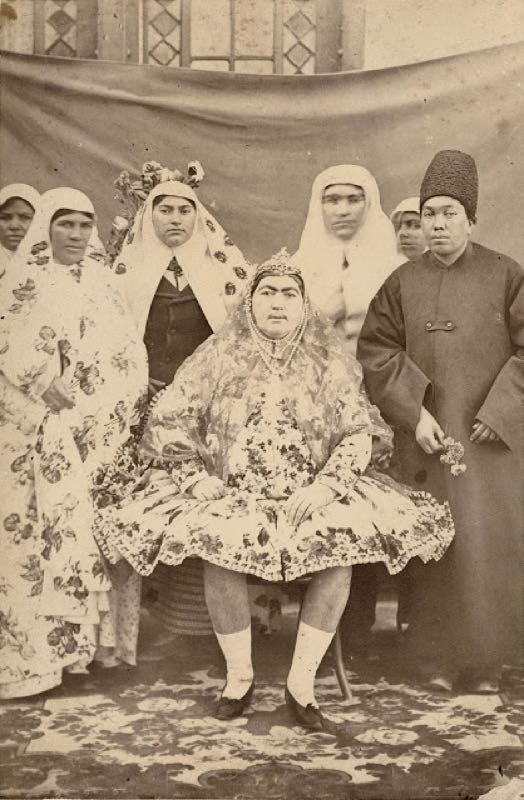
The internal conditions and factors that influenced the positionality of the modern Iranian woman include the Iranian Revolution of 1979, the pre-revolution political context, and the broader historical context. The political factors that affect the positionality of women in Iran are all linked with the states' influence on Islam and vice versa. One example, given in "Orientalism & Middle East Feminist Studies," is the trend of patriarchy emerging from law linked to the state. This Islamist force in the sphere of jurisprudence enforces the patriarchy, which represents the modern context of Islamic law, not necessarily one of its traditional hallmarks. As for the historical context, in "Veiled Discourse, Unveiled Bodies," Afsaneh Najmabadi expounds on the idea of the premodern female voice as an oral one, one that existed in a homosocial space. Therefore, in the late 19th century, when works by female authors, specifically Bibi Khanum's "The Vices of Men," took on a voice addressing both men and women, it was considered as a major turning point in the discourse over female positionality in Islamic society. This example of female transgressive irony, especially in the context of rebuking sexism, stands as a useful indicator of positionality. Historical context is important as well, especially when comparing attitudes over traditionalism and modernism. Some takes on modernism often veered towards Euro-centrism, and the emulation of western civilization.
Taj al-Saltanah pointed towards the natural sciences and civility of European society as a step forward for Islamic societies. On the other hand, of course, traditional attitudes would look to Islam for the root of progress, a clear example being the 1979 Iranian revolution. The external factors include the media, as well as the portrayal through academic works, international women's organizations and feminist groups in neighboring countries. The media, who tends to sensationalize the "veil" as an element of Orientalism, shapes the "mystique" and the positionality of modern women in Iran by shaping the actions and attitudes of westerners, while also generating political discourse domestically.
The propagation of certain ideals of the behavior of women on the national stage is one of the many factors that makes this feminism “tricky.” Another aspect of this is "trickiness" referred to by Afsaneh Najmabadi is the complicated views that have developed in regard to the relationship between Islamism and feminism, and whether the two are antithetical.
The 19th and early 20th centuries also saw the growth of educational institutions for girls and women’s increased access to the press. These developments, Najmabadi argues, facilitated a transformation in the feminine ideal, where women became disciplined through education and science, embodying a new form of rationality that contrasted with traditional superstitions.
The 20th century brought intensified interactions between modernist and Islamist ideologies. For modernists, the absence of women in public life symbolized premodern stagnation. They viewed unveiling—both metaphorically, in terms of women’s participation in intellectual discourse, and literally, in terms of clothing—as essential to national progress.
In contrast, Islamists saw unveiling as an existential threat to Islamic identity. Najmabadi emphasizes how the veil became a potent symbol of resistance against secular modernity. Its removal was perceived as eroding the community's spiritual and cultural integrity. In this Islamist framework, women were positioned as defenders of religious and cultural values, embodying the tension between preserving tradition and accommodating change.
The positionality of Iranian women in the modern era represents a dynamic negotiation of competing ideologies, historical shifts, and external pressures. Modernist ideals of unveiling and education have intersected with Islamist calls for cultural and religious preservation, creating a layered and contested landscape. The integration of new educational opportunities, the rise of female intellectual voices, and the enduring influence of external forces have collectively transformed Iranian women’s roles and identities. This intricate interplay continues to shape the evolving discourse on Iranian womanhood today.
-Satchel Williams, MJ
References:
Najmabadi, Afsaneh. 1993. “Veiled Discourse-Unveiled Bodies.” Feminist Studies 19: 487–518.
This page has paths:
- Satchel Williams Satchel Williams
- The Making of the Modern Woman Hatcher Stanford