Faith and Identity Under Pressure
Iran is predominantly Shia Muslim, with over 90% of the population officially identified as Shia. However, this figure does not fully reflect the religious diversity within the country, as many Iranians privately identify as atheist, agnostic, or followers of other beliefs but are unable to publicly declare their views due to severe consequences, including the death penalty. Sunni Muslims constitute 8–10% of the population, while smaller communities practice faiths such as Bahá’í, Zoroastrianism, Christianity, and Judaism.
The Islamic Republic has a long-standing history of intolerance toward religious diversity, particularly targeting those who deviate from the state-endorsed Shia ideology. One significant example is the case of Bahman Shakoori, a Shia who converted to Sunni Islam in 1980. Shakoori was executed on charges of "insulting Prophet Muhammad" after criticizing certain Shia practices, such as pilgrimages to the graves of Muslim saints. His execution sent a stark warning to the Sunni community, highlighting the systematic oppression they would face under the Islamic Republic. This marginalization has been especially severe for the Baluch community, a Sunni minority that has long experienced systemic discrimination under the Shia-dominated government.
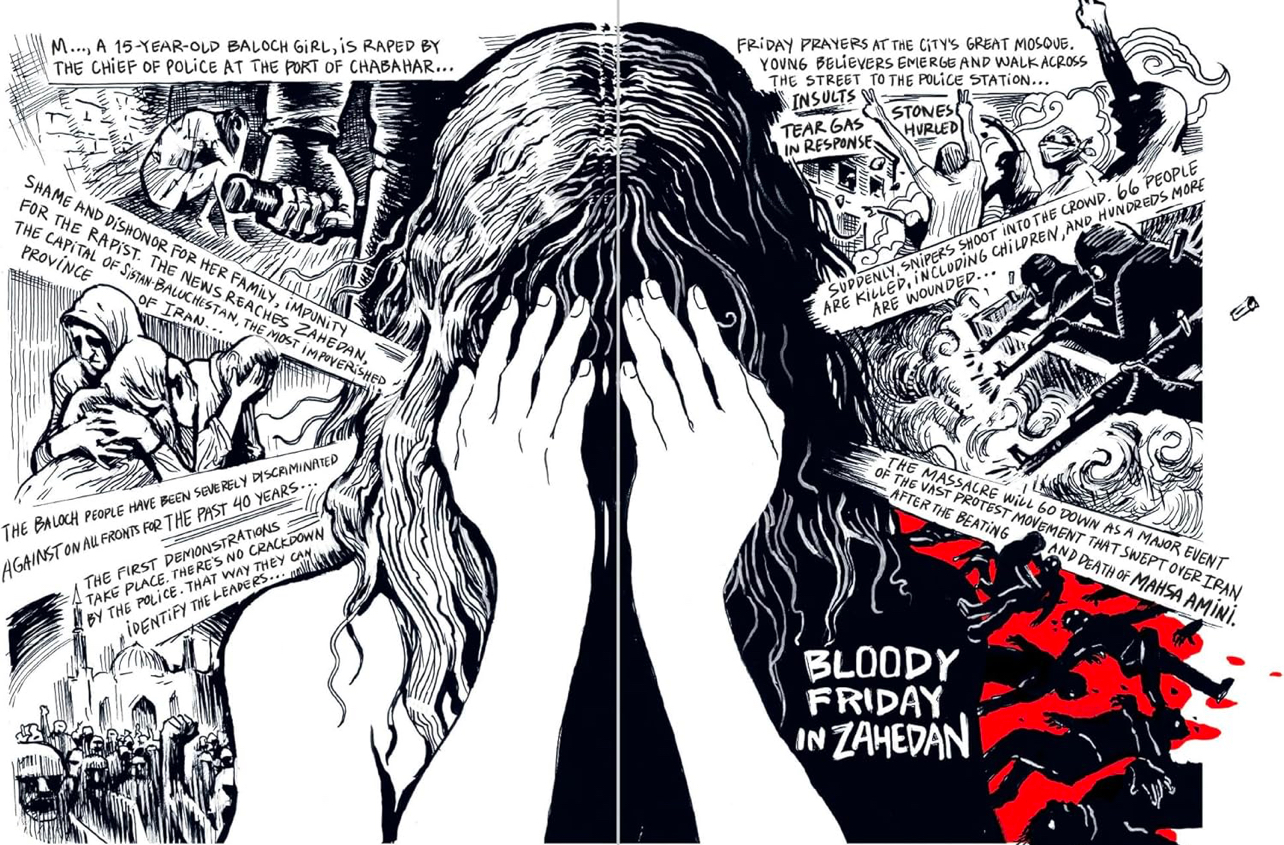
Tensions between the state and the Baluch minority escalated in the fall of 2022, after the rape of a young Baluch girl by a police commander. This act of violence sparked widespread outrage and protests in Zahedan, the capital of Sistan and Baluchestan province, where the Sunni Baluch community is concentrated. On September 30, during largely peaceful protests following Friday prayers (though a minority threw stones at a police station), the regime responded with extreme violence. The crackdown, later known as the Zahedan Massacre or Black Friday, began with sniper fire and escalated as plainclothes and uniformed officers pursued protestors into public spaces such as shops and malls, shooting indiscriminately. At least 96 people, including 13 children, were killed.
This massacre fueled further unrest and resistance, particularly among the Baluch people. Among those who lost their lives, the story of Khodanur Lojei, a young Baluch man, became a symbol of defiance. An image of Khodanur handcuffed to a pole before his death circulated widely on social media, drawing attention to the suffering and resilience of the Baluch people. His story resonated with broader struggles against state violence and oppression in Iran.
The Zahedan massacre revealed the deep fractures in Iran’s religious and ethnic dynamics, shedding light on the systemic repression faced by minorities. It also underscored the strength of those who continue to resist and fight for justice, even in the face of brutal suppression. This tragedy remains a significant chapter in the ongoing struggle for freedom and equality in Iran.
- MJ
References
Azizi, Arash. What Iranians Want: Women, life, freedom. London: Oneworld, 2024.
Wikipedia Contributors. “2022 Zahedan Massacre.” Wikipedia. Wikimedia Foundation, July 30, 2024. https://en.wikipedia.org/wiki/2022_Zahedan_massacre.
Wikipedia Contributors. “Baloch People in Iran.” Wikipedia. Wikimedia Foundation, September 15, 2024. https://en.wikipedia.org/wiki/Baloch_people_in_Iran#:~:text=The%20Baloch%20are
%20predominantly%20Muslim,as%20many%20as%202%20million..
This page has paths:
- The Writing in the Margins Hatcher Stanford
- MJ MJ