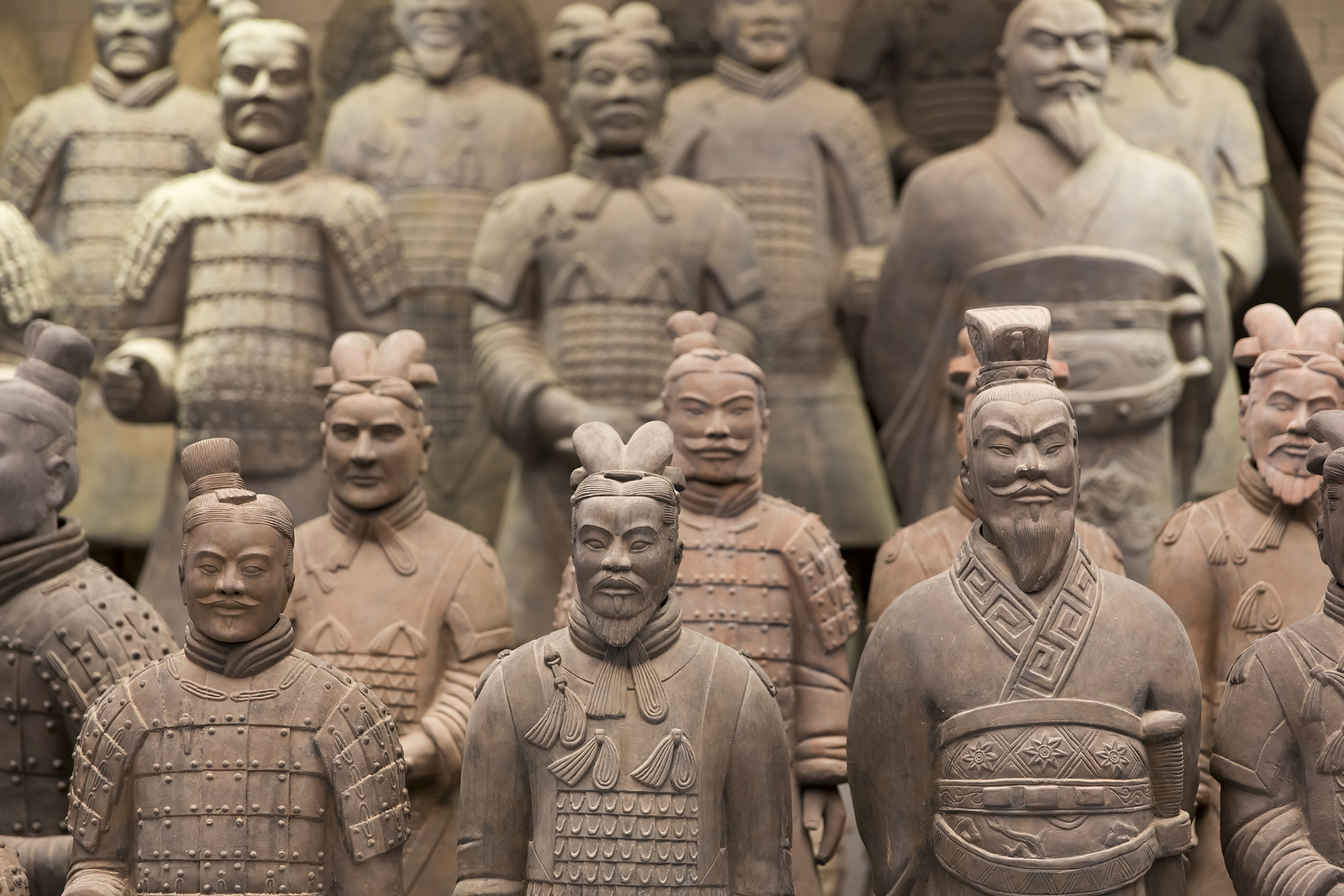
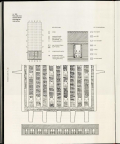
Pit 1
This pit contained many important answers to military historical data on how Qin dynasty's troops operated. In the front of the large mass of soldiers was a vanguard. These 204 soldiers were neither armed nor heavily armored. These soldiers were believed to be the best and bravest soldiers who would attack at high speeds and lead the charge in battle. [1] Similar to the vanguard there was also a rearguard in the back of the formation. The final two west most rows were the only two rows of soliders in the entire pit that is facing west. These soldiers were believed to be heavily armed and armoured as they protected the entire army from rear end attacks. In each of the outermost two corridors there were bowman each facing outward protecting each side of the army. This military formation is perfectly symmetrical regardless of which direction you look at it from. [4] This meant that every flank was guarded from enemies. This was a new and effective formation that had not been discovered in ancient china before this. Many historians believe that this could have been one of the reasons why the Qin Dynasty was able to take control of so many other territories. They had formations and strategies that had never been seen before. On the other hand some historians such as Fieber believe that this was not an actual battle formation and more of a standby formation waiting to engage in battle. [1]
This page has paths:
- Cover Christopher Thompson