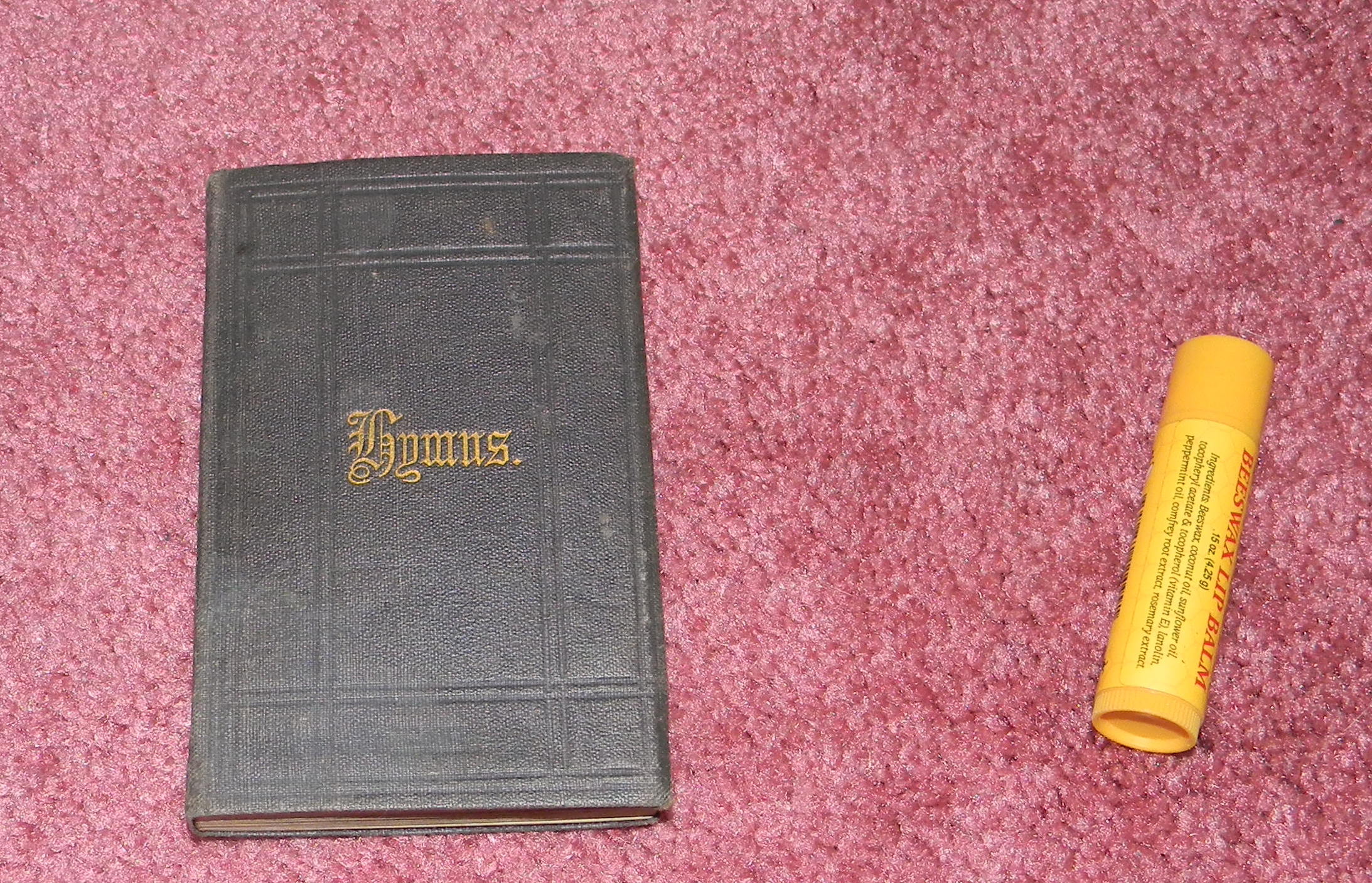
19th century hymn book
1 media/DSCN4213_thumb.JPG 2023-06-22T22:03:29-07:00 Alisa Clapp-Itnyre d22bb56f3c8ebb3d7e0537bc1b85da2502038efe 43370 1 note how small they were! plain 2023-06-22T22:03:31-07:00 20110111 120359 20110111 120359 Alisa Clapp-Itnyre d22bb56f3c8ebb3d7e0537bc1b85da2502038efeThis page is referenced by:
-
1
media/Stained glass cropped.jpg
2023-06-12T10:29:07-07:00
Part 1: Hymns & Religious Songs
51
image_header
1408994
2024-05-20T10:57:28-07:00
Nineteenth-Century British Children's Hymns:
In today’s society, hymns--when they are still sung at all--are primarily sung in church, or church-related activities (camps, etc.), and they are usually sung as the entire congregation, of all ages. Pop music dominates what children sing on their own, even what might be sung in schools and at home as community activities. In the nineteenth century, in both England and America, folk songs and popular music existed but what children—of all classes—would sing on a daily basis were hymns: they sang them at home, they sang them at the church-sponsored schools, they sang them at the public (boarding) schools, later they sang them at the national schools. Yet this culture of children’s hymn-singing has not been studied thoroughly. My study stems both from my personal love of hymn-singing, as a youth and now as an adult, and from my two areas of scholarship--Victorian aesthetics and children’s literature—as they converge into a study of Victorian children’s hymnody. It focuses primarily on the situation in England and spans the entire nineteenth century. It is based on three research trips to England, as I delved into archives and libraries for extant hymn books for children of the era, and amassed an incredibly large bibliography of over 200 hymn books. Placing their indices into an Excel database, I began to determine the most commonly appearing hymns in these hymn books.
An Overview
From this research of nine years, I consider children’s hymns from many different disciplinary angles, from children’s literature to 19th century hymnody. The results are a book published by Ashgate Publishers (now Routledge) in 2016: British Hymn Books for Children, 1800-1900: Re-Tuning the History of Childhood, with the following chapters:
1) Creating Communities of Song: Class and Gender in Children’s Hymn-Singing Experiences;
2) Re-Writing the History of Children’s Literature: Three Periods of Children’s Hymnody;
3) Erasing Child-Adult Distinctions: “Crossover” Children’s Hymn-Texts and Tunes;
4) Staging the Child: Agency and Stasis for Children in Art and Hymn-Book Illustrations;
5) Reforming Society: Missionary, Bands of Hope, and Bands of Mercy Hymns; and
6) Resurrecting the Child: The Cult of the Deathbed, Hymns of Faith, and Children of Life.
In my analysis of these various hymn venues I make the following claims:
1) hymns challenge and empower children, placing deep theology and rich poetry within the grasp of children;
2) the music is just as powerful, and perhaps even more inspirational at times, as the text, making hymns for adults with engaging tunes very popular in children’s hymn books; and
3) hymns offered children a way to impact the world around them, in missionary work, temperance work, and even animal welfare (temperance leagues for children were called Bands of Hope and animal-welfare organizations were called Bands of Mercy).
Our 2015 Hymn-Camp Singers
My daughter, Annetta Itnyre, grew up during the writing of this book, learning quite a few of these hymns. Then, in June 2015, with immense help from my colleague Dr. Jessica Raposo, director of music at Indiana University East, I auditioned for and created a “Hymn Camp” for 18 children grades 4th through 8th grade, including Annetta, to learn some of these hymns. For a week, Jessica taught them about 17 hymns which we then recorded at the end of the week. It was inspiring to see children of today become as excited about hymns as I imagined many nineteenth-century children might be! See pictures of them below (all children’s voices and images used with parental permission; use the arrows for the slide-show):
Singers: Heather Metzger, age 8; Grace Stewart, age 9; Mary Jetmore, age 9; Kristen Urich, age 10; Eden Judd, age 10; Malory Bolser, age 10; Ben Schweitzer, age 10; Graham Milligan, age 11; Madeline Stults, age 12; Luke Schweitzer, age 12; Heidi Metzger, age 13; Grace Blakely, age 13; Natalie Milligan, age 13; Annetta Itnyre, age 13; Natalie Pegg, age 13; Alexa Turner, age 15.Co-directors: Jessica Raposo, Alisa Clapp-Itnyre
Pianist: Caryl Bailey
Recording engineer: Chris Robinson
Location: Central United Methodist Church, Richmond
Recordings are also archived in IU's Media Collection Online.
Additional hymn-singers:
(also used with parents' permission)
Annetta Itnyre, age 8 and 13; Madelyn Brunton, age 8, & Lydia Shively, age 14.
Using the Hymns on this Website:
TOP 30: On this accompanying website, you will find a chart of the “top 30” children’s hymns of the era, with date of composition and most commonly used tune name, as well as a complete bibliography to the project.
HYMNS HERE: Linked below, you will find those most popular hymns, listed in the order of their popularity according to my study; with each linked hymn, you will find a contemporary score from books I own and my analysis of the hymn.