Thanks for your patience during our recent outage at scalar.usc.edu. While Scalar content is loading normally now, saving is still slow, and Scalar's 'additional metadata' features have been disabled, which may interfere with features like timelines and maps that depend on metadata. This also means that saving a page or media item will remove its additional metadata. If this occurs, you can use the 'All versions' link at the bottom of the page to restore the earlier version. We are continuing to troubleshoot, and will provide further updates as needed. Note that this only affects Scalar projects at scalar.usc.edu, and not those hosted elsewhere.
The Shadow of World War II in Modern Japan: Professor's ManualMain MenuHow to Use this ModuleAbstractAn introduction to this moduleModule MaterialsTerminologyScheduleIntroduction to JapanJapan and World War IICommunityDragon Head 『ドラゴンヘッド』Discussion: Dragon Head"Victim's History"Grave of the Fireflies 『火垂るの墓』Discussion: Grave of the FirefliesHiroshimaBarefoot Gen 『はだしのゲン』Discussion: Barefoot GenGodzilla 『ゴジラ』Discussion: GodzillaGodzilla, Mothra, and King Ghidorah: Giant Monsters All-Out Attack!『ゴジラ・モスラ・キングギドラ 大怪獣総攻撃』Discussion: All-Out Attack!Godzilla Resurgence 『シン・ゴジラ』Discussion: Godzilla ResurgenceModule Wrap UpBradley J. Wilsond07e2adfeaea18284aa4bc3bb77cb735351313e9
Godzilla 『ゴジラ』
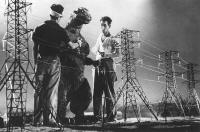
12017-07-27T11:15:52-07:00Bradley J. Wilsond07e2adfeaea18284aa4bc3bb77cb735351313e9207781plain2017-07-27T11:15:52-07:00Bradley J. Wilsond07e2adfeaea18284aa4bc3bb77cb735351313e9In 1954, a film that would change the Japanese movie industry forever was released to a populace still recovering from the tragedies of World War II. Ishiro Honda's Godzilla would capture the imaginations of millions over the next decades and spawn a film franchise that has spanned 29 nine films to date.
The original Toho Studio classic examines the Japanese reaction when a giant, irradiated monster rises from the depths of the sea and proceeds to rampage through Tokyo. However, despite spawning a franchise that would focus mostly on monster versus monster battles, the seminal film is an allegory for the destructive nature of nuclear power; a topic that would have been much on the minds of the Japanese following the incidents at Hiroshima and Nagasaki only a few years before.
In dealing with the Godzilla crisis, two camps emerge. One side would like to capture Godzilla and study it while the other wants to destroy it by any means necessary. In the end, it is decided that the Japanese must fight "fire with fire" and attack the beast with an equivalent weapon of mass destruction. This comes in the form of Dr. Serizawa's Oxygen Destroyer. The scientist himself chooses to detonate the weapon, but at what cost?
In 1956, the original Japanese film was re-edited into the American version, Godzilla, King of the Monsters!, co-directed by Terry O. Morse and Ishiro Honda. The film was dubbed mostly into English and cut several minutes of the film in order to include newly recorded portions starring actor Raymond Burr. Notably, anti-nuclear sentiment was removed from the film, significantly changing its message.
Godzilla can be purchased at retailers such as Amazon.com.
This page has paths:
12017-07-27T11:16:03-07:00Bradley J. Wilsond07e2adfeaea18284aa4bc3bb77cb735351313e9TerminologyBradley J. Wilson3plain4854722017-09-15T06:34:13-07:00Bradley J. Wilsond07e2adfeaea18284aa4bc3bb77cb735351313e9