Thanks for your patience during our recent outage at scalar.usc.edu. While Scalar content is loading normally now, saving is still slow, and Scalar's 'additional metadata' features have been disabled, which may interfere with features like timelines and maps that depend on metadata. This also means that saving a page or media item will remove its additional metadata. If this occurs, you can use the 'All versions' link at the bottom of the page to restore the earlier version. We are continuing to troubleshoot, and will provide further updates as needed. Note that this only affects Scalar projects at scalar.usc.edu, and not those hosted elsewhere.
12018-12-05T21:54:59-08:00Josie Cotton85e536e9436ca7acf1cc79640b3de84b2753ceeb3147411plain2019-03-20T18:17:34-07:00Josie Cotton85e536e9436ca7acf1cc79640b3de84b2753ceebThough we often think of Britain standing “alone” against Nazi Germany during the Second World War, Britain was not alone. Behind Britain lay its empire, vast and powerful, as the saying goes, "on which, the sun never sets." Australia, many thousand miles away from the metropole, across entire continents and great swaths of ocean, played a vital role in the Allied war effort. It provided Britain with a base in the Pacific, as well as food, arms, and other supplies. In both Britain and Australia, farm workers labored to supply the empire with food and factory workers to churn out armaments for soldiers across the world. In both countries, men enlisted by the thousands, in search of glory or adventure, or simply wanting to defend their homelands.
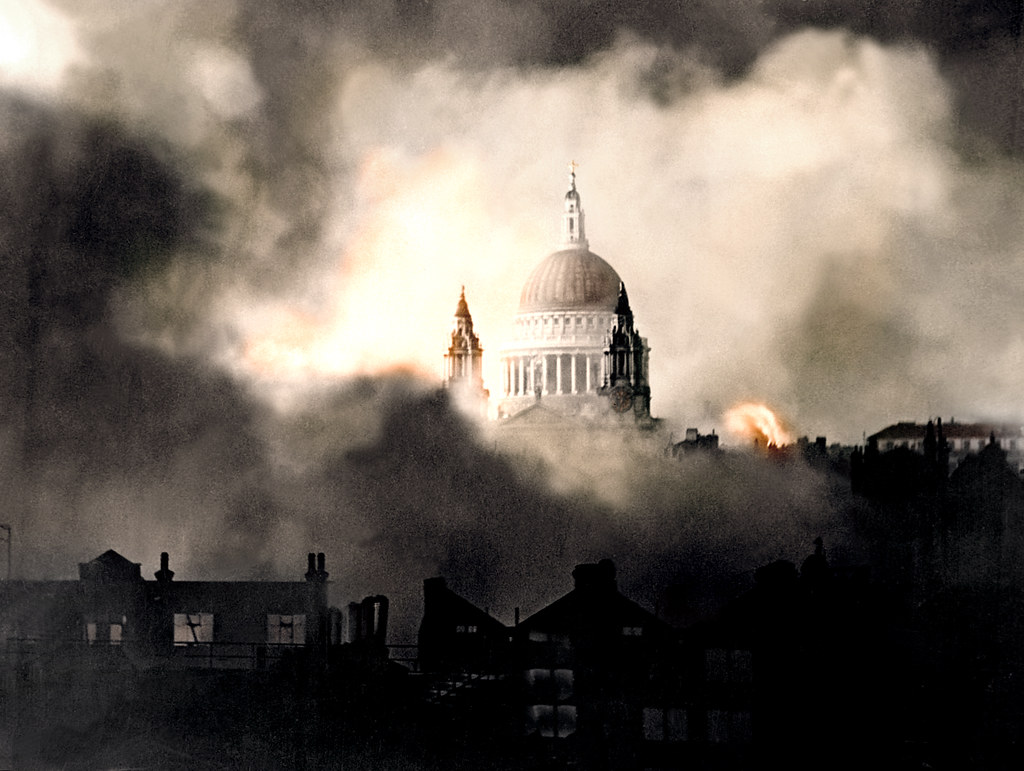
In many ways, the Australian civilian experience of the war mirrored that of the British. As the British fought the Germans in Europe, the Australians fought the Japanese in the Pacific. As the Germans bombed civilian targets in London and other major British cities, the Japanese bombed Darwin and other cities on the north coast of Australia. Though air raids on Australian cities were less intense than the Blitz, between February 1942 and November 1943, Darwin alone was bombed sixty-four times. And just as Australians feared a Japanese invasion, Britons feared a Nazi one. Neither invasion ever happened.