Scalar's 'additional metadata' features have been disabled on this install. Learn more.
The International Prester John Project: How A Global Legend Was Created Across Six CenturiesMain MenuOrientation to ProjectPath One: 1122-1235Path Two: 1236-1310 ADPath Three : 1311-1460 ADPath Four : 1461-1520 ADPath Five: 1521-1699 ADPath Six: 1700-1800 ADChristopher Taylor // christopher.eric.taylor@gmail.com946e2cf6115688379f338b70e5b6f6c039f8ba6f Global Middle Ages
Gregory Bar-Hebraeus
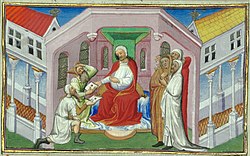
1media/gregory-bar.jpg2015-06-15T11:24:55-07:00Christopher Taylor // christopher.eric.taylor@gmail.com946e2cf6115688379f338b70e5b6f6c039f8ba6f52819image_header2016-07-10T21:56:29-07:00Christopher Taylor // christopher.eric.taylor@gmail.com946e2cf6115688379f338b70e5b6f6c039f8ba6fBar-Hebraeus (1226-1286) was born in modern-day Turkey and served as bishop of the Syriac Orthodox Church. Bar-Hebraeus was widely read and composed a number of treatises concerning topics such as philosophy, science, theology, and history. In his Chronicon Syriacum Bar-Hebraeus tells a tale of Prester John similar to those of the Dominican missionaries of the mid-thirteenth century. This anecdote represents the oldest extant mention of Prester John by a non-European.
This page has tags:
1media/Screen Shot 2018-01-09 at 9.11.43 PM.png2015-05-17T12:23:26-07:00Christopher Taylor // christopher.eric.taylor@gmail.com946e2cf6115688379f338b70e5b6f6c039f8ba6fMap 2.1 : Author Origins and TravelsChristopher Taylor // christopher.eric.taylor@gmail.com26plain2023-11-24T15:37:14-08:00Christopher Taylor // christopher.eric.taylor@gmail.com946e2cf6115688379f338b70e5b6f6c039f8ba6f
12016-07-10T21:54:08-07:00Christopher Taylor // christopher.eric.taylor@gmail.com946e2cf6115688379f338b70e5b6f6c039f8ba6fNon-European Writers on Prester JohnChristopher Taylor // christopher.eric.taylor@gmail.com1plain2016-07-10T21:54:08-07:00Christopher Taylor // christopher.eric.taylor@gmail.com946e2cf6115688379f338b70e5b6f6c039f8ba6f
Contents of this tag:
1media/Screen Shot 2021-06-03 at 4.28.36 PM.png2016-03-26T20:53:44-07:00Christopher Taylor // christopher.eric.taylor@gmail.com946e2cf6115688379f338b70e5b6f6c039f8ba6fPrester John and 'Nestorianism'19image_header2024-02-26T19:08:17-08:00Christopher Taylor // christopher.eric.taylor@gmail.com946e2cf6115688379f338b70e5b6f6c039f8ba6f
This page is referenced by:
12016-07-11T20:31:03-07:00Ong Khan11plain2023-12-31T14:17:54-08:00 Ong Khan, alternately known as Unc Khan, Toghril, Tooril Khan, Unach, King David, and King John was the Khereid ruler in the late 12th/early 13th centuries. The title ong is the Mongol form of the Chinese honorific wang meaning 'universal' (Hamilton, p. 248).
Reportedly a Nestorian Christian– although according to Bar Hebraeus' Chronicon Syriacum, a lapsed one– "Unach" Khan was killed by his blood brother and subordinate, the soon-to-be Genghis Khan, who was acting on rumors that a jealous Unc was planning to kill him.
This is the same figure known in other mid-thirteenth century texts as King David, son of Prester John.
Ong Khan figures in a number of Prester John narratives, including the Historia Tartarum (c. 1246), William of Rubruck's Itinerarium(c. 1253), the Chronicon Syriacum, Marco Polo's Travels,