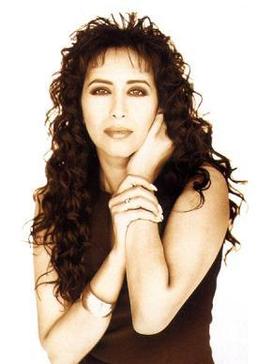
Ofra Haza
1 2018-08-30T03:39:30-07:00 Marc Thorman f2b57c456bb408491ab2cdffaf869c4905420054 30914 1 Israel singer plain 2018-08-30T03:39:31-07:00 Marc Thorman f2b57c456bb408491ab2cdffaf869c4905420054This page is referenced by:
-
1
2018-08-22T21:52:16-07:00
ROCK, RAP, AND HIP HOP IN THE ARAB WORLD
67
plain
2026-07-12T08:41:50-07:00
Rock, rap, and hip hop are popular and accessible musical genres in most areas of the Arab world, but are subject to the approval of, and banning by, governmental agencies that oversee culture and music. Music videos or songs that feature profanity, glorify drugs, or mock political leaders are forbidden. Music that promotes LGBTQ themes, is perceived as anti-religious, or contains highly sexualized content may be banned from broadcasts and live performances. Song lyrics in some countries are subject to pre-approval by government agencies. Restrictions range from most restrictive — Houthi-controlled regions of Yemen, UAE, and Egypt — to least restrictive — Lebanon, Morocco, and Tunisia.
ROCK
Egyptian authorities meddling in popular musical culture is not new. In the late 1990s Egyptian religious hardliners and the press initiated a smear campaign against metal and rock , falsely claiming that rock events were occasions for Satanism, blood-drinking, and orgies. Rock musicians were arrested and panic ensured, with fans destroying cassettes of rock and metal music. A similar crackdown took place in Morocco in 2003 when middle-class headbangers tried to organize a music festival. Police dragged them from their homes and charged them with wooing young Moroccans into Satanism, with a bonus count of promoting prostitution. Rock music is not overtly banned in Egypt today, but alternative and underground genres face ongoing indirect suppression, heavy bureaucratic hurdles, and occasional crackdowns.
Times have changed in Morocco. The state now sponsors L'Boulevard, a premier urban and alternative music festival that began in 1999 in Casablanca. L'Boulevard aims to underground talent from the MENA region with competitions in which emerging bands in rap/hip hop , fusion and world music, and rock/metal perform live.
Lydia Canaan of Lebanese singer-songwriter, the first "rock star" of the Middle East, the first internationally successful Lebanese recording artist, first Middle Eastern artist to sing in entirely in English, and the first to have music videos shown on MTV Middle East and other MTV channels .Canaan was catalogued in the Rock and Roll Hall of Fame in 2015. Canaan is also a civil rights advocate who has spoken frequently before the UN Human Rights Commission. [Wikipedia]
Saad Lamjarred (Arabic: سعد لمجرد; born 7 April 1985) is a Moroccan singer-songwriter, actor, multi-instrumentalist, dancer, and record producer. His official music video for "LM3ALLEM" has received over 1 billion views on YouTube . . . Lamjarred moved to the US in 2001 and cites this as one of the main sources of inspiration for his music, crediting the experience for exposing him to western music and having a defining effect on his style and the type of artist he wanted to identify as. [https://en.wikipedia.org/wiki/Saad_Lamjarred]
Lamjarred's career has undergone several setbacks due to multiple rape allegations, prison sentences, and protests.
Singer Leesa A took social media by storm when she released a music video of her rapping at the wheel of a car on the day the ban on women driving was officially lifted."I don't need anyone to take me... Drivers' license with me," she sings defiantly to the camera, sitting in the driver's seat of a Hyundai. Until the law officially changed [in 2018], women in Saudi Arabia could not drive and families had to hire private chauffeurs for female relatives. [Georgina Rennard, "Saudi wastes no time to rap at the wheel," BBC News, June 2018]
Qusai - (Don Legend)of Saudi Arabia, now about 40, was first professional Saudi hip hop artist. He began in high school by selling tapes of his music from a car trunk. At age 17 he emigrated to the U.S. as a student and stayed for eleven years, playing in Orlando, Atlanta, Chicago, and New York City. He has performed with US hip-hop artists Ludacris and Akon among others.
Back in Saudi Arabia in 2005, his first two albums sold in the tens of thousands despite having no international distribution or online sales and topped Arab music charts for consecutive weeks. Qusai hosted Arabs Got Talent on MBC in 2011. Tours throughout Europe, the Middle East and the United States followed through 2017, when Qusai hosted the Saudi television show Hip Hop Na with Fredwreck for MTV.
In Qusai's "The Wedding" (2008) and "Yalla" (2012), lyrical content is "clean" and the videos attempt to portray a positive and moral vision of Saudi society.Last year it was announced by the Saudi govt that hip-hop would be included in programs by the influential Saudi Arabian Society for Culture and Arts (SASCA), which sponsors and develops Saudi artists. Qysai performed for a crowd that contained both sexes, reflecting the changing nature of life within Saudi Arabia. Having an artist like Qusai front and center, rapping in English and Arabic, paints a favorable picture of a country looking to reinvent itself to international audiences. It also fits with the narrative of bin Salman's Vision 2030 strategy to make Saudi Arabia more open and moderate. [Heidi Pullyard, "Qusai Kheder, Saudi Arabia's Hip Hop Pioneer," CNN, November 16, 2017]Egypt
Ahmad Mekky is an Egyptian actor, writer, director, and rapper. Mekky has many hits recordings and is well known for his 2009 patriotic song "Masr Baldy" ("Egypt Is My Home"). He began his career in the Egyptian cinema after graduating from the directing division at the Institute of Cinema in Cairo.Zap Tharwat is an underground poet and rapper from Egypt who rose to fame during and after the Egyptian Revolution of 2011. Born Ahmed Tharwat in Jordan, his songs tackle many of the social and political problems faced by Egyptians in the second decade of the 21st century. He continues to be the voice of young Egyptians, releasing several hits including "ba7lam" and "meen el Sabab". [last.fm]Yemen
The Arabs in this video are originally from Hadhramaut in South Yemen. The Hadhrami people have settled in many parts of the world. This video comes from Indonesia but represents the traditional Yemeni culture.
The sound of the takht and its rhythmic configuration is similar to the all-electronic instrumental backup for Yemeni singer Ofra Haza.
Inspired by a love of her Yemenite Jewish and Hebrew culture, her music quickly spread to a wide Middle Eastern audience. As her career progressed, Haza was able to switch between traditional and more commercial singing styles without jeopardizing her credibility. Her music fused elements of Eastern and Western instrumentation, orchestration and dance-beat. She became successful in Europe and the Americas; during her singing career, she earned many platinum and gold discs.
A-WA (Arabic for Yes) is an Israeli band made up of the three sisters Tair, Liron, and Tagel Haim. Their single "Habib Galbi" (“Love of My Heart”) became a world hit, with its Yemenite traditional music mixed with hip-hop and electronic music. [Wikipedia]Arab Women in Rap
Shadia Mansour (b. 1985), also known as "the first lady of Arabic hip hop" is a British Palestinian singer and MC who sings and raps in Arabic and English. Much of her music focuses on Middle East politics." [Wikipedia]
Shadia is the featured vocalist in "Hamdullillah" by Iraqi-Canadian rapper and Arab hip hop pioneer Yassin 'Narcy' Alsalman.More recently, the Syrian-American rapper and activist Mona Haydar gained worldwide attention with her hit rap song "Hijabi (Wrap My Hijab)"