Historical Background & Other Riots
In 1943, riots were reported in several cities across the United States, from Los Angeles to Beaumont and Mobile to Detroit and Harlem, to name the largest. The Los Angeles riot is unique amongst these in that it is still remembered as the “Zoot Suit Riots," named after the clothing that allegedly incited the riot. Unsurprisingly, this evasive name has been contested, at times called the “so-called pachuco riots,” “sailor riots” and by Chester Himes at the time of the event, race riots. “Race riots” was commonly used to describe events that took place in other cities across the U.S. in 1943, but not as frequently in regards to Los Angeles. This desire to avoid discussing race and ethnicity with the Zoot Suit Riots emerged at the time from multiple causes: potential legal claims Mexican Americans have had to whiteness has historically confused clear racial identification; wartime sensitivities to an alliance between the United States and Mexico affected how Mexican Americans could be identified in the press without offending the support provided to the American war effort by Mexican nationals and Mexican American soldiers. In part, this influenced why contemporaneous news reports conjured the “zoot suit” and “pachucos” rather than focusing on the Mexican and Black Americans beaten who were not wearing the fashion, influencing even now how the riots are remembered. Memory flattens many of the socio-economic issues that influenced the riots in Detroit and Harlem, such as labor disputes in factories and the resentment resulting from discrimination against Black soldiers home from the war.
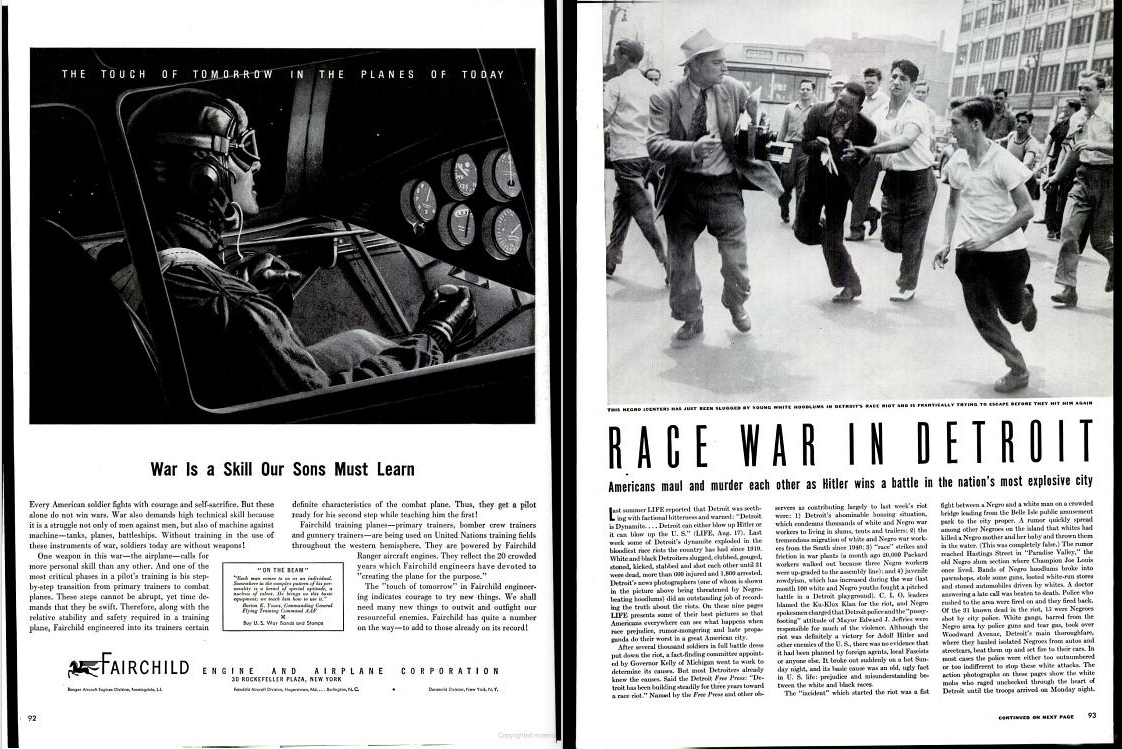
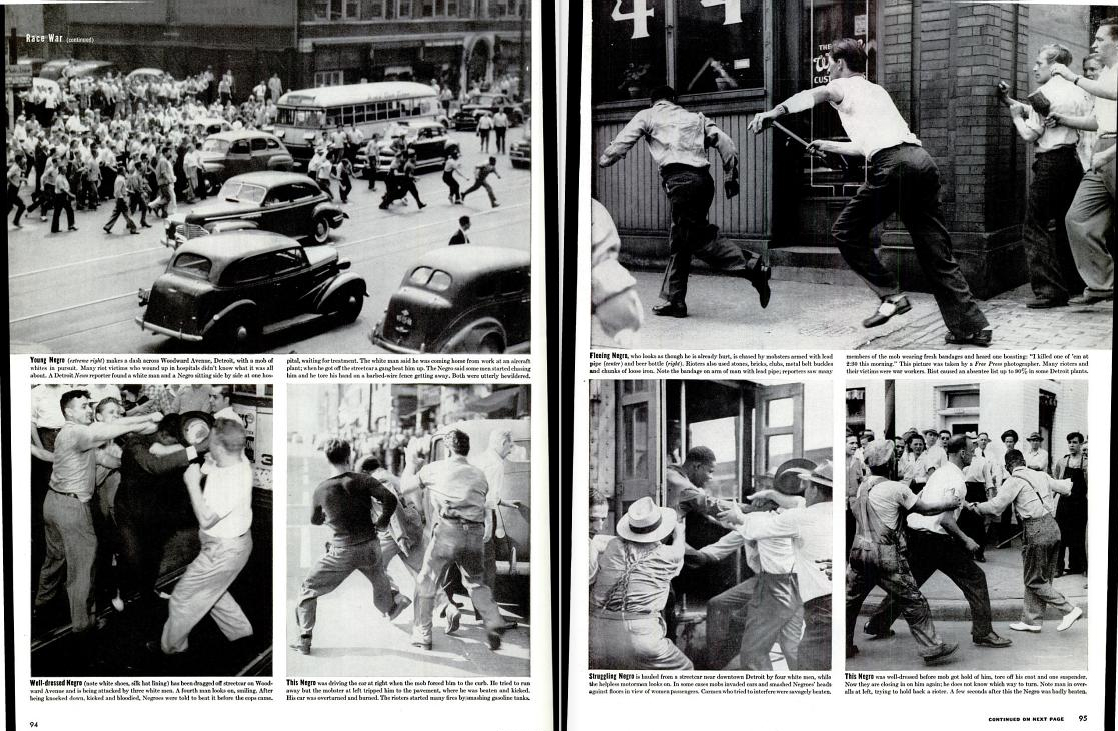
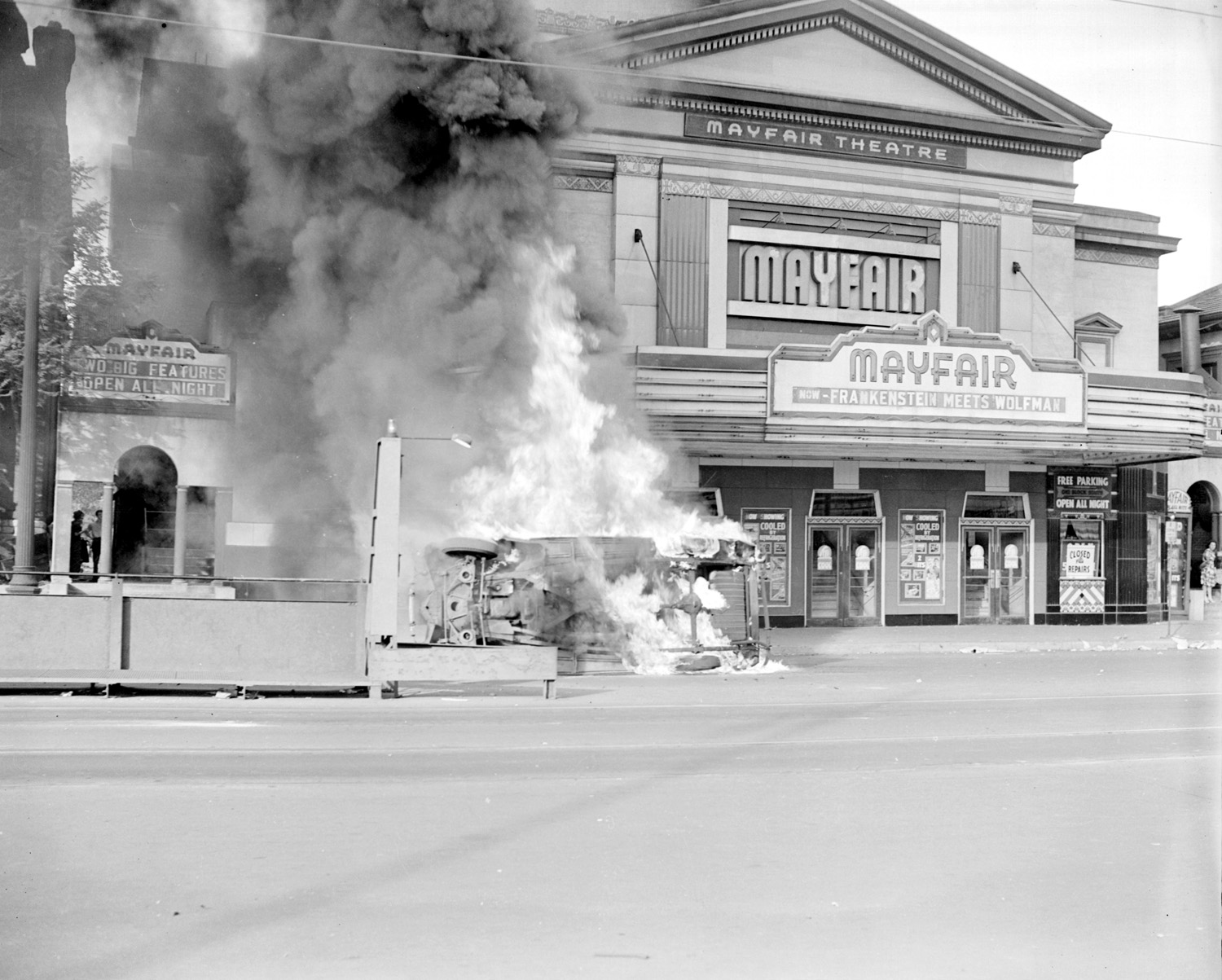
Movie theaters, trolleys and other public spaces appear in materials that document many of these riots. For example, in describing the rioters from June 1943 in Detroit, Dominic Capeci and Martha Wilkerson relate how in the early morning of June 21 white “adolescents and young men…assaulted black patrons exiting from the all-night cinemas” after having “gathered about the Roxy and Colonial theaters” (9). The consequences of the Detroit riot were much more severe than the Los Angeles riot: 34 deaths, 676 injured victims, and $2 million estimated property damage (87). In contrast, the Los Angeles riot yielded no deaths, injuries were minimal, and there was no severe property damage.

Later in the summer, the Harlem riot was precipitated by an incident in the lobby of the Braddock Hotel. Rumors spread after a white police officer (James Collins) shot a Black soldier (Robert Bandy) after the soldier protested at the officer’s perceived mistreatment of a Black female hotel customer (Marjorie Polite). Unlike in Detroit and Los Angeles, the Harlem riot was contained to only two days, August 1-2, and resulted in much fewer deaths than Detroit, still more than Los Angeles’ count of zero: six Black persons dead and several hundred injured. Additionally, accounts of the Harlem riot are different from Detroit and Los Angeles, in that Black Harlem residents were reported as the primary rioters, in contrast to the other cities’ white rioters attacking Black and Latino targets (in the case of Los Angeles), or at least equal measure of white and non-white rioters (in Detroit). The Harlem riot also involved looting resulting in property damage on a larger scale, some estimates placing damage as high as $5 million.
While the very naming of the Zoot Suit Riots as a “riot” is frequently challenged in literature about American race riots, historian of the Harlem and Detroit riots, Dominic Capeci has stated “it was the Harlem upheavals of 1935 .. and 1943 that ushered in Watts, Newark, and the second Detroit.” According to Luis Alvarez, in contrast to white New Yorkers’ interpretation after the riot that Black rioters acted in anger toward white Americans, “Black New Yorkers involved in the rioting…saw their behavior as targeting property rather than persons” (229). Alienated by poverty, rising rents and increased living costs, combined with unfair and unequal treatment by white business owners, financial institutions, legal structures and the police force, Harlem erupted in rebellion. Replacing the images from Los Angeles and Detroit of Mexican American and Black people being dragged out of streetcars and movie theaters, reports show that the riot in Harlem marked a shift, with accounts of white patrons harassed and beaten in the public spaces of the movie house and trolley car. However, this aspect of the rioting was rare. Newspaper images from the riot focus on rioters’ looting of luxury clothing and goods, as well as the destruction of white-owned businesses.
In The Power of the Zoot, Luis Alvarez situates the Zoot Suit Riots in the context of this violence across the country in 1943, “rather than viewing [them] as isolated incidents” (200). Alvarez’s argument that the “the bloody confrontations…reflected the ongoing struggle for dignity by nonwhites in the wartime United States” (199) connects to his overall interpretation of the zoot style as an expression used by racialized youths to reclaim dignity in this period of discrimination. Finding this emphasis on dignity and respect important for understanding the Harlem rebellion and the smaller scale expressions of adopting a zoot style, this project is interested in how racial issues were coded in coverage of the riots in ways that influenced cultural narratives formed around the events. Race was evaded in the case of the Zoot Suit Riots through the use of “zoot suiter” and “pachuco” to avoid identifying attacked youths as Mexican or Mexican American. This resonates with how racial injustice was minimized as an influence in the Harlem riots in contemporaneous coverage, framed instead as “potent expressions of racial antagonism.”
This page has paths:
- Pachuco Goes to the Movies Veronica Paredes