Ejected Spectator: Challenging Representations
The above epigraph comes from the short story “¿A qué lado de la cortina?” (On which side of the curtain?), written by Chilean writer Fernando Alegría. First published in 1956, it portrays one experience of the Zoot Suit Riots through the perspective of Pancho, a fourteen-year-old Mexican American teenager. Pancho is representative of many second generation Mexican Americans caught up in the sensationalist headlines that dominated local newspapers during this period, which most significant for this study includes the riot, but also in the news coverage surrounding the death of José Díaz and the Sleepy Lagoon Case.Pancho brushed Nancy’s ear with his lips and at that moment a blow cut through the chest of the hero projected on the screen like a knife. The theater went black…
In contrast to the one-dimensional images found on the covers of the Herald Examiner and the Los Angeles Times of Mexican American youths as criminals and rioters, Alegría animates a “concrete historical context” (Madrid-Barela 38) for Pancho’s story. The reader is given specific details about his life, experiences and motivations. For instance, Pancho lives in San Gabriel, he attends high school, and he grows his hair out in order “to blend in with his generation” (11). It is this same motivation that leads to his purchase of a zoot suit, complete with a cream-colored jacket with giant shoulders. Pancho also buys the suit in order to impress his white American girlfriend, to hold “the gaze of Nancy in the school hallways.”
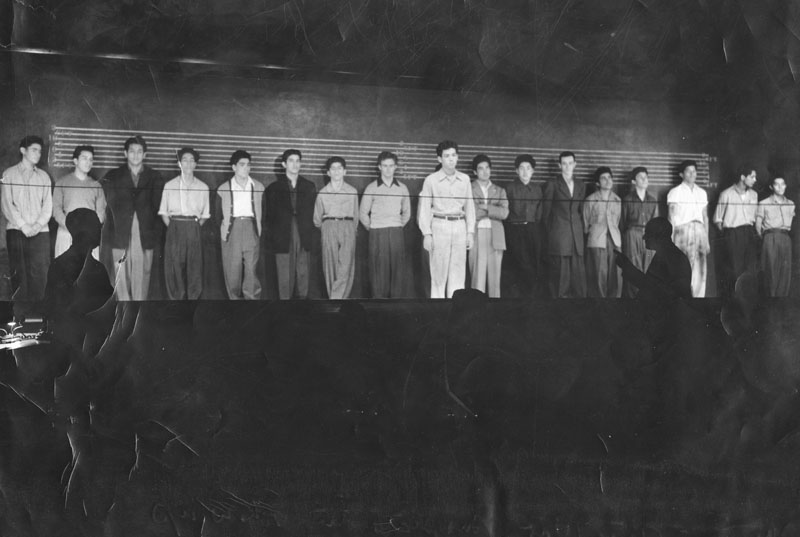
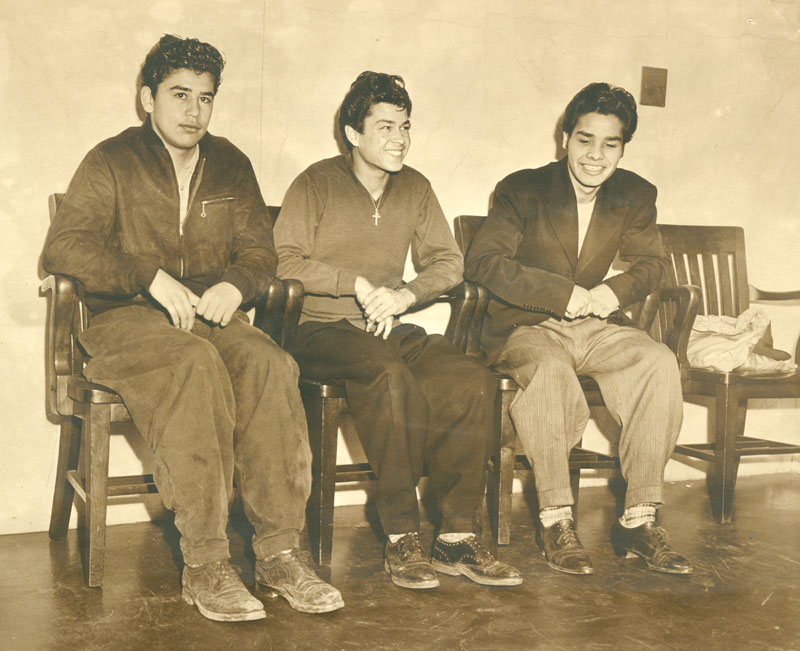
As Pancho’s everyday life is being described in “¿A qué lado de la cortina?” the narrator reflects with an exclamation, “¡Ah si lo viera Ginger Rogers! Quiero decir si lo viera tal como es (If Ginger Rogers could see him! I mean if she could see him as he really is).” Alegría elaborates on the image of Pancho being circulated on the cover of The Los Angeles Times and other newspaper accounts from the time, specifying that this misleading image portrays Pancho, and the other young Mexican American men like him, as “a bandit with black hair, a crooked mouth, a scar on his cheek, and an inferiority complex.” A fuller representation would focus on “Pancho of three in the afternoon,” or “Pancho of Broadway,” who is neither tall nor short, with curly black hair, dark, sad eyes and a thick mouth who wears a knee-length jacket, black pants with white cuffs rolled up tight to reveal colorful socks. Pancho who takes his girlfriend to the movies.
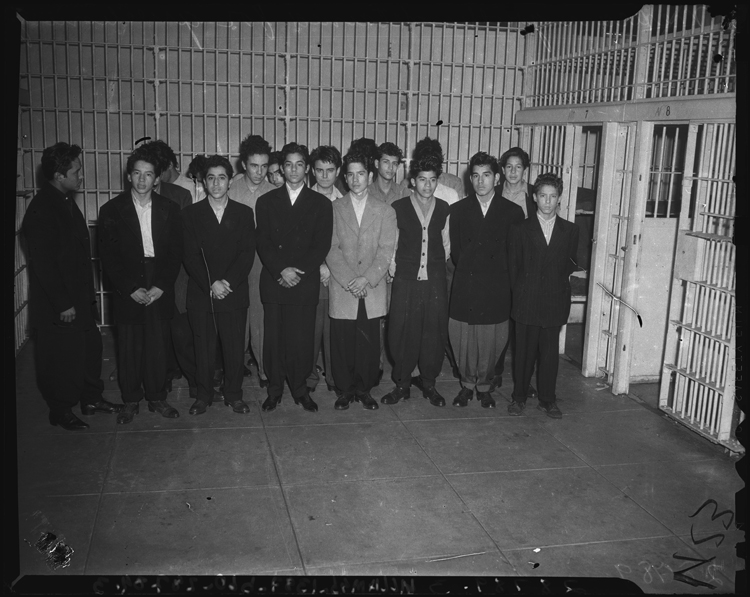
The story begins inside of the movie theater as the two teenagers watch a war film starring Gary Cooper and Ginger Rogers, eagerly awaiting the screen couple’s final kiss, so that they may imitate this amorous display in real life at the Bijou Theater in Downtown Los Angeles. They caress and touch in their seats until the shock of the sailors’ attack shatters their romance. The violent interruption is described in vivid detail from their perspective. After the initial shock, the story fractures. By the story’s end the movie theater setting has returned, but this time with Pancho’s assailant, a red-haired sailor, enjoying the darkness of the movie theater as the next film begins. The violent interruption of the soldiers and sailors fractures not only Pancho and Nancy’s romance as a scene of cinematic spectatorship, but also the story’s formal structure through a shift in the character that frames the story’s perspective. Just as the “blow cut[s] through the chest of the hero projected on the screen” as Pancho and Nancy watch in the Bijou, so too is the protagonist of the short story annihilated through Pancho’s defeat and humiliation.
“¿A qué lado de la cortina?” incorporates this experimentation with perspective throughout the story by contrasting the narrative about Pancho’s everyday experiences and dreams at school, at the department store, at the movie theater with newspaper headlines covering the riots. For example, after a vivid description of what the inside of the movie theater feels like -- with the “sound of blood and of collective digestion” quietly heard in the background, toasted peanuts and chewing gum littering the ground – the following line interrupts an otherwise evocative scene of moviegoing:
"It is estimated that roughly thirty thousand Mexican youths and twenty-five thousand black youths dress as pachucos in Los Angeles."
Other lines weaved throughout the story, include: "In long caravans of taxis, jeeps and private cars, toured Mexican neighborhoods, armed with sticks and gloves"/ “He broke the jaw of a twelve-year-old Mexican boy" / "Pachucos stripped, kicked on the ground." The lines demonstrate how the violence of the riots may have been summarized in newspaper reports and also demonstrates the wide gulf between the lived experience of a so-called pachuco and how he may be depicted as a statistic or stuck in a narrative of violence and true crime in contemporaneous mainstream media reports.
This page has paths:
- Pachuco Goes to the Movies Veronica Paredes