Reflections
1 media/1616196-200_thumb.png 2022-02-14T12:37:41-08:00 Tan Sooi Beng & Marcia Ostashewski (Co-Editors), The International Council for Traditional Music 99590786580aa343605c172dc9dd1d991dfa67d1 40007 1 plain 2022-02-14T12:37:41-08:00 Tan Sooi Beng & Marcia Ostashewski (Co-Editors), The International Council for Traditional Music 99590786580aa343605c172dc9dd1d991dfa67d1This page is referenced by:
-
1
2022-05-20T06:44:53-07:00
A Latin American Dialogue for Social Inclusion
52
Community Musics, Ethnicities, and Identities
plain
2022-07-18T11:58:40-07:00
Community Musics, Ethnicities, and Identities
Organizer
Juan Sebastián Rojas E. (Fundación Universitaria Juan N. Corpas, Colombia)Moderator
Julio Mendivil (Universität Wien)Language
EnglishPresenters
Agenor Cavalcanti de Vasconcelos Neto (Universidade Federal do Amazonas, Brasil)
Jessie Vallejo (Cal Poly Pomona, USA)
Juan Sebastián Rojas E. (Fundación Universitaria Juan N. Corpas, Colombia)Other participants
Arturo Prado
Corporación Folclórica Kandombeo y Color (Colombia)
Willie Acuña, Mariachi Sol de Mexico de Jose Hernandez (USA)
Flora Delgado, Civil Engineering student, Cal Poly Pomona (USA)
Ary até Ykuema, musician and member of the Kuximawara community (Brazil)A Latin American Dialogue for Social Inclusion
Community Musics, Ethnicities, and Identities
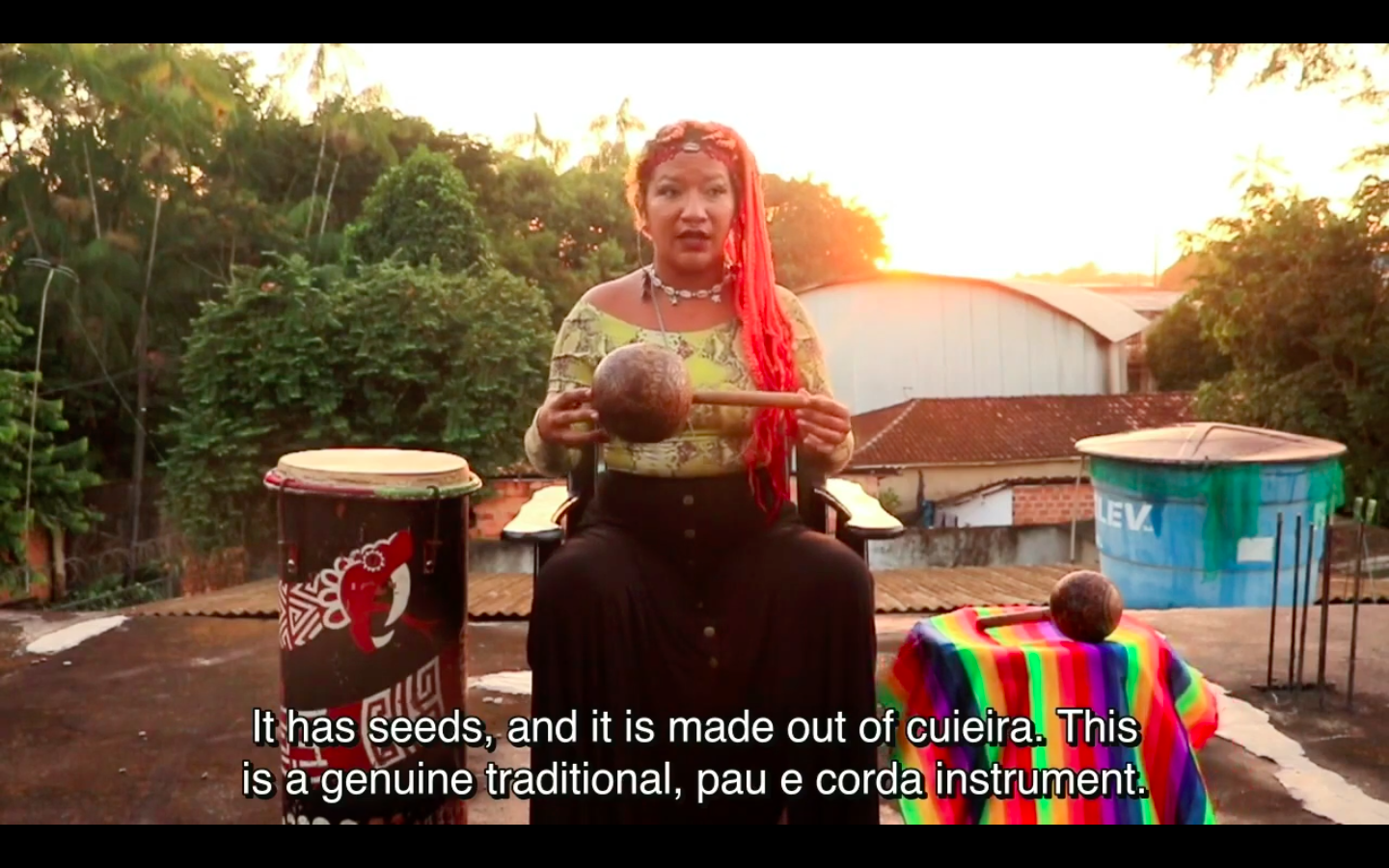
In a globalized world dominated by neoliberal economies and flooded by social inequality—now decimated by a global pandemic—ethnic minorities throughout the Americas continue to experience marginalization and exclusion. This marginalization and exclusion is frequently perpetuated by historical tensions of race, class, nation, and gender. In this context of oppression, communities frequently embrace traditional or popular musical and performance practices to build meaning, construct networks of solidarity, and create a sense of community, often strengthening cooperation and collective action. Three cases are presented in this panel session, from Amazonas (Brazil), Los Angeles (California), and Bogota (Colombia). They display diverse situations in which community organization and local performance practices converge to construct spaces of cultural resistance, enabling processes of identity construction and the development of a sense of belonging, among other forms of social impact.Agenor Vasconcelos presents the case of Kuximawara music among Indigenous musicians in the Brazilian Amazon city of São Gabriel da Cachoeira, describing Indigenous musicology applied to a current local genre of popular music and its connections with the Jurupary myth. This work reinforces Indigenous people's resistance movements and has challenged Vasconcelos to rethink norms learned in the music industry. Jessie Vallejo presents some of the challenges and possibilities for decolonizing music curricula at the undergraduate university level in a Hispanic Enrolling (aspiring to be a Hispanic Serving) Institute. In particular, she discusses the case of mariachi ensembles as part of a music degree program, drawing from her experience as a student, professor, and ensemble director, in addition to the experiences of her students. Juan S. Rojas presents the case of religious Afro-Colombian rituals from the Pacific Coast of Colombia that have been transplanted to the city of Bogotá. The rituals are oriented towards community building in the context of economic migration or forced displacement. Since the late 1980s, these celebrations have tackled diverse social issues such as uprooting and structural racism in the context of emerging multicultural policies.
This session addresses the decolonization of music scholarship in several ways. First, each ICTM member co-presents with a research collaborator who completes the presentation by drawing on a grassroots perspective. This decentres the scholar’s authority and makes native voices directly audible in this event. Second, to encourage more multidirectional dialogue, we have allotted 13-minute presentations and prioritized lengthy discussions. During discussion, participants address transversal issues proposed by the moderator, Julio Mendívil. The moderator acts as a central methodological figure, facilitating questions, threading connections between cases, and exerting equanimity in the use of time. To challenge hegemonic ideas of academic communication, we weave our presentations together as collective narratives rather than as three independent presentations. Third, we aim to reposition the importance of single authorship, acknowledging that social interactionism in the context of knowledge production can lead to other, sometimes more inclusive, kinds of discourses.
Un Diálogo Latinoamericano para la Inclusión Social
Músicas Comunitarias, Etnicidades e Identidades
En un mundo globalizado, dominado por las economías neoliberales, inundado por la desigualdad social, y ahora, diezmado por una pandemia global, las minoría étnicas a lo largo y ancho de las Américas siguen experimentando marginalización y exclusión, con frecuencia son perpetuadas por tensiones históricas de raza, clase, nacionalidad y género. En este contexto de opresión, las comunidades con frecuencia aprovechan prácticas musicales y performáticas de carácter tradicional o popular para construir sentido, crear redes de solidaridad y desarrollar sentido comunitario, con frecuencia fortaleciendo la cooperación y la capacidad de acción colectiva. En esta sesión, presentamos tres casos del Amazonas (Brasil), Los Angeles (California, Estados Unidos) y Bogotá (Colombia), los cuales exponen diversas situaciones en las que la organización comunitaria y las prácticas performáticas locales convergen para construir espacios de resistencia cultural, posibilitando así procesos de construcción de identidad y fortalecimiento del sentido de pertenencia, además de otras formas de impacto social.
Agenor Vasconcelos presenta el caso de la música Kuximawara entre músicos indígenas en la ciudad amazónica brasilera de São Gabriel da Cachoeira, describiendo prácticas de musicología indígena aplicadas a un género actual de música popular local y sus conexiones con el mito de Jurupary. Este trabajo refuerza los movimientos de resistencia de los pueblos indígenas y ha desafiado al autor a repensar normas aprendidas en el ámbito de la industria musical. Jessie Vallejo presenta algunos de los desafíos y posibilidades para descolonizar currículos musicales a nivel de pregrado universitario en una institución estadounidense que busca matricular altos porcentajes de estudiantes de ascendencia hispánica. En particular, ella discute el caso de los ensambles de mariachi que hacen parte del programa de música, basándose en su experiencia como estudiante, profesora, y directora de ensamble, además de en las experiencias de sus estudiantes. Juan S. Rojas presenta el caso de algunos rituales religiosos afrocolombianos de la costa Pacífica colombiana, los cuales son trasplantados a la ciudad de Bogotá y son orientados hacia procesos de construcción comunitaria en contextos de migración y económica o desplazamiento forzado. Desde finales de la década de 1980, estas celebraciones han abordado diversos problemas sociales —tales como el desarraigo y el racismo estructural— en un contexto de políticas multiculturales emergentes.
Esta sesión propende por la descolonización de los estudios musicales de diversas maneras. En primer lugar, cada miembro de ICTM co-presenta con alguno(s) de sus colaboradores de investigación, quienes complementan la ponencia desde su perspectiva, local y de base. Queremos descentrar la autoridad del investigador y hacer audibles de manera directa a las voces nativas en un evento de esta naturaleza. En segundo lugar, para motivar un diálogo más multidireccional, hacemos presentaciones cortas de 14 minutos para priorizar la discusión, el diálogo y las preguntas del público. Durante la discusión, los participantes atenderán temas transversales propuestos por el moderador, Julio Mendívil. El moderador es una figura metodológica central, pues facilita las preguntas, teje las conexiones entre los distintos casos y ejerce ecuanimidad en el uso del tiempo. Para desafiar ideas hegemónicas sobre la comunicación académica, vamos a hilar nuestras ponencias entre sí como narrativas colectivas, en vez de como tres presentaciones independientes. Tercero, nuestro objetivo es reposicionar la importancia de la autoría individual, reconociendo que el interaccionismo social en el contexto de la producción de conocimiento puede llevar a otras formas de discurso, a veces más inclusivas y colaborativas.

Further References
Friedmann, S. (1996). “Hibridación o Resistencia? El Velorio de Santo en la Música del Pacífico Colombiano” [Hybridity or Resistance? The Velorio de Santo in Colombian Pacific Music]. Ensayos: Historia y Teoría del Arte 2, 76–96. Universidad Nacional de Colombia. https://revistas. unal.edu.co/index.php/ensayo/article/view/46440Garcia, Gina Ann. (2019). Becoming Hispanic-Serving Institutions: Opportunities for Colleges and Universities. Baltimore, MD: Johns Hopkins University Press.Garcia-Pusateri, Yvania Andrea. (2019). "Homeplace: A Case-Study of Latinx Students Experiences in Making Meaning within a Multicultural Center." Ph.D. dissertation, Miami University.Grueso, Libia, Carlos Rosero, and Arturo Escobar. (2018). "The Process of Black Community Organizing in the Southern Pacific Coast Region of Colombia." Cultures of Politics, Politics of Cultures. Routledge. 196-219.Gutierrez Keeton, Rebecca, Corina Benavides López, and José M. Aguilar-Hernández. (2021). "'It Shaped Who I Am': Reframing Identities for Justice Through Student Activism." Association of Mexican American Educators 15(1):1-28.Mackinlay, Elizabeth. (2010)."Big Women from Burrulula: An Approach to Advocacy and Applied Ethnomusicology with the Yanyuwa Aboriginal Community in the Northern Territory, Australia." Applied Ethnomusicology: Historical and Contemporary Approaches.Madison, D. Soyini. (2010). Acts of Activism: Human Rights as Radical Performance. Cambridge University Press.Molina, Natalia. (2014). How Race is Made in America: Immigration, Citizenship, and the Historical Power of Racial Scripts. Berkeley and Los Angeles: University of California Press.Rappaport, Joanne. (2005). Intercultural Utopias. Public Intellectuals, Cultural Experimentation, and Ethnic Pluralism in Colombia. Duke University Press.Salazar, Lauryn C. (2011). "From Fiesta to Festival: Mariachi Music in California and the Southwestern United States." Ph.D. Dissertation, University of California, Los Angeles.Santos, Boaventura de Sousa. (2001). "Los Nuevos Movimientos Sociales" [The New Social Movements]. OSAL: Observatorio Social de América Latina 5: 177-188.Vasco, Luis Guillermo. (2007). "Así es mi Método en Etnografía." [This is my Ethnographic Method]. Tabula Rasa 6: 19-52.In general, we believe that these exercises help with envisioning and constructing new practices that will enhance the poetics of knowledge communication in ethnomusicology, ethnochoreology, and other related fields.Reflections
The panel is structured around research approaches and methods that seek to overcome societal prejudices about listening to and understanding diverse musical practices and respecting them as equal. We felt the conversation was helpful in applying and experimenting with inclusive formats for conferences. Including research participants in these spheres of dissemination of academic knowledge is a key aspect for decolonizing the humanities and social sciences by challenging the historic separation of researchers and research participants. It is essential we advocate for more democratic relationships in academic knowledge production.
We carefully considered how to represent our ideas and arguments in multiple languages while balancing time for discussion. Communicating in multiple languages is important in directly and faithfully conveying cultural meanings, making explicit attempts to minimize mediation or top-down elitist approaches while still paying attention to cultural and linguistic translation, interpretation, and representation. It was no small challenge, and we look forward to multilingual exchanges becoming more common in academic conferences.
Overall, local feedback was very positive. The event was a popular topic among Kuximawara musicians. Singer-songwriter Ary até Ykuema’s participation encouraged new local encounters and had a positive local impact. Similarly, collaborators Willie Acuña and Flora Delgado appreciated being included in a type of academic discussion where they have not always felt welcomed. Similarly, Arturo showed appreciation for being included; as someone who holds an MA in Education and is a schoolteacher and NGO chair, his participation holds academic and professional value for him since it positions his work more uniquely in an international sphere.
In general, we believe that these exercises help with envisioning and constructing new practices that will enhance the poetics of knowledge communication in ethnomusicology, ethnochoreology, and other related fields.
Questions to Consider
Which points raised throughout the Dialogues series could we include in a statement on best practices for decolonizing higher education and academia? What steps will be crucial for us to ensure we make changes, however small, to decolonize without leaving things as they are or leaning too much on the optics of a discussion without substantive change?
What can be good strategies to further democratic and egalitarian dialogues between music, dance, and culture scholars and non-academic knowledge producers?
How can collaboration between scholars and their research interlocutors contribute to improving the lives of all stakeholders?
In general, we believe that these exercises help with envisioning and constructing new practices that will enhance the poetics of knowledge communication in ethnomusicology, ethnochoreology, and other related fields.
-
1
2022-05-20T07:29:41-07:00
From Cosmopolitanism to Cosmology
11
Forging Decolonial Praxis in Contemporary South Africa
plain
2022-07-15T15:20:38-07:00
Forging Decolonial Praxis in Contemporary South Africa
Organizer
Brett Pyper (University of the Witwatersrand)
Moderator
Brett Pyper
Language
English/ SeTswana/ SePedi
Presenters
Mfanufikile Aubrey Motau (Cosmopolitan Collective Secretary & Mamelodi Arts & Culture Forum Chairperson)
Jennifer Mahlangu (Cosmopolitan Collective working group member, jazz appreciator and dancer)
Prince Lengoasa (professional musician, composer and graduate student in the Wits School of Arts)
Pat Ranoto (professional musician and promoter and Cosmopolitan Collective working group member)
Christine Msibi (professional music promoter and graduate student in the Wits School of Arts)
Oladele Ayorinde (graduate student and postdoctoral fellow in the Wits School of Arts)Speakers in the video
Kgomotso Moshugi, Wits PhD candidate, vocal arranger & co-musical director
Jennifer Mahlangu, jazz appreciator and dancer
Phillip Ngobeni, composer and musician
Bizza Buthelezi, Cosmopolitan Collective Chairperson
Julian Ngwenya, jazz collector, appreciator and dancer
Mfanufikile Motau, poet, musician & Mamelodi Arts & Culture Forum Chairperson
Pat Ranoto, musician and producer
Thabo Rapoo, choreographer, dancer, musician and co-researcher
Willie Lubise, digger (dancer)Video footage and production
by Manyatsa Monyamane and Themba Vilakazi with still photography by Themba Vilakazi.
The Cosmopolitan Collective gratefully acknowledges the use of the following musical excerpts in the video:
Live performance by Salim Washington, inter alia.
Vocals by Denay Willie
Thabo Rapoo with Medumo Art Ensemble
Diga dances by Willie Lubise and Prince LengoasaFrom Cosmopolitanism to Cosmology
Forging Decolonial Praxis in Contemporary South Africa
Our contribution to the ICTM Dialogues emerges from what was originally conceived as an artist residency inspired by Steven Feld’s monograph Jazz Cosmopolitanism in Accra (2012) and the accompanying music recordings and films. The proposed residency, which was disrupted by the COVID-19 pandemic, was to be supported by our university’s Arts Research Africa (ARA) project. Musicians who feature centrally in Feld’s study were invited to Johannesburg to engage in a pan-African conversation and collaboration about comparative forms of jazz cosmopolitanism in various African cities and regions. The decolonial intention was to enable the subjects of contemporary Africanist research in West and South Africa to engage in direct, pan-African dialogue with peer musicians and cultural activists without relying on the mediation of cultural scholars. This intention was heightened by several other elements of the project. An ensemble comprising both music faculty and students was formed to study the Accra recordings and respond musically from an embodied research perspective, centring musical as opposed to textual modes of research. This yielded an inspiring concert at our university theatre in October 2020 titled “Cosmology.” Furthermore, the Wits Festival Study Group (a student-led initiative premised on the study of African musicology and festival theories and practises) engaged forms of jazz cosmopolitanism in the content of the residency performances as well as in their presentational form, as an action research project. Reaching beyond the academic space, an extensive social partnership with community-based jazz appreciators and cultural organisers came to be called the Cosmopolitan Collective. It brought vernacular curatorial practices and aesthetics to the project in ways that challenged the scholars, festival organisers and the musicians. Our ICTM Dialogues session took place from the home of the chairperson of our community-based jazz collective rather than from our university, underscoring the importance of self-representation and epistemic agency as decolonial values. Although our intention of hosting the jazz experimentalists from Accra remains unrealized, our intended intra-continental, pan-diasporic, intergenerational dialogue yielded unforeseen levels of local collaboration under pandemic conditions that led to the formation of the new collective that is advancing decolonial research, teaching and community-based musical events on an ongoing basis.
The Arts Research Africa (ARA) project in the Wits School of Arts at the University of the Witwatersrand has been exploring how artistic research can decolonize knowledge and practice in a highly charged national context. Since 2015, South African universities have again become sites of intensified decolonial activism, scholarship, and attempts to forge transformative praxis, more than a quarter-century after the formal end of apartheid. Challenging not only the enduring legacies of colonialism but also the unfulfilled promises of the post-apartheid era, protests sparked by the under-provision of funding have encompassed wider struggles for social justice by opposing exploitative labour practices and confronting colonial, and to an extent patriarchal and heteronormative, academic institutional cultures. The ARA initiative (documented inter alia in open-source conference proceedings [2020]) continues to engage issues around decolonization in African arts, including music study.
Ukusukela emasikweni nasezizweni ezahlukahlukene, ukuya endalweni, ukwakha inkambiso yokuqeda ukuthunjwa eNingizimu Afrika yezikhathi zamanje
[With thanks to Mfanufikile Motau for this translation into isiZulu]
Ukulahlela kwethu itshe esivivaneni senkulumo mpendulwano yeICTM uqobo lwayo kusukela emkhakheni wezokuvakashelana ngobuciko, ngogqozi lomculu kaSteven Feld, Ingqubevange ye Jazz eAccra (Jazz Cosmopolitanism in Accra) nokufaka ngaphakathi umculo onyathelisiwe nemidlalo yezithombe. Isicelo saloluhlelo lezokuvakasha, elakhinyabezwa yinhlekelele ye COVID-19, lalufanele lixhaswe yiNyuvesi yethu ngaphansi kohlelo lweArts Research Africa Project (Ichazwe ngenhla). Osomculo abawela ngaphansi kwemfundo kaFeld kade bemenywe eGoli/Johannesburg ukubandakanya enkulumeni nasebudlelwaneni bobuAfrika, Pan-African conversation and collaboration pheqelezi, mayelana nezilinganiso noma ukufanisa izinhlobo zomculo weJazz emadolobheni aseAfrika namaphethelo ayo. Inhloso yokuhlakazwa kokuthunjwa bekuwukwenza ukuthi izifundo ezimayelana nokufunisisa kweAfrika yezikhathi zamanje, pheqelezi Contemporary Africanist research, eNtshona naseNingizimu Afrika, kube khona ukubandakanya ngqo, inkulumo mpendulwano ngobuAfrika nontanga kwezomculo nezobushoshovu kwezamasiko, ngaphandle kokuthembela koqhwepheshe noma izifundiswa zezamasiko. Lenhloso yaqiniswa amagaja athize walomsebenzi. Iqembu elaliqukethe izinyuvesi zombili nabafundi bazo yabunjwa ukuze kufundwe ukunyathelisa eAccra bese kuphendulwa ngokomculo futhi okusukela ekubukeni komzimba wokufunisisa, kugxilwe emculweni kungahambelani nokufunisisa ngokwezincwadi. Lokhu kusilethele umdlalo womculo onogqozi eshashalazini lenyuvesi yethu ngoMfumfu 2020, isihloko “Cosmology”, pheqelezi. Nangalokho, iqembu lemfundo lomgidi womculo waseWits, umkhakha oholwa ngabafundi ngaphansi kwesifundo seAfrican Musicology and Festival Theories and Practices ngamafuphi. Babandakanye izinhlobo zengxubevange zomculo weJazz, hhayi emkhakheni wezokuvakasha nokudlala umculo, kodwa ekuzindlaleni kwazo, njengomsebenzi wokufunisisa. Nangaphezukomkhathi wezifundo eziphakemeyo, ubudlelwano obunabile namaqembu omphakathi wabalandeli nabancomi beJazz, nezinhlangono zobuciko namasiko ezibizwa Cosmopolitan Collective ngamafuphi, ilethe ubumkhaya nezifundo zobuciko kulomsebenzi ngezindlela eziqhudela nokwahlulela izifundiswa, abahleli bomkhosi womculo kanye nabosomculo. Inkulumo mpendulwano yethu yeICTM yenzeke ekhaya lomgcini sihlalo wenhlangano yethu yomphakathi yejazz kunokuthi yenzeke eNyuvesi yethu, kwaveza ubumcoka bokuzimela nobumcoka bokuhlakazwa bokuthunjwa, Nanoma inhloso yethu yokwamukela abadlali beJazz abavela eAccra kungafezekanga, inhloso yethu yenkulumo mpendulwano yezwekazi laseAfrika isilethele amazinga angakabonwa wokusebenzisana kwabomkhaya ngaphansi kwenhlekelele yeCOVID, ebangele ukuhlonywa kokusebenzisana mayelana nokuqhubekisa nokufunisisa kokuhlakazwa kokuthunjwa, isize nangokufundisa, nangokwenza kube khona imigidi yomculo emiphakathini njalo nje.
Umsebenzi weArts Research Africa (ARA) eWits School of Arts eNyuvesi yaseWitwatersrand beyisebenzana nokubheka ukuthi ukufunisisa kwezobuciko kungaluhlakaza kanjani ulwazi nenkambiso yokuthunjwa ezingeni eliphezulu lesizwe. Kusukela ngo2015, amanyuvesi waseNingizimu Afrika abengamashashalazi obushoshovi obuqinile bokuhlakaza ukuthunjwa, nezezikole, nemizamo yezinguquko ngaphezu kweminyaka engamashumi amabili nanhlanu, emveni kokuguqiswa kobandlululo. Kungaqhudeli kuphela izinsalela zengqindezelo nokuthunjwa kuphela, kodwa nezithembiso ezingafezwanga emveni kombuso wengqindezelo. Umzabalazo obangelwe nangukuswela ukuxhaswa ngezimali zemfundo ngumbuso, ihlanganise ngobubanzi imizabalazo yobulungiswa esizweni, nokuphikisana nenkambiso yengqindezelo kwezemisebenzi,
Nokuqhudelanisana nokuthunjwa, nobulisa/ubulili nemithetho engasile yamasiko ezemfundo ephakeme. Umkhakha weARA (umculu wayo ohambelana nenkambiso yengqungquthela yomthombo ovulekileyo), iyaqhubeka nokubandakanya nezindaba ezimayelana nokuhlakazwa kokuthunjwa ebucikweni base Afrika, okufaka nezifundo zomculo ngaphakathi.
Reflections
The process of co-creating the presentation and engaging in dialogue with interested colleagues around the world was inspiring and generative for our group in various ways. It was the first time that we participated in an academic presentation off-campus from a setting in the community of practice in which we work, and the experience gave us confidence to continue to engage from wherever we are under prevailing pandemic conditions. These positive experiences have strengthened our resolve to develop and present the outcomes of our work together collaboratively, wherever possible. Moreover, several members of our group took an interest in attending subsequent ICTM Dialogues over the course of the year. In light of our ICTM Dialogues session, we received an invitation to present our ongoing collaboration to the Austrian Chapter of the ICTM in November 2021 on a panel titled “Sustainable Solutions for Participatory Research in Ethnomusicology. Also in the light of our ICTM Dialogues, we developed an exchange relationship with colleagues based in Rio de Janeiro who have similar interests. We hope this exchange relationship will yield reciprocal visits and transnational collaborations in 2022.
Questions to Consider
Participating in the 2021 ICTM Dialogues was inspiring but also raised expectations as to how we can sustain this level of transnational critical dialogue into the future.
The value of building communities of practice / praxis across institutional, national and regional settings has been affirmed throughout the 2021 ICTM Dialogues and raises the question as to how socially engaged music research can more purposefully play an active role in enabling this.
The specifics of the genres on which we focus (in our case, jazz) seem less important than the kinds of cultural politics they can serve as a vehicle for, with musical expressions that may originate externally (even in former colonial centres) potentially becoming vehicles for transmitting Indigenous values. Understanding the many ways in which this is manifesting today is one of the broad questions the series both posed and answered.
References
One way into the extensive literature on South Africa’s “Campus Spring” (also cited in other respects during our presentation by Oladele Ayorinde) is Francis B. Nyamnjoh’s #RhodesMustFall: Nibbling at Resilient Colonialism in South Africa. Bamenda, Cameroon: Langaa Research & Publishing CIG.
Classic book-length studies of jazz cosmopolitanism in South Africa include Gwen Ansell’s Soweto Blues: Jazz, Popular Music, and Politics in South Africa, New York: Continuum (2004); Christopher Ballantine’s Marabi Nights: Jazz, ‘Race’ and Society in Early Apartheid South Africa, 2nd edn. Pietermaritzburg: UKZN Press (2012 (1993)); and David Coplan’s In Township Tonight! Three centuries of South African black city music and theatre, 2nd edition. Johannesburg: Jacana (2007 (1985)).
On jazz cosmopolitanism in Ghana, see Steven Feld’s Jazz Cosmopolitanism in Accra: Five Musical Years in Ghana, Durham, NC: Duke University Press (2012) and the accompanying recordings and films (see https://voxlox.myshopify.com).
Oladele Ayorinde’s references to Francis Nyamnjoh’s writing during our ICTM Dialogues panel discussion were as follows: Nyamnjoh, Francis B. “Blinded by Sight: Divining the Future of Anthropology in Africa,” in Africa Spectrum Vol 47, No 2-3 (2012): 63-92; and “Incompleteness: Frontier Africa and the Currency of Conviviality,” in Journal of Asian and African Studies (2017) 52(3):253-270.
Further readings are forthcoming by members of the Mamelodi Arts & Culture Forum’s heritage working group, including Aubrey Mogase’s self-published book on the history of Mamelodi and a book and short film honouring jazz veteran Bra Abbey Cindi.
Doherty, Christo. (2020). Proceedings of the Arts Research Africa Conference 2020e Arts Research Africa, University of the Witwatersrand, Johannesburg, 22–24 January 2020. Johannesbug: Arts Research Africa -
1
2022-05-20T07:29:42-07:00
Decolonization of High-Impact International Journals of Music
11
plain
2022-07-18T11:11:39-07:00
- Organizer: Ijeoma Forchu (University of Nigeria)
- Moderator: Ijeoma Forchu
- Language: English
- Presenters: Christian Onyeji, Felicia Ezeugwu, Kingsley Ilo, Ijeoma Forchu, Elizabeth Onyeji, Chidubem Onyekwelu (University of Nigeria)
Academic and scholarly outputs from institutions of learning are documented and disseminated in different media: books, periodicals, monographs, electronic slides, and so on. For the most part, periodicals in the form of journal publications are quite prominent and highly regarded in academia. This is due to the insistence on peer-review mechanisms as a critical norm and as a force for authentication and quality assurance regarding research. This tradition has been maintained over time in different knowledge cultures and locations, and is supported by academia globally. Prior to the twenty-first century, African and Nigerian scholars enjoyed access to publishing in international journals. Nigerian musicologists still celebrate Meki Nzewi, Akin Euba, Samual Akpabot, Lazarus Ekwueme, Richard Okafor, Joshua Uzoigwe, and others whose articles in notable journals around the world continue to serve as standard reference materials. This trend has changed in recent times, though, as journals have begun making glaring distinctions between writers from the Global North and those from the Global South.
Low acceptance rates of research submissions from Africa is common now, which makes most scholars, particularly those from Nigeria, weary of discrimination and continual rejection from gatekeepers. The stringent requirements of journals do not take into account specific challenges faced by scholars in many different global sociocultural contexts. High-impact journals are intolerant of submissions that do not meet their requirements, which are constructed on Western structures and norms. This is a form of mental imperialism/neocolonialism/colonization of academia through its research outputs. It seems that if research does not match the requirements of the West, it is not worthy of publication. Access to publishing is denied based on West-centric notions, or should we say, bias. The majority of Nigerian scholars face critical challenges regarding access to and acceptance in academic journals. African scholars are compelled to adopt Western models in article writings, consolidating a dependency syndrome. The presenters on this panel draw attention to challenges African scholars face regarding access to publication. They take the position that practices of high-impact music journals around the world are exclusionary, colonizing, and negatively impact access to and dissemination of research and scholarly outputs from disadvantaged global contexts and cultures - the work of scholars from places and cultures that are currently dramatically underrepresented in academic publishing. The presenters on this panel are strongly disinclined to parochial Euro-centric perspectives and pressures for research to comply with European structures. They are inclined to more liberal and accommodating structures that weigh the impact of unequal socio-economic access and human development indices on research facilities, funding, and outputs in journal publications. The objective would be to find ways of enabling greater access to academic publication for Nigerian musicologists and researchers. The panel, therefore, calls for a paradigm shift and a transformation in all spheres of high-impact journal publication practice.
Further References
Curry. Stephen (2018). “Let’s Move Beyond the Rhetoric: It’s Time to Change How We Judge Research,” Nature. 554 (7691): 147. https://ui.adsabs.harvard.edu/abs/2018Natur.554..147C/abstract, Accessed January 2022.
Davis, Phil (2012) “Publish-or-Perish Culture Promotes Scientific Narcissism.” https://scholarlykitchen.sspnet.org/2012/05/07/publish-or-perish-culture-promotes-scientific-narcissism/ Accessed January 2022.
Ekwueme, Lazarus Nnanyelu. (1973). “African music in Christian liturgy: The Igbo Experiment.” African Music: Journal of the African Music Society 5(3). https://doi.org/10.21504/amj.v5i3.1655
Ekwueme, Lazarus Nnanyelu. (1974). “African-Music Retentions in the New World,” The Black Perspective in Music 2(2), 128-144. https://doi.org/10.2307/1214230.
Euba, Akin. (1970). “New Idioms of Music-Drama Among the Yoruba: An Introductory Study, Yearbook of the International Folk Music Council 2: 92-107. https://doi.org/10.2307/767427
Euba, Akin. (1967). “Multiple Pitch Lines in Yoruba Choral Music,” Journal of the International Folk Music Council 19: 66-71. https://doi.org/10.2307/942189
Gargouri, Yassine; Hajjem, Chawki; Lariviere, Vincent; Gingras, Yves; Carr, Les; Brody, Tim; Harnad, Stevan. (2018). “The Journal Impact Factor: A Brief History, Critique, and Discussion of Adverse Effects” https://ui.adsabs.harvard.edu/abs/2018arXiv180108992L/abstract, Accessed January 2022.
Nzewi, Meki. (1980). “Folk Music in Nigeria: a Communion,” African Music: Journal of the International Library of African Music 6(1): 12-22.
Uzoigwe, Joshua and Israel Anyahuru. (1986). “Conversation with Israel Anyaguru, Igbo Master Musician,” The Black Perspective in Music 14(2): 126-142. https://doi.org/10.2307/1214983
Reflections
The importance of publishing the research of African scholars lies in their foregrounding Africa as a starting point for interrogating existing knowledges, as well as developing new insights into major local and global challenges of sustainable development goals. It is imperative to not isolate African scholars; their knowledge contributes a critical part to the whole global system. To this end, African scholars, as well as local and international impact journal editors, have different roles to play. Nigerian scholars should continue to seek opportunities to publish in journals within and outside Nigeria. They need to ensure that their articles attain high quality, relevance, and value, that they are significant to their localities as well as the global community. It is essential that processes surrounding high impact journal publication be reviewed and decolonized. High impact music journals all over the globe, including the ICTM journal, need to be more objective and inclusive when gatekeeping and reviewing articles from certain cultural locations, particularly Nigeria. Each manuscript should be judged on its own individual merit. Journals should endeavour to determine the most acceptable means and context of a publication to ensure accuracy, reliability, reception, and value in academic circles as well as avoid semblances of neo-colonization and destructive scholarship methods. It is important for high impact journals to be aware of challenges faced by African scholars, and be willing to provide an accommodating platform for them within appropriate scholarly practices.
Questions to Consider
When we talk about the impact of a journal, one may ask, impact for whom? Does impact rely on the West for its determination?
-
1
media/ICTM-Dialogue3_Video-Thumbnail.png
2022-05-20T07:29:41-07:00
Insider Dance Research and Resulting Discourses in Seven African Countries
8
plain
2022-07-15T15:21:43-07:00
- Organizers: Ronald Kibirige (Makerere University, Kampala-Uganda) and Eric Baffour Awuah (University of Ghana)
- Moderator: Ronald Kibirige
- Language: English and other Indigenous languages
- Presenters: Gwerevende Solomon (Dublin City University), Heather Elizabeth van Niekerk (University of South Africa), MacDonald Maluwaya (Malawian Cultural Ministry), Ronald Kibirige (Makerere University, Kampala-Uganda); Eric Baffour Awuah (University of Ghana), Olabanke Oyinkansola Goriola (University of Edinburgh), Gerald Ssemaganda (Dept of Performing Arts and Film, Kampala), Kesii Mark Lenini (Memorial University of Newfoundland)
Abstract
Research and discourse on traditional dances from many African nations have been greatly dominated by a number of voices far away from those of the bearers of the researched traditions. In part due to a lack of resources in many African nations, dance research in these areas has mostly been carried out by outside researchers. (For the purpose of this presentation, we have decided to refer to dance researchers born and raised within Africa as “inside researchers” and those not born and raised in Africa as “outside researchers.”) Further, textual/formal documentation and interpretation of dance knowledge has most often been carried out in English or French, languages that are very different from local languages of tradition bearers. This has influenced interpretation: for instance, detailed analysis (bodily/sonic) and ideas regarding intentions of local enactment dance traditions have been shaped by Eurocentric understandings. Given the long history of such dynamics, Eurocentric understandings of African dance are now often seen as “normal,” and they continue to be adopted by teachers because they are published and widely accessible. Many African nations even depend on the scholarly accounts of outside researchers because they are what is most readily accessible. On the one hand, outside researchers have greatly improved the visibility of many African traditions, especially those of minority ethnic groups. On the other hand, the prevalence of outsider perspectives has to some degree relegated the research and voices of insiders to the shadows. This situation activates colonial dynamics; it also presents difficulties for local communities to access, assess, and critique the outsider knowledge in scholarly contexts and discourse. How can we level this imbalance and, in the process, also foster decolonization of our discipline?
This ICTM Dialogues session is intended as a practical decolonization strategy, regarding a very concrete practice (dancing), grounded in localized African communities. Our discussion first showcases scholarly works of inside researchers from within seven African countries (Ghana, Nigeria, Uganda, Kenya, Zimbabwe, Malawi, and South Africa), in the field of dance studies. We describe and engage topics and research orientations integral to several of us working from the inside. Our hypothesis is that inside researchers have different inherent strategies, aims, and methodologies. The transmission of traditional dance knowledge, its safeguarding and dissemination, are hardly touched upon by outside researchers - but this knowledge needs to be amplified for global audiences to better understand its value. Our discussion will also consider colonial dynamics embedded in ontologies and epistemological constructions of discourses on dance traditions from Africa. We summarise scholarly intentions behind particular works, in order to build on these intentions and advocate for a balance of scholarly voices. Our group sees a re-balancing of scholarly voices as a direct mechanism for decolonization in post-colonial countries. This presentation is part and a result of our ongoing interactive discussions and work on a book project bringing together perspectives of scholars from the said seven African countries.
Further References
Mabingo, Alfdaniels, Gerald Ssemaganda, Edward Sembatya, Ronald Kibirige. (2020). “Decolonizing Dance Teacher Education: Reflections of Four Teachers of Indigenous Dances in African Postcolonial Environments,” Journal of Dance Education, Issue on Race in Education, 20(3): 148-156. https://doi.org/10.1080/15290824.2020.1781866. Accessed January 2022.
Reflections
The panelists were delighted for the chance to present their work in its early stages. Audience attendance was impressive, and we were thrilled with the many constructive and positive reactions. We all think that the process of decolonizing music and dance studies must begin from each individual’s mind-set, and that it requires an effort of all concerned. The ICTM Dialogues are a necessary step in this direction. As we move this session towards publication, we consider this presentation/discourse as a beginning step in our work. We greatly appreciate the opportunity to be part of an ongoing dialogue, reactions and interactions, which continue to inform this great cause, our current/ongoing efforts, and future publication projects on the topic. We thank the organizing team for being patient and understanding, and look forward to participating in the coming sessions.
Questions to Consider
Many African nations literally depend on the scholarly accounts of outside researchers because they are so readily accessible. This situation activates colonial dynamics, and it presents difficulties for local communities to access, assess, and critique this knowledge in scholarly discourses. How can we level this imbalance and in the process provide for decolonization of our discipline?
-
1
media/Dialogue 22 background.png
2022-05-20T07:29:43-07:00
Shifting Identities
8
Musical Journey from the USSR to Post-Soviet Independent States
plain
2022-07-16T10:13:02-07:00
Musical Journey from the USSR to Post-Soviet Independent States
Organizer
Razia Sultanova (University of Cambridge, UK)
Moderator
Razia Sultanova
Language
English
Presenters
Razia Sultanova, Valeriya Nedlina (Kurmangazy Kazakh National Conservatoire, Almaty), Kanykei Mukhtarova (University of Alberta, Canada), Zilia Imamutdinova (The Russian State Institute for Art Studies, Moscow)
In the former Soviet Union, or Union of Soviet Socialist Republics (USSR), the process of establishing particular national identities and the challenge of separating from the cultural history of the USSR can be likened to a relationship of decolonization. The Soviet Union disintegrated in 1991, and resulted in fifteen new sovereign republics. It was the greatest geopolitical disaster in the history of Eurasia, and it led to a severe economic crisis and the notable decline in living standards of all post-Soviet states. Many scholars consider the dissolution of the USSR to have had a greater impact than the Great Depression. To this day, the post-Soviet states are engaged in establishing themselves economically, politically, and culturally. Specifically, their culture, art, and music are still experiencing the distinct challenge of separating from the “big brother” that is the USSR. All four of us, presenters of this ICTM Dialogues session, were brought up in the USSR and were caught up in the collapse of the Soviet Union that occurred in the middle of our lives and careers. For this reason, we consider ourselves to be some of the most recent witnesses of the particular phenomenon called “decolonization.” The aim of our panel is to explore an alternative methodology to examine the musical situation in the post-Soviet space of Central Asia and Russian Muslims of the Ural-Volga area.
Sultanova shows how the current image of Russia has greatly changed due to millions of migrant workers arriving from Central Asia. They have brought with them their cultural values and Islamic way of life, which have impacted these cities in a variety of ways. The influx of the new migrant population in Russia numbers up to 1.2 million in Moscow and 1 million in St. Petersburg, making them the biggest Muslim cities in Europe. New sounds, particularly at times of religious holidays such as Ramadan, can be heard in the many Uzbek, Kyrgyz, and Caucasian cafés and restaurants that have been set up. There are also various live music performances in the streets, bazaars, theatres, and concert halls of the two cities.
Nedlina explores methods for studying traditional music in post-Soviet Kazakhstan. Current Kazakh ethnomusicology borrows much from its Soviet past. During the Soviet era, studies of such local traditions as baqsylyq (shaman), dhikr (Sufi devotional rite), aitys (epic poet-singers’ competition), and dombyra shertpe kui (East Kazakhstan kui tradition), were either forbidden due to Soviet propaganda or considered not to have merit. Only in the last three decades have Kazakh scholars Saida Yelemanova, Bazaroly Muptekeev, Zhibek Kozhakhmetova, Saule Utegalieva, and others been able to initiate and establish studies of the local traditions.
Mukhtarova looks at new music making at Central Asian Ethnojazz festivals that have recently begun to appear in Almaty (2003), Bishkek (2006), Dushanbe (2009), and Tashkent (2015). Supported by various international organizations and embassies, and including performances by musicians from Kazakhstan, Kyrgyzstan, Tajikistan, and Uzbekistan, these festivals have promoted jazz music and helped to develop a unique fusion of jazz and Central Asian musical traditions. Playing Ethnojazz that draws on diverse local sounds, these musicians have developed mutual understandings and joy in overcoming together, through music, national and ethnic conflicts that persist in Central Asia.
Imamutdinova investigates the religious musical culture of the Ural-Volga Russian Muslims (Tatars and Bashkirs) that underwent total destruction during the Soviet era, due to a strict Soviet atheist policy. Islam is a major cultural factor for Muslim people of the region. An Islamic revival is currently taking place, doubly influenced to combination of the local pentatonic style and canonical Arabic modes in Qur’anic recitation, and the inclusion of elements of Muslim rap in religious chants.
Reflections
To our knowledge, our panel was the first international scholarly attempt to examine significant aspects of musical dynamics in post-Soviet Russia and Central Asia. Participation in this ICTM Dialogues session was an opportunity to share our scholarly observations on he current cultural processes in the former USSR. It was useful for us to look at post-Soviet Russia and Central Asian countries in relation to global processes, revising the traditions of the Turkic-speaking peoples and restoring their cultural processes.
Questions to Consider
What positive features of the Soviet period can we observe during the post-Soviet period? What positive Soviet trends could be re-introduced after three decades of independence and ideological freedom?
Which performances and musical research in the post-Soviet space reflect social diversity and power hierarchies? What progress has been made to further social justice in post-Soviet regions, especially Russia and Central Asian countries? To what extent has Indigenous knowledge on music been legitimized and differentiated from the dominant colonial power of the former USSR? What is the current state of Islamic musical culture studies, especially of post-soviet Central Asia Muslims?
Further References
Sultanova,Razia. (2021). “The Non-Russian Sound of Post-Soviet Moscow.” In Transcultural Music History: Global Participation and Regional Diversity. Section 4. Media and Transcultural Music History, Chapter 18, 341-353, edited by Reinhard Strohm and Susannah Salle. Berlin: Verlag für Wissenschaft und Bildung.Imamutdinova, Zilia. (2017). “The Qur’ānic Recitation Traditions of the Tatars and Bashkirs in Russia: Evolution of Style.” Performing Islam 6 (2), December 97-121(25). UK: Intellect. University of Leeds.Nedlina Valeria. (2016). Kazakh Traditional Music in the System of Culture: the Reinterpretation of Heritage between 20th ‒21st centuries. [Казахская традиционная музыка в системе культуры: реинтерпретация наследия на рубеже XX-XXI веков], Almaty, Kazakhstan. -
1
media/Dialogue 4 thumbnail V2.png
2022-05-20T07:29:42-07:00
Collaborative Methodologies for Decentring Power Hierarchies in Education, Artistic Research, and Museum Curating
7
plain
2022-07-16T13:46:07-07:00
- Organizer: Wei-Ya Lin (University of Music and Performing Arts Vienna)
- Moderator: Tan Sooi Beng (Universiti Sains Malaysia)
- Language: English
- Presenters: José Jorge de Carvalho (University of Brasília), Matthias Lewy (Lucerne University of Applied Sciences and Arts), Deise Lucy Oliveira Montardo (Federal University of Amazon), Wei-Ya Lin (University of Music and Performing Arts Vienna), Tan Sooi Beng (Universiti Sains Malaysia)
Collaborative Methodologies for Decentring Power Hierarchies in Education, Artistic Research, and Museum Curating
Decolonization demands fundamental changes in hegemonic power relations and the decentring of hierarchies such as those between scholarship/activism, theory/practice, and researcher/researched. Interrogation of these dichotomies diminishes the authority of academics as experts of a specific musical culture and transforms the balance of power. This interpretation of decolonization requires shifts in methodologies that foreground the struggles and voices of Indigenous and marginalized communities. It also engages these communities in the production and dissemination of knowledge. In this panel, we share the collaborative methodologies of five different decolonizing projects pertaining to music education, archiving, digital ethnography, and research creation in Brazil, Taiwan, and Malaysia.
José Jorge de Carvalho discusses “The Meeting of Knowledges Movement” that began in Brazil in 2010. It aims to promote a concrete decolonization of the arts in teaching, research, and archiving. Carvalho shares his experiences in promoting affirmative action for students of Indigenous and Black communities to enter all academic spaces and for Indigenous and Black masters to teach their local genres of music and dance on an equal basis with Western classical music and dance. Matthias Lewy deliberates the concepts of collaborative archiving and curating that aim to decolonize the ethnographic museum's research, archiving, and curating practices. He reflects on the “restitution” project with Indigenous co-researcher Balbina Lambos from Venezuela/Brazil, who employed Indigenous ideas of curating such as the incorporation of dance and music. Both were invited by the Ethnologisches Museum Berlin to investigate instruments and other relevant ritual objects of the Koch-Grünberg collections. Deise Lucy Oliveira Montardo presents a collaborative project conceived and developed by a Baniwa Indigenous family from Alto Rio Negro, Amazonas. One of the objectives of the project was the construction of a ceremonial house in the Itacoatiara Mirim village, located in the surroundings of São Gabriel da Cachoeira. The project helped to increase the self-esteem of children and youth by valuing their traditional music, dances, food and drinks. The project also strengthened the young people by reinforcing their presence in São Gabriel da Cachoeira in the face of the violence suffered daily in the city. The researcher acted as a consultant and the project continues to be carried out by the Baniwa until today. Wei-Ya Lin considers the challenges of collaboration between Austria-based composers/sound creators and Tao traditional music practitioner Chien-Ping Kuo and the contemporary Tao dancer Si Pehbowen as artistic researchers in the project Creative (Mis)Understandings (2018–2021). The formation of a digital platform with a horizontal communication structure allowed all the collaborators to take notice of the various existing power hierarchies in field research and the daily lives of the Tao. Tan Sooi Beng makes a case for artistic research that integrates research/creative practice, performance/protest, and Western/local musics as a decolonizing approach that can help sustain endangered minority traditions in Malaysia. In particular, she discusses collaborative participatory approaches and challenges faced in the rejuvenation of the Penang Hokkien glove puppet theatre.
Metodologías Colaborativas para el Descentramiento de Jerarquías de Poder en Educación, Investigación Artística y Curaduría de Museos
La descolonización exige cambios fundamentales en las relaciones de poder hegemónicas y también en el descentramiento de jerarquías, tales como aquellas que ocurren entre trabajo académico/activismo, teoría/práctica, e investigador/investigado. La interrogación de esas dicotomías disminuye la autoridad de los académicos como especialistas en una determinada cultura musical y transforma el equilibrio de poder. Ésta interpretación de la descolonización requiere cambios en las metodologías que ponen de relieve las luchas y las voces de las comunidades indígenas y marginalizadas y que las estimulan hacia la producción y diseminación de conocimientos. En este panel nosotros compartimos las metodologías colaborativas de cinco diferentes proyectos descolonizadores relacionados con educación musical, archivo, etnografía digital y creación-investigación en Brasil, Taiwán y Malasia.
José Jorge de Carvalho discute el Movimiento Encuentro de Saberes que propone una descolonización concreta de las artes en la enseñanza, la investigación y el archivo, y que empezó en Brasil en 2010. Carvalho comparte dos experiencias complementares e interrelacionadas en la promoción de políticas de inclusión: a) acciones afirmativas para estudiantes de comunidades indígenas y negras entrar en todos los espacios académicos; b) contratar mestres (sabedores tradicionales) indígenas y negros para enseñar sus géneros musicales y de danza propio en igualdad de condiciones con los profesores que enseñan la música y la danza clásica occidentales. Matthias Lewy elabora los conceptos de archivo y curaduría colaborativos que buscan descolonizar las practicas de investigación, archivo y curaduría de los museos etnográficos. Desarrolla una reflexión sobre el proyecto de “restitución” con la co-investigadora indígena Balbina Lambos de Venezuela/Brasil que empleó ideas indígenas de curaduría, tales como la incorporación de danza y música. Ambos han sido invitados por el Museo Etnológico de Berlín para investigar los instrumentos y otros objetos rituales relevantes de las colecciones de Koch Grünberg. Deise Lucy Oliveira Montardo presenta un proyecto colaborativo concebido y desarrollado por una familia indígena del Alto Rio Negro, Amazonas. Uno de los objetivos del proyecto fue la construcción de una casa ceremonial en la aldea Itacoatiara Mirim, ubicada en los alrededores de São Gabriel da Cachoeira. El proyecto aumentó la autoestima de los jóvenes al valorar sus tradiciones de música, danza, comidas y bebidas. También los estimuló a reforzar su presencia en São Gabriel da Cachoeira, frente a la violencia que sufren todos los días en la ciudad. Wei-ya Lin reflexiona sobre los cambios de colaboración ente los compositores/creadores de sonido basados en Austria y el músico y practicante tradicional Tao Chien-Ping Kuo y el danzarino Tao contemporáneo Si Pehbowen como investigadores artísticos en el proyecto (Mal)Entendidos Creativos (2018-2021). La formación de una plataforma digital con una estructura de comunicación horizontal permite a todos los colaboradores tomar conciencia de las varias jerarquías de poder presentes en el trabajo de campo y en la vida cotidiana de los Tao. Tan Sooi Beng argumenta en favor de la investigación artística que integra la practica de investigación/creación, performance/protesto, y músicas occidentales/locales como un acercamiento descolonizador que puede sostener las tradiciones amenazadas de las minorías en Malasia. Más específicamente, ella discute las practicas de colaboración participativa y los retos enfrentados para el rejuvenecimiento del teatro de títeres Hokkien de Penang.
Reflections
José Jorge de Carvalho reflects: As we engage in the ICTM Dialogues, one point becomes clearer. Each one of us works with a general and common theory of collaboration and participation that can fit well within the framework of Applied Ethnomusicology. In this line, one of the common issues we face is the matter of intangible cultural heritage, with all the political articulations around the communities’ demands for archive restitution. This entails, necessarily, on our part, the effort of bringing together the voices of members of the communities with whom we develop our research, and our efforts. Therefore, a conceptual and political position about representation of non-academics within the academy, sensitive to our specific case of music and dance, is something we will have to continue exploring together. Another connected issue is the institutional aspect of Applied Ethnomusicology. Perhaps we can think of producing some collective reflection in the future about this third locus of our research: neither the community nor the campus where we work, but rather the institutions (public and private) outside our quotidian teaching space where archives of traditional people’s cultural heritage are being kept.
Some ICTM members raised concerns about specific terminologies in music and dance studies that have not been accepted by international music journals and book publishers. A few members have volunteered to develop a list of terminologies for the future reference of publishers and authors.
Wei-Ya Lin raised issues about access to the collection of the Indigenous Tao music from Taiwan at CREM (Centre for Research in Ethnomusicology) at the Sound Archives of the Musée de l'Homme, Paris. Following Dialogue 4, CREM has allowed the Tao team members in the collaborative arts creation project access to the collection.
Matthias Lewy is involved in a new project "Sounding Amazonia in the Museum,” where a sound-centred concept with cultural participation of the inhabitants of Amazonia is being developed in the family area of the Humboldt Forum Berlin (Amazonia). The basis of this work is an interculturally sensitive approach to curating that is critical of colonialism. Pemon specialists from Venezuela and Germany will collaborate with Laida Mori (Shipibo-Konibo, Peru/Austria), the Lucerne University of Applied Sciences and Arts (Bernd Brabec, Austria; Matthias Lewy, Venezuela/ Switzerland) and the Stiftung Preußischer Kulturbesitz (SPK/Germany).
Questions to Consider
How do we change our methodologies so as to decentre power hierarchies in research and teaching? Can we decolonize methodologies without interactions and collaborations with Indigenous researchers? What are the challenges in collaborative composition and artistic research, with Indigenous communities and minorities?
How do we include the voices of Indigenous researchers in collaborative museum archiving and curating? Are there general characteristics that define an Indigenous researcher or an Indigenous community? If so, who defines these characteristics?
Central to the decolonizing power of the Meeting of Knowledges Movement are questions related to: (i) decolonizing the curriculum by certifying masters as lecturers and researchers; (ii) decolonizing the role of the music teacher by offering courses on all musical traditions of all ethnic groups and nations; (iii) decolonizing the musical canon by decolonizing the whole curriculum; and (iv) decolonizing musical practices by reshaping the bodies and minds of colonized Westernized musicians.
References
Carvalho, José Jorge, Liliam Barros Cohen, Antenor Ferreira Corrêa, Sonia Chada, and Paula Nakayama. (2016). "The Meeting of Knowledges as a Contribution to Ethnomusicology and Music Education,” The World of Music 5(1): 111–133.Carvalho, José Jorge. (2021). “Ethnomusicology and the Meeting of Knowledges in Music. The Inclusion of Masters of Traditional Musics as Lecturers in Higher Education Institutions,” In Diamond and Castelo-Branco, 2021: 185-206.Carvalho, José Jorge & Juliana Florez. (2014). “The Meeting of Knowledges: A Project for the Decolonization of Universities in Latin America,” Postcolonial Studies. Special Issue: Decoloniality, Knowledges and Aesthetics, 17(2): 122-139, June. Institute of Postcolonial Studies, Melbourne, Australia.Diamond, Beverley and Salwa El-Shawan Castelo-Branco (eds). (2021). “Ethnomusicological Praxis, An Introduction.” Transforming Ethnomusicology (Vol. 1) Methodologies, Institutional Structures and Policies. New York: Oxford University Press.Lewy, Matthias. (2018). “Singing with Things in Ethnographic Museum’s Archives: The reunification of Material/Immaterial Units as Part of an Engaged Ethnomusicology.” Música em Contexto, 12(1): 34–47.Smith, Linda Tuhiwai. (2012). Decolonizing Methodologies, Research and Indigenous Peoples. London and New York: Zed Books and University of Otago Press. -
1
2022-05-20T07:29:42-07:00
Collaborative Knowledge Production in the Territories of the Southern Cone
6
plain
2022-07-15T15:41:51-07:00
Organizer
Jacob Rekedal (Universidad Alberto Hurtado)
Moderator
Jacob Rekedal
Language
English/ Spanish/ Qom la’qtac (Toba-Qom)/ Mapudungun (Mapuche)
Presenters
Anthropology of Body and Performance Research Team, University of Buenos Aires (Silvia Citro, Adriana Cerletti, Soledad Torres Agüero, Adil Podhajcer and Ema Cuañerí,Toba-Qom singer and teacher), María Mendizábal (Instituto Nacional de Musicología "Carlos Vega"), Juan Domingo Ñanculef Huiquinao, Corporación Nacional de Desarrollo Indígena–CONADI)Collaborative Knowledge Production in the Territories of the Southern Cone
In recent decades, collaborative academic works have been produced in Latin America and in the Southern Cone territories of Argentina and Chile, prioritizing Indigenous epistemologies as well as reciprocal values and intercultural micropolitics, in conjunction with critical approaches towards hegemonic Western theorizations. In this ICTM Dialogues session, we present the following topics relevant to decolonization in—and through—ethnomusicology.
Juan Domingo Ñanculef Huiquinao: “Ethnographic Writing and Representation Based on Collaboration and Co-authorship.” Due to my status as kimche (bearer of wisdom), zugumachife (spiritual interpreter of the machi) and ülkantufe (traditional musician), numerous researchers have contacted me to collaborate in their work, either as an “informant” through interviews, or other ways such as dialogue. At the same time, I have developed my own career as a researcher, which has led me to publish several works on the Mapuche worldview, within which music is always an important dimension. I will reflect upon my experiences as both informant and researcher in relation to the production of knowledge about the Mapuche people and their music.
María Mendizábal: “Collaboration, Reciprocity and Applied Research with a Mapuche Community in the Puelmapu Territory.” This presentation addresses the experience of belonging to the Lof Vicente Catrunao Pincen, a community that ascribes itself as Mapuche-gününa küna and is currently undergoing a process of ethnogenesis. The Lof replicates the multiethnic and cross-cultural model of the original community (destroyed in the nineteenth century by a military incursion), integrating people of different ancestry, as in the case of this ethnomusicologist. It is worth clarifying that the author has joined the community not as an ethnomusicologist, but as a tayilme (singer of tayil) and as a lamngem (sister/friend) with multiple roles.
Anthropology of Body and Performance Research Team, U. Buenos Aires (Silvia Citro, Adriana Cerletti, Soledad Torres Agüero, Adil Podhajcer and Ema Cuañeri, Toba-Qom singer and teacher): “Two Long-term, Collaborative Research Projects with the Toba People of the Argentine Chaco, and with the Latin American Network of Andean Women Musicians.” These projects began with fieldwork documentation, transcription and analysis; subsequent stages have included collaborative, interdisciplinary research with Ema Cuañeri and other Toba collaborators, and with Andean women performers Nirvana Sinti and Judith López Uruchi, among others. The projects feature participatory, multimedia, and multi-genre workshops, and participatory production of videos, books, and CDs in a context of increasing multiculturalist ideologies and cultural heritage policies. We address each of these in stages of research in turn and, finally, outline an experimental process of artistic co-creation, in a context of critical interculturality and decolonial questioning of scholarly knowledge.
La Producción Colaborativa de Conocimientos en los Territorios del Cono Sur
En las últimas décadas, se han venido produciendo en América Latina y en los territorios del Cono Sur de Argentina y Chile, trabajos académicos colaborativos, que retoman y revalorizan las epistemes indígenas, así como sus valores reciprocitarios y una micropolítica intercultural, en conjunto con abordajes críticos hacia las teorizaciones occidentales hegemónicas. Expondremos los siguientes temas relevantes a la descolonización en -y mediante- la etnomusicología.
Juan Domingo Ñanculef Huiquinao: “Prácticas de escritura y representación etnográficas basadas en la colaboración y la coautoría”. Por mi condición de kimche (sabio mapuche), zugumachife (intérprete espiritual de la machi) y ülkantufe (músico tradicional), varios investigadores me han contactado para colaborar en sus investigaciones, ya sea como “informante”, a través de entrevistas u otros modos de interlocución. Al mismo tiempo, he desarrollado mi propia carrera como investigador, lo que me ha llevado a publicar varios trabajos sobre cosmovisión mapuche, dentro de los cuales la música es siempre una dimensión importante. Compartiré algunas reflexiones sobre mis experiencias tanto como informante e investigador en relación con la producción de conocimiento sobre el pueblo mapuche y su música.
María Mendizabal: “Colaboración, reciprocidad e investigación aplicada con una comunidad mapuche en el territorio de Puelmapu”. La exposición aborda la experiencia de pertenecer al Lof Vicente Catrunao Pincen, una comunidad que se autoadscribe como mapuche-gününa küna y que actualmente está en un proceso de etnogénesis. El lof replica el modelo multiétnico y transcultural de la comunidad originaria que fue destruida en el siglo XIX por el ejército, integrando personas de diversas ascendencias, como es el caso de esta etnomusicóloga. Vale aclarar que la autora se ha incorporado a la comunidad no como etnomusicóloga, sino como tayilme (cantante de tayil) y como lamngem (hermana/amiga) con múltiples roles.
Equipo de Antropología del Cuerpo y la Performance, Universidad de Buenos Aires (Silvia Citro, Adriana Cerletti, Soledad Torres Agüero, Adil Podhajcer) y Ema Cuañeri (cantante y maestra toba-qom): “Dos proyectos de investigación colaborativa de largo plazo con el pueblo toba del Chaco argentino y con la Red Latinoamericana de Mujeres Músicas Andinas”. Estos proyectos comenzaron con la documentación, transcripción y análisis en base al trabajo de campo, y las etapas subsiguientes han incluido una investigación colaborativa e interdisciplinaria con Ema Cuañeri y otras colaboradoras toba, y con las intérpretes mujeres andinas Nirvana Sinti y Judith López Uruchi, entre otras. Los proyectos incluyen talleres participativos, multimedia y multigénero, y la producción colaborativa de videos, libros y CD, en un contexto de crecientes ideologías multiculturalistas y políticas de patrimonio cultural. Finalmente, esbozamos un proceso experimental de co-creación artística, en un contexto de interculturalidad crítica y cuestionamiento de(s)colonial del saber académico.
Reflections
In addition to the research and topic-specific reflections in the presentations, it is worth noting that four new members joined ICTM thanks to this panel. This growth in membership is intricately linked, in our view, with the purpose of ICTM Dialogues, which is nothing less than a move in the direction of the decolonization of music and dance studies. We invited participation by people not directly involved in ICTM, who are important culture bearers as well as researchers in their own right. With recently established membership protocols, we facilitated their incorporation into ICTM. Hence, the topics covered in the panel dealt with decolonial theory and collaborative research, representing long-term research projects already well under way, while the panel itself was, in a real sense, a practical extension of the principals grounding the projects presented.
Questions to Consider
How can we generate research, research-creation and dissemination processes based on collaboration with and about the music and dance of the Indigenous peoples of the Southern Cone? Can reciprocity, as an ethical-political principal characteristic of these peoples, also become an epistemological and methodological principle capable of guiding these collaborative processes?
What are the guiding premises of an epistemological and ethical-political decolonizing paradigm of intercultural exchange? What limitations and what contributions do these paradigms have in our current geopolitical context of ethnic demands but also of exoticizations and essentialisms that respond to multiculturalist policies?
How can the historical archives and contemporary creations of Indigenous music and dance be articulated? Is the logic of montage a feasible way to generate research and research-creation processes that are more respectful of this diversity of materials and, above all, a feasible way to avoid subsuming them to the hegemonic epistemological and aesthetic logics of modernity-coloniality?
To what extent can the study of Indigenous music contribute to a political engagement between academic knowledge and the traditions of Indigenous peoples and their cultural worlds? In this sense, what are the magnitude and potential of dissident music, born within the discord of modernity-coloniality, to co-create emancipatory knowledge?
What are the values of Latin American feminisms that are capable of promoting intercultural actions - actions that create other possible modes of sociability and communitarianism and, in turn, tackle mercantilism and cultural and material extractivism?
Further References
Citro, Silvia, coord. (2016). Memorias, Músicas, Danzas y Juegos de los Qom de Formosa [Memories, music, dances and games of the Qom from Formosa].Buenos Aires: Universidad de Buenos Aires. Collaborators: Ema Cuañeri, Romualdo Diarte, Mariana Gómez, Lucrecia Greco, Amanda García, Ramón González, Gerson Ortiz, Paula y Rafael Ortiz, Alejandra Quiroga e Isabel Salomón, Soledad Torres Agüero.Citro, Silvia and Soledad Torres Agüero. (2015). “Las Músicas Amerindias del Chaco Argentino: Entre la Hibridación y la Exotización” [The Amerindian Music of the Argentine Chaco: Between Hybridization and Exoticization]. Journal de la Société des Américanistes 101(1-2): 203-230.Citro, Silvia and Adriana Cerletti. (2009). “‘Aboriginal Dances Were Always in Rings’: Music and Dance as a Sign of Identity in the Argentine Chaco.” Yearbook for Traditional Music 41: 138–165.Martínez Sarasola, Carlos. (2012). “Pueblos Originarios, Procesos de Reetnización y Reconstrucciones Comunitarias: El caso de la comunidad günün ä küna-mapuche Vicente Catrunao Pincén en las Pampas Argentinas”. [Native Peoples, Reethnization Processes and Community Reconstructions: The Case of the Günün ä Küna-Mapuche Community Vicente Catrunao Pincén in the Argentine Pampas].Diversidad 4(2): 57-81.Mendizabal, María. (1994). “Aproximación al Canto Ritual Mapuche” [Approach to the Mapuche Ritual Song]. In Junta de Hermanos de Sangre, Pereda, I. y Perrotta, E. Buenos Aires: 142-153.Podhajcer, Adil. (2011). “El Diálogo Musical Andino: Emoción y Creencias en la Creatividad de Conjuntos de ‘Música Andina’ de Buenos Aires (Argentina) y Puno (Perú)” [Andean Musical Eialogue: Emotion and Beliefs in the Creativity of 'Andean Music' Ensembles from Buenos Aires (Argentina) and Puno (Peru)]. Latin American Music Review / Revista de Música Latinoamericana 32(2): 269–293.———. (2021). “Experiencias Sonoro-Colaborativas En Red. El III Congreso Internacional de Sikuris en Buenos Aires y los Compromisos Micropolíticos en la Modernidad/Colonialidad” [Online collaborative sound experiences. The III International Congress of Sikuris in Buenos Aires and the Micropolitical Commitments in Modernity/Coloniality]. Revista Mundo Sikuri :118-132.Podhajcer, Adil and Alejandra Vega. (2021). “Entre el Buen Vivir y los Feminismos. Agencia y Pensamiento Comunitario en los Grupos Femeninos de Música Sikuri en Argentina” [Between Good Living and Feminisms. Agency and Community Thought in Female Sikuri Music Groups in Argentina]. Revista Argentina de Musicología (RAM) 22(2): 189-217. -
1
2022-05-20T07:29:42-07:00
Working Together?
5
Interrogating Collaboration towards Decolonizing Music and Dance Research
plain
2022-07-18T19:18:21-07:00
Interrogating Collaboration towards Decolonizing Music and Dance Research
Organizer: Cornelia Gruber (University of Vienna)
Moderator: Cornelia Gruber
Languages: Bi-lingual: English/ French (subtitles in English)
Presenters: Cornelia Gruber
Charissa Granger (University of the West Indies)
Talia Bachir-Loopuyt (University of Tours)
Marko Kölbl (University of Music and Performing Arts Vienna)Working together is a vital aspect of ethnomusicology. Ethnomusicologists have always depended upon individuals or groups in and from the research field, cultural, social, and political actors, and researchers from various disciplines. Yet, their collaborations and collaborators have not always been acknowledged as such, and the level of socio-political awareness differs from project to project. Furthermore, ethnomusicological and academic analysis, writing, and theorizing are still generally individualized and isolated practices. Working together remains a personal choice rather than being structurally encouraged, as it implies more time, effort, and resources.
Collaboration has become a keyword for an ethnomusicology that is working on decolonizing the discipline, particularly for developing collaborative research projects and applying collaborative methodologies. Applied ethnomusicology has included those “researched” into research processes to not write “about” people, but “with” people. Yet, regarding decolonizing, what does collaboration imply for power relations, building relationships? Has it, by now, become an empty promise within a neoliberal and neocolonial academic system? Are “decolonizing” and “collaboration” simply academic buzzwords in a feel-good decolonial academia, and essentially non-performative (Ahmed, 2006)? Can ethnomusicologists alone decolonize music studies? Should we focus more on working with other music specialists within academia? Or should we invest less into the institution and more into engagements and coalitions outside academia? What does forging relationships in terms of collaboration as an active political gesture imply within and beyond academic work? What does collaboration imply for decentring power relations, disturbing objective knowledge, and building relationships? What are alternative modes of action and engagement?
Panelists in this ICTM Dialogues session discuss aims, challenges, misunderstandings, the discomfort of feel-good politics, blind spots, and the risk of empty concepts in relation to the questions above. Each session participant contributes a brief presentation on one aspect of collaboration based on our own experiences, projects, collectives, and discourses of collaboration. Cornelia Gruber speaks about intra-academic collaboration within a workshop series and collective of early-career scholars who are currently or were formerly involved in German-speaking (ethno)musicological institutions. Through her discussion of a collaboration with percussionist and composer Vernon Chatlein, Charissa Granger emphasizes the necessity of collaboration in ongoing attempts to make sense of Zikinza, a Curaçaoan ethnographic archive that holds songs and melodies sung by descendants of enslaved peoples. Marko Kölbl addresses ethnomusicological refugee studies, particularly ethnographic fieldwork and the coloniality of asylum that shapes collaborations in the field. Talia Bachir-Loopuyt discusses the aspect for intra-academic collaborations and the necessity for ethnomusicologists to work with other specialists in order to enhance our understanding of coloniality. In respect to collaboration, coalition, and crossings in music and dance research, we then think through three key topics in a curated discussion – ethnography, friendships and general relationships, and the futurity and longevity of decolonizing practices in relation to ongoing dialogues – which was developed over several weeks of continuous online meeting within our group prior to the session. While we think that working together is a necessary and possible form of decolonizing, it remains vital to interrogate and reimagine our practices and premises regarding this subject.
Further References
Ahmed, Sara. (2006). “The Nonperformativity of Antiracism”. In Meridians 7(1): 104-126.Lugones, María. (2003). Pilgrimages / Peregrinajes: Theorizing Coalition Against Multiple Oppressions. Lanham: The Rowman & Littlefield Publishing Group (Introduction and Ch. 4).Olley, Jacob. (2016). “Towards a Global History of Music? Postcolonial Studies and Historical Musicology,” Ethnomusicology Review 22(2). https://ethnomusicologyreview.ucla.edu/content/towards-global-history-music-postcolonial-studies-and-historical-musicologyPicozza, Fiorenza. (2021). The Coloniality of Asylum: Mobility, Autonomy and Solidarity in the Wake of Europe’s Refugee Crisis. Lanham: Rowman & Littlefield.Sperber, Dan. (2003). “Why Rethink Interdisciplinarity?” In Rethinking Interdisciplinarity (virtual seminar) https://www.dan.sperber.fr/?p=101Smith, Christen A. (2021). "An Introduction to Cite Black Women," Feminist Anthropology 2.(1): 6-9.Smith, Linda Tuhiwai. (2021). Decolonizing Methodologies: Research and Indigenous Peoples. London: Zed Books Ltd.Mackinley, Elizabeth. (2015). "Decolonization and Applied Ethnomusicology: Storying the Personal-Political-Possible in Our Work." In Oxford Handbook of Applied Ethnomusicology, Volume 2. Oxford: Oxford University Press, 379-397.McKittrick, Katherine. (2021). Dear Science and Other Stories. Durham: Duke University Press.Reflections
Based on our collective reflections from these dialogues, we ask ourselves how we can transgress many of the structural restraints within academia particularly by raising consciousness for the many ontological and epistemological boundaries we expect and accept as a given. Humanizing knowledge and knowledge producers such as the many collaborators within our academic practices and beyond, and the archival “material” we work with is one of the central starting points which can help transgress supposed academic boundaries. This involves radically rethinking “ownership,” “data” and, in the case of ethnomusicology, disinvesting from canonical ethnography.
We hope to continue our work in various spaces and continue our dialogues with activists, not in terms of “retrieving information” but in terms of learning from and with each other. We want to continue building spaces such as intradisciplinary and interdisciplinary workshops, especially with specialists from other academic fields (music historians, sociologists) as well as music and dance activists, and cultural agents.
Questions to Consider
What do radical reconsiderations of academic research, collaboration and ethnographic practices in regard to collaboration look like - and how can we ensure that they inhabit decolonizing directions and anti-racist principles?
How can we bring the issue of decolonization to spaces where it is not yet being debated, or where it is not well understood due to variable geo-political positions and related power relations?
How can we use our access to funds, infrastructure, and power from within the university to humanize knowledge production beyond a strictly academic understanding thereof?
-
1
media/Dialogue 18-background.png
2022-05-20T07:29:43-07:00
Decolonizing African Compositions
5
Deconstructing the Theory and Practice Using Traditional Models
plain
2022-07-16T10:48:23-07:00
Deconstructing the Theory and Practice Using Traditional Models
- Organizer: Ukeme Akpan Udoh (University of Uyo, Nigeria)
- Moderator: Christian Onyeji (University of Nigeria, Nsukka)
- Language: English/ Igbo/ Ibibio
- Presenters: Ukeme A. Udoh, Johnson J. Akpakpan (University of Uyo, Nigeria), Charles Mandor Asenye (University of Uyo, Nigeria), Boniface Akpan Inyang (College of Education, Afaha Nsit, Akwa Ibom State, Nigeria)
Abstract
The most extreme form of colonization in Africa has been underlying, hidden institutional colonization. This is colonization of internal systems that affects music-making and its compositional practices, and is founded on colonial and Christian educational models. These models involve hegemonic binaries (e.g., high culture/low culture, primitive music/modern music, Global North/Global South) that undermine the legitimacy of Indigenous creativity in music. In Nigeria, for example, along with the establishment of Western Art Music traditions, a dichotomy has been established between elitist composers (gown) and local music practitioners (town). Further, unless musical creativity is based on Western written traditions (e.g., hymns, anthems, works that represent the Western historical epochs such as Baroque, Classical, Romantic), it is viewed as primitive or unacceptable in some way. Weary of the longtime influence of Eurocentric cultural models in the theory and practice of music composition in Nigeria and other parts of Africa, musicians and composers of these regions are now searching for styles and idioms that are Africa-based and Africa-sensitive. Increasingly, contemporary Indigenous Nigerian composers are composing based on styles and paradigms that draw on Africa's unique creative idioms and Indigenous musical elements.
In this ICTM Dialogues session, we discuss examples of traditional, popular and art music styles of Nigeria, particularly of Ibibio and Igbo cultures. We consider our positions and engagement with various oral and written materials of these cultures. We also discuss ways of decolonizing deeply rooted and epistemic systems through an employment of a range of compositional strategies, from those that are historical and Indigenous to those that are more contemporary and practical in nature. In the process, we bring to light modes of coloniality that are entwined in conventional music compositional models, and juxtapose them with traditional Indigenous ones.
By sharing our ideas about decoloniality in the context of musical creativity, we make plain the ways in which Western (written) culture has been dominant over Ibibio/Igbo (oral) cultures and traditional modes of expression in music composition. In this session, we address various meeting points between foreign and Indigenous compositional models, and ways in which hegemonic (colonizing) systems have been set up to suppress and/or appropriate localized traditions. For instance, African pianism borrows from the percussive style of Indigenous music instruments, including the imitation of melo-rhythmic elements. Yet, we also argue that the value of African pianism should not be overestimated because it is shaped by colonizing influences. Therefore, we advocate for an equal importance of foreign and Indigenous models in African compositional practices.
Further References
Agawu, Kofi. (1984). “The Impact of Language on Musical Composition in Ghana: An Introduction to the Style of Ephraim Amu.” Ethnomusicology, 28(1): 37 – 73.
Agawu, Kofi. (2011). “The Challenge of African Art Music.” Circuit: Musiques Contemporaines, Vol. 21(2): 49-64.
Agawu, Kofi. (2016). “Tonality as a Colonizing Force in Africa.” In Audible Empire: Music, Global Politics, Critique, edited by Ronald Radano and Tejumola Olaniyan, 334 - 355. Durham and London: Duke University Press.
Agawu, Kofi. (2016). The African Imagination in Music. New York: Oxford University Press.
Akpabot, Samuel Ekpe. (1975). Ibibio Music in Nigerian Culture. Michigan: Michigan State University Press.
Ashcroft, Bill, Gareth Griffiths, and Helen Tiffin. ([2000] 2007). “Decolonization” in Post-Colonial Studies - The Key Concepts, 2nd ed. New York: Routledge.
Herbst, Anri, Jeanne Zaidel-Rudolph and Christian Onyeji. (2003). “Written composition.” In Musical Arts in Africa – Theory, Practice and Education, edited by Anri Herbst, Meki Nzewi and Kofi Agawu, 142 – 178. Pretoria: Unisa Press.
Katz, Ruth. (2009). A Language of Its Own Sense and Meaning in the Making of Western Art Music. Chicago and London: The University of Chicago Press.
Kessi, Shose. Zoe Marks, and Elelwani Ramugondo. (2020). “Decolonizing African Studies”, Critical African Studies, 12(3): 271-282.
Nzewi, Meki. (2003). “Acquring Knowledge of the Musical Arts in Traditional Society.” In Musical Arts in Africa – Theory, Practice and Education, edited by Anri Herbst, Meki Nzewi and Kofi Agawu, 13 - 37. Pretoria: Unisa Press.
Nzewi, Meki, Israel Anyahuru and Tom Ohiaraumunna. (2008). Musical Sense and Musical Meaning: An Indigenous African Perception. The Netherlands: Rozenberg Publishers.
Okafor, Richard C. (2019). Popular Music in Nigeria. Enugu: New Generation Educare Ltd.
Omojola, Bode. (1995). Nigerian Art Music. Ibadan: Institut Francais de Recherche en Afrique (IFRA).
Onyeji, Christian Uzoma. (2016). “Composing Art Music Based on African Indigenous Musical Paradigms.” In The University of Nigeria Inaugural Lecture Series, February 11, 2016 (www.unn.edu.ng).
Onyeji, Christian. (2008). “Drummistic piano composition: an approach to teaching piano composition from a Nigerian cultural perspective.” International Society for Music Education (ISME), 26 (2) 161–175.
Stanton, Burke. (2018). “Musicking in the Borders toward Decolonizing Methodologies.” Philosophy of Music Education Review, 26 (1): 4-23.
Strumpf, Mitchef, William Anku, Kondwani Phwandaphwanda and Ncebakazi Mnukwana. (2003). “Oral Composition.” In Musical Arts in Africa – Theory, Practice and Education, ed. Anri Herbst, Meki Nzewi and Kofi Agawu, 118 - 141. Pretoria: Unisa Press.
The Best of Uko Akpan Cultural Group. (2016). “Sabon Sabon.” The Best of Uko Akpan Cultural Group. https://www.youtube.com/watch?v=1TpMw_Q3zp0
Udoh, Ukeme Akpan. (2012). “An Evaluation of the Compositional Styles and Techniques of Uta Dance Music of the Ibibio.” An Unpublished Masters Thesis, Obafemi Awolowo University, Nigeria.
Reflections
This ICTM Dialogues session was an avenue to rethink, expand upon and re-engage our decolonial models and strategies. Our initial focus was on art music and its inferiorization of traditional musical practices and models. However, our understanding broadened to include all music(s) within our modern cultural space, including popular music. Also, during our presentation, one previously underestimated issue was raised: the issue of generalization in Africa. For example, when we use the term ‘African art music’ or ‘Nigerian art music’ to represent culturally differing internal systems (Ewe, Akan, Yoruba, Ibibio, Igbo, etc.), what do we mean? Is the pentatonic scale of the Ibibio the same as that of the Igbo, or are we aligning our scales and internal structural designs and patterns to the Western diatonic system? Two decolonial initiatives have already been proposed between some of our presenters and localized music practitioners, and we will continue our conversation in this new direction beyond the ICTM Dialogues session. The first group involves a collaboration related to harmonic peculiarities of the Ibibio, and Igbo traditional music (in pristine or near-pristine form). The second group will explore the patterning of specific scale systems.
Questions to Consider
How many Indigenous cultural tones (that is, scales) are retained in the contemporary traditional instrumental system, especially where tuning of instruments like the Ibibio xylophones has been pressured to align with the Western diatonic system?
At what point did Africans begin to use or deviate from parallelisms in their music composition?
Are there ways of notating oral music? Such a notation would involve a mechanism (that is, a semiotic representation) that accommodates several possibilities, and conforms to Indigenous modes of expression.
How is an interest in oral music evident in schools within the Nigerian educational system? To what extent does borrowing go the other way? For example, did Western rap music borrow from the example of Ntañ (speech form) as exemplified in one of the presentations in this ICTM Dialogues session?
-
1
2022-05-20T07:29:42-07:00
“Piti Piti Zwazo Fè Nich”? (Little by Little the Bird Makes its Nest)
5
Appraising Haitian Music-making in Brazil and Projecting Futures Amidst Pandemics and Precarity
plain
2022-07-11T23:39:23-07:00
“Piti Piti Zwazo Fè Nich”? (Little by Little the Bird Makes its Nest)
Appraising Haitian Music-making in Brazil and Projecting Futures Amidst Pandemics and Precarity
- Organizer: Caetano Maschio Santos (University of Oxford, UK)
- Moderator: Caetano Maschio Santos , Alix Georges
- Language: Portuguese/ English
- Presenters: Alix Georges, Jocelyn Prèval, Akim Merissant Dorvilus, Very Larose (Haitian musicians), Caetano Maschio Santos (University of Oxford, UK)
Abstract (English):
Twenty-first-century Haitian migration to Brazil signals shifts in global migration patterns, simultaneously concerning immigration flows to Brazil as well as Haitian transnational mobility. These shifts are linked to the hardening of Global North immigration policies that have resulted in the increase of the South-South movement of migrants and refugees. In Brazil, the signals are of a new surge of Black immigration in a country where flagrant racial inequality reveals the permanence and weight of colonial legacies. These legacies impact the lives of non-white Brazilians and migrants through differentiated regimes of citizenship. An overlap of the racialized perception of Black migrants by Brazilian society and the widespread denial of structural racism is increasingly manifest in official discourse and policy since the election of nationalist, conservative, and populist president Jair Bolsonaro in 2018. All of this brings to the fore local and translocal perpetuations of colonialism and racism, which makes hearing Haitian voices in Brazil even more important.
Distributed mostly in the urban centres of Brazil’s south and southeastern regions – considered “whiter” parts of the country – Haitian migrants have been integrated into Brazilian society as a cheap labour force. They work mostly in blue-collar jobs; this is contemporary evidence of how “race is the modality through which class is lived” (Hall, 1978). Parallel to their blue-collar jobs, many Haitians also perform intense musical labour in a variety of contexts. One of the main loci of this musical agency have been the many Haitian home studios established through patient saving and collective effort over many years. Through such musical powerhouses, Haitian migrant artists have produced vast quantities of music in an eclectic array of musical genres, always in pursuit of their artistic dreams. Largely invisible to Brazilian society, this musical output circulates mainly within local migrant networks and through transnational circuits of the Haitian diaspora.
As this recent Global South Black diaspora completes its first decade of existence, this ICTM Dialogues session aims to work towards decolonization by empowering migrant epistemologies and ontologies and decentering the researcher - by bringing Haitian subjects to speak about Haitian issues. This session privileges the voices of four Haitian artists and/or studio owners to debate major challenges and achievements of Haitian music-making in Brazil to date. Through the accounts of Alix Georges, Poony Btag, Prince Amki, and Very Larose, we explore specific connections between their musicking and migratory experiences in the local and transnational spaces that connect Haiti to Brazil. We also consider how their positionality as Black migrant artists offers an important view into discussions about racism and migration in Brazil. Lastly, we give special attention to the Covid-19 pandemic and its specific social, sanitary, and economic impact on Haitian migrants in Brazil. The Haitian saying that provides a title for this ICTM Dialogues session suggests a gradual evolution of Haitian musicking in Brazil. Yet, increasing precarity during the pandemic has also made many Haitian artists leave the country to seek better lives elsewhere. The pandemic forces us to consider the transient nature of this diasporic music scene, as well as how the diaspora scene echoes the racial heritages of colonialism.
Abstract (Portuguese)
"Piti Piti Zwazo Fè Nich"? Avaliando o Fazer Musical Haitiano no Brasil e Projetando Futuros Entre Pandemia e Precariedade
A migração haitiana ao Brasil no século XXI sinaliza mudanças nos padrões globais de migração, tanto em relação aos fluxos migratórios para o Brasil quanto para a mobilidade transnacional haitiana, e está ligada ao endurecimento das políticas migratórias do Norte Global, que resultou no aumento do movimento Sul-Sul de migrantes e refugiados. No Brasil, seu início demarca uma nova onda de imigração negra em um país onde a flagrante desigualdade racial revela a permanência e o peso de legados coloniais, impactando as vidas de brasileiros e migrantes não-brancos através de regimes diferenciados de cidadania. A sobreposição da percepção radicalizada de migrantes negros no Brasil com a negação disseminada do racismo estrutural – cada vez mais manifesta nos discursos e políticas oficiais desde a eleição do presidente nacionalista, conservador e populista Jair Bolsonaro em 2018 – traz à tona perpetuações locais e também translocais do colonialismo e racismo, aumentando a importância de escutar as vozes haitianas no Brasil.
Distribuídos majoritariamente nos centros urbanos do Sul e Sudeste do Brasil - considerados mais “brancos” - os haitianos têm sido integrados à sociedade brasileira como mão-de-obra barata, trabalhando até hoje principalmente em empregos precários, em uma constatação atual de como “a raça é a modalidade através da qual a classe é vivida” (Hall 1978). Paralelamente, muitos haitianos realizam intenso trabalho musical em uma variedade de contextos. Alguns dos principais lugares dessa agência musical têm sido estúdios caseiros haitianos, estabelecidos através de paciente economia e esforço coletivo ao longo de anos. Através dessas usinas musicais, artistas migrantes haitianos têm produzido vastas quantidades de música em uma variedade de estilos, sempre em busca de realizar seus sonhos artísticos. Majoritariamente invisível para a sociedade brasileira, essa produção musical circula principalmente através das redes locais de migrantes e circuitos transnacionais da diáspora haitiana.
Comemorando o fechamento da primeira década de existência dessa diáspora negra do Sul Global, essa sessão busca a descolonização através do empoderamento de epistemologias e ontologias migrantes, e da decentralização do pesquisador, privilegiando as vozes de quatro artistas e/ou donos de estúdio haitianos para debater os principais desafios e conquistas da produção musical haitiana no Brasil até agora – colocando sujeitos haitianos para falar sobre assuntos haitianos. Através dos relatos de Alix Georges, Poony Btag, Prince Amki e Very Larose, buscaremos explorar conexões específicas entre seu musicar e suas experiências migratórias nos espaços locais e translocais que conectam o Haiti ao Brasil, e também como sua posicionalidade como artistas
migrantes negros oferece um prisma importante para as discussões sobre racismo e migração no Brasil. Finalmente, atenção especial será dada para a pandemia de Covid-19 e seus impactos sociais, sanitários e econômicos para os haitianos no Brasil. Apesar de o ditado que nomeia a sessão sugerir uma evolução gradual do musicar haitiano no Brasil, a crescente precariedade durante a pandemia incentivou muitos artistas haitianos a deixar o país para buscar uma vida melhor em outro lugar, o que nos força a considerar a natureza transitória dessa cena musical diaspórica e como isso ecoa heranças raciais coloniais.
Further References
Hall, Stuart. (1978). Policing the Crisis: Mugging, the State and Law and Order. London: Macmillan.
Santos, Caetano Maschio. (2018). Ayisyen Kite Lakay (Haitians Leave their Homes): An Ethnomusicological Study of the Musicking of Haitian Immigrant Artists in Rio Grande do Sul. [Master’s thesis, Federal University of Rio Grande do Sul]. Lume. https://lume.ufrgs.br/handle/10183/178892#
Santos, Caetano Maschio. (2018). Haitian-immigrant Artists and the Political Aesthetics of Migration in Brazil’s Polarized 2018 Political Campaign. SEM Student News, 14(2): 32-36.
Santos, Caetano Maschio; Hikiji, Rose Satiko; Stringini, Daniel; Venturin, Kelvin. (2022). GT-07 Etnomusicologia e Fluxos Migratórios Recentes: Desafios e Engajamentos no Brasil Atual [Ethnomusicology and Recent Migration Flows: Challenges and Engagements in Contemporary Brazil]. Annals of the 10th Encounter of the Brazilian Association of Ethnomusicology, Porto Alegre, RS, Brazil (forthcoming).
Reflections
As we presented our session in late May, Brazil slowly left its worst moment in the Covid-19 pandemic so far, but still averaged the shocking number of circa 1,800 daily deaths. At that time, lost amidst the tsunami of Covid-related news, reports of a significant movement of Haitians leaving Brazil began to appear. The pandemic’s halting effect on international mobility seemed to be drawing to a close. Ironically, just as I was finally able to begin on-site fieldwork with Haitian artists in Brazil after my vaccination, I realized that my “field” was vanishing into thin air, as multiple research collaborators took “the route” towards the USA in search for better lives. 2021 effectively came to mark a veritable exodus of Haitians living in Brazil, a transnational migration that occupied international headlines only after the October 2021 Del Rio crisis in the Texas/Mexico border. With regard to my Dialogue interlocutors, the results of this scenario were disparate: though I was able to carry out collaborative music making with Very Larose and Alix Georges, Poony Btag’s migration to the USA signalled the demise of his enterprise BTAG Studio PSWARK, an essential powerhouse of Haitian diasporic musicking in Brazil.
Questions to Consider
What is the meaning of fieldwork and how does it feel to do fieldwork when the “field” itself seems to disintegrate before your very eyes? Is an ethnomusicology of urgency something possible, or desirable? What should be its tenets and objectives?
What is the ethical responsibility of the researcher (if any) when he witnesses that research interlocutors are prone to taking an extremely long and dangerous transnational migratory route in search for better lives, in many cases accompanied by women and young children?
-
1
2022-05-20T07:29:42-07:00
Ethnomusicology in Rio de Janeiro, Its Praxis, Methods and Political Engagements
4
An Overview of the Participatory Action Research Groups of the Ethnomusicology Laboratory of the Federal University of Rio de Janeiro (UFRJ)
plain
2022-07-11T23:44:11-07:00
Ethnomusicology in Rio de Janeiro, Its Praxis, Methods and Political Engagements
An Overview of the Participatory Action Research Groups of the Ethnomusicology Laboratory of the Federal University of Rio de Janeiro (UFRJ)
- Organizer: Pedro Mendonça (Ethnomusicology Laboratory of UFRJ)
- Moderator: Juliana Catinin (Ethnomusicology Laboratory of UFRJ)
- Language: Portuguese/ English
- Presenters: Ethnomusicology Laboratory of UFRJ Groups:
- Research Group on Ethnomusicology Dona Ivone Lara (GPEDIL): Jhenifer Raul, Juliana Freire de Lima, Lucas Assis, Raphaela Yves, Pedro Mendonça;
- Cultural Temple Group: Artur Costa Lopes, Creusa de Onirá, André Luís Bernardo Storino, Luciana Viana Neves, Luciana Andrade
- Ethnomusicological Research Group Negô: Acsa Braga Costa, Danilo da Cunha Jesus dos Santos, Leonardo Moraes Batista, Thamara Collares do Nascimento, Victor Hugo Costa Cantuaria da Silva
- DJ Pirigo (André dos Santos Junior), Nyl MC (Felipe de Sousa Carneiro), Juliana Catinin
Abstract (English)
We submit this proposal as members of the Ethnomusicology Lab of UFRJ (LE-UFRJ), represented by groups that are involved in performance as part of participatory research methodologies. We do not take a position of “neutrality” but aim, through praxis, to produce research models of intervention, reflection, and political action. We are inspired in our work by the Musicultura group, the oldest group at LE-UFRJ, characterized by interventionist and activist work in local sites. Groups such as the Research Group on Ethnomusicology Dona Ivone Lara and the Ethnomusicological Research Group Negô act in events and movements related to Black music production, made for and by Black people, while taking into consideration debates related to intersectionality in a broad sense–in which race, gender, sexuality, and class, territoriality, and accessibility are vectors that shape research. The debate dimension of interreligious dialogue is represented by the Cultural Temple group, which develops its work in Baixada Fluminense, a metropolitan region of Rio de Janeiro. The musical and political performance of young Black artists and activists from the hip-hop universe are represented by the research of Juliana Catinin, Nyl MC, and DJ Pirigo.
We seek to break with academic canons that transgress the rights of oppressed people and groups, to contest the privilege of academic writing, and to take a decolonial and counter-colonial path. This involves valuing, making visible, and giving weight to counter-hegemonic political and epistemological experiences of our African, Afro-Brazilian, and Amerindian ancestors. Without any illusion of “purity,” we share perspectives from a diverse, complex, urban diaspora. These are voices that challenge their daily lived realities and reflect deeply on issues such as structural racism, which is visible in public spaces through religion, corporeality, politics, and music.
This ICTM Dialogues panel is composed mostly of young Black people with diverse backgrounds, in academia and beyond, living in the peripheries. We understand and honour the knowledge of those who came before us, and those who work outside of current paradigms. We have thought together about music and what it offers as a tool for transforming society, and we propose alternatives that foster dialogue and, in a certain sense, overcome the canons of colonialism and coloniality of the world of ethnomusicology as an academic practice. Through a multifocal perspective of acoustic situations of oppression – observed by people of oppressed groups – we will discuss how social transformation may be achieved through actions on a micro level, which over time can gain other dimensions and also help in the fight for social justice.
Abstract (Portuguese)
Etnomusicologia no Rio de Janeiro, Sua Práxis, Métodos e Engajamentos Políticos: Um Panorama dos Grupos de Pesquisa Ação Participativa do Laboratório de Etnomusicologia da Universidade Federal do Rio de Janeiro (UFRJ).
Apresentamos esse painel enquanto membros do laboratório de etnomusicologia da Universidade Federal do Rio de Janeiro (LE-UFRJ), representado aqui, mais especificamente, por aqueles grupos com maior afinidade e aplicação de metodologias de pesquisas participativas, que sem pretensões de “neutralidade”, fazem de suas práxis investigativas modelos de intervenção, reflexão e ação política. Com inspiração no grupo Musicultura, o mais antigo grupo do LE-UFRJ com esse caráter, que intervém em uma perspectiva mais territorial, grupos como o Grupo de Pesquisa Dona Ivone Lara (GPEDIL) e o Grupo de Estudos e Pesquisa Etnomusicológica NEGÔ atuam em eventos/movimentos ligados a produções musicais negras, feitas por e para o povo negro, considerando as perspectivas do debate interseccional em seu modo expandido no qual raça, gênero, sexualidade, classe, territorialidade, acessibilidade são vetores circundantes às suas pesquisas. A dimensão do debate do diálogo inter-religioso está representada pelo grupo Templo Cultural, que desenvolve seu trabalho na Baixada Fluminense, região metropolitana do Rio de Janeiro. A performance e atuação específica de jovens artistas e ativistas negros do universo do Hip Hop, estão representados pela pesquisa de Juliana Catinin, Nyl MC e DJ Pirigo.
Buscando romper com cânones acadêmicos que violentam os corpos da maioria de nós, contestando o privilégio da escrita, mais objetivamente da escrita acadêmica, ousamos caminhar num sentido decolonial e contra-colonial, isto é, valorizando, visibilizando e potencializando experiências políticas e epistemológicas contra-hegemônicas produzidas pelos nossos ancestrais africanos, afro-brasileiros e ameríndios. Sem ilusão de pureza, apresentaremos vozes de uma diáspora múltipla, complexa e urbana. Vozes estas que desafiam seus cotidianos, tecendo reflexões de extrema profundidade, mesmo com toda pressão do racismo estrutural, com reflexos visíveis no espaço público, por meio da religião, corporeidade, política e música.
Esse painel é composto por maioria de jovens negras/os, moradoras/es de periferias e com diversas formações, acadêmicas e além-acadêmicas, entendendo e reforçando os saberes dos que vieram antes de nós, e dos que produzem fora dos moldes dessa realidade em si. Juntas/os, temos pensado a música e o que a cerca enquanto ferramenta de transformação da sociedade, propondo alternativas que visam dialogar e, em certo sentido, superar cânones do colonialismo e da colonialidade do mundo da etnomusicologia enquanto prática acadêmica. Assim, através de uma perspectiva multifocal de situações acústicas de opressão - observadas sob a ótica de oprimidos – discutiremos como pode ser possível haver possibilidades de transformação social através de ações a nível micro, que com o passar do tempo podem ganhar outras dimensões e também auxiliar no processo de luta por justiça social.
Reflections
This session was very productive for exchanging experiences at an international level, especially since some of the audience had not experienced this model of collective research before. The four collective presentations comprising musical compositions, experience reports, field recordings and interviews, were based on very different contexts of the metropolitan region of Rio de Janeiro, Brazil.
The debate revolved around the challenges of participatory action-research in music studies in Brazil, and how the results are produced and reflected upon from peripheral epistemologies. Our greatest challenges are related to the difficulty of organizing collective work in graduate programs; the organization of groups; the lack of funding; the unavailability of participants and their non-permanence in the research; the curricular restrictions in the academy; structural racism; and the discrimination and invalidation of the production of knowledge coming from this type of research.
From this perspective, we have seen that participatory work provokes a disruption in university guidelines. We try to democratize and expand research through community dialogue using other platforms such as the organization of public debates, parties, musical labels, and pedagogical actions outside the academy. The ICTM Dialogues working group of UFRJ aims to continue the dialogue, as well as develop concrete actions in the short and medium term that will help our research to have a greater reach and generate some social impact for minorities.
Further References
Freire, Paulo. (2005). Pedagogy of the Oppressed (30th anniversary). New York: Continuum.
Gramsci, Antonio. Cadernos do Cárcere (2) [Prison Notebooks (2)]. (2001). Translated by Carlos Nelson Coutinho. Rio de Janeiro: Civilização Brasileira.
Gomes, Nilma Lino and Laborne, Ana Amélia de Paula. (2018). "Pedagogia da Crueldade: Racismo e Extermínio da Juventude Negra" [Pedagogy of Cruelty: Racism and Extermination of the Black Youth]. Educ. rev. [online], 34, November. Disponível em: <http://www.scielo.br/scielo.php?script=sci_abstract&pid=S0102-46982018000100657&lng=pt&nrm=iso >.
Lühning, Angela and Tugny, Rosângela Pereira de (Orgs.). (2016). Etnomusicologia no Brasil [Ethnomusicology in Brazil]. Salvador: Editora UFBA.
Andrade, Luciana and Lopes, Artur Costa. (2019). "Pesquisa-ação Participativa e Diálogo Inter-Religioso" [Participatory Action Research and Inter-Religious Dialogue]. Caderno Teológico. PUCPR, 4 (2). Disponível em: https://periodicos.pucpr.br/cadernoteologico/article/view/25197
Andrade, Luciana, Lopes, Artur Costa, Onirá, Creusa de, Junior, Luís Carlos Costa and Ferreira, Jéssica Ribeiro. (2017). "Música e Diálogo Inter-religioso” [Music and Inter-Religious Dialogue], Anais do ENABET, 141-150
Questions to Consider
How do we expand the relationship between the university and peripheral communities, as well as funding for local researchers so that they can strengthen epistemologies against social injustice?
To what extent are dialogues between peripheral knowledges from different parts of the world necessary?
How do we break down the language barrier using new technologies of simultaneous translation in the form of speech or subtitles in meetings and study groups?
-
1
media/Dialogue 19 background.png
2022-05-20T07:29:43-07:00
The Necessity of a Decolonial Frame
4
Undoing the Inscriptions of Colonial Modernity in the Study of Sikh Musical Heritage
plain
2022-07-12T00:15:55-07:00
The Necessity of a Decolonial Frame
Undoing the Inscriptions of Colonial Modernity in the Study of Sikh Musical Heritage
- Organizer: Francesca Cassio (Hofstra University)
- Moderator: Francesca Cassio
- Language: English/ Punjabi
- Presenters: Francesca Cassio, Balbinder Singh Bhogal (Hofstra University), Bhai Baldeep Singh (The Anad Foundation), Nirinjan Kaur Khalsa Baker (Loyola Marymount University)
Abstract
This ICTM Dialogues session focuses on Sikh musical heritage in a critique of dominant colonial narratives of South Asian music, which have marginalized the voices of ''minorities" according to center-periphery dynamics. We speak from a decolonial standpoint, recognizing the “epistemic privilege of the West of classifying without being classified,” and call for the undoing of its hierarchical structures. In this, we aim to encourage a paradigm shift, a radical rethinking of ethnomusicological readings of underrepresented cultures of South Asia
With roots in the late 15th century, Sikh musical literature encompasses a rich body of rāgas and song forms for Gurbānī Kīrtan, the singing of scriptural hymns. Modern arrangements of kīrtan are increasingly popular among the Sikh diaspora. However, the documentation and study of heritage compositions and traditional musical knowledges, known as Gurbānī Sangīta, remain overlooked by contemporary ethnomusicology. Instead, our field attends more to Hindu ideologies, and Hindu sacred sound and devotional practices in South Asia. The four speakers in this session question the lack of attention to the Gurbānī Sangīta, critiquing orientalist theories constructed Sikh(ism) as a world ‘religion,’ and Sikh heritage as peripheral to and derivative of a pan-Indian tradition. What would it mean to deconstruct these foreign impositions? Is it possible to recover an intangible (Sikh) heritage? Hailing from diverse fields and backgrounds, the presenters engage a multidisciplinary approach to dismantle the demarcation of a (Hindustani) ‘centre.’ They examine Gurbānī Sangīta’s heritage as embodied knowledge in a way that predates and resists colonial modernity, and it is not linked to institutionalized models and normative 20th century constructions of Hindustani music.
Francesca Cassio introduces Sikh musical literature from an (ethno)musicological perspective. She discusses the rāga-based setting of scriptural hymns as a horizontal mode of knowing, experiencing, and celebrating the teaching of Sikh Gurūs. They exist outside the top-down concept of rāgas as ‘classical’ and exclusive music. Encompassing Bhakti and Sufi songs of the premodern era, the hymns are an inclusive body of sung poetry that reflect the epistemic pluriversality of Sikh thought. The concept of pluriversality, as opposed to Western Universalism, is thoroughly explored by the second panelist, Balbinder Singh Bhogal, a Sikh Studies scholar. Debating a spatial and temporal othering that has disempowered ‘different colors of thought,’ he expands on key decolonial expressions such as coloniality of power, epistemicide, enunciation, and epistemic reconstruction. The third presenter, Bhai Baldeep Singh, the 13th-generation exponent of Gurbānī Kīrtan, addresses the recovery of the intangible and tangible heritage of Sikhs. He argues that the original Gurbānī Sangīta paramparā (tradition) has remained untouched by coloniality. By resisting foreign and nationalist attempts of colonization, the ‘memory of the persecuted’ has been marginalized and, until recently, has not been documented. The pivotal work of Bhai Baldeep Singh, inspired by the so-called Sikh Renaissance, is critically considered by Nirinjan Kaur Khalsa-Baker at the end of this session. According to Khalsa-Baker, Singh represents a resilient stream of embodied knowledge whose uncolonized logics offer a living hermeneutic. He offers a transformative pedagogy and dynamic process that decolonizes the Sikh self toward a sovereign being (relative to modern attempts that use western logics to revive a supposedly ‘ancient musical purity’).
Further References
Cassio, Francesca and Nirinjan Khalsa-Baker. (2020). ‘Singing Dharam: Decolonizing the Sikh Sonic Path in the 21st Century’. In Miller, Christopher, Jeffrey Long and Michael Reading (eds) Beacons of Dharma. Lanham: Rowman and Littlefield, Lexington Books. 271-288.
Friere, Paulo. (2014). Pedagogy of the Oppressed. London: Bloomsbury.
Mandair, Arvind-pal Singh. (2009). Religion and the Specter of the West. Sikhism, India, Postcoloniality, and the Politics of Translation. New York: Columbia University Press.
Masuzawa, Tomoko. (2005). The Invention of World Religions: Or How European Universalism was Preserved in the Language of Pluralism. Chicago and London: The University of Chicago Press.
Mignolo, Walter D. (2000). Local Histories/ Global Designs: Coloniality, Subaltern Knowledges and Border Thinking. New Jersey: Princeton University Press.
Mittman, Asa Simon and Marcus Hensel (eds). (2018). Classic Readings on Monster Theory. Demonstrare Volume 1. Leeds: Arc Humanities Press.
Santos, Boaventura de Sousa. (2014). Epistemologies of the South: Justice Against Epistemicide. Boulder and London: Paradigm Publishers.
Singh Bhāī Baldeep. (2019). “Memory and Pedagogy of Gurbāṇī Saṅgīta: An Autoethnographic Udāsī”. In Khalsa Nirinjan Kaur (ed), Sikh Formations: Music and Poetics of Devotion in the Jain and Sikh Traditions, 15 (1-2): 14-141. Abingdon: Routledge.
Reflections
The dearth of Sikh musical literature and practices in the history of South Asian music reveals profound colonial dynamics that exclude the heritage of the Sikh minority from contemporary narratives. Orientalist scholarship proposes a reading of Sikh heritage through Hindu ideologies about sacred sound and Western classifications of music genres. This reading does not reflect the epistemic ground of Sikh thought and experience. Discussing the domesticating power of naming and mapping musics according to foreign frameworks, this panel raised thought-provoking questions about the colonization of memory, which erases the aural heritage of the persecuted; and fosters new interpretations of Indigenous epistemologies relative to Western logics and neocolonial agendas. A decolonial approach to the study of Sikh musical heritage requires interdisciplinary efforts. This panel supports a collaboration between musicologists, exponents of the Gurbānī sangīta paramparā, and Sikh Studies scholars, through engagement with key issues. Among the achievements of this session is the introduction of decolonial notions such as ecology of knowledges and pluriversality into the field of Sikh Studies and South Asian (ethno)musicology. Considering the various contexts of power in which knowledge is produced, and by whom, the panelists differentiated western discourse regarding universalism and pluralism from the decolonial notion of the pluriversal that (as represented by the Sikh Gurūs’ vision) works against any forms of peripheralization.
Questions to Consider
How can these scholarly reflections about decoloniality be shared with the community, in order to deconstruct ingrained colonial stereotypes? How can we avoid an epistemic reconstruction of intangible and tangible heritage that results in a sense of exclusive knowledge, of knowledge guarded by privileged or credentialed scholars and specialized musicians?
In what ways might the pedagogic process of orally transmitting pre-colonial knowledge resist colonial and reformist attempts to homogenize musico-religious identity into a normative standard? How might this pedagogic process teach an uncolonized logic?
How can we respect one another’s voices, as well as each others’ pedagogies and sovereignty of views? In this regard, does the academy have an ethical responsibility to include the voices of “others”? Further, does the academy have an ethical responsibility to allow or encourage “others” to shape the scholarly production of knowledge, and methods of its production?
When we see (the few remaining) Indigenous epistemologies as potential resources for thinking differently, how can we avoid falling into the (ethical) trap of representation (cultural difference) rather than focusing on the power of enunciation (colonial difference)?
To avoid re-inscribing colonial classifications and the mentality of colonial superiority, one must ask hard questions about the erasure of non-Western epistemologies and pedagogies. We must also engage with the continuities from colonial discourses to the present. In this regard, should we be employing the decolonial category of “modern/colonial world-system” or “colonial modernity” for short?
-
1
media/Dialogue 20 background.png
2022-05-20T07:29:43-07:00
Decolonizing Tunisian Mālūf
4
Articulation and Struggles in the French-Tunisian Matrix of Power
plain
2022-07-12T00:18:50-07:00
Decolonizing Tunisian Mālūf
Articulation and Struggles in the French-Tunisian Matrix of Power
- Organizer: Salvatore Morra (Università degli Studi della Tuscia, DISUCOM)
- Moderator: Kawkab Tawfik (IFAO-CEDEJ research fellow)
- Language: French/ English
- Presenters: Salvatore Morra (Università degli Studi della Tuscia, DISUCOM), Anas Ghrab (University of Soussa in Tunisia and Magreb), Myriem Lakhoua (Institut Supérieur de Musique de Tunis)
Abstract (English)
20—Decolonizing Tunisian Mālūf: Articulation and Struggles in the French-Tunisian Matrix of Power
This panel focuses on how Tunisian mālūf has become a part of the dynamics of power and national authority since the French protectorate (1881). Mālūf is a permanent fixture in Tunisian people’s lives, one that integrates a complexity of forms, social milieus, and cultural identities. This ICTM Dialogues session reviews the ways in which this North African genre has been constructed and discussed in Western and Arab musicological literature, as well as how it was redefined through the twentieth century. For instance, historically, it was orally transmitted and now it is transmitted via Western notation (Guetta, 2000; Davis, 2002, 2004). Volumes of transcriptions now afford the repertoire a status that rivals Western musical canons. We also offer new perspectives on mālūf, examining tensions between French colonials and Tunisian natives, between public and intimate discourses. We consider the concept of “decoloniality” (Mignolo and Walsh, 2018) as an antidote to the formalism of cultural colonialism that has arisen in Tunisia since the French occupation (1881), and as a form of struggle and survival against the “colonial matrix of power.” To what extent did mālūf embody Tunisian identity during the period of colonialism? And how has it been constructed and negotiated in the post-colonial period?
Anas Ghrab introduces an historical sketch of how mālūf has been studied in Tunisian musicology since the 1920s. Ghrab’s presentation reconsiders the roles of Rodolphe d’Erlanger and Ḥasan Ḥusnī ʿAbdalwahhāb in Tunisian musicological research, and critique certain strands of nationalised heritage from the 1970s onward. Myriem Lakhoua addresses struggles that were involved in safeguarding mālūf in the twentieth century, as well as the passage of the genre from oral to written transmission in academia. As Tunisian music scholars, they illustrate the current state of musicological curriculum in Tunisian academia. Salvatore Morra presents a new source that encourages us to decolonize the history of Tunisian mālūf: the women’s periodical Leīla (1936–1941). Articles in Leīla provide new understandings of musicmaking during the colonial period. These new understandings lead to a rethinking of Western notions of “classical”music that are carried by mālūf. By employing a musical reading of Tunisian self-determination, this ICTM Dialogues session explores how Tunisian musicians have contributed significantly to a national resistance against colonial rule.
Abstract (Arabic) **please note that Arabic text is starting from left to right
إنهاء استعمار المالوف التونسي
التعبير والكفاح في مصفوفة القوة التونسية-الفرنسية
تركز هذه الندوة على الكيفية التي أصبح بها المالوف التونسي جزءاً من عملية النفوذ والسلطة الوطنية منذ الحماية الفرنسية (1881). طوال القرن العشرين، خضع هذا النوع الموسيقي لعملية إعادة تعريف، من النقل الشفهي إلى التدوين الغربي (جويتا ، 2000 ؛ ديفيس ، 2002 ، 2004). ومنحت مجلدات التدوين المختلفة، على وجه الخصوص، مخزون موسيقى المالوف مكانة تنافسية أمام الأعمال الموسيقية الغربية وجعلت منه أيضاً عنصرًا ثابتًا في حياة الناس، حيث كان يعد المالوف كيانًا أكثر تعقيدًا يمزج بين الأشكال والأوساط الاجتماعية والهويات الثقافية. وتستعرض الندوة الطرق التي أُنشئ بها هذا النوع الموسيقي الشمال أفريقي وكيف جرت مناقشته في أدبيات علم الموسيقي الغربي والعربي، كما تقدم منظورًا جديدًا عنه عبر دراسة التوتر بين المستعمرين الفرنسيين والمواطنين التونسيين، والخطابات العامة والخاصة. نحن نطور مفهوم إنهاء الاستعمار كترياق لشكلية الاستعمار الثقافي الذي نشأ في تونس منذ الاحتلال الفرنسي (1881)، وكشكل من أشكال النضال والبقاء ضد "مصفوفة القوة الاستعمارية". إلى أي مدى جسد المالوف الهوية التونسية خلال فترة الاستعمار؟ وكيف تم تشكيل هذا والتفاوض بشأنه في فترة ما بعد الاستعمار؟
سيقدم الدكتور أنس غراب رسماً تخطيطيًا تاريخيًا للكيفية التي دُرس بها المالوف ضمن علم الموسيقى التونسي منذ عشرينيات القرن الماضي. وسيعيد عرض غراب ربط أدوار رودولف دورلانجر وحسن حسني عبد الوهاب ضمن البحث الموسيقي التونسي، وسيطور نقدًا لفروع معينة من التراث المؤمم بداية من سبعينيات القرن الماضي.
وسيعرض الأخوة كفاح الحفاظ على المالوف في القرن العشرين والانتقال من التعليم الشفوي إلى الكتابي في الأوساط الأكاديمية. وبصفتهم باحثون في الموسيقى التونسية، سيوضحون بشكل أكبر، الوضع الحالي للمناهج الموسيقية في الأوساط الأكاديمية التونسية. وسيقدم مورا مصدراً جديداً يشجعنا على إنهاء استعمار تاريخ المالوف التونسي: دورية نسائية بعنوان ليلى (1936-1941). إن تحليل مقالات ليلى يقدم قراءات جديدة لصناعة الموسيقى خلال الحقبة الاستعمارية، والتي تعيد التفكير في المفهوم الغربي للموسيقى الكلاسيكية التي يحملها المالوف. في الختام، يستكشف الحوار كيف ساهم الموسيقيون التونسيون، بشكل كبير، في المقاومة الوطنية ضد الحكم الاستعماري عبر توظيف قراءة موسيقية لتقرير المصير التونسي.
Further References
- D’Erlanger, Rodolphe. (1917). "Au sujet de la musique arabe en Tunisie," Revue Tunisienne Vingt-Quatrième Année 121: 91–95.
- Abdul-Wahab (ʿAbd al-Wahhāb), Ḥasan Ḥusnī. (1918). "Le développement de la musique arabe en Orient, Espagne et Tunisie," Revue Tunisienne Vingt Cinquième Année 25: 106–17.
- Ghrab, Anas. (2018)"Le baron Rodolphe-François d’Erlanger et les débuts de la musicologie francophone en Tunisie", Revue des Traditions Musicales des Mondes Arabe et Méditerranéen 12: 151–162.
- https://oudmigrations.com/
Reflections
Through the analysis of relevant musical materials, we explored the legacy of a collective heritage by looking at musicmaking as a medium for asserting power against the backdrop of colonial expansion. In this ICTM Dialogues session, we began by showing how transcolonial connections of the past - between Europe and North Africa, and between Egypt and Tunisia - continue to shape present-day issues and identities. We then discussed the complex positionality of Tunisian musicians, French researchers, and Egyptian musicologists in their adopted countries, to where they migrated in North Africa. Music in this region has served to reinforce "Tunisia-ness" as well as underpin a Tunisian reading of patriotism, nationalism and colonialism in the Mediterranean.
Questions to Consider
What was the relationship between Egyptian and Tunisian musicians in the twentieth century, especially with respect to music composed, styles performed, venues selected, and media chosen? What were their interactions at the time of the protectorates and during patriotic movements? What (musical) spaces have (colonized) Tunisians occupied, and how did they resist oppression?
-
1
media/ICTM-Dialogue13_Video-Thumbnail.png
2022-05-20T07:29:42-07:00
Embracing a Decentred Approach in the Borderlands of Ethnomusicology
4
plain
2022-07-11T23:56:51-07:00
Embracing a Decentred Approach in the Borderlands of Ethnomusicology
- Organizer: Alexander M. Cannon (University of Birmingham)
- Moderator: Alexander M. Cannon
- Language: English
- Presenters: Alexander M. Cannon, Hsu Hsin-Wen (National Taiwan Normal University), Kiku Day (Goldsmiths, University of London), Tasaw Lu Hsin-Chun (Institute of Ethnology, Academia Sinica, Taipei)
Abstract
A vital aspect of decolonizing ethnomusicology and decolonizing knowledge more generally entails decentring whiteness. In this ICTM Dialogues session, we identify vestiges of white supremacy in the discipline, especially in the way that stories are clipped, sutured, rationalized, translated, and ordered to fit fashionable theories or common narratives. Part of our decolonizing effort includes accepting that previous works are products of their time, and then following the lead of our fieldwork interlocutors to repair the misunderstandings generated. Decentring suggests a replacement of focus, but on what should we now focus in our discipline’s work?
Centring our conclusions on the lives of Black and Indigenous musicians offers renewed attention on the experiences of marginalized and non-settler experience, but how might these operate in locations in Asia? Categories invoked by decolonizing scholarship are contested; indeed, groups living away from perceived ancestral homelands may not identify as “settler colonials” as the term is invoked in North American scholarship. How do ethnographers support decolonized practice if research partners or consultants in Asia do not abide by the assumptions underpinning Indigeneity and settler status? What happens if scholars identify multiple Indigenous experiences to centre? The panellists draw from their research experiences in Denmark, Japan, Myanmar, Taiwan, Vietnam, and the United States, and respond to these questions using ethnographic examination with what we consider “borderlands” running between and through more easily identifiable categories in Asia. We seek to engage decolonization and further decentre whiteness by foregrounding perspectives of inhabitants of the many borderlands folded into the fabric of music practice in Asia. These borderlands have been described occasionally as “transnational” or “translocal,” but do not fit easily into either of these groupings. Inhabitants of borderlands seek certain affinities and resist others; in many ways, they seek tactical decentring for the purposes of maintenance. Should ethnographic decentring seek new centres or remain decentred? How might constant unmooring generate agency?
The four panellists will make short presentations and take part in a discussion with each other and a virtual audience. Alexander M. Cannon investigates how southern Vietnamese musicians decouple their practice from narratives of the “national character” as a way of forming new methods of sovereignty and social solidarity with musicians outside of Vietnam. Hsu Hsin-Wen examines the creation of Hakka hymns in Taiwan and how Hakka Christians in Taiwan and beyond have fought for the legitimacy and institutional support for Hakka missions. Kiku Day reflects on locations of knowledge about the shakuhachi, noting the many more “Western” studies of the instrument and its practices compared to those in Japan, and considers who owns intellectual knowledge about it. Tasaw Lu Hsin-Chun seeks to decolonize hegemonic theoretical paradigms in studies of borderland communities and draws from specific examples in the Golden Triangle on the Thai-Myanmar border and among “world-music ensembles” in Taiwan. The panel therefore embraces decentred approaches and perspectives to explore emergent bounds of community in historical and contemporary borderlands.
Further References
Ahmed, Sara. (2007). “A Phenomenology of Whiteness.” Feminist Theory 8(2):149–168.
Comaroff, John L and Jean Comaroff. (2009). Ethnicity Inc. Chicago: University of Chicago Press.
Guo, Pei-Yi. 2014. “Gongzuo de ‘Tonglixin’: Chongfan/fan Suoluomen Qundao Langalanga Jiaohu Qu de Tianye Gongzuo” (共做的「同理心」:重反/返所羅門群島Langalanga 礁湖區的田野工作) [Co-acting ‘Empathy’: Reflections on Fieldwork among the Langalanga People in the Solomon
Islands”], In Tongli Xin, Qinggan Yu Huwei Zhuti: Renleixue Yu Xinlixue de Duihua (同理心、情感與互為主體:人類學與心理學的對話) [Empathy, Affect, and Intersubjectivity: Dialogue between Anthropology and Psychology], edited by Liu Fei-Wen and Chu Ruey-Ling, 19-67. Taipei: Institute of
Ethnology, Academia Sinica.
Harris, Rachel. 2020. Soundscapes of Uyghur Islam. Bloomington, IN: Indiana University Press.
Hsu, Hsin-Wen. 2021. “The Making of Hakka Hymns in Postwar Taiwan: Negotiating Identity Conflicts and Contextualizing Christian Practices.” In Resounding Taiwan: Musical Reverberations Across a Vital Island, edited by Nancy Guy, 105-123. London and New York: Routledge.
Moussawi, Ghassan, and Salvador Vidal-Ortiz. 2020. “A Queer Sociology: On Power, Race, and Decentering Whiteness.” Sociological Forum 35(4): 1272–1289.
Puwar, Nirmal. 2004. Space Invaders: Race, Gender and Bodies Out of Place. Oxford and New York: Berg.
Robinson, Gregory J. (2013). “Remembering the Borderlands: Traditional Music and the Post-Frontier in Aisén.” Ethnomusicology 57(3): 455–484.
Said, Edward W. 2000. Reflections on Exile and Other Essays. Cambridge, MA: Harvard University Press.
Shirazi, Roozbeh. 2018. “Decentering Americanness: Transnational Youth Experiences of Recognition and Belonging in Two U.S. High Schools.” Anthropology & Education Quarterly 49(2):111–128.
Tan, Shzr Ee. 2021. “Whose Decolonisation? Checking for Intersectionality, Lane-policing an Academic Privilege from a Transnational (Chinese) Vantage Point.” Ethnomusicology Forum 30(1):1–23.
Reflections
Discussions of decentred practices and movements have taken place in ethnomusicology (and music studies more generally) for decades. As academics have offered ways of decentring knowledge and ideas, these ways later become new centers and new disciplining paradigms. The panel encourages a revised consideration of decentring through the concept of the borderlands as a dynamic and developing process that necessarily operates as social practice. Borderlands are not fixed entities but well-traversed, sometimes purposefully hidden, and are constantly reconstituted by inhabitants and travelers. Within these borderlands, ideologies and belief systems cannot be easily reconciled; herein lies their power to maintain decentred approaches. The panel and its participants discuss ways of rethinking educational structures and revise research methodologies to foreground voices and experiences of non-academic musicians outside centres of power. Decentring whiteness enables this work and fosters greater dialogue; it also sustains engagement with local practices and encourages new forms of reflexivity. Still, it is essential that we do not solely rely on reflexivity. Continually engaging decentred approaches benefits ethnographic research by helping researchers create cooperative relations with research subjects in negotiating with normative structures, sounding silenced identities, and achieving social justice.
Questions to Consider
Why are we talking about “de-centring” now? What new centres, norms, and colonizing powers have been newly created, and in which contexts?
What forms of borderlands built on the old centres have also emerged? (How) Do those require us to think of decentering and recentring? If forms of borderlands have transformed into new centers and new paradigms, should we consider decolonizing or welcoming such forms?
How can we include more non-academic musicians in our field so they have a direct voice and can engage in greater dialogue with us?
What are some other kinds of decentred approaches that are also needed in the borderlands of ethnomusicology?
How might engaging with borderlands of ethnomusicology offer new approaches to interrogating authenticity and tradition?
How can ethnomusicologists change their ethnographic research approaches to decentre whiteness?
How important is the development of local programs in ethnomusicology to the project of decentring?
-
1
2022-05-20T07:29:42-07:00
Painting Ecuador Anew
4
Knowledge Circulation in a Diversified Country
plain
2022-07-11T23:28:08-07:00
Painting Ecuador Anew
Knowledge Circulation in a Diversified Country
- Organizer: María Gabriela López Yánez (Universidad Central del Ecuador)
- Moderator: María Gabriela López Yánez
- Language: Kichwa/ Spanish/ English
- Presenters: Colectivo Guangopolo (Coord. Jorge Llumiquinga), Warmi Shina "Ñuka Trans" (Coord. Nela Venegas Ferrín), Shinchi Warmikuna (Coords. Ana Cachimuel and Grecia Albán)
Abstract (English)
This session gathers a diverse group of Ecuadorian singers, musicians, academics, and activists to discuss the capacity of sounds and embodied movements to circulate knowledge(s) beyond universalised theoretical frameworks that typically locate these sounds and movements on the bottom rung. More specifically, we intend to challenge the “extractivist” tendency of some academic research, as coined by the Bolivian sociologist Rivera Cusicanqui (2015: 89). This refers to cases where knowledge(s) from the Global South have mainly been understood and used as the source of extraction of “raw material” to be exported, processed, and subsequently re-imported as “refined” products, or “truly academic” knowledge. Through brief (6-8 minutes) pre-recorded, collective and performative interventions, several groups of participants creatively approach the context of their work. Their interventions will highlight strategies based on local epistemologies and ontologies that may be used to “interculturally translate” (Sousa Santos, 2010: 57) their knowledge(s) to a broader audience. The proposed session will be tri-lingual (Kichwa-Spanish-English). Subtitles are integrated at times to facilitate a wider understanding and, at the same time, to celebrate the linguistic richness of groups that have been historically excluded from academia.
Among the participating groups are the Colectivo Guangopolo (Guangopolo Collective), Warmi Shina Ñuka Trans (Just as Women, We Transexuals) and Sinchi Warmikuna (Strong Women). The three groups will focus on fresh perspectives regarding the circulation of knowledge, emphasizing practices that re-construct, democratize, and strengthen processes of knowledge circulation. On the one hand, the Colectivo Guangopolo will tackle a much-needed re-construction of the circulation of local dances from the elders of the rural town of Guangopolo, including the communities of Rumilona, Sorialoma, and La Toglla (Pichincha province). Their work is inscribed within a context in which folk groups have been pressured to include in their repertoire only dances that are officially recognized as a part of a “national identity.” Historically, a fixed group of dances has been widely recognized as part of an Ecuadorian identity. This group excludes other not-so-well-known dances, such as the ones from Guangopolo.
The folk dance group Warmishinas Ñuca Trans proposes to democratize the circulation of knowledge regarding traditional-festive arts of the Ecuadorian Andes from the point of view of the queer population of Quito, Ecuador’s capital city (Pichincha province). By democratization, they specifically refer to the horizontal circulation of knowledge between academic researchers and this one group. This involves the rejection of power relations that might typically be established in the process of research.
Finally, the female group Sinchi Warmikuna will share their process of circulation of knowledge between Ecuadorian Indigenous women from different Kichwa communities (Kichwa-Otavalo, Kichwa-Caranki, Kichwa-Kayambi, Kichwa-Kutacachi, Kichwa-Puruwa and Kichwa-Waranka; Imbabura, Chimborazo, and Pichincha provinces). They have resisted patriarchy by encouraging women to continue singing according to their ancestral ways of understanding the world - and to share their knowledge with new generations through singing.
Through these three different performative approaches, each group intends to contribute to the decolonization of the study of music and dances while empowering themselves to expose unique perspectives regarding knowledge circulation.
Abstract (Spanish)
Pintando un Nuevo Ecuador: Circulación de Conocimientos en un País Diversificado
Esta sesión busca reunir un grupo diverso de músicos, cantantes, académicos y activistas ecuatorianos para dialogar acerca del poder de los sonidos y movimientos corporizados en la circulación de conocimientos más allá de marcos teóricos universalizados que casi siempre los colocan en el peldaño más bajo. Proponemos cuestionar la tendencia extractivista de la mayoría de investigaciones académicas, en las cuales, como ha sido propuesto por la socióloga Boliviana Rivera Cusicanqui (2015: 89), los conocimientos del Sur Global han sido entendidos y utilizados más que nada como una fuente de extracción de ‘materia prima’ que es exportada y subsecuentemente re-importada como producto ‘refinado’ o conocimiento ‘verdaderamente académico’. A través de breves intervenciones performativas, colectivas y pre-grabadas (8 a 10 minutos), cada grupo de participantes abordará de manera creativa el contexto de su trabajo, poniendo especial énfasis en generar estrategias basadas en epistemologías y ontologías locales para ‘traducir interculturalmente’ (como es entendido por de Sousa Santos, 2010: 57) sus conocimientos para un publico ampliado. La sesión propuesta será trilingue (Kichwa-Español-Inglés) y con subtítulos para facilitar un mayor entendimiento y además, para celebrar la riqueza linguística de grupos que han sido históricamente excluidos de la academia.
Entre los grupos participantes están el Colectivo Guangopolo, las Warmishinas -Ñuca Trans (Igual que Mujeres, Nosotras Transexuales) y las Sinchi Warmikuna (Mujeres Fuertes). Cada uno de estos tres grupos se enfocará en perspectivas frescas de circulación de conocimiento, con un énfasis especial en su re-construcción, democratización y fortalecimiento. Por un lado, el Colectivo Guangopolo se enfocará en la necesaria re-construcción de la circulación de danzas y bailes locales de los ancianos de la localidad rural de Guangopolo, la cual incluye las comunidades de Rumiloma, Sorialoma y La Toglla (provincia de Pichincha). Su trabajo se desarrolla en un contexto en el cual los grupos folclóricos han sido forzados a incluir en su repertorio exclusivamente aquellas danzas y bailes que son reconocidas como parte oficial de una ‘identidad nacional’. Históricamente, hay un grupo fijo y limitado de danzas y bailes que son reconocidos masivamente como parte de una identidad ecuatoriana, el cual excluye aquellos otros bailes no tan conocidos, tal como los de Guangopolo.
Por otro lado, el grupo folclórico Warmishinas - Ñuca Trans propone una democratización de la circulación del conocimiento alrededor de las artes festivas-tradicionales de los andes ecuatorianos desde el punto de vista de la población queer de Quito, la capital del Ecuador (provincia de Pichincha). Con democratización, ellas específicamente se refieren a la circulación horizontal de conocimientos entre investigadores académicos y el grupo, y por tanto, el rechazo a cualquier relación de poder que pudiese establecerse en un proceso de investigación. Finalmente, el grupo de mujeres Sinchi Warmikuna compartirán su proceso de circulación de conocimientos entre mujeres indígenas ecuatorianas de diferentes comunidades Kichwa (Kichwa-Otavalo, Kichwa-Caranki, Kichwa-Kayambi, Kichwa-Kutacachi, Kichwa-Puruwa and Kichwa-Waranka; provincias de Imbabura, Chimborazo y Pichincha) que han resistido al patriarcado a través de animar y apoyar a mujeres para que sigan cantando sus maneras ancestrales de comprender y relacionarse con el mundo y circular conocimientos a las nuevas generaciones a través de sus cantos. A través de estos tres abordajes performativos, cada grupo pretende contribuir a la descolonización del estudio de músicas y bailes, empoderándose para exponer por ellos y ellas mismas perspectivas únicas de circulación de conocimiento.
Annotated References
We think it is crucial to understand the inequalities that academia has sustained. In this sense, scholars who have been part of long-term processes with historically-excluded groups deserve to be read and heard. The book, Decolonizing Methodologies (2012), by Indigenous scholar of education Linda Tuhiwai Smith (2012), offers a deep analysis on how power structures have directly affected the methodologies scholars use when they research historically-excluded groups. The Bolivian sociologist Silvia Rivera Cusicanqui (2015) also offers deep insight into ways of approaching Indigenous cultures using methodologies proposed by them instead of methodologies proposed by Western academia. Similarly, the Afroecuadorian activist and storyteller Juan García Salazar (2017) contributes a deep understanding of the importance of including human and other-than-human knowledge(s) in any approach to Indigenous cultures.
García Salazar, J., & Walsh, C. (2017). Pensar sembrando/sembrar pensando con el Abuelo Zenón [To think sowing/to sow thinking with Grandfather Zenón]. Quito: Universidad Andina Simón Bolivar, Sede Ecuador. Ediciones Abya-Yala.
Rivera Cusicanqui, S. (2015). Sociología de la imagen: Miradas ch’ixi de la historia andina. [Sociology of image: Ch’ixi Views of Andean History] Buenos Aires: Tinta Limón.
Smith, L. T. (2012). Decolonizing methodologies: Research and Indigenous People (2nd ed.). London ; New York and Dunedin: Zed Books & Otago University Press.
Reflections
Generally, this session’s participants feel that the opportunity to be part of the ICTM Dialogues has allowed them to reflect on their own practices and learn about Ecuadorian artistic groups with similar views to their own. The participants also feel that, in order to obtain longer term benefits, a longer-term process would need to be established.
Questions to Consider
What are the strategies that music and dance scholars are implementing in their academic research to avoid replicating historical, inequitable power relations, that continue to locate musicians and dancers from the Global South on the bottom rung of the socio-economic order?
How can music and dance scholars facilitate multilingual dialogical spaces to avoid excluding the great majority of a population that does not speak English?
How can music and dance scholars deeply expand our understanding of the diverse ‘ways of knowing’ and transmitting knowledge(s), in ways much beyond conventional academic ways of producing and reproducing knowledge(s)?
-
1
2022-05-20T07:29:42-07:00
Notes for a Practical Concept of (De)coloniality in the Context of Music and Dance Practice
4
plain
2022-07-12T00:00:33-07:00
Notes for a Practical Concept of (De)coloniality in the Context of Music and Dance Practice
- Organizers/Presenters: Naiara Müssnich Rotta Gomes de Assunção (Universidade Federal do Rio Grande do Sul), Juan Felipe Miranda Medina (Universidad Nacional de San Agustín de Arequipa), Cinthia Carolina Duran Larrea (Choremundus – Masters in Dance Knowledge, Heritage and Practice), Jorge Poveda Yánez (Embodying Reconciliation / MULTILOGOS), Maria José Bejarano (Proyecto Colibrí)
- Moderator: Jorge Poveda Yanez
- Language: English
Abstract (English)
The increased use of the term "decolonization" poses a challenge to ground its meaning both as a concept and as a practice. To advance these discussions in the context of the ICTM Dialogues, in this session we bring forward the concepts of coloniality, decoloniality and praxis, as proposed and developed by Latin American thinkers (Grosfoguel, 2007; Lugones, 2010; Mignolo & Walsh, 2018; Quijano, 2000).
We agree that coloniality refers to the continuity of colonial forms of domination after the end of colonial administrations, produced by colonial structures persistent in the modern/colonial capitalist/patriarchal world-system (Grosfogel, 2007: 219-220). Since colonialism is over while coloniality is pervasive, decolonizing is not about "undoing colonization" but about overcoming the structures of coloniality. To take steps forward in this direction, we highlight the importance of changing: (1) the way we view and interact with each other, (2) the material conditions of life and of knowledge production of marginalized peoples in the coloniality matrix, (3) the material/epistemic/political structural forms of violence and marginalization.
To tackle the praxis-related dimension of the decolonial endeavour, we explore the resonances and interconnections between Aristotle (Balaban, 1990), Paulo Freire (1970) and Afro-Peruvian choreographer and thinker Victoria Santa Cruz (2019/2004). Contrary to goal-oriented productive activity, praxis is not efficiency-driven but rather allows for a sustained quality of experience. Freire’s use of praxis links it directly with decolonization, in that praxis is reflection and action of humans upon the world in order to transform it. The transformative action that implements praxis is precise, timely, and responsive to its context.
Both decoloniality and praxis call into question Western paradigms of knowledge. As case studies we propose the carnival in Brazil, where political bodies sing “joy and resistance!” deploying dance and play as tools for social transformation, standing for feminist, LGBTQ+ and anti-racist causes. In a similar manner, the reinterpretation of the poem of Victoria Santa Cruz “Me Gritaron Negra” [They yelled “Black” at me] by Afro-Peruvian women today is another example of semiotic resistance and renewed construction of the Afro-Peruvian identity.
Finally, we challenge the researcher-participant hierarchy and aim at having “participants” as co-authors. We propose understanding Foucault and any other Western perspective from the concepts that Indigenous people operate with, rather than the other way around. In this sense, we resist privileging the rational over bodily experience in our engagement with ideas around decolonization. Instead, we foreground the quotidian as a substance worthy of observation: where in my body do I feel the colonial wound when I’m not being taken seriously because I speak English with an accent, or when I receive less attention at a gay bar because I am not white?
We believe in a decolonial theory that leads to the construction of a pluriverse where diverse forms of being and experiencing the world are not only welcomed but considered epistemologically relevant for an integrated and always positioned process of cross-sectional knowledge-making that is as political as it is embodied.
Abstract (Spanish):
Apuntes Para un Concepto Práctico de la (De)colonialidad en el Contexto de los Estudios de la Danza y la Música
El uso cada vez más frecuente de lo "decolonial" plantea un desafío para fundamentar su significado tanto a nivel de concepto como a nivel de práctica. Para avanzar en estas discusiones, presentamos los conceptos de colonialidad, decolonialidad y praxis, propuestos y desarrollados por pensadores latinoamericanos (Grosfoguel, 2007; Lugones, 2010; Mignolo & Walsh, 2018; Quijano, 2000).
Estamos de acuerdo en que la colonialidad se refiere a la continuidad de las formas coloniales de dominación después del fin de las administraciones coloniales, producida por las culturas y estructuras coloniales persistentes en el sistema-mundo moderno/colonial capitalista/patriarcal (Grosfogel, 2007: 219-220). Dado que el colonialismo ha terminado mientras que la colonialidad es omnipresente, la descolonización no se trata de "deshacer la colonización", sino de superar las estructuras de la colonialidad. Para dar pasos en esa dirección, destacamos la importancia de desafiar: (1) la forma en que nos vemos e interactuamos entre nosotras/es, (2) las condiciones materiales de vida y de producción de conocimiento de los pueblos marginados en la matriz de la colonialidad, (3) las formas materiales/epistémicas/políticas estructurales de la violencia y la marginación.
Para abordar la dimensión de la praxis del impulso decolonial, exploramos las resonancias e interconexiones entre Aristóteles (Balaban, 1990), Paulo Freire (1970) y la coreógrafa y pensadora afroperuana Victoria Santa Cruz (2019/2004). Al contrario de la actividad productiva orientada por objetivos, la praxis no está impulsada por la eficiencia, sino que permite una calidad de experiencia sostenida. El uso que hace Freire de la praxis la vincula directamente con la descolonización, en cuanto que la praxis es reflexión y acción de los humanos sobre el mundo para transformarlo. La acción transformadora que implementa la praxis es precisa, oportuna y sensible a su contexto.
Tanto las nociones de lo decolonial como de praxis cuestionan los paradigmas occidentales del conocimiento. Como casos de estudio proponemos el carnaval de Brasil, donde los cuerpos políticos cantan “¡alegría y resistencia!” desplegando la danza y el juego como herramientas para la transformación social, defendiendo causas feministas, LGBTQ+ y antirracistas. De manera similar, la reinterpretación del poema de Victoria Santa Cruz “Me Gritaron Negra” por parte de las mujeres afroperuanas de hoy, es otro ejemplo de resistencia semiótica y re-construcción de la identidad afroperuana.
Finalmente, debemos desafiar la jerarquía investigador-participante y aspirar a tener “participantes” como coautores. Proponemos entender a Foucault y cualquier otra perspectiva occidental desde los conceptos con los que operan los pueblos indígenas, y no al revés. En este sentido, nos resistimos a privilegiar la experiencia racional sobre la corporal en nuestro compromiso con las ideas sobre lo decolonial. En cambio, ponemos en primer plano lo cotidiano como una sustancia merecedora de observación: ¿en qué parte de mi cuerpo siento la herida colonial cuando no me toman en serio porque hablo inglés con acento, o cuando recibo menos atención en un bar gay por no ser blanco?
Creemos en una teoría decolonial que conduzca a la construcción de un pluriverso donde las diversas formas de ser/estar y experimentar el mundo no solo son bienvenidas sino consideradas epistemológicamente relevantes para la construcción de conocimientos colaborativos, posicionados y corporalizados.
Further References
Freire, P. (1970). Pedagogia do oprimido. [Pedagogy of the Oppressed]. São Paulo: Paz e terra.
Grosfoguel, Ramón. (2007). “The Epistemic Decolonial Turn: Beyond Political-Economy Paradigms.” Cultural Studies 21 (2-3): 211-223, March/May.
Lugones, María. (2010). “Toward a Decolonial Feminism.” In: Hypatia 25 (4): 742-759.
Mignolo, Walter D. and Catherine E. Walsh (eds.). (2018). On Decoloniality: Concepts, Analytics, Praxis. Durham and London: Duke University Press.
Quijano, Anibal. (2000). “Coloniality of Power, Eurocentrism, and Latin America.” Nepantla: Views from South 1.3: 533-580.
Santa Cruz, V. (2019/2004). Ritmo: El Eterno Organizador [Rhythm: The Eternal Organiser]. Seminario Afroperuano de Artes y Letras.
Balaban, O. (1990). “Praxis and Poesis in Aristotle's Practical Philosophy,” The Journal of Value Inquiry, 24(3): 185-198.
Annotated References
Decoloniality is not only a term referring to a system of thought - it is embedded within a multiverse of practices. For this reason, we recommend further reading some valuable materials raised by Latin American scholars who have based their research on the territories they inhabit, related to “originary thought” from the Andean and the Caribbean regions, to name a few.
Silvia Rivera Cusicanqui’s work on the notion of chi’xi, for instance, presents important material to reframe the way we classify reality to study it. Chi’xi refers to the notion of multiverse, thought as an ecosystem where different ways of life co-habit in dialogue and exchange. This concept questions the notion of reaching a unique knowledge which is the ultimate truth; it accommodates the possibility of multiple different perspectives existing in a complex system of thought. Interestingly, Cusicanqui’s work was transcribed only very recently, as the way she used to transmit her research was mainly oral. This brings to the table the importance of oral knowledge for reconsidering our ways of producing, analysing and spreading research results.
Following on this idea, we can suggest the work by a less known scholar Rodolfo Kusch, a German-Argentinian anthropologist who retired to the North of Argentina for years to document the “originary thought.” Kusch addresses an important distinction between Ser and Estar, two verbs that compose the verb to be, untranslatable to English language (and which, by the way, causes a lot of trouble among Spanish language students). In this context, Ser would be aligned to the search for an ultimate way of being, the quest for an ultimate essence. Estar, on the contrary, is related in Kusch’s terms to a state of being present in the moment, without expectations or a definitive state. Finally, estar siendo is proposed by Kusch as the channel for the “originary thought.” Estar siendo would be, then, a state of presence of dynamic change and flux.
Of course, we recommend revisiting the work by Boaventura de Sousa Santos, specifically his positions about cognitive justice. We agree with the author that there is no social justice until there is cognitive justice, meaning that each community can propose their ways of thinking without necessarily leading to hegemonic discourses based on a single truth. The author often refers to an empire of knowledge that favours certain intellectual frameworks over others and he questions who actually can profit from such hierarchies.
Finally, as stated throughout our presentation, we suggest the revision of practice-based research as a way of questioning the duality between body and mind that is obsolete. In that sense, we recommend the revision of the work by Sandoval Forero, a Mexican scholar who stands for research as a practice, that is embodied and alive, always in process, always in dialogue. We have learned the inner contradictions of decoloniality itself when it comes to defending a discourse that contrasts with the practices behind it. Most of these further materials are written in Spanish language, and although we wish there would be English translations in the near future for them, we also invite the readers to actively try to decode them in their original form, to become closer not only to the ideas contained in them but with the ideological frameworks underlying them.
Reflections
This presentation is the result of one year of meetings and discussions among the presenters. As a group of Latin Americans studying and developing research in Europe, we founded a space to share our cultural and epistemological shocks while facing the experiences of displacement and estrangement in academia. Some of these meetings were also challenges in order to understand each other's perspectives, since we also come from different countries and have different academic backgrounds. However, the common ground that united us was the perception that we needed to develop a concept of “decoloniality” that made sense for us. Since we witnessed the growing importance of the concept in the discussions around us, we started to question what it meant for different groups: did it bring forward the same ideas when discussed among a group of Norwegian scholars than when raised among an Indigenous community in Brazil, threatened by powerful farmers and profitable agricultural industries? Through this presentation we tried to explore this question of embodied positionality by presenting alternatives to work with the concept of “decoloniality” in academia, without losing what, for us, is an important aspect of this process: praxis. By acting in our world, we want to transform it. By thinking about our world, we want to produce it.
Questions to Consider
Is the amplification of the decolonial discourse having a real impact in policies and structural organisation of institutions?
Does the decolonization of dance studies imply rethinking dance as an object of knowledge? That is, should we think of dance only as a practice or also as an object and/or a methodology?
What would it mean to think about, inhabit, and produce a decolonial perspective that is embodied, in the context of the production and dissemination of knowledge?
-
1
2022-05-20T07:29:43-07:00
MULTÍLOGOS
4
Knitting Together Our Movement Network (Vernos A Nosotros Mismos – Looking In Between Ourselves)
plain
2022-07-12T00:25:38-07:00
MULTÍLOGOS
Knitting Together Our Movement Network (Vernos A Nosotros Mismos – Looking In Between Ourselves)
- Organizer: Beatriz Herrera Corado (MULTÍLOGOS)
- Moderator: Beatriz Herrera Corado
- Language: English/ Spanish
- Presenters: Beatriz Herrera Corado (MULTÍLOGOS), Raymundo Ruiz González (MULTÍLOGOS, LODC UK, Conservatoire National Supérieur de Musique et de Danse de Paris), Maria Peredo Guzmán (MULTÍLOGOS, Colectivo Artivista Arterias Urbanas)
Abstract (English)
In 2019, four Latin American researchers, dance artists, and Choreomundus alumni created a team with the objective of opening a gate for sharing dance knowledge. Since that time, we have been seeking ways of co-constructing and disseminating knowledge in a horizontal way. That is, we aim to ensure that the knowledge that we co-create is accessible to the Spanish-speaking world broadly, and that our activities foster internal dialogues as well as facilitate cross-sector encounters. We recognize and wish to foster wider recognition of the value of diverse research and artistic achievements within Latin American contexts, including those that are often rendered invisible in academic institutions.
Thus, we created MULTÍLOGOS, a bi-weekly webinar about dance, corporealities, and movement. With an open call once a year, we invite Spanish-speaking audiences to share their reflections and artistic proposals through talks, interviews, debates, panels, workshops, or performative lectures. Whatever the modality, each webinar session includes a time dedicated to asking questions and giving feedback. Through the wide spectrum of these dialogues, and the opportunities that they have provided for listening to the realities of others, we have collectively developed a skill set as a method and as a goal.
Through a performative presentation in this ICTM Dialogues session, we highlight the main aspects of the MULTÍLOGOS webinar:
- Our personal stories as a motivation for the project and its further development with community: Through our own demographic analysis of MULTÍLOGOS outreach, we show the scope of geographies from which participants come, and their modalities of sharing knowledge. Such diversity constructs MULTÍLOGOS as a circle of multiple locations, connected by threads of thought and action.
- Contents of the knowledge space: Grounded on a fabric of connections, confrontations, and co-constructions, we trace transversal axes in a rhizomatic path that connect through several topics. In this ICTM Dialogues session, we outline three topics that have repeatedly arisen in the MULTÍLOGOS webinar: gender identities and relations, Afro-Latin communities and mestizaje, Latin American resistance through dance.
- Enactment of decoloniality: We claim that altering the circulation of knowledge has a decolonial potential to create a space for approaches from the Global South. Thus, we strongly believe that the biggest treasures lie in the plurality of voices, accents, gestures, and many times in diverse viewpoints and political positions that Western theories would never have imagined.
- Dialogue in itself as an epistemic practice: Throughout discussions about embodied activities, we value the epistemic dimensions arising from participants’ contributions, and the different realities of Spanish-speaking territories from which they come. Anchored in anti-racist and participatory concepts of learning, we maintain that dialogic practices change knowledge.
Abstract (Spanish)
MULTÍLOGOS: Knitting Together Our Movement Network (Vernos a Nosotros Mismos)
En el 2019, cuatro investigadores y artistas latinoamericanos egresados del programa Choreomundus, crearon un equipo con el objetivo de abrir un espacio para compartir conocimiento sobre danza. Desde entonces, buscamos co-construir y diseminar conocimiento de manera horizontal que sea accesible a la audiencia hispanohablante, provocando diálogos y polinizando encuentros entre sectores con distintos niveles de profesionalización. Nuestro objetivo es reconocer el valor de la diversidad de alcances artísticos e investigativos en el contexto Latinoamericano que es muchas veces invisibilizado en instituciones académicas.
Así, creamos MULTÍLOGOS, un webinario sobre danzas, cuerpos y movimientos con frecuencia de dos veces por mes. Por medio de una convocatoria anual, invitamos al sector hispanohablante a compartir sus investigaciones y propuestas artísticas a través de ponencias, entrevistas, debates, paneles, talleres o intervenciones performativas. Cada modalidad incluye un tiempo dedicado a hacer preguntas y dar retroalimentación. El amplio espectro del contenido de los diálogos así como la escucha a otras realidades es una destreza colectiva que hemos desarrollado como método y como meta.
En una presentación performativa, resaltamos los aspectos principales del webinario:
- Nuestras historias personales como motivación del proyecto y su desarrollo en comunidad: a partir de nuestro análisis del alcance de audiencia de MULTÍLOGOS mostramos la amplitud de las geografías desde las que provienen los participantes y sus modalidades de compartir conocimiento. Esta diversidad es la que construímos en MULTÍLOGOS como un círculo de múltiples localidades conectadas por hilos de pensamiento y acción.
- Contenidos del espacio de conocimiento: basados en un tejido de conexiones, confrontaciones y co-construcciones, trazamos ejes transversales en veredas rizomáticas sobre distintos temas. En esta ocasión referimos tres que han aparecido de manera recurrente en el webinario: identidades y relaciones de género, comunidades afrolatinas y mestizaje, y las resistencias en Latinoamérica desde el prisma de la danza.
- Accionar en la descolonialidad: Planteamos que proponer otras travesías de circulación de conocimiento tiene un potencial decolonial que crea un espacio para los enfoques del Sur Global. Por lo tanto, creemos que el tesoro más grande está en la pluralidad de voces, acentos, gestos y, muchas veces, diversos puntos de vista y posiciones políticas que las teorías de Occidente ni han alcanzado a soñar.
- El diálogo como práctica epistémica: A través de las discusiones sobre actividades corporalizadas, valoramos la dimensión epistémica que emerge en la interacción con los participantes, contrastando diferentes realidades de territorios hispanohablantes. Basados en principios pedagógicos participativos, sostenemos que la práctica del diálogo genera nuevos conocimientos.
Further References
As an emerging project, MULTÍLOGOS is shaping a blog in which all the sessions are further discussed and theorized. The material is in Spanish and can be found in the following link https://multilogosdanza.wixsite.com/conectar/blog
Cusicanqui, Silvia Rivera. (2018). Un Mundo Ch'ixi es Posible: Ensayos Desde un Presente en Crisis [A Ch'ixi World is Possible]. Buenos Aires: Tinta limón.
Masetti, Marcela. 2013. “Corporalidades en la Danza” [Corporeality in Dance]. En III Encuentro Platense de Investigadores Sobre Cuerpo en las Artes Escénicas y Performáticas-ECART (La Plata, 2013).
Allende, Ana; Amigo, Ricardo; Rojas, José. 2019. Danza Afro en Chile: Abriendo Caminos [African Dance in Chile: Opening Pathways.] Santiago de Chile: Fondo Nacional de Desarrollo Cultural y las Artes.
Poveda, Jorge; Herrera, Beatriz; Mendizábal, María. “Forced Secularization and Postmodern Discourses within Contemporary Performance: Weaponizing Multicultural Rhetoric to Ratify Asymmetries”. Dance Chronicle. Forthcoming.
Reflections
In this session, we presented various points of focus for our Multílogos project, which uses performative and dialogical tools, and also summarized the content of our work. We chose to present ourselves and the origins of the project in a performative fashion, so that the audience could connect with our feeling-thoughts (sentipensares). As we summarized and translated the selected sessions that were held during our webinar, we cited many Latin American speakers and presentations that challenge anglophone scholarly research categorizations of dance practices.
We highlighted the last part of our presentation, “Latin American resistance through dance,” displaying examples of the agency of dancers as political subjects. These examples make evident that our artistic and research works are contestations to the status quo that is imposed by clear-cut means of State repression in Latin American contexts. This awareness transcends understandings of what is typically categorized as “dance” according to hegemonic aesthetics, to foster a broader understanding of something that carries ancestral, improvisational, and innovative knowledge. We intentionally facilitated a dialogue in the Q&A by asking the audience to consider their understandings of ‘resistance’ in order to stimulate our own imaginations as scholars working toward decolonization.
Questions to Consider
How can decoloniality serve to interrogate the processes of legitimation regarding dance practices and knowledge in Latin America?
How is decoloniality nurtured by the contributions of an international community that discusses dance and the multi-sensorial in languages other than English?
What are the ways that researchers and artists from around the globe articulate their resistance to different modes of oppression?
-
1
2022-05-20T07:29:42-07:00
Dance, Body and Decoloniality
4
Between Practice and Institutionalization
plain
2022-07-11T23:31:46-07:00
Dance, Body and Decoloniality
Between Practice and Institutionalization
- Organizer: Sriradha Paul (Choreomundus - International master´s in Dance Knowledge, Practice and Heritage)
- Moderator: Sriradha Paul
- Language: English
- Presenters: Maria Luiza Silva Patury e Souza, Sriradha Paul, Samson Akanni, Mohammed Faisal (Choreomundus- International master´s in Dance Knowledge, Practice and Heritage)
Abstract
The marks of colonialism are still evident in our contemporaneity; however, its manifestations have progressively become more complex. Through the collective endeavour of this ICTM Dialogues session, we aim to reflect on shades of decoloniality in dance, mobilising different contexts and situations from practice-based (tradition to contemporary) and institutional-based (museums and academia) knowledge. We explore how East-West power dynamics play out in ways that permit us to observe shifts from the centre to the periphery, rather than conventional understandings of the oppression of the Global South. Departing from these reflections, the four presentations in this panel will show that decoloniality is a dynamic process that has the potential of initiating dialogues to foster social equality.
This panel is proposed by a diverse and international group of emerging researchers from Nigeria, Brazil, Ghana, and India, to support and contribute to the debate of decolonisation of music and dance studies. All participants are Master’s students in the programme Choreomundus–International Master’s in Dance Knowledge, Practice, and Heritage, coordinated by the Université Clermont-Ferrand (UCA).
Sriradha Paul. Deconstruction of Classicism in Odissi dance? A Case Study of a Contemporary Odissi Dance Choreographer
Based on a performance practice perspective, the contradictory history of Odissi (Indian classical dance) as a post-colonial dance is not free from the colonial eye. From an insider-outsider position in the Odissi community, Paul observes possible shifts in Odissi dance from the classical decolonized body to the dynamic body of decoloniality, in the works of a few celebrated Indian choreographers. This work analyses the issue of Pay and Perform, and the interdisciplinary work of dismantling disciplinary boundaries, focussing on intersectional work between genders, class, and Indigenous communities.
Maria Luiza Silva Patury e Souza. Decentralizing Museum Narratives Through Performance: Discussing Examples in the United Kingdom
Several ethnographic and archaeological museums in the United Kingdom have been gradually focusing on the inclusion of dance and other performing arts within their exhibitions. Generally, this trend is part of a discourse by these institutions that seeks more interactivity and a better contextualization of their collections. Traditional dance artists and practitioners who have made presentations in these spaces have reflected on how they have been represented by the institutions, pointing out what they consider to be the colonial character of museum discourse. Focusing on two case studies involving South Asian classical dance, this presentation asks how performances (dance in particular) can critically engage with colonial museum collections, and address issues related to the legacies of a colonial past. Furthermore, this presentation reflects on ways to decentralize the institutional approach of a museum and foster fruitful dialogues between dance practitioners and scholars/curators.
Faisal Mohammed and Samson Akanni. Afro Contemporary Dance Practice: Dialoguing Decolonisation from an Artistic Perspective
Contemporary dance choreographers in Nigeria have recently made extra efforts to propagate the philosophies of their ancestors through novel dance styles. Among these choreographers is Qudus Onikeku, a prominent Nigerian dance professor known for his "atypical" performance and rehearsal methods. His efforts to alter narratives of how we perceive and imagine dance is embodied in the techniques he devised to deconstruct and recreate the dance body of Africans. This presentation brings his training and performance methodologies to the fore. We also consider the frameworks of Onikeku's work to help us understand his deconstructive strategies, decolonial tools, motivations, and visions for African dance practitioners.
Further References
Banerji, A. (2019). Dancing Odissi: Paratopic Performances of Gender and State, London, New York, Calcutta: Seagull Books.
Banks, O. C. (2010). “Critical Postcolonial Dance Pedagogy: The Relevance of West African Dance Education in the United States,” Anthropology & Education Quarterly, 41(1), 18–34.
Bishop, Claire. (2014). “The Perils and Possibilities of Dance in the Museums: TATE, MOMA, and Whitney,” Dance Research Journal, 46 (3): 62-76.
Marglin, F. (1985). Wives of the God-King: The Rituals of the Devadasis of Puri, New York & New Delhi: Oxford University Press.
Proctor, Alice. (2020). The Whole Picture: The Colonial Story of the Art in Our Museums...and Why We Need to Talk About It. London: Cassel Publisher.
Reflections
It was an enriching experience for all the presenters to prepare for this ICTM Dialogues session. To some extent, we consider ourselves as by-products of a colonial regime; thus, it was challenging to identify ourselves with the idea of decolonizing our practices. Group discussions during our preparation for the session emphasized the difficulties of defining decoloniality and finding our own voices as researchers, academics and practitioners/artists. We explored the boundaries between individual creativity and appropriation, as well as issues related to authenticity and safeguarding. This allowed us to formulate a more complex understanding of decolonial discourse, and to identify different gaps in knowledge and understanding. After the ICTM Dialogues session, attendees asked questions and provided us with opportunities to clarify our arguments, and share our ideas and experiences, with a very diverse group that included esteemed scholars, practitioners, and researchers from different parts of the world. As a group, we believe that this diversity was essential to fostering dialogue about decoloniality and bringing it to a more interesting place. In the context of the session, we were able to reflect on copyright issues related to dance, and the role of educational institutions and museums in dealing with their colonial past; as well as discuss pragmatically with other traditional dancers their experiences of different situations where power relations are key.
Questions to Consider
To what extent can we push the idea of decolonizing our practices (culture, dressing, dance, costume, etc.) in this globalized world, where virtually everything is already intricately mixed into a whole?
How can we copyright our dances and what possible rules can we create regarding appropriation?
How can educational institutions such as academia and museums (formal and informal knowledge) engage with debates regarding decolonization, and give space to communities that are interested in contributing to these discussions?
What are the benefits of dialogues between institutions such as universities and museums, and (arts) practitioners? How can one deal with power dynamics that are part of these relationships?
How can an African artist traverse the difficulties of presenting a traditional piece to an international audience, without succumbing to colonial ideas?
Who is decolonizing dances such as Odissi, and for whom? Who benefits from the work of this decolonization?
In what ways do African artists decentre ideas of coloniality in their dance art forms?
-
1
2022-05-20T07:29:42-07:00
Making Cultura Popular Brasileira (Brazilian Popular Culture)
4
Experiences in Conversation
plain
2022-07-12T00:03:55-07:00
Making Cultura Popular Brasileira (Brazilian Popular Culture)
Experiences in Conversation
- Organizer: Lorena Avellar de Muniagurria (University of Campinas)
- Moderators: Lorena Avellar de Muniagurria, Michael Silvers (University of Illinois Urbana Champaign)
- Language: Portuguese/ English
- Presenters: Lorena Avellar de Muniagurria, Michael Silvers, Priscila Duque (Group Carimbó Cobra Venenosa), Francisco DiFreitas (Apae Juazeiro)
Abstract (English)
Based on collaborative research experiences, this panel explores the entanglements of multiple actors involved in the making of cultura popular Brasileira (Brazilian popular culture), such as artists and practitioners, intellectuals, public administrators and official representatives, state and non-profit institutions, tourism, culture, and music industries and so on. We focus on the universes of forró and carimbó, two of several regional traditional manifestations appropriated during the first half of the twentieth century by hegemonic narratives to build a stereotypical imaginary of Brazil and its people. In different ways, forró and carimbó trigger senses of cultura popular and Brazilianess. Beyond their important parallels, these universes also present us with significant differences regarding their historical and contemporary relations with the cultural industry, the academy, and the State. They are living practices which, through several non-conformant experiences, provide an arena of great contention that decentre power hierarchies and challenge puristic categories usually taken as given.
Presented as a conversation, this panel juxtaposes forró and carimbó universes, histories, and experiences. It also brings together artists and researchers from Brazil and the United States of America (USA) with different perspectives vis-a-vis national and regional belongings, races, classes, genders, and professional statuses. Lorena Muniagurria (Brazil, São Paulo), an anthropologist investigating cultural activism and policies, discusses the main role artists and other makers had in the making of Brazilian cultural policy. Focusing on the case of carimbó, her paper challenges notions of “the State” and “state policies,” blurring boundaries and revealing multiple actors, practices, and knowledges involved in the making of cultura popular brasileira. Priscilla Duque (Brazil, Pará), a musician, performer, and band-leader of the group Carimbó Cobra Venenosa, discusses the subversive and feminist performance of Cobra Venenosa, which denounces the Brazilian elites’ deep-seated internal colonialism. By investing in contemporary Amazonian, Black, Indigenous, and peripheral aesthetic, her presentation develops notions of rootedness that encompass transformations. Michael Silvers (USA, Illinois), an ethnomusicologist investigating musical cultures, presents the cultural policy supporting forró pé-de-serra implemented by the same leftist Workers’ Party government that brought millions of Brazilians out of poverty at the start of the second decade of the twenty-first century. The new consumer class amplified the success of electronic forró, a genre often considered a threat to forró pé-de-serra. Silvers discusses this paradox—that the leftist goals of ameliorating poverty and sustaining vibrant music ecologies might sometimes be at odds. Francisco DiFreitas (Brazil, Ceará), a musician/rabequeiro, instrument maker, and educator, discusses the challenges of making culture in Cariri, home to many of forró’s roots. He assesses the current demands of arts advocacy in his work with other local mestres and in arts education with vulnerable communities.
Dialogues between different subjects, their knowledges, and traditions that strive towards more symmetrical relations can simultaneously reveal and question power hierarchies that have shaped the universes of cultura popular brasileira. By bringing together presenters who occupy different positions (researchers/researched; academy/non-academy; center/periphery; Global and National North/South), this panel aims to explore the decolonizing potential of collaborative experiences.
Abstract (Portuguese)
Fazendo a Cultura Popular Brasileira: Experiências em Diálogo
Baseado em experiências de pesquisa colaborativa, este painel explora os emaranhados de múltiplos atores envolvidos na formação da cultura popular brasileira (artistas, intelectuais, gestores, instituições estatais e sem fins lucrativos, turismo, indústrias culturais e da música, etc). Focamos nos universos do forró e do carimbó. Trata-se de duas das várias manifestações populares e tradicionais regionais apropriadas ao longo da primeira metade do século XX por narrativas hegemônicas para construir um imaginário estereotipado do Brasil e de seu povo. De formas diferentes, ambos acionam sentidos de cultura popular e brasilidade. Para além de seus paralelos, também apresentam diferenças significativas quanto a suas relações históricas e contemporâneas com a indústria cultural, a academia e o Estado. São práticas vivas que, por meio de experiências variadas, fornecem uma arena de grande disputas que descentraliza hierarquias de poder e desafia categorias puristas geralmente tidas como dadas.
O painel justapõe universos, histórias e experiências do forró e do carimbó. Reúne artistas e pesquisadores do Brasil e dos Estados Unidos com diferentes perspectivas em relação a pertencimentos, raças, classes, gêneros e status profissionais nacionais e regionais. Lorena Muniagurria (BR, São Paulo), antropóloga que investiga ativismo e políticas culturais, discute o papel central que fazedores de cultura tiveram na formulação e implementação da política cultural brasileira. Focalizando o caso do carimbó, seu trabalho questiona as noções de “Estado” e de “políticas estaduais”, borrando as fronteiras e revelando os múltiplos atores, práticas e saberes envolvidos no fazer da cultura popular brasileira. Priscilla Duque (BR, Pará), artista, intérprete e líder de banda do grupo Carimbó Cobra Venenosa, discute a performance subversiva e feminista do Cobra Venenosa, que denuncia o profundo colonialismo interno das elites brasileiras. Ao investir em uma estética contemporânea amazônica, negra, indígena e periférica, sua apresentação desenvolve noções de enraizamento e ancestralidade que englobam transformações. Michael Silvers (EUA, Illinois), etnomusicólogo que tem refletido sobre ecologias musicais, discute a relação paradoxal entre a política cultural promovida pelo governo do Partido dos Trabalhadores (PT) em apoio ao forró pé-de-serra – o mesmo governo responsável por retirar milhões de brasileiros da pobreza no início dos anos 2000. A nova classe de consumidores amplificou o sucesso do forró eletrônico – gênero que muitos consideram uma ameaça ao forró pé-de-serra – sugerindo um desencontro entre as políticas de redução da pobreza e de promoção de sustentação de ecologias musicais. Francisco DiFreitas (BR, Ceará), músico/rabequeiro, construtor de instrumentos e educador, discute os desafios de se fazer cultura no Cariri, lar de muitas raízes do forró. Ele avalia as demandas atuais da defesa das artes em seu trabalho com outros mestres locais e na educação artística com comunidades vulneráveis.
Sustentamos que diálogos entre diferentes sujeitos, seus saberes e tradições, quando buscam ser estabelecidos a partir de relações mais simétricas, podem simultaneamente revelar e questionar as hierarquias de poder que moldaram os universos da cultura popular brasileira. Reunindo apresentadores que ocupam diferentes posições (pesquisadores/pesquisados; academia/não academia; centro/periferia; Norte/Sul nacional ou global), este painel explora o potencial descolonizador de experiências colaborativas.
Further References
Araújo, Samuel. (2021). “Re-engaging Sound Praxis in the Real World”. In Transforming Ethnomusicology Volume II: Political, Social & Ecological Issues, edited by Beverley Diamond and Salwa El-Shawan Castelo-Branco, New York: Oxford University Press 2: 67-82.
AVBEM—Associação dos Voluntários Para o Bem Comum is a Ponto de Cultura (an association Ponto das Tradições). It is a non-profit association that works in Cariri Ceará in the areas of education, environment, culture, training and qualification, in addition to promoting voluntary work. https://www.avbem.org/
Duque, Priscila; Muniagurria, Lorena A. “Modes of (r)existence in Brazilian Traditional Cultures: Ancestry and Queerness in the Subversive Performance of the Carimbó Cobra Venenosa,” Journal of Folklore Research. Special Issue on Queer Intersectionalities in Folklore Studies, edited by Cory W. Thorne and Guillermo de los Reyes. (forthcoming).
Flor de Mururé (Mururé Flower). Short movie and music video, 2021. Directed by Priscila Duque and Marcos Corrêa. https://www.youtube.com/watch?v=fGGTqcUGlQ0
Muniagurria, Lorena Avellar. 2018. As Políticas da Cultura: Trânsitos, Encontros e Militância na Construção de Uma Política Nacional [The Politics of Culture: Transit, Meetings and Militancy in the Construction of a National Policy]. São Paulo: Humanitas; Fapesp.
Project Madeira que cupim não rói is a collaborative cultural/academic project that aims to recognize and support the creativity of the fiddlers and luthiers community in the state of Ceará. publish.illinois.edu/
Rios, Flávia. 2019. “Améfrica Ladina: The Conceptual Legacy of Lélia Gonzalez (1935–1994)”. LASA FORUM 50: 75-79.
Schippers, Huib, and Catherine Grant, eds. (2016). Sustainable Futures for Music Cultures: An Ecological Perspective. Oxford University Press, 2016.
Silvers, Michael. (2018). Voices of Drought: the Politics of Music and Environment in Northeastern Brazil. Urbana, Chicago and Springfield: University of Illinois Press.
Reflections
The conversation in this session reinforced our perception that a decolonial turn is due in music studies and urges us to recognize and promote traditional makers' protagonism. Particularly when considering traditional music, we should remember that a decolonial enterprise is not about genres. Rather, it is about the people who make the music, their knowledge, and their perspectives. Focusing on genres not only misses the point of decolonial enterprises but also carries the risk of reinforcing static and folklorized ideas of traditional culture. The challenge is indeed complex: when it comes to traditional culture in Brazil, overcoming coloniality means rethinking the very foundation of the field. This is because the idea of "culturas tradicionais" was initially formulated by intellectual and economic national elites who, disregarding traditional makers' perspectives, appropriated and idealized popular forms of expression. The conversation in this ICTM Dialogues session brought up examples that point to the importance of considering both the context (political, social, and economic) and the poetics of traditional arts. This poetics seems to be related to how Brazilian traditional expressive forms build meaningful connections—otherwise difficult to exist—between references from the past (particularly Black and Indigenous ancestry) and contemporary everyday life, experiences, and struggles.
Questions to Consider
Who speaks for and about “popular and traditional cultures” in Brazil?
How can we ensure that makers of popular and traditional cultures participate in the distribution of earnings and resources (both symbolic and material) when versions of these expressions reach the market?
What are the possibilities and limits of a dialogue that is truly committed to processes of decolonization between subjects who may occupy unequally hierarchical positions? Specifically, what are such possibilities and limits in the cultural, educational, and scientific contexts of traditional cultures, given that their structures and values derive from deeply colonial logics? Is it possible to "reconvert" these fields of production and knowledge?
-
1
2022-05-20T07:29:43-07:00
Towards Decolonization of the Curricula in Nigerian Musical Arts Education
4
plain
2022-07-12T00:28:48-07:00
Towards Decolonization of the Curricula in Nigerian Musical Arts Education
- Organizer: Esinkuma James Amaegbe (University of Port Harcourt Rivers State, Nigeria)
- Moderator: Esinkuma James Amaegbe
- Language: English
- Presenters: Glory Nnam (Joint Admissions and Matriculation Board (JAMB), National Headquarters Bwari Abuja, Nigeria), Anthony Okoro (University of Port Harcourt Rivers State, Nigeria), Nturem Masiakek (University of Port Harcourt Rivers State, Nigeria), Pere Fatai (Nnamdi Azikiwe University Awka, Anambra State, Nigeria), Marie Agatha Ozah (University of Port Harcourt Rivers State, Nigeria)
Abstract
Nigeria's post-colonial educational systems are based extensively on models and structures inherited from European colonialists. Over time, these systems have produced graduates who, acculturated by Eurocentric curriculum contents, are typically inadequately prepared to effectively address the peculiar socio-economic and ethno-cultural challenges of the country. Many of the music education curricula are conceived as bi-musical, especially at the tertiary level. They are conceived with the intention of grounding students/graduates in African cultural paradigms while also preparing them for global work environments. Yet, they are often heavily skewed, in practice, towards European and American music. Okafor (1991) affirms this when he notes that "the syllabus of the educational system, the curriculum content, and the philosophy and thrusts of the institutions which teach music place emphasis on Western music" (63). He (1992) further expresses concern regarding this situation, adding that: “An examination of music education in Nigeria presents the observer with an immediate and glaring anomaly. The focus of music education itself appears to be on Western music, music transplanted or introduced into the culture of Indigenous Nigeria from an outside culture“ (8-9).
Considering that “music” is not a standalone concept in Indigenous African worldviews, nor is there a unique term for music in most Indigenous African languages, the continued use of the term “music education” in the Nigerian context exposes ignorance of, or perhaps, even disdain for, Nigeria's Indigenous epistemological paradigms. Perhaps this ignorance and/or disdain is at the root of the continued preponderance of colonial influences on musical arts curricula in Nigeria. Such curricula, without adequate grounding in a Nigerian Indigenous ethos and pathos, typically fail to engender "virtuous humanity disposition" (Nzewi 2019: 19) vis-à-vis "human cogitations, productions, relationships, and actions" (ibid), which ground African Indigenous musical arts education and practice. Although there has been increasing consciousness about, and efforts towards, decolonizing musical arts education in Nigeria, there is still a lack of consensus on what this decolonization would entail. Continued, focused dialogue and interactions among regulators, educators, and practitioners is needed, towards the reform of musical arts curricula to better address the needs of Nigerian society.
Grounded in theories of constructivism, convention and identity, and transformative learning, our discussion session interrogates the colonial structures in, and influences on, Nigerian music arts curricula. Employing data from participant observation and focus group discussions, we elucidate the retarding impacts of colonial artefacts on the effectiveness of current Nigerian musical arts curricula. Furthermore, we advocate revision of these curricula for enhanced Indigenous culture sensitivity and developmental relevance.
Further References
Adeogun, A.O. (2015). “African Musical Knowledge in African Universities: The Insufficiency of the Sufficient.” Journal of Nigerian Music Education, 7: 20–41.
Adedeji, Femi. (2013). “African Music Theory in the Music Education Curricula of Nigerian Universities.” Awka Journal of Research in Music and the Arts, 9: 34–44.
Agu, D.C.C. (2015). “The Application of Indigenous Knowledge System in Music Education and Practice in Nigeria: A Most Valuable Option.” Journal of Nigerian Music Education, 7: 1–8.
Ahanotu, E. N. (2009). Comparative analysis of school music and traditional music education. A Ph.D dissertation presented to Music Department, University of Nigeria, Nsukka.
Federal Government of Nigeria. (2007). The 9-Year Basic Education Curriculum at a Glance. Abuja: NERDC.
Nzewi, M. (1999). Strategies for Music Education in Africa: Towards a Meaningful Progression from Tradition to Modern. IJME (Conference Edition), 33: 72–87.
Nzewi, M. (2019). “Restoring the Pristine Humanning Potency of Music Education Anchored on Stimulating Assessment Practices,” Journal of Nigerian Music Education 11: 18-39.
Okafor F. C. (1991). Nigerian Teacher Education: A Search for New Direction. Enugu: Fourth Dimension Publishing Co. Ltd.
Okafor, R. C. (1992). “Concepts of Functional Education.” Journal of General Studies, 1(3): 40-46.
Reflections
Social appeal and inclination towards contemporary traditional musical styles show that traditional music continues to play a pivotal role in various aspects of our society. Incorporation of traditional music education remains a roadmap to the attainment of a functional end of the music programme at all levels of education. Every time and place humans or cultures collide, there is bound to be borrowing and imbibing of useful elements of each other's cultures. We are free to continue borrowing, but that does not mean we should become enslaved. This is a call to emancipate ourselves from intellectual slavery.
Many Nigerian schools have started incorporating the elements discussed in this ICTM Dialogues session into their curricula. For example, the Nnamdi Azikiwe University, Awka Nigeria has even employed an oja specialist who teaches the students the art of playing the oja. Students of this department now play compositions written by African pianism-sensed composers.
The arrival of Prof. Meki Nzewi to the Department of Music at the University of Port Harcourt, increased awareness of African traditions in a department that had already incorporated some Africaness in its curriculum. Meki Nzewi donated fifty (50) jembe drums and copies of jembe drum tutor books to the department, making it easier for students to have instruments for practice and performance. The curriculum of the department now has a stronger sense of African Music studies as students are strongly encouraged to research and write their project and thesis on their cultures. For their African dance classes, students are encouraged to work with themes from their cultures, and present performances that are meaningful and that tell a story.
Questions to Consider
The future direction of music education in Nigeria rests on the restructuring of general music curricula in the country. This restructuring should also address the subsuming of music under Cultural and Creative Arts (CCA). The question is: how do we make this restructuring of music education in Nigeria a reality?
Do we undertake European music in our classes? If yes, which particular classes? What strategies do we apply in integrating European music in our classes? Can these same strategies be adopted for integration of our traditional music? Is there a need to modify/strengthen the strategies to better suit our music?
In restructuring the curriculum, one way is to remove all Marching and Game songs and replace them with our Indigenous songs. Other strategies include the use of Indigenous practice pieces, giving African music more time rather than Western music; use of Indigenous art compositions as practical examples rather than Western ones; and infusion of our culture and its expression through music.
We recommend the incorporation of music, especially folksongs, into the teaching of other subjects such as history, civic education, and so on. This is pivotal in the decolonization process, since nursery rhymes and school songs are still those handed down by the colonialists, such as “Twinkle Twinkle Little Star.”
-
1
2022-05-20T07:29:43-07:00
Kopi One! How to Ownself-Check-Ownself
4
Chatting about Singaporean/Chinese Privilege in the Lion City and Beyond
plain
2022-07-12T00:07:32-07:00
Kopi One! How to Ownself-Check-Ownself
Chatting about Singaporean/Chinese Privilege in the Lion City and Beyond
- Organizer: Shzr Ee Tan (Royal Holloway University of London)
- Moderator: Shzr Ee Tan
- Language: Singlish/ English
- Presenters: Muhammad Noramin bin Mohamed Farid (Royal Holloway University of London), Shzr Ee Tan, Jarrod Sim (Australian National University), Alicia Joyce De Silva (Nanyang Academy of Fine Arts / National Institute of Education, Singapore), Gene Lai (Wesleyan University)
Abstract
The topic of privilege is one that crosses most conversations about race, class, gender and politics. Parallel to ongoing discourses about decolonization as shaped by now global movements such as #BlackLivesMatter is the ever urgent need to highlight the voices of marginalized peoples. Singapore in 2020 is equally faced with critiques regarding its colonial hangover and tokenistic treatment of minority and migrant peoples.
Using the online padlet as a communication medium, we hope to provide a tool in which conversations and pointers are not merely fleeting verbalisations but also documented collaboratively. Via text/ audio/ visual prompts and responses on our site [https://padlet.com/kopi1ownselfcheckownself/Bookmarks], facilitators will begin non-linear conversations with each other, but also invite general members of the ICTM community to weigh in on the complexities of Chinese privilege (however defined) in music practice and research. We see such (gentle or otherwise) provocations and interventions as ways to destabilize hierarchies and authorial speech as acts of decolonization too! Activities and talking points generated by these posts/ interactions/ contributions will first be consolidated in our proposed 2-hour panel. We hope these sharing sessions will continue beyond our official ICTM Dialogues session as we continue to update the padlet.com site with future responses for a month and maintain it for a year.
Taking an intersectional approach to understanding decolonization through layered histories and political hierarchies of neo/coloniality, we interrogate an ‘elephant-in-the-room’ issue of Chinese/ Singaporean privilege in Southeast Asia and beyond. We target the making of music as well as research communities themselves. Particularly, we look at both postcolonial and neocolonial positionalities of musicians and scholars who are able to, as well as not access, the oft-described socio-economic (and in some cases politico-hegemonic) privilege of an ethnic Chinese and/or Singaporean background. This is however the background may be defined – whether transnational Chinese in Southeast Asia vs Europe, Malay/Eurasian in Singapore, or China-passport-holding in the Global North and South. Additionally, we locate these discussions within divergent understandings of precolonial, postcolonial and decolonial Southeast Asia as maritime cultures in flux, rather than static island or regional ‘blocs.’ On a practical level, for example, intersectionalities operating at all stages of music-making and research will be interrogated - from the politicized choice of research subject, to access to educational infrastructure/research and conference funding, and situational hierarchies formed between consultant-collaborators and researcher-practitioners in the field. Some of the more awkward questions we ask include:
- How do Singaporean researchers and musicians locate themselves geo-culturally in Southeast Asia?
- Are there reasons to think Singaporean/ Chinese music practitioners/ researchers act with ‘entitlement’ in Southeast Asia/ beyond?
- How has adopting English as a working language affected ways in which Singaporeans self-identify and are viewed by other Southeast Asian countries?
- How do music practitioners and researchers who identify as transnational/ ethnic Chinese understand their own intersectional privilege locally as well as regionally? How do these dynamics run with/ against old and new projections of the ‘Yellow Peril’ amidst the rise of China as a politico-economic force?
- What is it like to work/practice/research music as a non-Chinese person in a Chinese hegemonic environment?
- How does a Singaporean conduct fieldwork in other Southeast Asian nations and the affordability that comes with a higher currency?
- How aware is a Singaporean/Chinese researcher of their place of privilege in the field and the “perks”/conveniences of their nationality/race as privileged Asian?
- How aware is a Singaporean/Chinese Singaporean of the issues pertaining to privilege in their home country as opposed to their field (if elsewhere in the region)?
Further References
Kopi One! Panel Padlet Resource : https://padlet.com/kopi1ownselfcheckownself/Bookmarks
Kathiravelu, Laavanya, Lily Zubaidah Rahim, Alfian Sa’at, Kwee Hui Kian, and Ian Chong. (2021). “Webinar: Race, Discrimination, and the State.” Roundtable presented at Symposium of the Malaysia and Singapore Society of Australia, 14 November. https://www.academia.sg/events/race-webinar-massa/, accessed Jan 12, 2022.
Lum, Chee Hoo (ed.). (2013). Contextualized Practices in Arts Education: An International Dialogue on Singapore. Singapore: Springer.
Lum, Chee Hoo. (2017). “My Country, My Music: Imagined Nostalgia and the Crisis of Identity in a Time of Globalization.” International Journal of Music Education 35 (1): 47-59.
Saharudin H. “Confronting ‘Chinese Privilege’ in Singapore. The New Mandala.” (2016 Nov 2). https://www.newmandala.org/brief-history-chinese-privilege-singapore/, accessed Jan 11 2022
Sai, Siew Min. “Why There is Chinese Privilege in Singapore but It’s Not Analogous to White,” http://www.academia.sg/academic-views/why-there-is-chinese-privilege-in-singapore-but-its-not-analogous-to-white-privilege/?fbclid=IwAR031YIbzqyhQ7nvAF3nLFUqIpqOALPNp7uBKLz6hNYTpWdauAFlyf9Bn64, accessed Jan 11, 2022.
Tan, Shzr Ee. (2018). “State Orchestras and Multiculturalism in Singapore.” In Global Perspectives on Orchestras: Collective Creativity and Social Agency, edited by Tina K. Ramnarine, 261-281. New York: Oxford University Press.
Weiss, Sarah. (2020). “Negotiating Singaporean Identities: Observations from Study at an Academy of Indian Music and Dance Performance.” In Understanding Musics: Festschrift on the Occasion of Gerd Grupe’s 65th Birthday, edited by Malik Sharif and Kendra Stepputat, 293-312. Düren: Shaker Verlag.
Weiss, Sarah. (2017). “‘Last time, in the Kampong, Chinese Wayang, Bangsawan, and Kroncong, All One Place’: Nostalgia, Anecdote, and History in Discourse on Singaporean Performance.” In Out of Bounds: Ethnography, History, Music-Essays in Honor of Kay Kaufman Shelemay, edited by Ingrid Monson, Carol Oja, and Richard Wolf, 161-184. Cambridge, Massachusetts: Harvard University Press.
Zainal, Humairah, and Walid Jumblatt Abdullah. (2021). "Chinese Privilege in Politics: A Case Study of Singapore’s Ruling Elites." Asian Ethnicity 22 (3): 481-497.
[See also response from: Goh, D.P. and Chong, T. (2020). “Chinese Privilege as Shortcut in Singapore: a Rejoinder.” Asian Ethnicity 1-6].
Reflections
A fluid, relatively unstructured sharing session in regional/ local/ colloquial languages and accents can be a useful format for engendering inclusive conversations, in conjunction with formal, structured academic papers.
Self-accountability and mutual accountability are crucial to our work as artists, educators, and good citizens of multiple communities. We need to practice better understandings of intersectionality, and in working towards more equal playing fields we need look for the subtle differences between being asked to ‘lose one’s privileges’ (for example, no longer being at the front of arts funding queues) and ‘experiencing systemic injustice’ (for example, becoming a victim of hate crime).
As the world changes – along with its constitution of dynamic, systemic, and intersecting inequalities – new notions of privilege and marginality will emerge via the rise of new sectors in society, and re-understandings of historical processes. We will need to learn and adapt with empathy to these sweeping changes, while also looking at future fissures (for example, new inequalities emerging through Climate Change).
As BIPOC academics, it is our responsibility to make a continual effort to ensure that all levels of privilege (in its broadest sense) between all parties are acknowledged and addressed. We need to be even more sensitive with our application of western-based/developed theories, methods, and methodologies that we frequently utilize, and the potential colonial vestiges attached to them. This is substantial given that most of us receive(d) our educational training through a western model and tend to apply certain concepts without thorough consideration. By doing so, we can ascertain whether certain approaches are appropriate, relevant, or applicable to the contexts of the communities being written about.
Questions to Consider
How can we incorporate more grounded understandings of Chinese (and emerging privileges) into the ways we learn/make our sounded worlds and our arts/ education practices?
What can scholars, educators, performers, and arts lovers who identify as Chinese do in order to better reflect on our/their positionality in our/their own practice? What concrete steps can ‘Chinese’ persons take with regards to issues of structural inequality and incidents of race-based discriminations in work and living places?
How can Chinese-identifying arts practitioners and educators be better allies?
How can one nuance Chinese privilege in transnational terms, alongside understandings of East Asian privilege(s)?
We would like to call Chinese-identifying as well as white-identifying members of the ICTM membership at large to reflect on the intersectionality of white privilege alongside Chinese privilege (and other emerging privileges, as well as emerging marginalities). Concerns at our session arose regarding the notion of ‘Chinese privilege’ being weaponized (by white communities) against Chinese communities amidst the beginnings of a ‘new Yellow Peril’ with the politico-economic rise of China. We would like to ask our network(s) for a renewed commitment towards self and mutual accountability alongside a call for care in the community/ communities of learning, scholarship, and culture-making.
What are the varying degrees of privilege between Chinese-identifying communities around the world and how can we generate constructive conversations and awareness among these groups?
What steps are required for national-level arts councils to achieve a truly meritocratic system of awarding funds to performers and researchers of ethnic-based traditional arts?
Should we reconsider and re-evaluate Chinese diasporas such as the Peranakans who position themselves off-center from the hegemonic sociocultural structures often associated with Chinese privilege? What are the roles of all the stakeholders involved? Is there a Peranakan privilege?
-
1
2022-05-20T07:29:42-07:00
Challenging Embedded Coloniality in Music History Curricula
4
plain
2022-07-11T23:41:41-07:00
Challenging Embedded Coloniality in Music History Curricula
- Organizer: Margaret E. Walker (Queen's University at Kingston Ontario)
- Moderator: Margaret E. Walker
- Language: English/ French
- Presenters: Margaret E. Walker, D. Linda Pearse (Mount Allison University / McGill University), Sandria P. Bouliane (Université Laval), Sarah-Anne Arsenault (Université Laval)
Abstract
As Canada, located on the lands known to Indigenous peoples as Turtle Island, becomes increasingly diverse and globalized, educational institutions have a duty to reform curricula to account for and include the stories and voices of Black, Indigenous, and People of Colour (BIPOC). Exposing and addressing the colonial histories that have led to the whiteness of the academy is part of this responsibility. Yet, since university music education is still built around a history of music that is rooted in narratives of European essentialism and the "normative" sounds of Western European music, it remains particularly resistant to change. Developing both a pedagogy and a curriculum that would challenge these embedded narratives theoretically and broaden the practical canon of music practices beyond elite European music, however, is a challenge that must be met! One must ask what the obstacles are to integrating a decolonial perspective into music history? What types of educational resources need to be implemented to move toward an inclusive and global music history? How can existing resources be made more accessible to instructors who wish to revise and ideally decolonize their undergraduate music history courses?
This panel aims to contribute to the crucial process of decolonizing knowledge production and dissemination in university music programs through sharing research and reflections from within the Canadian post-secondary context. The Canadian context is a relevant starting point because its position in the Americas includes its ongoing colonial reality, its institutional bilingualism despite an English-speaking dominance, its predominantly white but also multicultural population, and its recent political moves toward improving recognition of Indigenous culture and heritage. These are, however, moves that do not transfer easily to the practical realm of the music history classroom due to the embedded and enduring colonial and hegemonic structures of the post-secondary education system. In an effort to reveal and challenge the operative structural frameworks of post-secondary music programs, the panelists share their practical experiences from within the academy, creating spaces for dialogue, and opening up room for the debate.
The panelists in this ICTM Dialogues session are all musicologists speaking from positions of privilege within the academy, teaching required music history survey courses, and also experimenting with curricular and pedagogical redesign. They present three 15-minute papers in both French and English followed by 45 minutes for questions and dialogue. The first paper sets the scene by putting curriculum, decolonial theory, and emergent work on global music history in dialogue. The second paper digs deep into practical experience, sharing curricular experiments undertaken in an undergraduate early European music survey course. The third paper presents a collaborative case study with particular attention to the pedagogical modalities of learning and assessment activities.
Abstract (French)
Défier le récit colonial dans les cours d’histoire de la musique
Situé sur les terres que les peuples autochtones appelaient Île de la Tortue, le Canada est un pays de plus en plus multiculturel et diversifié. Les établissements d’enseignement qui s’inscrivent dans ce contexte ont le devoir de réformer leurs programmes d’études afin de prendre en compte et d’inclure les histoires et les voix des personnes autochtones, noires et de couleur (PANC). Ils ont la responsabilité d’aborder l’histoire coloniale ayant conduit au système hégémonique européocentrique que l’on connaît . Pourtant, une histoire de la musique tributaire d’une idéologie européocentriste et des “sons normatifs” de la musique d’Europe occidentale dominent encore l’enseignement universitaire de la musique. Le développement d’approches pédagogiques et de syllabus de cours qui remettraient en question les fondements théoriques de ces récits normatifs, tout en élargissant le canon au-delà des pratiques musicales de l’élite européenne, demeure néanmoins un défi qui doit être relevé. Cependant, quels sont les obstacles à l’intégration d’une perspective décoloniale dans l’histoire de la musique? Quels types de ressources pédagogiques doivent être mis en place pour tendre vers une histoire inclusive et globale de la musique? Comment rendre plus accessibles les ressources existantes aux enseignants·es des milieux postsecondaires qui souhaitent réviser ou décoloniser leurs cours d’histoire de la musique?
Ce panel vise à contribuer au processus crucial de décolonisation de la production et de la diffusion des connaissances en partageant les recherches et les réflexions menées dans les milieux postsecondaires canadiens. Le contexte canadien est un point de départ pertinent en raison de sa position dans les Amériques, de sa réalité coloniale effective, de son bilinguisme institutionnel malgré une dominance anglophone, de sa population majoritairement blanche, mais aussi multiculturelle, ainsi que des récentes mesures politiques visant à améliorer la reconnaissance de la culture et du patrimoine autochtone . Ces mesures ne se transfèrent pas facilement au domaine pratique de l’enseignement de l’histoire de la musique en raison notamment des structures coloniales et hégémoniques du système d’éducation postsecondaire. Dans le but de révéler et de remettre en question les cadres structurels opérationnels des programmes de musique, les chercheuses partagent leurs expériences pratiques vécues au sein de leurs établissements pour créer des espaces de dialogues et pour ouvrir la voie au débat.
Les conférencières de cette séance de la série Dialogues de l’ICTM sont toutes trois musicologues, qui s’expriment depuis leur position privilégiée d’universitaire . Elles donnent des cours obligatoires d’histoire de la musique et travaillent activement à la refonte de leurs cours et de leur pédagogie. Cette séance comprend trois présentations de 15 minutes, suivie d’une période de questions et d’échanges de 45 minutes, en anglais et en français. La première intervention plante le décor en mettant en dialogue les cours d’histoire de la musique, la théorie décoloniale et les travaux émergents sur l'histoire globale. Le deuxième article se penche sur l'expérience pratique de la révision des contenus et de la matière dans le contexte d’un cours de premier cycle sur la musique ancienne européenne. Le troisième article présente une étude de cas sur la refonte d'un cours d'histoire de la musique en portant plus particulièrement attention aux modalités pédagogiques des activités d’apprentissage et d’évaluation.
Reflections
Our presentation for ICTM Dialogues provided a dynamic and interactive opportunity to launch our team project on Changing Colonial Narratives in Eurocentric Music History (supported by the Social Sciences and Humanities Research Council of Canada). Although we were building on earlier conversations between the three of us, we were all struck by the robust and helpful dialogue in the session. Chief among the ideas that stay with us and shape our continued project are the need for vigilance regarding research and teaching in different places, languages, and contexts. Decolonization itself means something different depending on where one is situated, as the international group of participants in the session constantly reminded us. Discussants from Zimbabwe, Austria, Singapore, Canada and more shared their experiences and thoughts about learning and teaching music history from their own space and place. The idea of discomfort arose several times reminding us that discomfort can be both a challenge to embrace and a warning to heed. Finally, a point made by several participants was that it is not necessary to reinvent history, but rather we need to open ourselves to multiple perspectives, resources, and approaches. Although never perfect, strategies and approaches to teaching music, and music history, beyond the colonial narrative may be more obvious than we think.
Questions to Consider
What secondary sources, including musical, musicological, historical, and pedagogical, already exist that can be drawn on to facilitate research on and teaching of anti-colonial music history?
What challenges need to be met in order to create music histories that truly reach across geographical, linguistic, and disciplinary barriers without becoming superficial or inaccurate?
How can scholars and teachers continuously learn from feelings of discomfort in order to productively question received knowledge while remaining open to multiple types of expertise and ways of knowing?
Further References
Bhambra, Gurminder K., Dalia Gebrial, and Kerem Nişancıoğlu (eds). (2018). Decolonizing the University. London: Pluto Press.
Bohlman, Philip V. (ed). (2013). Cambridge History of World Music. Cambridge: Cambridge University Press.
Chakrabarty, Dipesh. (2000). Provincializing Europe: Postcolonial Thought and Historical Difference. Princeton, New Jersey: Princeton University Press.
Douki, Caroline, et Philippe Minard. (2007). “Histoire globale, histoires connectées : un changement d'échelle historiographique? Introduction” [Global History, Connected Stories: a Change of Historiographical Scale? Introduction]. Revue d’histoire moderne & contemporaine, 54 (5): 7-21. DOI : 10.3917/rhmc.545.0007
Figueroa, Michael A. (2020). “Decolonizing ‘Intro to World Music?’” Journal of Music History Pedagogy 10 (1): 39-57.
Guye, Jean-Philippe et Poirier, Alain, eds. (2014). L’enseignement de la culture musicale : pratiques et innovations [The Teaching of Musical Culture: Practices and Innovations]. Paris: Éditions Delatour.
Kajikawa, Loren. (2019). “The Possessive Investment in Classical Music: Confronting Legacies of White Supremacy in U.S. Schools and Departments of Music. Seeing Race Again: Countering Colourblindness Across the Disciplines, eds. Kimberlé Williams Crenshaw, Luke Charles Harris, Daniel Martinez HoSang, and George Lipsitz. 155-175. Berkeley: University of California Press.
Karnes, Kevin C. (2008). Music, Criticism, and the Challenge of History. New York: Oxford University Press.
Morrison, Matthew D. (2012). “(De)Constructing Musicology’s Borders along the Color Line.” In “Musicology Beyond Borders?” Tamara Levitz, convenor. Journal of the American Musicological Society 65 (3): 849-61.
Ndlovu-Gatshemi, Sabelo J. and Sephamandla Zondi (eds). (2016). Decolonizing the University, Knowledge Systems and Disciplines in Africa. Durham, North Carolina: Carolina Academic Press.
Olstein, Diego. (2015). Thinking History Globally. Basingstoke: Palgrave MacMillan.
Robinson, Dylan. (2019). “To All Who Should Be Concerned.” Intersections: Canadian Journal of Music / Intersections: Revue Canadienne de Musique 39 (1): 138–141, https://doi.org/10.7202/1075347ar.
Stimeling, Travis D., and Kayla Tokar. (2020). “Narratives of Musical Resilience and the Perpetuation of Whiteness in the Music History Classroom.” Journal of Music History Pedagogy 10 (1): 20–38.
Theissen, Anna Loep. (2021). “Examining Whiteness in the Royal Conservatory of Music History Curricula. https://www.cfmta.org › docs › essays › Loepp_Thiessen.pdf
Walker, Margaret E. (2020). “Towards a Decolonized Music History Curriculum.” Journal of Music History Pedagogy 10 (1): 1-19.
Werner, Michael and Bénédicte Zimmermann. (2006). “Beyond Comparison: Histoire Croisée and the Challenge of Reflexivity.” History and Theory 45 (1): 30-50
Werner, M. & Zimmermann, B. (2003). “Penser l'histoire croisée: entre empirie et réflexivité [Thinking Cross History: Between Empiricism and Reflexivity]. “Annales. Histoire, Sciences Sociales, 58: 7-36.
Wilder, Craig Stephen. (2013). Ebony and Ivy: Race, Slavery, and the Troubled History of America’s Universities. New York: Bloomsbury Press.
Willinsky, John. (1998). Learning to Divide the World: Education at Empire’s End. Minneapolis: University of Minnesota Press.
Websites:
Beyond Tokenism: Dismantling, Rethinking & Reframing Narratives in Music History Pedagogy https://musichistoryredo.wordpress.com/
Inclusive Early Music https://inclusiveearlymusic.org/
The Inclusive Historian’s Handbook https://inclusivehistorian.com/
-
1
media/ICTM-Dialogue17-background.png
2022-05-20T07:29:43-07:00
Reading Together in a Far-Reaching Community
4
Applying Decolonization to Practice
plain
2022-07-12T00:10:48-07:00
Reading Together in a Far-Reaching Community
Applying Decolonization to Practice
- Organizer: Kate Walker (University of Sheffield)
- Moderator: Peter Underwood (Bath Spa University)
- Language: English
- Presenters: Hannah Bates (SOAS, University of London), Karin Bindu (University of Vienna), Abel Marcel Calderon Arias (Conservatorium van Amsterdam and Pianist), Sajith Vijayan (Mizhavu Percussionist and Performer), Kate Walker (University of Sheffield)
Abstract
Speakers in this ICTM Dialogues session share a common experience: all belong to a grassroots, online, global ethnomusicology reading group (ERG). Members range from MA students to senior academics who gather weekly as a community of practice. Participants share an interest in ethnomusicology and cognate disciplines, and they meet to improve their critical skills. The ERG is guided by a single principle: accessibility for all.
Since 2016, the ERG co-chairs have prepared reading lists concerning varied themes, regions, and musical practices. In 2020, however, we recognized the absence of scholarship from beyond the Euro-American academic systems; our omission was made more conspicuous by the regular attendance of participants from Nigeria, Sudan, India, and Indonesia. As UK-educated white scholars, we acknowledged our role in dictating what is of academic value as well as our complicity in replicating power structures in higher education.
To begin this ICTM Dialogues session, the ERG co-chairs introduce its activities and guiding principle. Acknowledging that BIPOC (Black, Indigenous, and People of Colour) ethnomusicologists are doing the heavy lifting affecting systemic change, we consider our positionality in relation to challenging the universality of academic outputs by white researchers. In particular, we critically assess our curation of a reading list of works by academics from low- and middle-income countries and our decision to make underrepresented scholars integral to our future reading lists – processes intended to better reflect the community that we serve. Thereafter, our panellists discuss how the issues raised in 2020 ERG sessions – the researcher and the researched, academics’ links to non-academics, the university and its relationship with the community, and positionality – affect their ethnomusicological research.
In the first presentation and musical performance, Sajith Vijayan (Mizhavu percussionist and performer) and Karin Bindu (Austrian percussionist and ethnomusicologist) examine the South Indian visual sacrifice Kutiyattam. They reflect how both visiting scholars and performers from Kerala approach research methods differently, including mutual recognition, criticism, inspiration, and collaborative potential. Second, Kate Walker autoethnographically critiques her participation in a large-scale programme delivered by Asian-American taiko players in direct response to Black Lives Matter. She considers how race, ethnicity, and gender affect players’ everyday lives as well as their musical and social participation in taiko. By sharing a collaborative performance, she considers why the burden falls on BIPOC players (who form the majority of community members) to challenge the status quo. Third, Abel Marcel Calderon Arias and Hannah Bates reflect upon the roles of dialogue and listening, both with each other as intellectuals, researchers, musicians and friends, and with a wider circle of interlocutors on their individual research and musical paths. Through their reflections, they engage with ideas of insider-/outsider-ness, orality versus literacy, and “official” versus erased narratives, and the parts such issues play in applying principles of decolonization to ethnomusicological practice.
Collectively, we challenge long-standing, outdated methods and approaches to sharing knowledge that reinforce hegemonic powers in our discipline. The co-chairs conclude that decolonization of the ERG necessitates a symbiotic relationship: participants’ work is affected by taking part in discussions, and the group’s development should in turn be impacted by its members’ scholarly activities.
Reflections
Our panel brought together scholars and interlocutors who used diverse formats to share their ideas. Despite focusing on varied musical and social practices, our contributors still identified common themes and values, particularly openness to engaging with scholars and musicians from different (academic) systems and structures. This, for us, highlighted the inherent value of multiple perspectives as well as diverse modes of participation and exchange toward dismantling hegemonic structures within ethnomusicology.
Since our ICTM Dialogues session, we have refined and implemented our identified action points in light of our new understanding of the importance of multiple modes of engagement. First, we are more vigorously promoting the ERG to widen access to activities among underrepresented groups. Second, we are diversifying our modes of participation and exchange by hosting regular online structured study days. Finally, we are advocating for agile, grassroots communities of practice beyond academia (like the ERG) as part of our vision for ethnomusicology in 2022 and beyond.
Questions to Consider
Given the ERG’s organising principle of accessibility for all, and the employment of diverse presentational modes, how best can we facilitate exchange among people with experience in diverse contexts (academic or otherwise)?
At the end of our ICTM Dialogues session, we commit to drawing attention to the potential of grassroots initiatives for advancing equity and inclusion within our discipline. This presumes that these grassroots initiatives would solely bring about positive change. What are some of the potential challenges that grassroots initiatives could present in this context - and are there ways to circumvent or mitigate any potential impact?
Further References
Au Yong, Byron, and Aaron Jafferis. N.d. “Activist Songbook.” Accessed January 14, 2022. https://www.activistsongbook.org/p/home.html.
Bindu, Karin, and Sajith Vijayan. (2021). “Kerala’s Ancient Mizhavu Drum: Transformations and Sustainability.” Asian European Music Research Journal 8: 27-38. https://doi.org/10.30819/aemr.8
De Los Ángeles Córdoba, María. (2012). Música y Memoria Histórica (Fernando Ortiz In Memoriam). La Habana: Cúpulas.
Dunphy, Kim. (2018). "Theorizing Arts Participation as a Social Change Mechanism." In The Oxford Handbook of Community Music, edited by Brydie-Leigh Bartleet and Lee Higgins, 301-322. New York: Oxford University Press.
Taylor, Diana. (2007). The Archive and The Repertoire: Performing Cultural Memory in the Americas. Durham: Duke University Press.




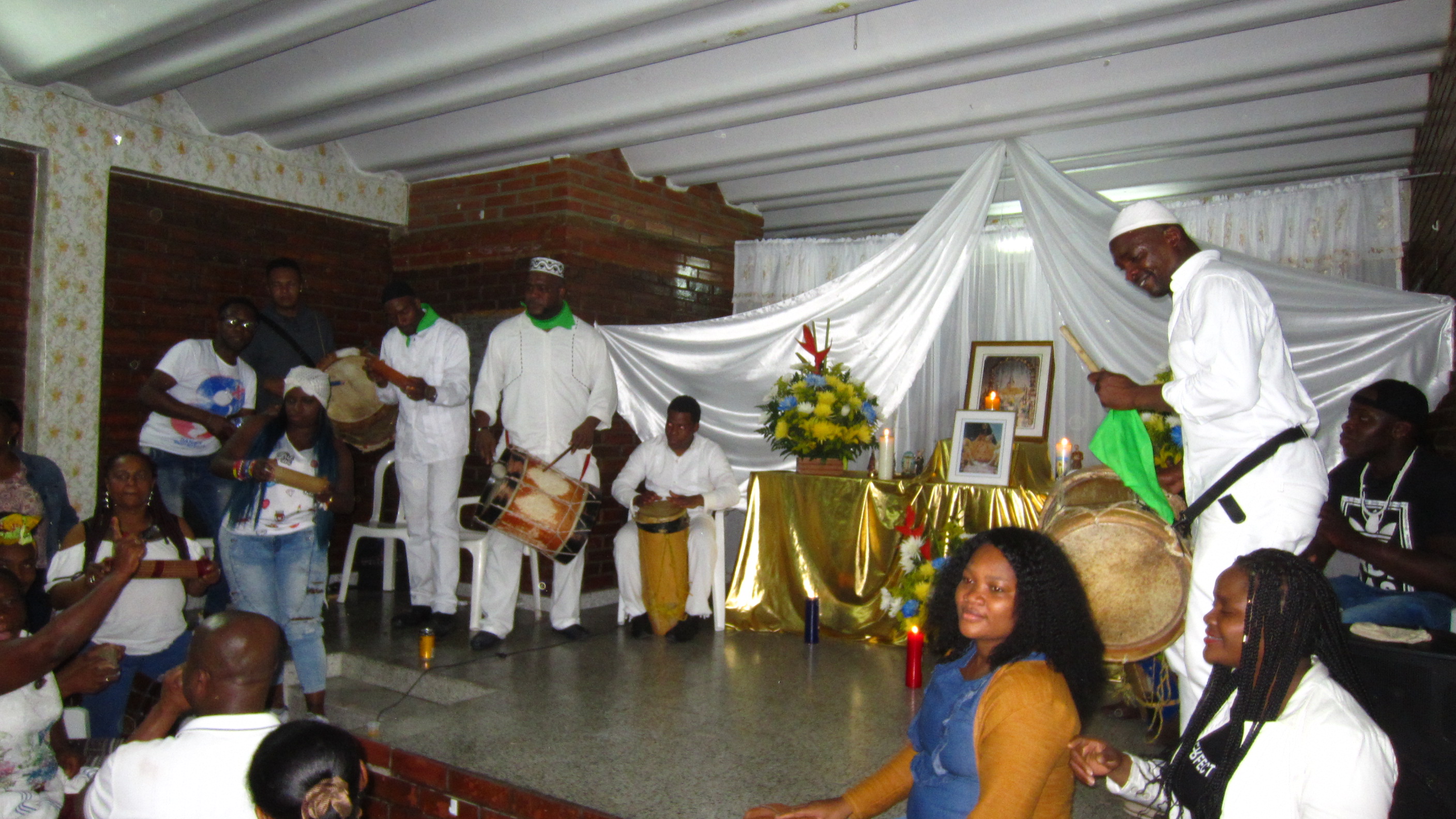


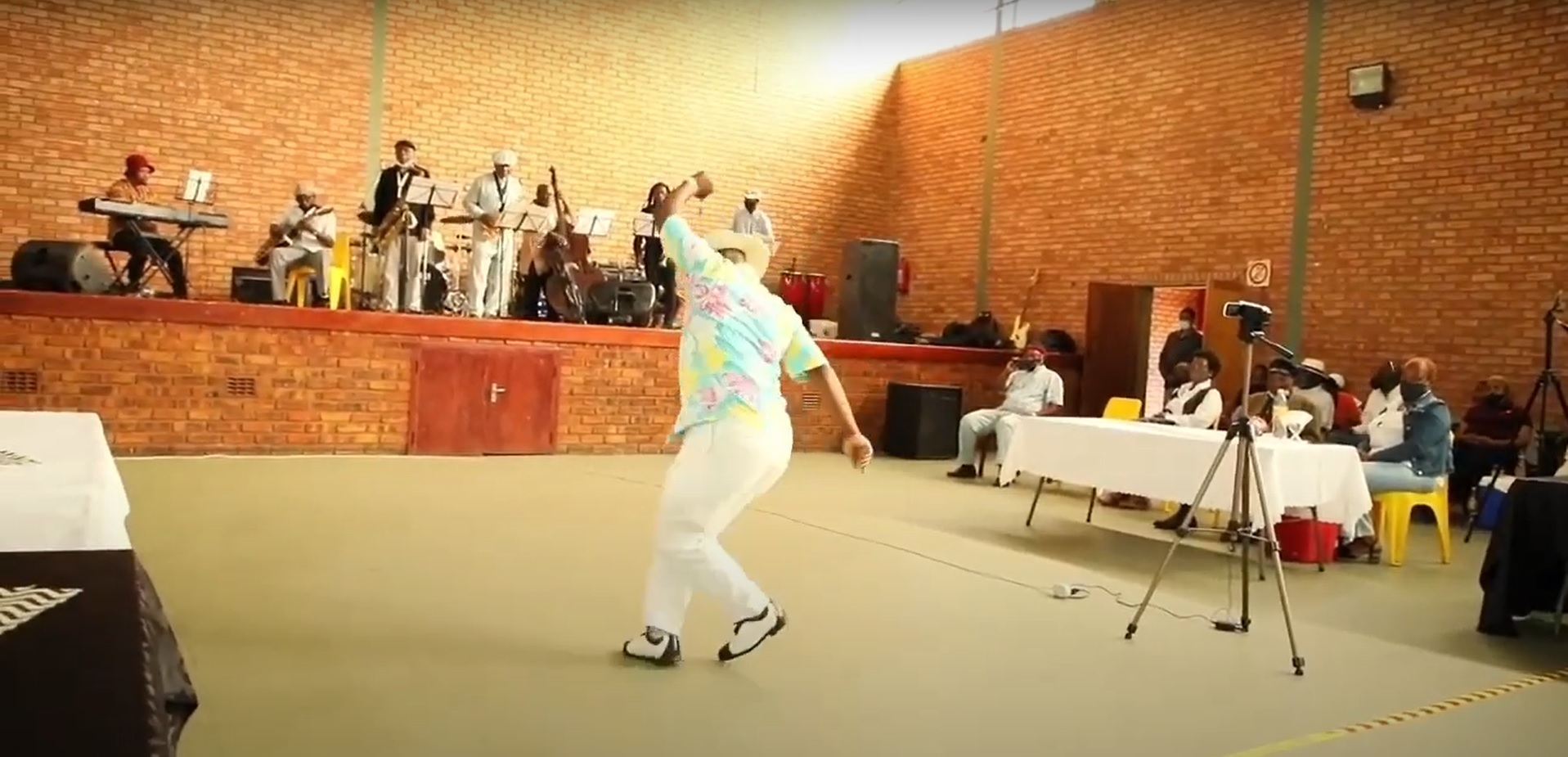
1.jpg)
2.jpg)

.jpg)
.jpg)



-Caruaru-Pernambuco-Brazil-Photo-by-Carvalho.jpg)


-2.png)
-1.jpg)
-2.jpg)
-3.png)
-4.jpeg)
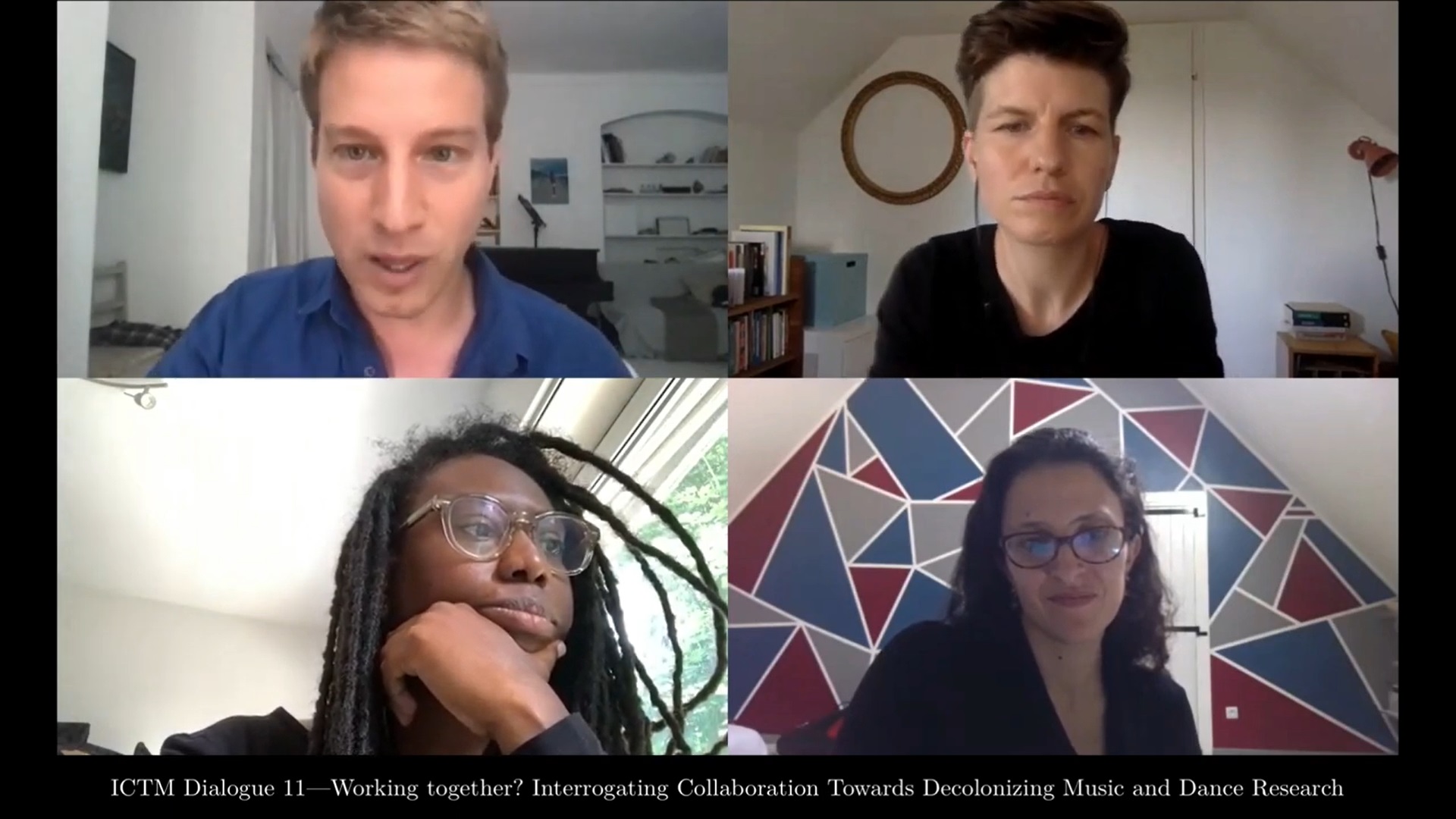


-Music.jpg)