This path was created by Marcella LeGrand. The last update was by Anne Paxton.
Legacies of Liberation
If these people, who were so much worse off than the people today, could conquer their slavery, we certainly can do the same thing.
Jacob Lawrence
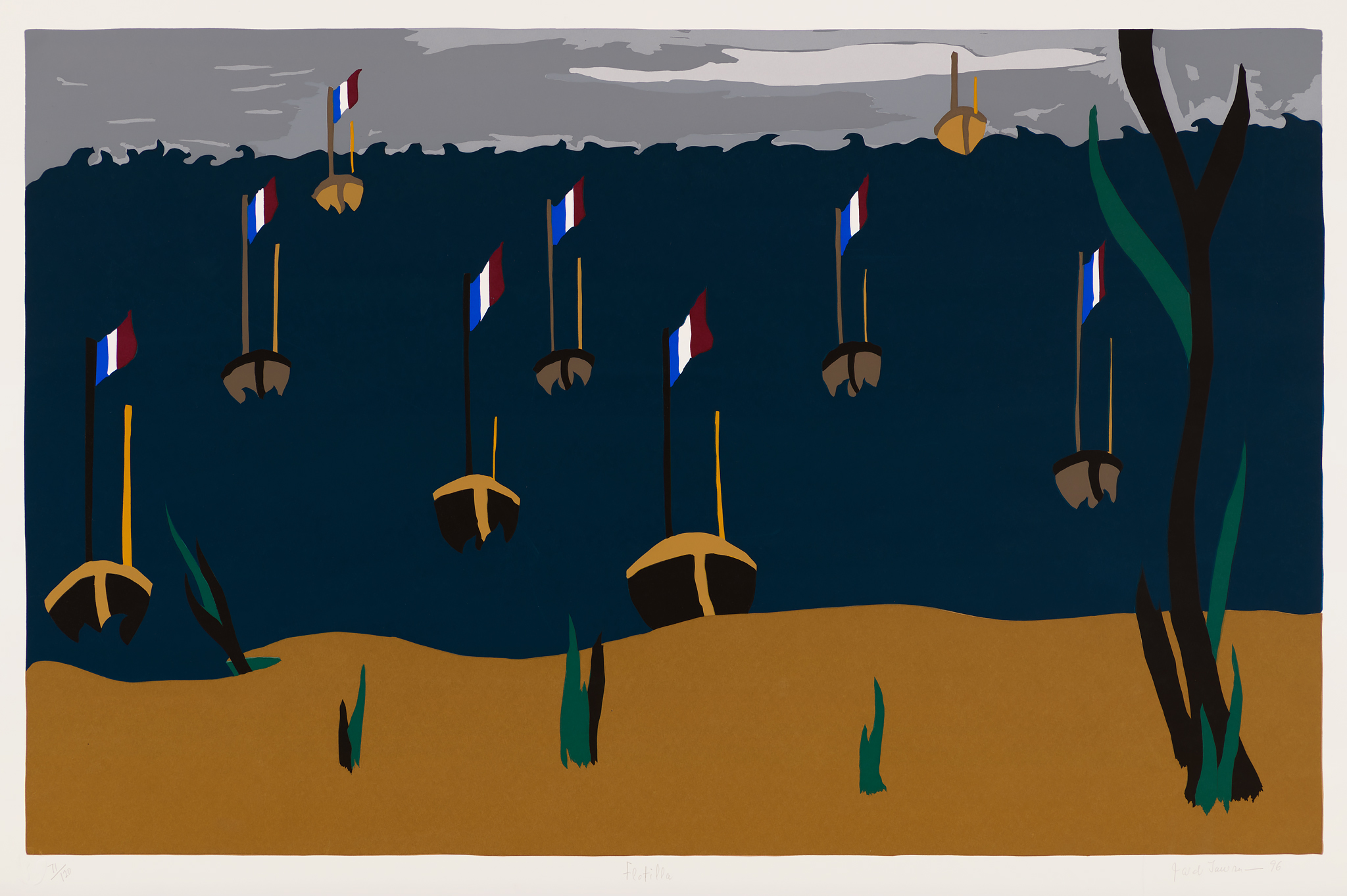
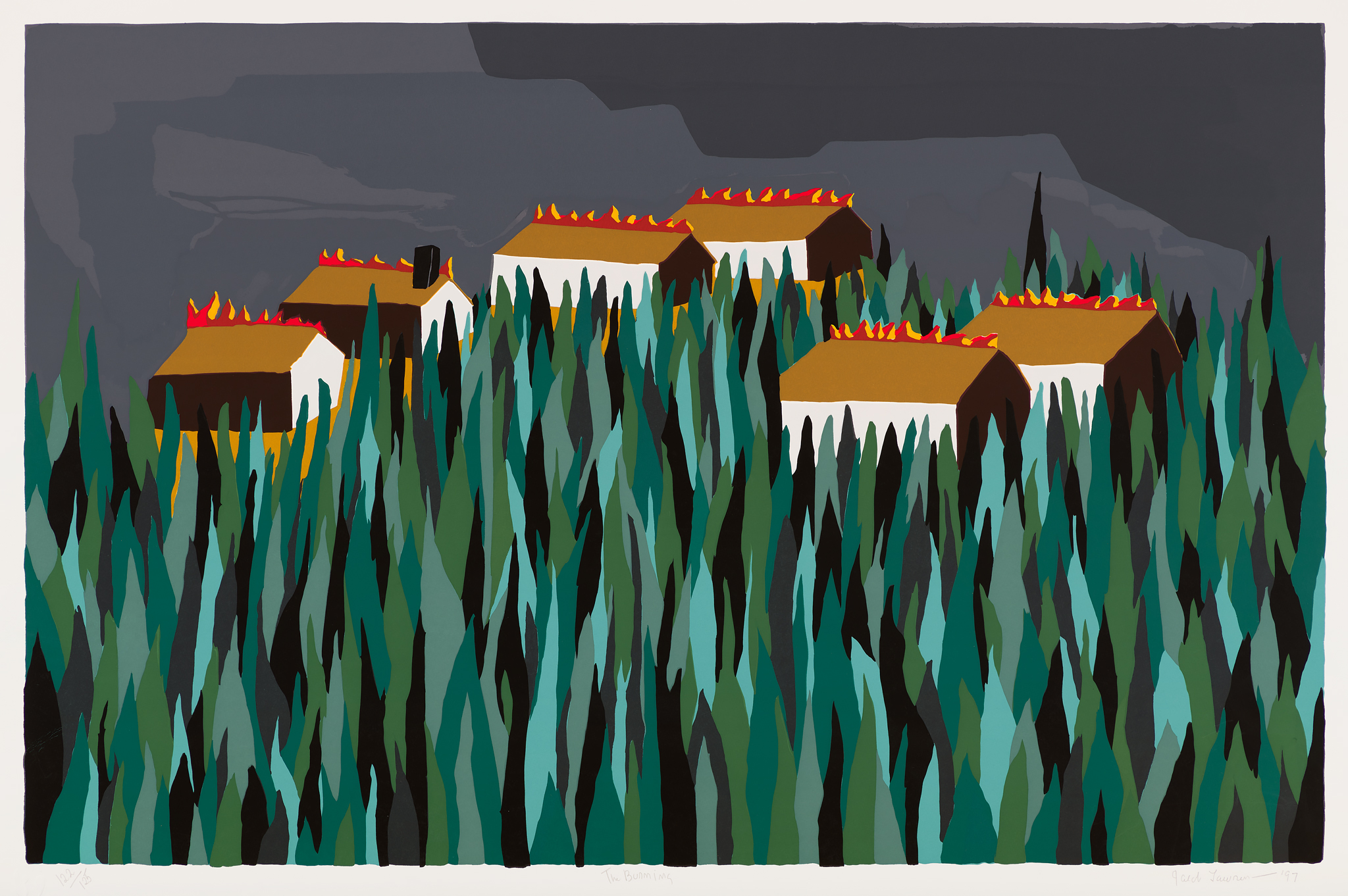
High horizons, cramped gray skies, violence approaching, and chaos ensuing – Flotilla captures the moment when France advanced to crush the revolts by any means necessary. On the other hand, The Burning illustrates the extreme measures Haitian rebels took to prevent the reinstatement of the French plantation system, including burning their own homes to protect their town and preserve the roots of their revolution. Together, these two scenes reflect the oppressive atmosphere revolutionaries had to endure in their fight for freedom.
On the road to freedom, the French retaliated against the rebels and sent various troops to shut down their revolts. France exerted its control over Haiti through violence, aiming to maintain the oppression of the enslaved to protect its economic and political interests. Yet the Haitian people never wavered in their fight for freedom even at the cost of their homes. The Haitian Revolution was one with many victories and losses on both sides. Lawrence emphasizes that the fight for freedom is always worth the struggle – a powerful story of how sacrifices and victory are intertwined.
This page has paths:
- The Life of Toussaint L'Ouverture in Print Sibel Zandi-Sayek