Scalar's 'additional metadata' features have been disabled on this install. Learn more.
Ghost Metropolis: Los Angeles from Clovis to Nixon
Main Menu
Regimes: Ruling the Los Angeles Region from the Late Pleistocene to the 21st Century
Places and Paths of Los Angeles
Manna From Hell: Power and Politics from Region to World Power
Shadows: Visual Cultures and Mass Media of a Regional and Global Power
Segregated Diversity: The Geosocial Formation of Social Justice in the Late Twentieth Century
Richard 37th: Nixon, Los Angeles, and World Power
The American 1989: Los Angeles at the Climax of the 20th Century
Narrative Essay
Bibliographies, Filmographies, Gazeteers, Indexes
Mapping the Past: Theory, Methods, Historiography
Path
Credits
Root
Phil Ethington
e37d40405599cccc3b6330e6c4be064cc03ef7a5
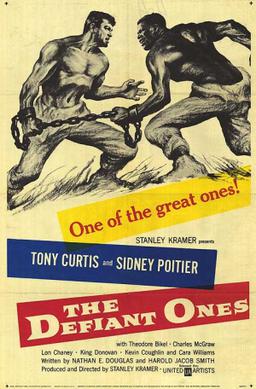
The Defiant Ones (1959)
1 2015-10-21T20:20:47-07:00 Phil Ethington e37d40405599cccc3b6330e6c4be064cc03ef7a5 677 1 Publicity Poster. Fair use claim for critical study with scaled-down copy. Embedded from wikimedia publication. plain 2015-10-21T20:20:47-07:00 Phil Ethington e37d40405599cccc3b6330e6c4be064cc03ef7a5This page has paths:
- 1 2017-01-19T11:59:15-08:00 Phil Ethington e37d40405599cccc3b6330e6c4be064cc03ef7a5 Phil Ethington, "The Humanities, the Digital, and Difference," keynote lecture for Studio Chi, DePaul University Phil Ethington 8 gallery 2017-01-19T12:44:37-08:00 Phil Ethington e37d40405599cccc3b6330e6c4be064cc03ef7a5
This page has tags:
- 1 2018-08-15T06:56:34-07:00 Phil Ethington e37d40405599cccc3b6330e6c4be064cc03ef7a5 1950s Phil Ethington 2 Decadal Tag vistag 2018-08-15T07:23:42-07:00 Phil Ethington e37d40405599cccc3b6330e6c4be064cc03ef7a5
This page is referenced by:
-
1
2018-07-13T23:28:19-07:00
The New Hollywood in the Old Hollywood, 1950s
1
plain
2018-07-13T23:28:40-07:00
Prelude to the New Hollywood: Innovation and Stasis Before Bonnie and Clyde
The artistic, uncensored, and socially, politically critical cinema that we know as the New Hollywood did not suddenly appear in 1967 with Bonnie and Clyde (1967). Its breakthrough screenwriter-directors, such as Stanley Kubrick, had been in the business making innovative and boundary-crossing films and television since the 1950s. Sam Peckinpah wrote hundreds of television scripts in the 1950s before moving into directing by about 1960 (although writing remained a major part of his output), Arthur Penn had been making television dramas until he directed Paul Newman in The Left-Handed Gun in 1958. The late 50s-early 60s tranformation of filmmaking was a very international movement, rooted in the alternative fringes of those years. Everyone was influenced by Akira Kurosawa's films coming out of Japan, especially The Seven Samurai (1956). And all were influenced by the French Nouvelle Vague (New Wave) led by François Truffaut and Jean-Luc Godard since the early 1960s. None more so than Peter Bogdanovich, a prolific professional critic who modeled his career on those of Truffault and Godard, choosing after 1968 to become a director himself. Bogdanovich, in turn, absorbed the Avant-garde / Popular-Front Old Left of 1930s-40s Classic Hollywood, through Orson Welles.
Some of the New Hollywood directors had already made edgy films by the early 1960s, such as Kubrick's 1964 Dr. Strangelove. By the end of the decade, there followed a flood of even younger directors and actors, Frances Ford Coppola, Diane Keaton, Gordon Parks Sr and Jr, Peter Bogdanavich, Melvin and Mario Van Peebles, Cybill Shepard, Peter Fonda, Jane Fonda, Dennis Hopper, LeRoy Jones/Amiri Baraka, Jack Nicholson, and Clint Eastwood, George Lucas and Stephen Spielberg...the list goes on, of still-powerful and still-productive New Hollywood names, many of whom are still powerful and productive in the second decade of the 21st century.
Breaking free from the ideological censorship of the Cold War National Security State (Trumanism and McCharthyism) began significantly earlier than the New Hollywood of the late 1960s, early 70s. It began in the senescence of the Old Hollywood. Even the Hollywood of the Major Studios had the modicum of courage that it took to produce films in the 1950s that addressed addressed racial inequality and Civil Rights. Two Sidney Poitier vehicles: The Edge of the City (M-G-M, 1957) and The Defiant Ones (United Artists, 1958), feature a black-white male bonding. Poitier plays Cassavettes's mentor and friend in The Edge of the City, while Poitier and Tony Curtis are forced by the steel bond of handcuffs to cooperate as they both escape a chain gang in The Defiant Ones. M-G-M and United Artists studio Execs knew that these films would make no box office in the South (no exhibition market). This is a patently segregated spatial market. But because the former Confederate states only held about 25% of US population by 1960, they could afford to address the "topical" questions forced on the American mass public sphere by the Civil Rights movement.
In the main, however, Hollywood had reached the apogee of its original innovations. The Classic Hollywood of the "seamless style" sought ever more refined methods of removing consciousness of a reality/fiction divide in the movie theaters. The seamless style seeks to draw the viewer into the screen virtually, so that she or he forgets that the reality before them is a movie. The eye-level match and "shot-reverse-shot" simulate an actual conversation between the viewer and the actor on screen. Bogart playing Rick conversing with Ingrid Bergman playing Ilsa in Casablanca (1942), is a very convincing simulation of the viewer assuming the POV of the actors themselves. By the 1950s, lighting, staging, cinematography, had all be executed so convincingly, that, ironically, movies actually started to seem unreal again. The lived world is not a "seamless" world, but a messy and chaotic one. That is precisely why Truffaut and Godard introduced the "Jump Cut," an intentional and very visible time-gap in the the action depicted in the film: to puncture a spacetime hole in the "invisible" style of Classic Hollywood.
Hollywood, even with an artful script, could make Rome look sterile and freshly cleaned in Roman Holiday (1953). Gregory Peck and Audrey Hepburn's performances, supplied with Dalton Trumbo's ghostwritten screenplay, make for a very fine product of the cinematic industries. But the strains on Hollywood in the McCarthy-anticommunist repression of the 1950s were very real and constraining as well. Dalton Trumbo was living in exile from the McCarthy-Eisenhower/Nixon repression in Mexico City when he wrote Roman Holiday. Fellow screenwriter Ian McLellan Hunter fronted for Trumbo and received both screen credit and Trumbo's Academy Award for Best Screenplay).
Combined government, industry, political media policing of the 1950s bored the American public into a blandness so insipid that married couples were forced to sleep in separate beds, no one had sex, no one bled to death, no one had political views critical of the two major and official political parties. We can only imagine that the masses thirsted for greater freedom of expression, and such would not be pure speculation. Almost all of the "Blockbusters"--movies grossing or earning hundreds of millions, and eventually billions, of dollars, were all made after 1967.
It was not simply the case that Television came along in the 1950s and stole away the affection of the audience. The movie product itself had outworn its fascination. The industrial sameness of Hollywood films had become all too familiar. By 1948 Americans were watching an average of 33 films per year. Two generations had already been socialized in movie culture, sharing culture-heroes and role models and legends about films and actors and dreams. But the industry had merely perfected a style established in the 1920s, and stopped questioning the format. That is why the New Hollywood has succeeded where the Old Hollywood failed. The New Hollywood broke down the monolithic style and the grand illusion of keeping up the illusion. The New Hollywood disrupted the viewer's attention with reminders of the camera (hand-held in Kubrick's Dr. Strangelove, 1964), or by using non-actors, extras drawn from a real location (Peckinpah's Wild Bunch, 1967). Truffaut and Godard's "Jump Cut" making the movie making visible, and putting movies, television, and radio within the movie frame, as Bogdanovich did in The Last Picture Show, re-introduced a Cervantean reflexivity to filmmaking.