Bloodbath: New Hollywood, New Right, and the Carnography of Power, 1960s to 1990s
In an equally revolutionary and reactionary age, the public sphere that connects state and society underwent a profound transformation from the 1960s through the 1990s. Los Angeles as a site of global production of mass culture ("Hollywood"), lost its dominance of the global art and business, after its corporate monopolies disintegrated and globalization redistributed regional concentrations, from Vancouver to Hong Kong and Mumbai to London and beyond. Here, "Hollywood" means the regional Los Angeles institutions and their dominance of the global movie making from the 1920s-1960s. The "New Hollywood" of the 1970s-1990s operated very differently, sprouting a new ecosystem in each and every decade since 1960s, so a critical assessment of the ways "Hollywood" functioned in larger or wider social spheres must consider the moving target of its morphing dynamic form. This essay focuses on the "New Hollywood," which was the hinge of the overall transformation.
This short essay does not attempt a comprehensive account of the rise of the New Hollywood. Instead, it has a very specific set of claims to make. It cuts a focused path to follow the linkages between the transformation of the mass-mediated public sphere, the fall of censorship, the rise of the New Right under Nixon-Reagan, and the urban rebellions and uprisings, along with cycles of repression and incarceration. In short, a bloodbath that feeds on itself cinematically.
The transformation of the cinematic industries (including movies and television) in the 1960-2000 period involved several interlocking dimensions:
1) The communications infrastructure of the United States and much of the globe underwent a dramatic restructuring with the rise first of Broadcast Television, then Cable Television, then the Internet, from the mid-1950s to the mid-1990s.
2) A centuries-old system of intolerant censorship enforced by the laws, the courts, by politics, and by the media industry itself, suddenly disintegrated in the 1960s, allowing almost complete freedom of expression concerning sex, violence, subject matter, and language. The Supreme Court finally fulfilled the promise of the 1st Amendment for true freedom of expression, and the industry immediately exploited sex and violence, creating a spectrum from respected art to hard-core pornography. Something sinister escaped the liberation, however: the carnography of power.
3) Ownership and the business model for making movies, TV shows and the distribution of sports and performance entertainment, changed several times since the 1960s and continues in flux in the early 21st century. In 1946 the movie industry was an oligopolistic, highly concentrated industry, run by heavily capitalized motion picture firms. By the late 1950s the eight major studios had lost control of distribution and faced huge audience losses to television. By the early 1970s the once-proud "Majors" were bought up by giant international conglomerates, which re-inscribed oligopoly at a global scale of ownership. But the rise of Cable and the Internet fragmented the industry once again, opening up major new pathways for entrepreneurship, content production, and even participatory, democratized mass communication.
4) As all of these changes were underway, movies, TV, and the mass media also served as America's "public sphere," where the most important issues of the day were discussed and represented. It mattered enormously that creators of movies and TV programming could at long last, after a century of struggle, exercise relatively "free" speech rights. The catch was that the messages expressed by the new movies, television, and music forms became fodder for the political realignments underway. Culture, thanks to mass media, became highly politicized, generating the "culture wars," and ultimately reinforced a pronounced turn to the Right in American politics, lead by a Nixonian politics of fear.
"Bloodbath": Recasting Mass Media in the Postwar Decades
Classic Hollywood, from the Silents of the 1920s to the Sound era and the end of the Second World War, had achieved a sort of industrial perfection, with vertical integration of all phases of production and distribution from scriptwriters and sound stages to stables of actors on long contracts, to marketing and distribution. Eight "Major" studios dominated not only national but global production of motion pictures. The all-time high audience figures for motion pictures was reached in 1946, when at least 78 million to as many as 90 million Americans paid for a movie ticket each week.Note During the year 1946 alone, the motion picture industry sold 4.5 billion tickets in the United States, which translates to 33 movies consumed for every American woman, child, and man that year (Sidgwick 2002). The most profitable years for Hollywood's Major studios were also 1946 and 1947. Paramount led the sweepstakes with $39.2 million in profit in 1946. Warner peaked at $22.1 million in profit in 1947, and RKO reached its high of $12.2 million in that year.That was, until the One-Two Punch: 1) Supreme Court's 1948 Paramount Decision (United States v. Paramount Pictures, Inc., 334 US 131. And 2) Television. In 1947 American manufacturers produced only 117,000 television sets per year. By 1953, more than 7 million television sets were produced, and I Love Lucy was dominating the airwaves. Cinema audiences dropped in almost direct proportion to the increase in television audiences in the 1950s.
By 1956 Warner's profits were only 10% of its 1946 figures, a mere $2.1 million. By 1958 Warner lost $1,000,000. "the first of its kind since 1934." (Casper 2007: 60-63). The major studios struggled during the 1960s with "low to modest" profits. Then, from 1969-1974 came the "Bloodbath," a period of staggering losses, totaling approximately $600 million across the industry. "Paramount was $2 million in arrears in 1970; $22 million in 1971." Fox lost $36.8 million in 1969 and a staggering $70.4 million in 1971. (Casper 2011: 47-8).
The steep decline of Classic Hollywood was matched apace by the steep rise of Television. By 1971, movies hit an all-time low of 15.8 million movie-goers every week. But Television, by 1976 had 70.5 million households--96.4%--had televisions. All of these millions of households received electromagnetic signals through the air: "airwaves." That new television market had a footprint: The suburban preponderance of population that had been reached by 1970, when more people lived in suburban municipalities than either those who lived in central cities or those who lived in rural areas. The 1970s was unquestionably the Age of Suburbia.
The "Paramount Decision"--taking its name only from the first of the eight major studios named in the suit--applied to all of them: The "Big Five" (Paramount Pictures, Inc, Radio-Keith-Orpheum Corp. (aka RKO); Loew's, Inc. (aka Metro-Goldwyn-Mayer); Twentieth Century-Fox Film Corp.; and Warner Bros Pictures, Inc.) and the "Little Three" (Universal Corp.; Columbia Pictures Corp, and United Artists Corp.). Hollywood since as early as Thomas Ince had operated on a factory-like model. Like auto showrooms for General Motors or Ford, theaters owned and branded by Paramount or Warner functioned like showrooms for a full range of film genres. The industry had come to rely on complex financial interdependencies between production and exhibition, refining and profit-maximizing schemes like "pooling," in which the profits from all of a quarter's films were pooled to off-set losses to any one of them. The Majors did not have a numerical monopoly on distribution, but Its 3,137 of the 18,076 theaters nationwide were disproportionately "first-run city-center movie houses that commanded 47 percent of the yearly box-office take." (Casper 39).
The Roosevelt and Truman Justice Departments had targeted the monopolistic practices of the studios since 1937, so the writing was on the wall by the late 1940s. The 1948 7-1 Supreme Court "Decree" finally forced the studios to divorce or disinvest their exhibition wings from their production wings, which marked the beginning of the end of the old monolithic studios of the Classic Era. That industry had a very refined footprint, standing mostly in Southern California, known collectively as "Hollywood." But this "Classic Hollywood" became "Old Hollywood" in a long slide from the late 1940s through the late 1960s. By the late 1960s and 1970s, a "New Hollywood" had emerged, producing very different kinds of movies and television under very different business models.
The 1960s and 1970s upheaval also dispersed its movie-making and media-producing footprint, considerably, beyond Los Angeles, with many competing capitals of production from San Francisco and Vancouver to New York and Bollywood.. All of the major studios were bought up as relatively minor assets by huge corporate "Conglomerates" like Gulf+Western (Paramount) and Seagrams (***). But the Studios were purchased because they were in a weak position, suffering major losses rather than profits, so an assessment of "Hollywood" as a major component of the United States's "ruling regimes," it is important to paint a picture not only of the new kinds of movies and images produced, but the institutional footprint of the industry as a whole, which had characterized social worlds in the region for generations.
Television was the spiderweb that captured the United States and then the world. By 1976, on the eve of the Cable Era, 70.5 million U.S. households--96.4%--had televisions. That was also the low-water mark of Hollywood movies. But the tables were turned once again within 20 years. By 1994, 98 percent, or 94 million of U.S. households had at least one television (millions of these had multiple TVs). And after another two decades, by 2010, most television screens (63%) received their signals via a hard-wired "cable," a delivery model for mass media that once again overturned all previous structures of the public sphere.
Television had a footprint: the living rooms of suburban homes by the millions across America:This landscape shifted visual entertainment from downtown movie theaters to (mostly racially White) suburban television screens, and devastated the Movie industry's oligopolistic business model. This was true all over the United States, but it was especially true in the same Southern California environment in which Movies and Television production grew up. We are talking about nothing less than "Nixonland" as Rick Perlstein dubbed it, or "Reagan Country" as it is better known: From the Southeast suburbs of Los Angeles County, then Orange County south to San Diego, was a vast regional reservoir of support for the New Right. The ground had been prepared for decades by many a John the Baptist. Billy Graham was one of the most influential, and his Southern California Crusade at the Anaheim "A"s Stadium in September 1969 was both a successor to previous Graham mass revivals, but an answer to the decadent immorality broadcast from the Liberal Democratic coalition of West LA, Hollywood, and Central LA.
The Carnography of Power: 1970s-1990s
The extensive disarray and wrenching financial crises of the broken Studio System, along with the sudden collapse of censorship in the 1960s, opened the space for filmmakers of the "New Hollywood" to explore all previously taboo subjects, leading with the naked, aggressive and vulnerable human body: sex and violence, on a spectrum from erotic fantasies to sadistic violence. This sudden emergence of legitimate critical discussion and portrayal of all subject matter has liberated millions worldwide. Although this long-fought-for artistic freedom led to countless cases of real, and ongoing emancipation, it also unleashed powerful, mass-visual/cinematic forces of exploitation and injustice. Political positions were highly polarized by late 1960s in a global upheaval that made the stakes very high. As historian Steve Ross has shown, when Hollywood has flexed its political muscles, it has done so in support of the Right more often than in support of the Left.NoteThe pioneering artists of the 1960s resembled Keats and the Shellys: a romantic and rebellious youthful movement. The New Hollywood was a powerful force not just in striking-down the long-standing limits on cinematic expression, but in the central political and moral debates of the public sphere. With the graphic violence of the Vietnam War saturating the press and television news across America and the world, Sam Peckinpah, thought America needed a Western that showed how unromantic violence really is. He said of his intent in The Wild Bunch (1969), "I wanted to show what it is like to be gunned-down." Roger Ebert declared, in his initial 29 June 1969 review that The Wild Bunch was "possibly the most violent film ever made," and yet he recognized its serious message. Peckinpah's opening scene is one of civilians slaughtered in the crossfire of armed gangs with no good guys in sight. The years of the New Hollywood's rise was also America's descent into darkness. Martin Luther King and Bobby Kennedy were assassinated in April and June of 1968; the Manson Murders took place in August of 1969; the My Lai Massacre was revealed in November of 1969; the Jackson and Kent State killings were to follow in May of 1970.
New Hollywood was a rebellious and largely youthful movement to make new and critical statements cinematically, while also striking-down the long-standing limits on cinematic expression, and while is is typically dated as emerging suddenly in teh late 1960s, it actually grew organically out of the same wave of Romantic cultural production as Beat literature and Jazz music in the 1950s, continuing through Bob Dylan and the Rock revolution in the early 1960s.
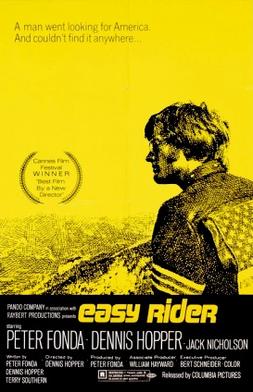
New Hollywood did not suddenly appear in 1967 with Bonnie and Clyde (1967). Its breakthrough screenwriter-directors, such as Stanley Kubrick, had been in the business making innovative and boundary-crossing films and television since the 1950s. Sam Peckinpah wrote hundreds of television scripts in the 1950s before moving into directing by about 1960 (although writing remained a major part of his output), Arthur Penn had been making television dramas until he directed Paul Newman in The Left-Handed Gun in 1958. The late 50s-early 60s tranformation of filmmaking was a very international movement, rooted in the alternative fringes of those years. Everyone was influenced by Akira Kurosawa's films coming out of Japan, especially The Seven Samurai (1956). And all were influenced by the French Nouvelle Vague (New Wave) led by François Truffaut and Jean-Luc Godard since the early 1960s. None more so than Peter Bogdanovich, a prolific professional critic how modeled his career on Truffault and Godard, choosing in 1968 to become a director himself. Bogdanovich, in turn, absorbed the Avant-garde / Popular-Front Old Left of 1930s-40s Classic Hollywood, through Orson Welles (who actually lived with Bogdanovich late in his life). Some of the New Hollywood directors had already made edgy films by the early 1960s, such as Kubrick's 1964 Dr. Strangelove. There followed younger directors and actors, Frances Ford Coppola, Diane Keaton, Peter Bogdanavich, Cybill Shepard, Peter Fonda, Dennis Hopper, Jane Fonda, LeRoy Jones, Jack Nicholson, and Clint Eastwood, all of whom established new high bars in creative achievements.
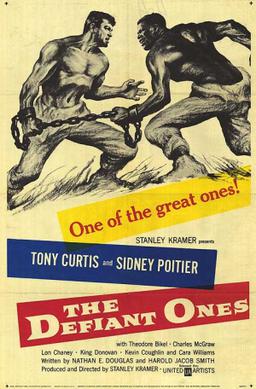
And even Hollywood of the Major Studios made films in the 1950s that addressed real social issues, especially the Civil Rights movement. Two Sidney Poitier vehicles: The Edge of the City (M-G-M, 1957) and The Defiant Ones (United Artists, 1958), feature a black-white male bonding. Poitier plays Cassavettes's mentor and friend in The Edge of the City, while Poitier and Tony Curtis are forced by the steel bond of handcuffs to cooperate as they both escape a chain gang in The Defiant Ones. M-G-M and United Artists was that these films would make no box office in the South. But, because the former Confederate states only held about 25% of US population by 1960, that was not a high price to pay at all.
In the main, however, Hollywood had reached the apogee of its original innovations. The Classic Hollywood of the "seamless style" sought ever more refined methods of removing consciousness of a reality/fiction divide in the movie theaters. The seamless style seeks to draw the viewer into the screen virtually, so that she or he forgets that it s a movie. The eye-level match and :shot-reverse-shot" simulate an actual conversation between the viewer and the actor on screen. Bogart playing Rick conversing with Ingrid Bergman playing Ilsa in Casablanca (1942), is a very convincing simulation of the viewer assuming the POV of the actors themselves. By the 1950s, lighting, staging, cinematography, could all be executed so convincingly, that movies actually started to seem unreal again. A medieval village in Joan of Arc, and Joan's armor itself, were just too perfect. Hollywood could make Rome look sterile and freshly cleaned in Roman Holiday (1953). and Gregory Peck and Audrey Hepburn's performances, supplied with Dalton Trumbo's ghostwritten screenplay, make for a very fine product of the cinematic industries. The strains on Hollywood in the McCarthy-anticommunist repression of the 1950s were very real and constraining as well. (Dalton Trumbo was living in exile from the McCarthy-Eisenhower/Nixon repression in Mexico City when he wrote Roman Holiday, with Ian McLellan Hunter fronting for him and receiving screen credit). In that sense, the government and the political policing of the 1950s bored the American public into demanding greater freedom of expression. This is not pure speculation. Almost all of the "Blockbusters"--movies grossing or earning hundreds of millions, and eventually billions, of dollars, were all made after 1967.
So it was not simply the case that Television came along in the 1950s and stole away the affection of the audience. The industrial sameness of Hollywood films had, perhaps become all too familiar. By 1948 Americans were watching an average of 33 films per year. Two generations had already been socialized in movie culture, sharing culture-heroes and role models and legends about films and actors and dreams. But the industry mainly perfected a style established in the 1920s, and stopped questioning the format. That is why the New Hollywood has succeeded where the Old Hollywood failed. The New Hollywood broke down the monolithic style and the grand illusion of keeping up the illusion. The New Hollywood disrupted the viewer's attention with reminders of the camera (hand-held in Kubrick's Dr. Strangelove, 1964), or by using non-actors, extras drawn from a real location (Peckinpah's Wild Bunch, 1967). Truffault pioneered the "Jump Cut" to make cinema itself visible. Movies and Television and Radio within the movie frame, as in Bogdanovich's Last Picture Show, re-introduced a Cervantean reflexivity to filmmaking.
This short treatment does not attempt a comprehensive account of the rise of the New Hollywood. Recall that the purpose of this essay is to draw linkages, between the transformation of the mass-mediated public sphere, the fall of censorship, the rise of the New Right under Nixon-Reagan, and the urban rebellions and uprisings, along with cycles of repression and incarceration. In short, what was ultimately unleashed is a real geopolitical bloodbath that feeds on itself cinematically, and vice-versa.
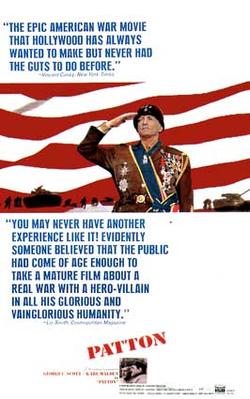
I shall consider the following films as convergent with the direction and scope of ideology and nakedly violent political and social power in those years: Bonnie and Clyde (1967; Valley of the Dolls (1967); Rosemary's Baby (1968); 2001: A Space Odyssey (1968); The Wild Bunch (1969); Easy Rider (1969); Kelly's Heroes (1970); Patton (1970); A Clockwork Orange (1971); Dirty Harry (1971); The Last Picture Show (1971); Behind the Green Door (1972); The Godfather (1972); Deep Throat (1972); Mean Streets (1973); The Devil in Miss Jones (1973); Enter The Dragon (1973); High Plains Drifter (1973); The Godfather, Part II (1974); Chinatown (1974); Taxi Driver (1976); Apocalypse Now (1979).
In the 1960s, two frameworks of censorship collapsed simultaneously: the Supreme Court-determined law on pornography; and 2) the Motion Picture Association of America's self-censorship system, called "The Code," which was terminated in 1966 and in 1968 replaced by the "Ratings" system. The MPAA Ratings (which since 1966 have evolved continuously, from SMA (Suggested for Mature Audiences), to M (Mature" and G (General) 1968, to 1970, G (General), R (Restricted) and an unofficial X for explicit content), to further changes through 1990s. Since teh late 1990s, the ratings have been: Rated G: General audiences – all ages admitted; Rated PG: Parental guidance suggested – some material may not be suitable for children; Rated PG-13: Parents strongly cautioned – some material may be inappropriate for children under 13; Rated R: Restricted – under 17 requires accompanying parent or adult guardian; Rated NC-17: No children under 17 admitted [1990–1996] / No one 17 and under admitted [1996–present]. Note that "X" was abandoned by the MPAA because "X" was rapidly appropriated by the pornographic film industry in the 1970s, and permanently branded in the popular mind with porn. The Ratings accomplished several things. Implemented under the leadership of MPAA President Jack Valenti (President Johnson's former Press Secretary), the "ratings" to restrict by age had been implemented already, for specific files, as the McCarthy Era thawed in the late 1950s and early 1960s. Elmer Gantry (1960) Splendor in the Grass, and Stanley Kubrick's adaptation of Vladimir Nabokov's Lolita (1962) were all age-restricted (16 and up for Splendor; 18 and up for Elmer Gentry and Lolita). Indeed, the Roman Catholic Church's own Legion of Decency had been pushing for a ratings system for years, to warn parents and youth away from certain content. (Casper 2011: 118-9)
It seems that neither the Legion of decency, nor the relatively conservative Jack Valenti, appreciated how many producers and how many movie-goers would prefer to see films rated R or X, and how the creation of these categories virtually invited graphic sex and violences, artistic or not, emancipatory or reactionary and exploitive. They were not watching the rapid developments in the un-censoring of pornography.
As Roger Darnton showed, the publishing of political dissent and sexual pornography have long been linked. Rousseau and Voltaire published from Switzerland because it was also an uncensored pornography publishing center, and books could be smuggled easily enough into France and the rest of Europe. The suppression of free speech in the 1950s shuddered when assailed several times by the Civil Rights movements, broadly conceived. McCarthyite America was a thought, policed, mockery of a marketplace of ideas. But Beats and Homophiles and Feminists asserted their rights and won them. LA-based Hugh Hefner's victory in the commercial publishing Playboy in December 1953 with Marilyn Monroe's nude 1949 calendar shoot, was a breakthrough for the mainstreaming of aesthetic nudity, at least. Hefner was an early and steadfast financier and organizer in the Civil Rights movement, founding, ultimately, in 1980, the Hugh Hefner First Amendment Award.
A series of pornography cases came before the U.S. Supreme Court in the 1950s-70s that struggled to create clearer definitions of that "obscene" and therefore not protected by the first Amendment. The 1868 "Hicklin Test" ("deprave and corrupt those whose minds are open to such immoral influences) was abandoned in Roth v. United States, 354 U.S. 476 (1957), restricted definition s of unprotected "obscene" material to that whose "dominant theme taken as a whole appeals to the prurient interest" to the "average person, applying contemporary community standards." The new keywords were "taken as a whole" and "community standards." Roth allowed the flourishing of a range of relatively explicit material, so long as it belonged to a work that taken as a whole was not "prurient," (that is, was serious), that the standard for this distinction would be "community standards."
Under Nixon's 1969 Chief Justice appointee, Warren Burger, a majority of the Supreme Court agreed to crack down on the proliferation of pornography, imposing in 1972-1975 a new and clarified three-prong test of "obscenity," Miller v. California 413 U.S. 15 (1973). This three-part "Miler Test" is stated as follows:
- "Whether the average person, applying contemporary community standards", would find that the work, taken as a whole, appeals to the prurient interest,
- Whether the work depicts or describes, in an offensive way, sexual conduct or excretory functions, as specifically defined by applicable state law (the syllabus of the case mentions only sexual conduct, but excretory functions are explicitly mentioned on page 25 of the majority opinion); and
- Whether the work, "taken as a whole, lacks serious literary, artistic, political, or scientific value." (Miller 413 U.S. at 24-25.)
This 5-4 Burger Court Decision was in direct ways a repressive law, giving states the specific definitions they needed to successfully close adult theaters and suppress publications. But the crucial phrases: "community standards" (offensive" in #2, and "lacks ..serious, literary, artistic, scientific, etc, ..value" These standards could be as depraved as any community becomes, so of course Los Angeles defined a historic low in what was "offensive" and what was "serious" Art had already been debased to commerce in Hollywood since the 1920s, so just about anything counted as art. And since nothing can offend those decadents who, since Roscoe "Fatty" Arbuckle have tried everything, the "community standards" of Los Angeles can easily be predicted to permit the portrayal of anything imaginable. Thus was born the multi-billion Pornography industry in the San Fernando Valley.
LA's Beat Avant-garde of the late 1950s and early 1960s displayed grotesquely explicit bodies in sexual ecstasy and violent agony, often metaphoric. Edward Kienholz's angriest work was his Psycho-Vendetta Case (1965), protesting the execution of condemned murderer Caryl Chessman. The titles on the work instruct the viewer to lick Chessman's arse. "Limit three Times." He also began in that year a gruesome trifecta savaging the whole tormented suburban-corporate American family, with John Doe (1959), Jane Doe (1960), and Boy, Son of John Doe (1961).
Television, like the Hollywood Movies of the Code Era (1934-1966), were not able to differentiate their product very widely. All genres needed to be acceptable to a certain definition of "family" morality: literally meant to be "mass" consumed by all genders, age groups, social classes, races, etc. Television before the Cable era remained committed to a universal, uniform mass audience. The rise of Cable after the mid-1970s broke this logjam, as the Ratings system did for movies after 1968, and unleashed all forms of expression in Television, which became majority-cable by the 1990s.
The Fall of Censorship meant that it was Prague Spring in Euro-America in 1968. The year of Nixon's triumph was also a global rebellion for peace, democracy, and freedom, when totalitarian and capitalist imperial states were equally reviled in the name of human emancipation. The films of the New Hollywood are a triumph of that Thaw, when Capital invested in the mass portrayal of its own bankruptcy.
Bodies Hot and Bleeding: Sex and Violence as Commodities Left and Right
Leaping into Hollywood's "Bloodbath" of the years 1967-74, a breathtaking array of writers, directors, actor-directors, auteurs, and producers with seemingly unlimited ambitions and creative talent typical of any Golden Age suddenly made monthly headlines with films that grabbed America's attention. The standard reference point for the New Hollywood's arrival was Bonnie and Clyde (1967). Many, like Peter Bogdonavich's The Last Picture Show (1971) were hailed as artistic masterpieces. Francis Ford Coppola's The Godfather, while also critically acclaimed as great art was a huge success at the box office as well, proving that art and commerce were once again compatible.A typical alphabetized list of the leading writers and directors of the New Hollywood is also revealing of fundamentally important fact. None were women: Woody Allen, Robert Altman, Hal Ashby, John G. Avildsen, Robert Benton, Peter Bogdanovich, John Boorman, Mel Brooks, John Cassavetes, Michael Cimino, Francis Ford Coppola, Brian De Palma, Clint Eastwood, Miloš Forman, Bob Fosse, William Friedkin, Monte Hellman, George Roy Hill, Dennis Hopper, Norman Jewison, Stanley Kubrick, George Lucas, Sidney Lumet, Terrence Malick, Paul Mazursky, John Milius, Paul Newman, Mike Nichols, Alan J. Pakula, Sam Peckinpah, Arthur Penn, Roman Polanski, Sydney Pollack, Bob Rafelson, Franklin J. Schaffner, John Schlesinger, Paul Schrader, Martin Scorsese, Steven Spielberg, Robert Towne.
Women as actors, however did figure prominently among the greatest new talents of the New Hollywood, Ruby Dee, Diane Keaton, Ali Magraw, Cybill Shepherd, Angelica Huston, Shelley Duvall. But in the New Hollywood's New Hierarchy, event eh best women talent were paired with the Leading Men of the New Hollywood: Polanski landed Sharon Tate as a starlette-trophy wife; Bogdanovich left his first wife for Cybill Shepard; Paramount's 1967 installation of New Hollywood Mogul Robert Evans, the bold-stroke transformative producer who saved Paramount with Rosemary's Baby, Love Story (1970), The Godfather (1972) and Chinatown (1974). fell in love with Ali McGraw and then lost her to Steve McQueen. Diane Keaton collaborated with, acted for, loved and lived with Woody Allen, loved and lived with Al Pacino when they both had roles in The Godfather, Part II.
These were power couples, to be sure, and it must be said that many of these women flexed their independence and strength, especially Keaton. But there is still little doubt that they were subservient to a very patriarchal, male-dominated Hollywood. It is significant that while the eLeft and right of the New Hollywood portrayed violence in opposite ways, while both exploited it for box office revenue as a sheer commodity.
While Bogdanovich and Cybill Shepard together create an ironical, unromantic portrayal of sex in, but The Last Picture Show is, like Citizen Kane, a great work of art more than a commercial success (and Welles indeed influenced Bogdanovich, his fan and sponsor, very much in this film, beginning with the decision to film it in Black and White).
It must say something significant about the New Hollywood that the landmark film signaling its arrival was noted first of all for setting a new standard for screen violence. Warren Beatty (producer/star) and Arthur Penn did set a new standard for gun violence in Bonnie and Clyde (1967), but new freedoms to portray other forms of violence would outstrip Bonnie and Clyde in the coming years. Indeed, while justly hailed as a serious film with strong anti-establishment message, it is almost predictable as a vehicle for the rebellious New Generation, recycling the genre of Romantic Bank Robber as folk culture hero of the 1930s Depression (which is also "when" it is set of course).
In 1967 Roman Polanski cast Sharon Tate as the Vampire Bride Sarah Shagal and promptly fell in love with her, marrying her in the following year. A sexy-tease comedic spoof on the Dracula genre, Polanski achieved a macabre sensuality throughout. Tate next landed the role of Jennifer North in Mark Robson's 1967 Valley of the Dolls. It was based on the best-selling potboiler novel by Jacqueline Susanne of 1966 -- "Dolls" being a euphemism for barbituate tranquilizer. The melodrama revolves around physical pleasure and emotional pain, lead characters all begin with promising careers in acting, but descend into drugs, affairs, and face the consequences of bad decisions. Sharon Tate's character Jennifer North resorts to soft-core pornography films, is diagnosed with breast cancer, and commits suicide.
The following year, 1968, Polanski got to the heart of Hollywood's misogynistic sex-violence: his victim the titular character: Rosemary (Mia Farrow), who is deceived, kidnapped, drugged, and raped by Satan himself and her body forced to bear a monster. Polanski had desired, but was unable to cast his own wife Tate in the role, overruled by ). The artistry of Rosemary's Baby lies in Polanski's psychological explorations in script and in directing the superb performances of John Cassavettes and Mia Farrow. True at least to the premise of Ira Levin's bestselling 1967 novel and Polanski's film adaptation, the violence toward Farrow is sadistic, visually graphic. The near-addiction of Hollywood to violations of female vulnerability is an element so essential to the movie business that cannot be overstated. Rape is the ever-present patriarchal cudgel and also trap of contemporary society. As practice, it keeps women in subjection. As screen portrayal, it warns women and girls that they are unsafe, and until very recently, presents the violent male as the solution to this vulnerability.
The great turning-point for Hollywood movies was achieved with Callie Khouri's screenplay and Ridley Scott's film, Thelma and Louise (1991). In the climax of Act I, the central plot element is the killing by Louise (Susan Sarandon) of Harlan (Timothy Carhart), who attempts to rape Thelma (Geena Davis) in a parking lot behind a bar where they had been dancing. Nineteen ninety-one however, was a long time to wait since the beginnings of cinema 100 years earlier. Khouri, born in 1957, was twenty years younger than the New Hollywood generation (Scott, while he began in television the 1960s, did not direct a feature film until 1977 with the Napoleonic The Duellists and played a major role thereafter with Alien (1979) and Blade Runner (1982) to generate a new era.
Screen types are really literary-dramatic types. The Knighthood and Gallant Chivalry of the protector-from-rape masculinity Hollywood descends directly from Don Quijote. (More accurately, from 12th-century Arthurian legend, 14th-century Amadis de Gaula, and its sequel by Garci Rodríguez de Montalvo's Las Sergas de Esplandián, (1495-1510) the romances of chivalry that drove Don Quijote mad (but which we only remember now because of Miguel de Cervantes's 1605-15 satire). In the medieval romances of chivalry, the villain is quite literally a rapist, and the hero a highly sexed defender of women's virtue) Since Griffith's Birth of a Nation (1915) rape, attempted rape, forced marriages have assumed an institutional permanence in Hollywood. It's a classic protection racket: We warn you that you can be sexually assaulted, and offer our services to keep you safe. It could be that movie portrayals of women's bodily vulnerability and desirability and powerlessness is more honest than banning that from the screen. Real chronic and lethal sexual violence against girls and women is an ongoing chronic horror.
So the next significant condition to evaluate is how are sexual assaults portrayed in the films? If freedom of expression must include freedom of sexual expression, for consensual pleasure not only of the participants, but of millions of freely consenting adults worldwide, then sex on the screen is not in itself inherently wrong in any way. While it usually is and certainly can be exploitative, demeaning, and morally wrong, it certainly does not need to be so.
The crucial question then, is: How are women's and girl's dignity and worth and value portrayed? On this crucial point movies vary from left to right. In Clint Eastwood's first film as writer-director-star, High Plains Drifter (1973), his character opens the movie with an attacker-sympathetic rape scene. An apparently middle-class woman named Callie Travers (played by Marianna Hill) insults Eastwood's "Drifter" and rather symbolically knocks a cigar from his mouth. "I'll to teach you some manners," Drifter says, grabs her wrist and drags her resisting and screaming into a nearby barn, where forces her into the hay, has unambiguously forceable penetration, while she verbally and physically resists in no uncertain terms: "what are you doing?" and "stop!", "no!" Eventually Callie Travers begins to enjoy the rape as pure sensual pleasure. This is nothing short of the rapist's fantasy and one of the oldest justifications men have made for sexual violence.Note
Rape is violence, of course, and the Horror genre has, since the New Hollywood, profited mightily from the fear of sexual violence,and the intersection of sex and violence in sadism. The contemporary "Ripper" genre appropriately honors "Jack the Ripper's" disemboweling and severing sadism of London's Whitehall district in the 1880s. While it is unfair to class Polanski's 1968 Rosemary's Baby with the 1974 Texas Chainsaw Massacre, Polanski in effect broke the dike with a crack that opened into a mighty flood by the end of the 20th century. It is instructive, then that in his "ultra-violent" A Clockwork Orange (1971), while he does exploit strip-tease visual arousal and rape fear, Stanley Kubrick, unlike Clint Eastwood in High Plains Drifter (1973), honestly and consistently portrays female victims as hurting and terrified.
In Rosemary's Baby (1968), Polanski embarked, little could he know it, on a real-life march of Horror. The movie climaxes with the very Devil fathering a child in a Satanic colony disguised as respectable New Yorkers. Polanski's bloody scene in which Mia Farrow's character is raped by Satan, marketed the slashed female body for mass consumption. A year later, Charles Manson, targeting both Polanski and his wife Tate, perpetrated cruel murder of the Polanski-Tate and the La Bianca households for mass media consumption--for political terror.
Sharon Tate was the "It Girl" of 1969, her celebrity and beauty made her the target Manson sought, someone whose gruesome death would shock the Whites of Los Angeles into a murderous rampage against people of color. All of this is about bodies and horror. Race war fantasies, as Mike Davis showed in his brilliant and unique essay, The LIterary Destruction of Los Angeles, have been surprisingly common motif. In Manson, the fantasies escaped the bound of slasher-genocide pulp novels and science fiction movies, to invade the public sphere in a mounting Age of Terror.
By 1969, the United States was ruled now by Nixon's New Right. His promised plan for Law and Order was given its best chance during his first year in office. He escalated the Vietnam War, and all hell literally broke loose, in battlefields and city streets. It was in this context that two major films, The Wild Bunch (1969) and Dirty Harry (1971), again set new standards for screen violence, but in very different ways.
Sam Peckinpah's Western, set on the Texas-Mexico border in 1913 during the Mexican Revolution, is loosely based on an actual band of outlaws of the same name. An aging gang of train robbers has their last ride as modern society overtakes them. The Wild Bunch stars William Holden, who plays a grizzled veteran in his 50s who maintains a code of dignity, even honor. Holden's role in Billy Wilder's Sunset Boulevard (1950) had also marked the passing of an era, but in that film, he had represented the new, rather than the old order (in Sunset, of "Hollywood," in Wild Bunch, of "The West"). From the opening to the final scene, the film offers ridicule and satire of established authorities. Pike's gang first appears as impostors wearing U.S. Army uniforms. During the Vietnam War, in the same year as the My Lai Massacre, dressing criminals in military uniform had rather obvious connotations. The railroad men, supposedly representing the Law, are also criminals, even less savory than Pike's Wild Bunch gang.
While The Wild Bunch is remembered first of all for its extreme, graphic violence, Peckinpah neither romanticized nor fantacized violence. Peckinpah wanted the violence to be horrible , not glorious. He features children throughout in contrast tot eh age and gravity of the gunfighters, and to make the audience feel their fragile vulnerability in a ruthless world. Killing is sheer waste in The Wild Bunch, so the film clearly qualifies as a critical protest--ironically enough--against the incessant violence of the Nixon era.
Not so Dirty Harry, released two years later in 1971, directed by Peckinpah's mentor, Don Siegel. Siegel's experience spanned both Old and New Hollywood, and shows in many ways how indebted the latter was to the former. Dirty Harry had a long development cycle. The screenplay is officially credited to Harry Julian Fink, R.M. Fink and Dean Riesner. The Finks wrote the first version inspired by the real-life but still (2015) unidentified "Zodiac" serial killer who murdered at least seven victims in the San Francisco Bay area in 1968 and 1969. The script revolves around a no-nonsense San Francisco cop, "Dirty Harry" Callahan, determined to capture a serial killer known as "Scorpio." That lead role was offered to a surprising number of men before Clint Eastwood assumed the role, beginning with Frank Sinatra and John Wayne. Burt Lancaster, Robert Mitchum, and even Steve McQueen and Paul Newman were offered the role. Mitchum and Newman both reportedly refused the role because it was so reactionary and unjust.
Along the way, legendary screenwriter-directors Terence Malik and John Melius had a hand in the script. Once Eastwood signed-on, he insisted on the version of the script that favored the heroic cop in defiance of a liberal establishment.
Dirty Harry, the character, is an almost seamless proponent of Richard Nixon's Law and Order political and policy agenda. This is evident throughout eh film, as Dirty Harry Callahan disrespects protocol and his hapless superiors in single-minded pursuit of a serial killer. But the complete political agenda of the film is on full display in the District Attorney scene in the last Act of the film, in which Callahan is informed by the District Attorney Rothko (Josef Sommer) that because Callahan had violated so many laws protecting suspects' rights during arrest and detention, the serial killer "Scorpio" will be released. From beginning to end of this scene, Rothko represents the "liberal" Warren Court rulings, Escobedo and Miranda are both named specifically. Written and produced at the height of Nixon's Law and Order campaign, the Dirty Harry script is practically a verbatim restatement of the Law and Order attack on the limitations placed on law enforcement in the 1960s. Dirty Harry is not just a tough cop: he represents the Republican position in 1971: that cops should be given full freedom to get tough on criminals. In this view, suspects' "rights" are a joke. Cops know well enough when they have a real bad guy, and real bad guys deserve to be either beaten, tortured to give up evidence, or summarily shot. The scene justifies naked state violence by portraying the criminal procedure protections as only helpful to criminals.
Drinking Blood: First Violence, Social Violence, and Media Violence from the 1965 Watts Rebellion to the 1992 Rodney King Uprising.
Writers, Directors, Producers, and Actors were not the only ones using violence for a social and political statement. Police violence was the first violence in the central city, the segregated city, the city of sin. Containing people to a clearly-bounded territory, and then locating/concentrating the sex trade and illegal booze and drug trade to those "bad" neighborhoods requires the violence of a City police force, plus the injustice of the real estate and other economic sectors. Ghost Metropolis documents these forms of injustice, in many essays, but here I address the question of violence as a joint production of media and state-political institutions. As Malcolm X explained from the late 1950s through his untimely assassination in 1964, not all urban violence is the same. The facts of the American criminal justice system are unequivocal: the abuse of power and force by uniformed police in the 20th century has been rampant. It was the cause of nearly every civil disorder in the 20th century. The so-called "riots" of the 1960s-1990s are best understood as geo-social explosions. Their scale and complexity defy simple, one-variable explanations.The August 1965 Watts Rebellion is well known and full documented by many major studies. This is not the place for a full review of those days of collective and state violence. We can encapsulate the macro pattern of this rebellion however, by visualizing the race-ethnic demographic geography of 1960 and 1970 in relation to the "Quarantine Area" established first by the LAPD and then by the U.S. Army, from to August 1965. This containment are almost perfectly circumscribes the African-American population, of all socioeconomic levels, throughout the 1960s. That line was much older than 1965, however. Chief William Parker had enforced racial apartheid and policed this same approximate boundaries in the 1950s, and before that, the HOLC "Redlining" maps also targeted these same spaces. An area subjected to many decades and generations of discrimination and police harassment, and containment of sex and drug trades, exploded with rebellious counter-violence after the provocation of the California Highway Patrol's treatment of Marquette Frye and his mother.
Thanks to geosocial injustice and to television, urban violence became the spectacle in the 1960s. The New Hollywood and the New Right both fed on this bloody spectacle, drinking blood in every nightly newscast. The 1965 Watts Rebellion was televised, as were all cases of civil unrest thereafter. It seems reasonable, in this light, to give broadcast television news the real credit for bringing ultra-violence to the screen, years before the graphic machine guns of Bonnie and Clyde (1967) or The Wild Bunch (1969). "A forty-seven year old Negro['s]...legs were almost cut off by twenty rounds from a National Guard machine gun at a Watts roadblock yesterday," recites one news announcer as the Watts Uprising was in progress, in August of 1965.
By 1970s, more Americans lived in suburbs than in central cities or in rural areas. By the late 1970s, the Nixon and Reagan Revolution had made fear of central city violence a stock-in-trade for campaigning, and by the 1980s, the reliance on militarized police forces to contain the "ghetto" was fully established. By this time, thousands of youths belonged to heavily armed gangs, and the cycle of violence became self-fulfilling. State legislatures dominated by white suburban districts rushed to increase the penalties for mere possession of drugs to felony status, leading to a lost generation in US prisons.
Filmmakers found the violent spectacle too valuable to miss. One of the icons of the New Hollywood, Dennis Hopper (Easy Rider 1969), made an early foray with his 1988 Colors, about the Crips (blue) and Blood (red) rivalries. But his cops-ye view of the violence achieves little more than ghetto voyeurism. Much more important were two films by African American directors: Spike Lee's 1989 Do The Right Thing, while set in gentrifying Bedford-Stuyvesant, Brooklyn, was an uncanny forecast of the 1992 Los Angeles Uprising. John Singleton's 1991 Boyz n the Hood artfully told the story of gangs and violence in a neighborhood-eye vie, reversing the perspective of Hopper's Colors. Singleton cast Lawrence Fishburne as Furious Styles an aged 1960s Black Panther imposing a Malcolm X discipline on his wayward son Tre (Cuba Gooding Jr). Tre stays out of the fray, but his friend "Doughboy," played by the rapper Ice Cube, succumbs to the deathtrap. While Hopper had been a genuine voice of the counterculture in the 1960s, his ham-handed Colors betrays his lack of local knowledge. Ice Cube provided that kind of voice from the experience of an America two decades beyond the bloodbath of the late 1960s.
Just as Singleton finished editing Boyz n the Hood in the spring of 1991, the global spectacle of the videotaped gang-beating of African American motorist Rodney King at the hands LAPD officers marched across the mediascape. LAPD's Chief Daryl Gates, a Republican, protege of Chief William Parker and a full advocate of the military suppression of "South Central" Los Angeles, exacerbated the outrage with his callous statements and televised gang sweeps. As with the 1965 Watts Rebellion, the 1992 Uprising is massively documented and analyzed in many fine studies. Here we need look no further than the transcripts of community hearings held in the aftermath of April 1992, by the Webster Commission. Voice after voice from the streets of LA testified to the concentration of crime and police brutality in the quarantined zones of South LA.
Decades of cross-feeding cinematic and televisual violence, used for political mobilization of the New Right in the escalating consumption of bodies produced a carnography of power, reached its climax in the inter-ethnic violence of 1992. Racialized bodies, not only African American, but now Latino and Korean, were targeted as "invasion" fears spread from whites to blacks. For Korean-Americans, April 1992 was a nightmare of failed police protection and unrestrained anger at their presence in formerly majority-black neighborhoods in transition. Latinos also suffered the wrath of misguided blacks in the 1992 melees. And the quarantines no longer held, as urban violence became generalized across Los Angeles's many fragmented spaces. By this time, also, the violence was literally performed for TV cameras, most notoriously as white trucker Reginald Denny was pulled from his car at Florence and Normandie and savagely beaten as television news helicopters circled overhead and the LAPD stayed safely distant.
This page has paths:
- White Shadows : Eros, Race, and Power of Global Hollywood [NEW STRUCTURE] Phil Ethington
- White Shadows: Bodies of Power for Global Hollywood Phil Ethington


This page references:
- A Clockwork Orange (1971)
- Cinematic Industries
- Dirty Harry (Warner Bros. 1971)
- The Devil in Miss Jones (1973)
- Race-Ethnic Majority Map, Los Angeles County, 1990, Showing 1992 Florence and Normandie and August 1965 Qaurantine Area
- Webster Commission Community Hearing No.3, Adams Junior High School, 151 West 30th St., Los Angles California. 10 September 1992
- Edward Kienholz, Boy, son of John Doe (1961).
- Thelma and Louise (1991) Sexual Assault Scene
- Sharon Tate and Roman Polanski in The Fearless Vampire Killers (Paramount, 1967)
- Edward Kienholz, The Psycho Vendetta Case 1960 (museum moderner kunst stiftung ludwig wien)
- Behind the Green Door (1972)
- Dirty Harry (1971) District Attorney Scene
- McCone Commission Map (1966) Overlaid on HOLC Redlining Map (1940)
- Patton (1970)
- Crowd Cheering Richard Nixon at Eastland Mall, West Covina, Los Angeles County, 14 October 1960
- McCone Commission Map Showing Quarantine Area and Incidents of Violence
- Resignation of Richard Nixon, Sears Color Television Set, Suburban Family Room, 8 August 1974
- Easy Rider (1969)
- Sharon Tate as Porn Actress Jennifer North, Valley of the Dolls (1967)
- Sites of Civil Violence across Los Angeles Metropolis, 1992
- Rosemary's Body Violated by Satan, 1968
- Rosemary's Baby (Roman Polanski, 1968)
- Bonnie and Clyde (1967)
- Race-Ethnic Majority Map, Los Angeles County, 1960, With August 1965 Qaurantine Area
- RETMA 1953 Report
- Deep Throat (1972)
- Race-Ethnic Majority Map, Los Angeles County, 1970, With August 1965 Qaurantine Area
- The Wild Bunch (1969)
- Shulman, Academy Theater (1940)
- Stanley Kubrick for Look Magazine, Chicago Downtown Movie Theaters, 1949.
- Edge of the City (1957)
- Edward Kienholz, John Doe (1959)
- The Defiant Ones (1959)
- Enter The Dragon (1973)
- Edward Kienholz, Jane Doe (1960)