Scalar's 'additional metadata' features have been disabled on this install. Learn more.
Ghost Metropolis: Los Angeles from Clovis to Nixon
Main Menu
Regimes: Ruling the Los Angeles Region from the Late Pleistocene to the 21st Century
Places and Paths of Los Angeles
Manna From Hell: Power and Politics from Region to World Power
Shadows: Visual Cultures and Mass Media of a Regional and Global Power
Segregated Diversity: The Geosocial Formation of Social Justice in the Late Twentieth Century
Richard 37th: Nixon, Los Angeles, and World Power
The American 1989: Los Angeles at the Climax of the 20th Century
Narrative Essay
Bibliographies, Filmographies, Gazeteers, Indexes
Mapping the Past: Theory, Methods, Historiography
Path
Credits
Root
Phil Ethington
e37d40405599cccc3b6330e6c4be064cc03ef7a5
Behind the Green Door (1972)
1 2015-10-17T19:56:42-07:00 Phil Ethington e37d40405599cccc3b6330e6c4be064cc03ef7a5 677 1 Publicity Poster, scaled-down, low resolution for critical study. Fair use claim. Image embedded from wikimedia publication. plain 2015-10-17T19:56:42-07:00 Phil Ethington e37d40405599cccc3b6330e6c4be064cc03ef7a5This page has tags:
- 1 2018-08-15T08:02:42-07:00 Phil Ethington e37d40405599cccc3b6330e6c4be064cc03ef7a5 1970s Phil Ethington 3 Decadal Tag vistag 2018-08-15T08:04:06-07:00 Phil Ethington e37d40405599cccc3b6330e6c4be064cc03ef7a5
This page is referenced by:
-
1
2015-10-11T16:53:55-07:00
Bloodbath: New Hollywood, New Right, and the Carnography of Power, 1940s to 1980s
437
image_header
2018-07-14T00:29:03-07:00
This essay maps the eruption of a real and a very cinematic "bloodbath," which increasingly constituted the contribution of Los Angeles and the Hollywood motion picture industry to U.S. and world power in era of the Vietnam War, Richard Nixon, and Ronald Reagan. In the midst of industry and world upheaval of the 1960s, the sudden fall of censorship in American mass media fed a new frenzy of bodily exploitation: sex and violence that was horrifyingly reflected in--and connected to--the atrocities of American domestic and foreign race wars. Motion Pictures, Television, and Digital Screens are the principal visual media that have dominated this era.
The rise of the New Right and the rise of the New Hollywood, from the 1960s to the 1980s, were deeply intertwined. Angelenos, along with many others, ultimately unleashed a real geopolitical bloodbath that still feeds upon itself cinematically, and vice-versa. That political-economic condition is a "carnography," in which the public order of the ruling regime consumes bodies visually as carnage--literally meat--in the reproduction of social power. Leaders leverage bloody images to inflict bodily harm; and cinematic industries feed on violated bodies to make bloody images that turn profits in the marketplace of thrilling fear. The synchronous rise of "terrorism" as a major global factor of geopolitics is only one result of carnographic power.
In a revolutionary and reactionary age, the public sphere that connects state and society underwent a profound transformation from the 1960s through the 1990s. Los Angeles as a site of global production of mass culture ("Hollywood"), lost its dominance of the global art and business, after its corporate monopolies disintegrated and globalization redistributed regional concentrations, from Vancouver to Hong Kong and Mumbai to London and beyond. Here, "Hollywood" means the eight-studio-dominant regional Los Angeles motion picture institutions, which held the majority of global movie production and market share from the 1920s-1960s. The "New Hollywood" of the 1970s- onward operated very differently, sprouting a new ecosystem in each and every decade since 1960s, so a critical assessment of the ways "Hollywood" functioned in larger or wider social spheres must consider the moving target of its morphing dynamic form. This essay focuses on the "New Hollywood," which was the hinge of the overall transformation.
"Bloodbath": Recasting Mass Media in the Postwar Decades
Classic Hollywood, from the Silents of the 1920s to the Sound era and the end of the Second World War, had achieved a sort of industrial perfection, with vertical integration of all phases of production and distribution from scriptwriters and sound stages to stables of actors on long contracts, to marketing and distribution. Eight "Major" studios dominated not only national but global production of motion pictures. The all-time high audience figures for motion pictures was reached in 1946, when at least 78 million to as many as 90 million Americans paid for a movie ticket each week.Note During the year 1946 alone, the motion picture industry sold 4.5 billion tickets in the United States, which translates to 33 movies consumed for every American woman, child, and man that year (Sidgwick 2002). The most profitable years for Hollywood's Major studios were also 1946 and 1947. Paramount led the sweepstakes with $39.2 million in profit in 1946. Warner peaked at $22.1 million in profit in 1947, and RKO reached its high of $12.2 million in that year.
That was, until the "one-two" stabs, followed by a bloodbath: The first stab was Supreme Court's 1948 Paramount Decision (United States v. Paramount Pictures, Inc., 334 US 131. The second stab was Television. By 1956 Warner's profits were only 10% of its 1946 figures, a mere $2.1 million. By 1958 Warner lost $1,000,000. "the first of its kind since 1934." The major studios struggled during the 1960s with "low to modest" profits. (Casper 2007: 60-63).
Then, from 1969-1974 came the "Bloodbath," a period of staggering losses, totaling approximately $600 million across the industry. "Paramount was $2 million in arrears in 1970; $22 million in 1971." Fox lost $36.8 million in 1969 and a staggering $70.4 million in 1971. That year, 1971, was not surprisingly a new low in weekly ticket sales: just 16 million, down from 80-90 million per week in 1946.NoteThe New Hollywood and the Carnography of Power: Art, Violence, and Sex in the Age of Nixon-Reagan
Leaping into Hollywood's financial "Bloodbath" of the years 1967-74, a breathtaking array of writers, directors, actor-directors, auteurs, and producers with seemingly unlimited ambitions and creative talent typical of any Golden Age suddenly made monthly headlines with films that grabbed America's attention. The New Hollywood was a rebellious and largely youthful movement to make new and critical statements cinematically, while also striking-down the long-standing limits on cinematic expression.
While the New Hollywood is typically dated as emerging suddenly in the late 1960s, it actually grew organically out of the same wave of Romantic cultural production as Beat literature and Bee-Bop jazz music in the 1950s, continuing through Bob Dylan and the Rock revolution in the early 1960s. The pioneering artists of the 1960s resembled Keats and the Shelleys: a romantic and rebellious youthful movement. The New Hollywood was a powerful force not just in striking-down the long-standing limits on cinematic expression, but in the central political and moral debates of the public sphere.
But it also "saved" the Old Hollywood spiritually, perpetuating a deeply institutionalized sexism and racism both of inclusion (the content of the films), and of exclusion (of women and minorities from artistic and management leadership in the cinematic industries).
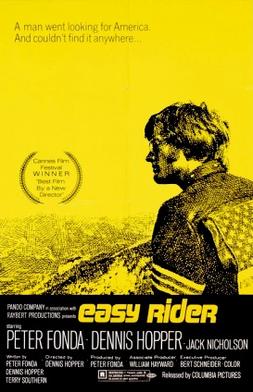
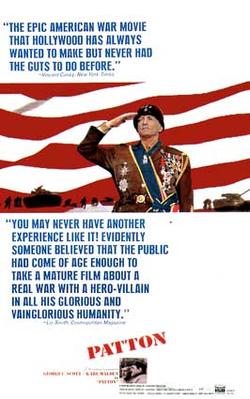
There are many more films and much more to Hollywood than I can address in this essay. I develop my argument from a history and reading of the following films: Bonnie and Clyde (1967; Valley of the Dolls (1967); Rosemary's Baby (1968); 2001: A Space Odyssey (1968); The Wild Bunch (1969); Easy Rider (1969); Kelly's Heroes (1970); Patton (1970); A Clockwork Orange (1971); Shaft (1971) Dirty Harry (1971); The Last Picture Show (1971); Sweet Sweetback's Baaadass Song (1971), Behind the Green Door (1972); The Godfather (1972); Deep Throat (1972); Mean Streets (1973); The Devil in Miss Jones (1973); Enter The Dragon (1973); High Plains Drifter (1973); The Godfather, Part II (1974); Chinatown (1974); Taxi Driver (1976); All the President's Men (1976); Apocalypse Now (1979); Illusions (1982); and Scarface (1983). -
1
2015-12-12T00:29:39-08:00
Filmography
14
Root
plain
2015-12-12T01:02:13-08:00
Spacer
La Sortie de l'usine Lumière de Lyon (Workers leaving the Lumière Factory, 1895)
Auguste and Louis Lumière invented, in 1895, the Cinématographe (a combined camera and projector), and shot, and exhibited the first motion picture as we know the genre today: one that is projected on a screen and viewed by many people simultaneously. Let that first movie, La Sortie de l'usine Lumière de Lyon (Workers leaving the Lumière Factory), introduce the essence of this new culture industry. Auguste and Louis chose first to film their own workers on whom the industry is based. My account of motion pictures follows these workers through the workshops and landscapes that they inhabited.Evangeline (1929)
Del Rio rose rapidly in Hollywood stardom. Carewe next cast her as the title character in Evangeline (1929). Another tragic tale of lovers torn apart by the British expulsion of the French Arcadians from Canada. Filmed with the Vitagraph sound technique (using synchronized 78 rpm records), Evangeline featured del Rio’s marvelous singing voice. By 1932, del Rio was considered one of the three most glamorous female stars, along with Greta Garbo and Marlene Dietrich.
spacerBack to Bataan (1945)
In Back to Bataan (RKO Radio Pictures, 1945) Ahn provided the hateful enemy for John Wayne’s heroic role. In the postwar years, Ahn continued a successful acting career, appearing in Michael Todd’s 1956 landmark, transnational production, Around the World In Eighty Days (United Artists) and with Elvis Presley in the musical comedy Paradise, Hawaiian Style (Paramount, 1966).[3] Ahn also became a major figure in the Korean American community, and served for two decades as the honorary mayor of unincorporated Panorama City. Philip Ahn’s last major role was the venerable Master Kan in the television series Kung Fu, starring David Carradine (ABC, 1972-5). He died in 1978. [Intersections and Identities]
I shall consider the following films as convergent with the direction and scope of ideology and nakedly violent political and social power in those years:
Bonnie and Clyde
Bonnie and Clyde (1967;
Valley of the Dolls (1967);
Rosemary's Baby (1968);
2001: A Space Odyssey (1968);
The Wild Bunch (1969);
Easy Rider (1969);
Kelly's Heroes (1970);
Patton (1970);
A Clockwork Orange (1971);
Dirty Harry (1971);
The Last Picture Show (1971);
Behind the Green Door (1972);
The Godfather (1972);
Deep Throat (1972);
Mean Streets (1973);
The Devil in Miss Jones (1973);
High Plains Drifter (1973);
The Godfather, Part II (1974);
Chinatown (1974);
Taxi Driver (1976);
Apocalypse Now (1979).
-
1
2018-07-14T00:32:46-07:00
"Bloodbath": Recasting Mass Media in the Postwar Decades, 1945-2000
1
plain
2018-07-14T00:32:46-07:00
"Bloodbath": Recasting Mass Media in the Postwar Decades
Classic Hollywood, from the Silents of the 1920s to the Sound era and the end of the Second World War, had achieved a sort of industrial perfection, with vertical integration of all phases of production and distribution from scriptwriters and sound stages to stables of actors on long contracts, to marketing and distribution. Eight "Major" studios dominated not only national but global production of motion pictures. The all-time high audience figures for motion pictures was reached in 1946, when at least 78 million to as many as 90 million Americans paid for a movie ticket each week.Note During the year 1946 alone, the motion picture industry sold 4.5 billion tickets in the United States, which translates to 33 movies consumed for every American woman, child, and man that year (Sidgwick 2002). The most profitable years for Hollywood's Major studios were also 1946 and 1947. Paramount led the sweepstakes with $39.2 million in profit in 1946. Warner peaked at $22.1 million in profit in 1947, and RKO reached its high of $12.2 million in that year.
That was, until the "one-two" stabs, followed by a bloodbath: The first stab was Supreme Court's 1948 Paramount Decision (United States v. Paramount Pictures, Inc., 334 US 131. The second stab was Television. By 1956 Warner's profits were only 10% of its 1946 figures, a mere $2.1 million. By 1958 Warner lost $1,000,000. "the first of its kind since 1934." The major studios struggled during the 1960s with "low to modest" profits. (Casper 2007: 60-63).
Then, from 1969-1974 came the "Bloodbath," a period of staggering losses, totaling approximately $600 million across the industry. "Paramount was $2 million in arrears in 1970; $22 million in 1971." Fox lost $36.8 million in 1969 and a staggering $70.4 million in 1971. That year, 1971, was not surprisingly a new low in weekly ticket sales: just 16 million, down from 80-90 million per week in 1946.NoteThe New Hollywood and the Carnography of Power: Art, Violence, and Sex in the Age of Nixon-Reagan
Leaping into Hollywood's financial "Bloodbath" of the years 1967-74, a breathtaking array of writers, directors, actor-directors, auteurs, and producers with seemingly unlimited ambitions and creative talent typical of any Golden Age suddenly made monthly headlines with films that grabbed America's attention. The New Hollywood was a rebellious and largely youthful movement to make new and critical statements cinematically, while also striking-down the long-standing limits on cinematic expression.
While the New Hollywood is typically dated as emerging suddenly in the late 1960s, it actually grew organically out of the same wave of Romantic cultural production as Beat literature and Bee-Bop jazz music in the 1950s, continuing through Bob Dylan and the Rock revolution in the early 1960s. The pioneering artists of the 1960s resembled Keats and the Shelleys: a romantic and rebellious youthful movement. The New Hollywood was a powerful force not just in striking-down the long-standing limits on cinematic expression, but in the central political and moral debates of the public sphere.
But it also "saved" the Old Hollywood spiritually, perpetuating a deeply institutionalized sexism and racism both of inclusion (the content of the films), and of exclusion (of women and minorities from artistic and management leadership in the cinematic industries).
There are many more films and much more to Hollywood than I can address in this essay. I develop my argument from a history and reading of the following films: Bonnie and Clyde (1967; Valley of the Dolls (1967); Rosemary's Baby (1968); 2001: A Space Odyssey (1968); The Wild Bunch (1969); Easy Rider (1969); Kelly's Heroes (1970); Patton (1970); A Clockwork Orange (1971); Shaft (1971) Dirty Harry (1971); The Last Picture Show (1971); Sweet Sweetback's Baaadass Song (1971), Behind the Green Door (1972); The Godfather (1972); Deep Throat (1972); Mean Streets (1973); The Devil in Miss Jones (1973); Enter The Dragon (1973); High Plains Drifter (1973); The Godfather, Part II (1974); Chinatown (1974); Taxi Driver (1976); All the President's Men (1976); Apocalypse Now (1979); Illusions (1982); and Scarface (1983).