Scalar's 'additional metadata' features have been disabled on this install. Learn more.
Ghost Metropolis: Los Angeles from Clovis to NixonMain MenuRegimes: Ruling the Los Angeles Region from the Late Pleistocene to the 21st CenturyPlaces and Paths of Los AngelesManna From Hell: Power and Politics from Region to World PowerShadows: Visual Cultures and Mass Media of a Regional and Global PowerSegregated Diversity: The Geosocial Formation of Social Justice in the Late Twentieth CenturyRichard 37th: Nixon, Los Angeles, and World PowerThe American 1989: Los Angeles at the Climax of the 20th CenturyNarrative EssayBibliographies, Filmographies, Gazeteers, IndexesMapping the Past: Theory, Methods, HistoriographyPathCreditsRootPhil Ethingtone37d40405599cccc3b6330e6c4be064cc03ef7a5
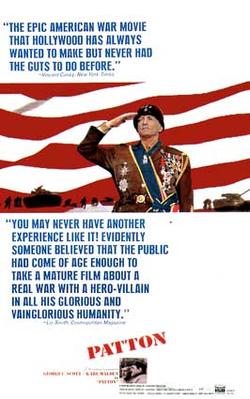
Patton (1970)
12015-10-17T20:09:21-07:00Phil Ethingtone37d40405599cccc3b6330e6c4be064cc03ef7a56771Publicity Poster. Fair use claim for critical study with scaled-down copy. Embedded from wikimedia publication.plain2015-10-17T20:09:21-07:00Phil Ethingtone37d40405599cccc3b6330e6c4be064cc03ef7a5
La Sortie de l'usine Lumière de Lyon (Workers leaving the Lumière Factory, 1895)
Auguste and Louis Lumière invented, in 1895, the Cinématographe (a combined camera and projector), and shot, and exhibited the first motion picture as we know the genre today: one that is projected on a screen and viewed by many people simultaneously. Let that first movie, La Sortie de l'usine Lumière de Lyon (Workers leaving the Lumière Factory), introduce the essence of this new culture industry. Auguste and Louis chose first to film their own workers on whom the industry is based. My account of motion pictures follows these workers through the workshops and landscapes that they inhabited.
Evangeline (1929)
Del Rio rose rapidly in Hollywood stardom. Carewe next cast her as the title character in Evangeline (1929). Another tragic tale of lovers torn apart by the British expulsion of the French Arcadians from Canada. Filmed with the Vitagraph sound technique (using synchronized 78 rpm records), Evangeline featured del Rio’s marvelous singing voice. By 1932, del Rio was considered one of the three most glamorous female stars, along with Greta Garbo and Marlene Dietrich. spacer
Back to Bataan (1945)
In Back to Bataan (RKO Radio Pictures, 1945) Ahn provided the hateful enemy for John Wayne’s heroic role. In the postwar years, Ahn continued a successful acting career, appearing in Michael Todd’s 1956 landmark, transnational production, Around the World In Eighty Days (United Artists) and with Elvis Presley in the musical comedy Paradise, Hawaiian Style (Paramount, 1966).[3] Ahn also became a major figure in the Korean American community, and served for two decades as the honorary mayor of unincorporated Panorama City. Philip Ahn’s last major role was the venerable Master Kan in the television series Kung Fu, starring David Carradine (ABC, 1972-5). He died in 1978. [Intersections and Identities]
I shall consider the following films as convergent with the direction and scope of ideology and nakedly violent political and social power in those years:
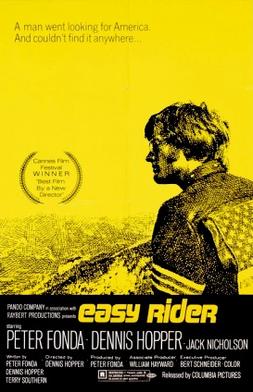
Bonnie and Clyde Bonnie and Clyde (1967; Valley of the Dolls (1967); Rosemary's Baby (1968); 2001: A Space Odyssey (1968); The Wild Bunch (1969); Easy Rider (1969); Kelly's Heroes (1970); Patton (1970); A Clockwork Orange (1971); Dirty Harry (1971); The Last Picture Show (1971); Behind the Green Door (1972); The Godfather (1972); Deep Throat (1972); Mean Streets (1973); The Devil in Miss Jones (1973); High Plains Drifter (1973); The Godfather, Part II (1974); Chinatown (1974); Taxi Driver (1976); Apocalypse Now (1979).