Constructing Data
Collecting
Roopika Risam (on reproducing colonial knowledge and also on archive that contextualize colonial knowledge- think of Vanishing Race)Participatory and Community Based archive- example Lesbian Herstory Archives pg 140 Intersectional Feminism
Posner radical new digital humanities (shifts focus from mainstream to marginalized but also develops ways of representing people's lives in data "as they have been experienced, not as they have been captured and advanced by businesses and governments".
Collection Activity
Encoding
For digital collections, item information is frequently encoded in relational databases. A relational database is a structured set of data that contains a series of formally described tables from which data can be queried or organized in different ways. This structure enhances searching, browsing, and exhibition functions by enabling users to access items and reassemble collections based on tabular information.To create a collection with these functions, you can either build a relational database or use a content management system (CMS) that functions as a relational database [2].
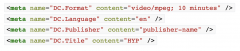
Either way, before getting started you will want to develop a metadata schema for your collection. Metadata, or data about data, "provides a means of indexing, accessing, preserving, and discovering digital resources" [3]. While metadata can serve different functions related to these tasks, in this workshop we will be primarily concerned with its descriptive function [4]. Specifically, you will learn to encode individual items with descriptive metadata and develop a schema to ensure that all of the items in your collection are described consistently to facilitate human and computational analysis.
To create your metadata schema, it is generally advisable to build upon established ontologies and/or controlled vocabularies. Not only will this help you structure your data, but, ultimately, it will allow you to integrate your collection into Linked Data initiatives. For the purposes of this workshop, we will build our schemas on Dublin Core (DC), which is one of the most versatile and popular ontologies for describing digital resources. Dublin Core consists of fifteen elemental terms (in italics below) and a series of qualified terms that extend or refine the original fifteen elements. These terms, alongside the associated technical specifications and syntax guidelines, have been developed and maintained by an international and cross-disciplinary consortium to provide expanded cataloging information and improved document indexing for search engines.
Before turning to the next activity, where you will build a metadata schema based on Dublin Core, it is worth mentioning some alternatives and ontological critiques. Dublin Core is explicit in its aim to transcend the " boundaries of information silos on the Web and within intranets" [5]. However, you may have a collection that calls for a more specialized ontology, such as the VRA Core for visual culture, the PBCore for audiovisual content, and the IPTC for media resources. Alternatively, you may have a collection that defies established ontologies. For example, represent people's lives in data "as they have been experienced,"
Metadata Schema Activity
To develop a metadata schema based on Dublin Core: consult the Elements and Qualifiers manuals; note that each term is optional and can be repeated; and keep in mind that you can link DC terms, like "subject" or "coverage," to controlled vocabularies, such as those developed by the Library of Congress and Getty Institute. This page has paths:
- Data for Humanists Andrea Davis