Thanks for your patience during our recent outage at scalar.usc.edu. While Scalar content is loading normally now, saving is still slow, and Scalar's 'additional metadata' features have been disabled, which may interfere with features like timelines and maps that depend on metadata. This also means that saving a page or media item will remove its additional metadata. If this occurs, you can use the 'All versions' link at the bottom of the page to restore the earlier version. We are continuing to troubleshoot, and will provide further updates as needed. Note that this only affects Scalar projects at scalar.usc.edu, and not those hosted elsewhere.
Chronicles
Main Menu
Introduction to Chronicles
An introduction to Chronicles with detailed information about the project
Super Nintendo Entertainment System Release
SNES Release's Opening Page
Playstation Re-Release
Opening page for Playstation re-release
Nintendo Dual System Re-Release
Opening Page of the Nintendo Dual System re-release
Mobile iOS and Android Re-Release
Opening Page of Mobile iOS and Android re-release
Traversals and Interviews Documentation
The documentation used for the traversals and Interviews
Author and Contributors' Bios
The bios of those who authored and produced Pathfinders
Madeleine Philbrook
793490c7e41f4e0efe523b50970c1632a02f214b
Nouspace Publications | Washington State University Vancouver
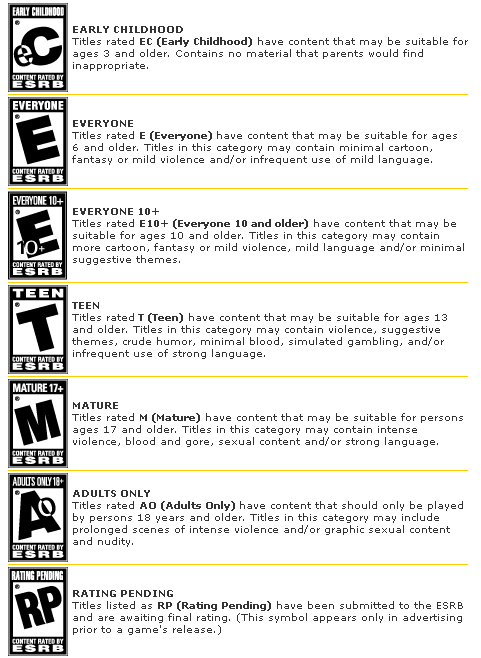
List of ESRB Ratings
1 2015-08-05T23:39:21-07:00 Madeleine Philbrook 793490c7e41f4e0efe523b50970c1632a02f214b 5497 1 List of ESRB ratings plain 2015-08-05T23:39:21-07:00 Madeleine Philbrook 793490c7e41f4e0efe523b50970c1632a02f214bThis page is referenced by:
-
1
2015-07-28T03:48:27-07:00
Decline of Censorship
7
Contains information regarding the decline of censorship featured in the NDS version of Chrono Trigger
plain
169991
2016-01-16T08:56:15-08:00
Shortly after the introduction of the Entertainment Software Rating Board (ESRB) in 1994, Nintendo of America decided to abolish many of its game content guidelines that brought much censorship to video games localized from different regions. This decision allowed consumers to make their own choices concerning the video game content they deemed suitable, be it for themselves or for those under their care. Since this massive change, the only truly established rule is that — along with their competitors, Microsoft and Sony — “Nintendo does not sell or license games that carry the ESRB rating “AO” (Adults Only).”1 Oftentimes, video games in today’s market have their content altered by their respective developers. It is only seldomly that Nintendo of America chooses to interfere with a game’s content.
Later, in March 2005, the ESRB created a new category for its instrumental rating system, called “E10+” (Everyone 10+). This category sought to distinguish between family-friendly video games (deemed appropriate for children of at least six years) and those that may include more suggestive themes, but would nonetheless be too mild for the “T” (Teen) category. Many games were subjected to this decision, either forced into the “K-A” (Kids to Adults), later named “E” (Everyone) category, or the “T” rating.
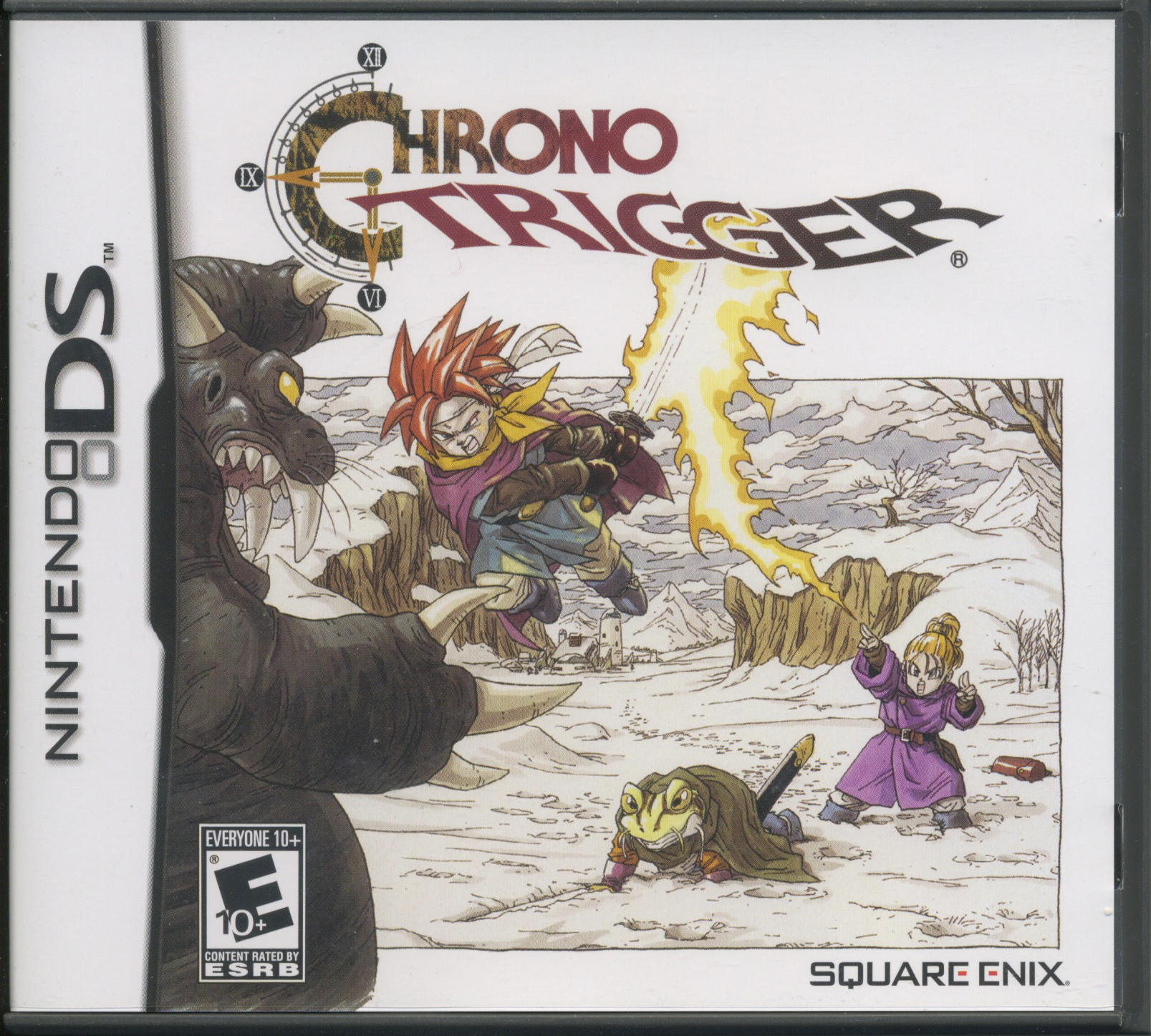
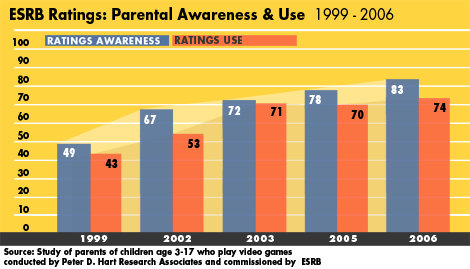
Chrono Trigger experienced the same fate, first being rated as a “K-A” title on the Super Nintendo Entertainment System (SNES), and later finding itself labeled as a “T” title when bundled with Final Fantasy IV for the PlayStation (PS). Due to these significant changes, it is conceivable that some gamers were never exposed to Chrono Trigger during the PS re-release era. It has been shown increasingly that, in the words of Jay Campbell, "the number of parents nationwide that are aware of the ESRB ratings and using them regularly when choosing games for their families continues to grow with each year. In fact, not only are more parents using the ratings, they are using them more often than ever before."2 In fact, “parental confidence in the ESRB ratings has never been greater.”2
As such, the ESRB rating categories and content descriptors influence the buying behaviors of consumers, especially parents, and even have the ability to fate a video game to popularity or obscurity. By allowing for an intermediary rating, more content could be deemed acceptable for a game without carrying the burden of a “T” label. As a matter of fact, the “E10+” label is easy to overlook as distinct — it is nearly identical in presentation to the “E” rating. With this added leniency, along with the abolishment of previous Nintendo of America game content guidelines, Nintendo Dual Screen (NDS) Chrono Trigger translator, Tom Slattery, decided to bring back some of the Japanese cultural artifacts lost due to previous censorship.After an extensive analysis, it is apparent that Slattery freed barriers on alcohol use and sexuality, sometimes utilizing uncommon or formal words to refer to such topics — presumably as a means of employing ambiguity in order to further safeguard younger gamers. Slattery also kept intact the preceding censorship of profanity and religious themes. However, at the same time, retranslation of item names led to the introduction of new elements from Japanese culture, specifically the mentioning of Buddhist deities, demons, and heaven. In the end, it was these new additions from Japanese culture that were articulated to North American gaming communities during the Chrono Trigger NDS re-release.
Works Cited:
[1] "Customer Service - Nintendo Buyer's Guide." Nintendo. Nintendo, n.d. Web. 28 July 2015.
[2] "Awareness, Use and Trust of ESRB Video Game Ratings Reach Historical High-Point Among Parents." Entertainment Software Rating Board. Entertainment Software Association, 29 May 2006. Web. 28 July 2015.