Scalar's 'additional metadata' features have been disabled on this install. Learn more.
Asia-Pacific in the Making of the Americas: Toward a Global HistoryMain MenuThe Spanish PacificThe China Trade Era19th-Century US PacificTimelineby Andrea LedesmaGalleryCollection of all images, documents, and photos featured on this site.AcknowledgementsCaroline Franka1a5e7e9a2c3dba76ecb2896a93bf66ac8d1635e
Tea, Sovereignty, and an East Indies Trade for a New American Empire
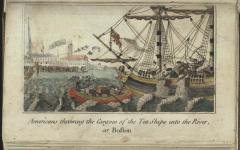
1media/rsz_1image9art402981copy.jpgmedia/Tea Plantation.jpgmedia/DETAIL_Liberty_Triumph.jpg2016-02-26T12:37:38-08:00Elli Mylonas3c69a4505ab77d1fab94c82afa1ef89d9f5787ff840121By Caroline Frank, Brown Universityimage_header2423082019-08-11T08:42:52-07:00Caroline Franka1a5e7e9a2c3dba76ecb2896a93bf66ac8d1635eThe "Boston Tea Party" has legendary status in U.S. history as one of the initial acts of a “free-born” people resisting tyrannical rulers and oppression. But why did the importation of Chinese tea provoke such a radical response—political, martial, and rhetorical—when colonists had tolerated and excused over a century of antagonistic British mercantilist legislation? Even before the ink was dry on the peace agreement with Great Britain in 1783, U.S. merchants were fitting out ships to sail to China. Here we reexamine the global context of the American Revolution and the early U.S. China trade, asking why Americans were so quick to develop their own “East Indies trade”on the heels of independence.
This page has paths:
1media/ChinaTradeOldChinaSt.jpg2016-05-04T18:12:50-07:00Zachary Ziebell8eecdb2214ffc2e89ec5ed5f180953625d845cc7The China Trade EraCaroline Frank20image_header2813512019-08-11T07:44:12-07:00Caroline Franka1a5e7e9a2c3dba76ecb2896a93bf66ac8d1635e
Contents of this path:
1#cdb3b22016-02-26T12:37:34-08:00Elli Mylonas3c69a4505ab77d1fab94c82afa1ef89d9f5787ffAn Era of Tea13plain2019-08-11T09:15:48-07:00Caroline Franka1a5e7e9a2c3dba76ecb2896a93bf66ac8d1635e
12016-02-26T12:37:38-08:00Julie Yueb0883442819b50853d3371115e08a855debf24bbTea Consumption in America16Frank, Part IIplain2019-08-11T08:23:17-07:00Caroline Franka1a5e7e9a2c3dba76ecb2896a93bf66ac8d1635e
12016-02-26T12:37:37-08:00Julie Yueb0883442819b50853d3371115e08a855debf24bbRisks of Drinking Tea21Frank, Part IIIplain2019-08-11T10:24:25-07:00Caroline Franka1a5e7e9a2c3dba76ecb2896a93bf66ac8d1635e
12016-02-26T12:37:38-08:00Julie Yueb0883442819b50853d3371115e08a855debf24bbTea Promotes Eastern Slavery in America16Frank, Part IVplain2019-08-11T10:25:36-07:00Caroline Franka1a5e7e9a2c3dba76ecb2896a93bf66ac8d1635e
12016-02-26T12:37:38-08:00Julie Yueb0883442819b50853d3371115e08a855debf24bbTaxes and the Boston Tea Party10Frank, Part Vplain2017-02-16T08:44:52-08:00Andrea Ledesma3398f082e76a2c1c8a9101d91a66e1d764540d34
12016-02-26T12:37:33-08:00Julie Yueb0883442819b50853d3371115e08a855debf24bbAn East Indies Trade for the United States Republic9Frank, Part VIIplain2019-08-11T09:44:03-07:00Caroline Franka1a5e7e9a2c3dba76ecb2896a93bf66ac8d1635e
12019-08-11T08:18:46-07:00Boston Tea Party1Early print of the "Destruction of the Tea." London, 1789.
media/Boston_Tea_Party-Cooper.jpgplain2019-08-11T08:18:46-07:00