A Nostalgic Filter: A University of Pittsburgh ExhibitionMain MenuFrontispieceGolden BooksFront GalleryMaking CopiesFront GalleryGender & ExperienceHallwayPoetry & SongRotundaSacred TimeBack GalleryMobility & TravelSide GalleryResourcesAcknowledgements
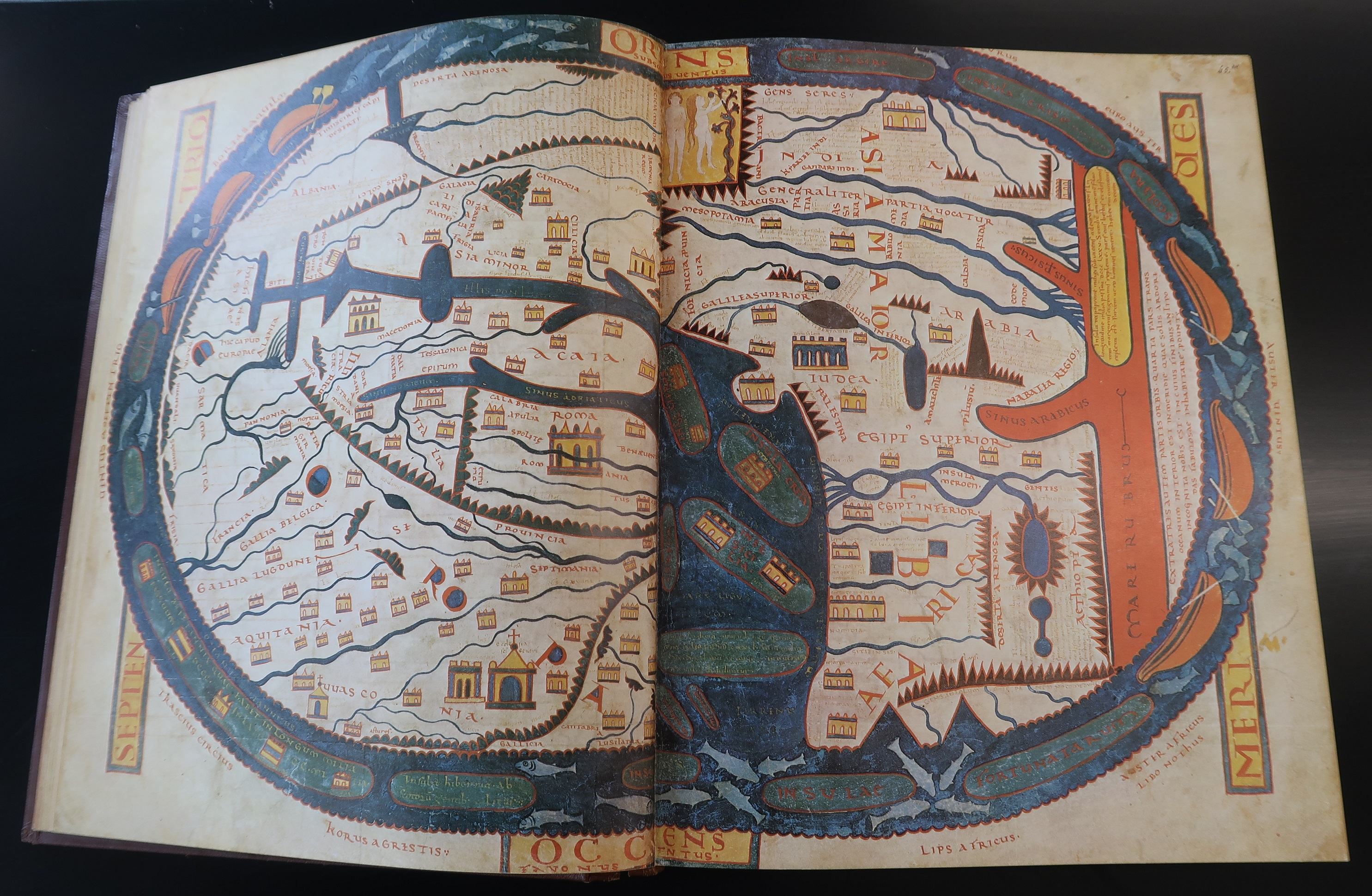
Mappa Mundi (Map of the World) from Two Beatus Manuscripts
1media/78_Sever_2_thumb.jpg2020-10-21T18:51:57-07:00Victoria Swindle262ed88f021ffe4ea6ac03ca8c1694814e5a41f1380981Facsimiles of the Saint-Sever Beatus and the Osma Beatusplain2020-10-21T18:51:57-07:00Paris and Burgo de OsmaMs. Lat. 8878; Cod. 145bis-45ter; 34v-035rShirin FoziUniversity Library System, University of PittsburghEdilán, Madrid (Spain); Vicent García Editores, Valencia (Spain)1984; 1993Bibliothèque nationale de France and Cabildo de la CatedralSaint-Sever Beatus and Osma Beatusc. 1050-1070; 1086Victoria Swindle262ed88f021ffe4ea6ac03ca8c1694814e5a41f1
Paris, Bibliothèque national de France, Ms Lat. 8878
While the overwhelming majority of medieval Beatus manuscripts were produced in Spain, the Saint-Sever Beatus is the only surviving example known to have been produced across the Pyrenees in France. Like the other books of this type, its images depict scenes from the Book of Revelations and include an impressive world map spread across two full folios. Placing the Saint-Sever and Osma facsimiles side by side allows a thoughtful comparison of the similarities and the differences between the two books, which clearly derive from a shared set of models but also contain numerous regional differences, reflecting the transmission of these manuscripts through political, institutional, and personal networks.