Leiden Aratea
Leiden, Universiteitsbibliotheek, VLQ 79
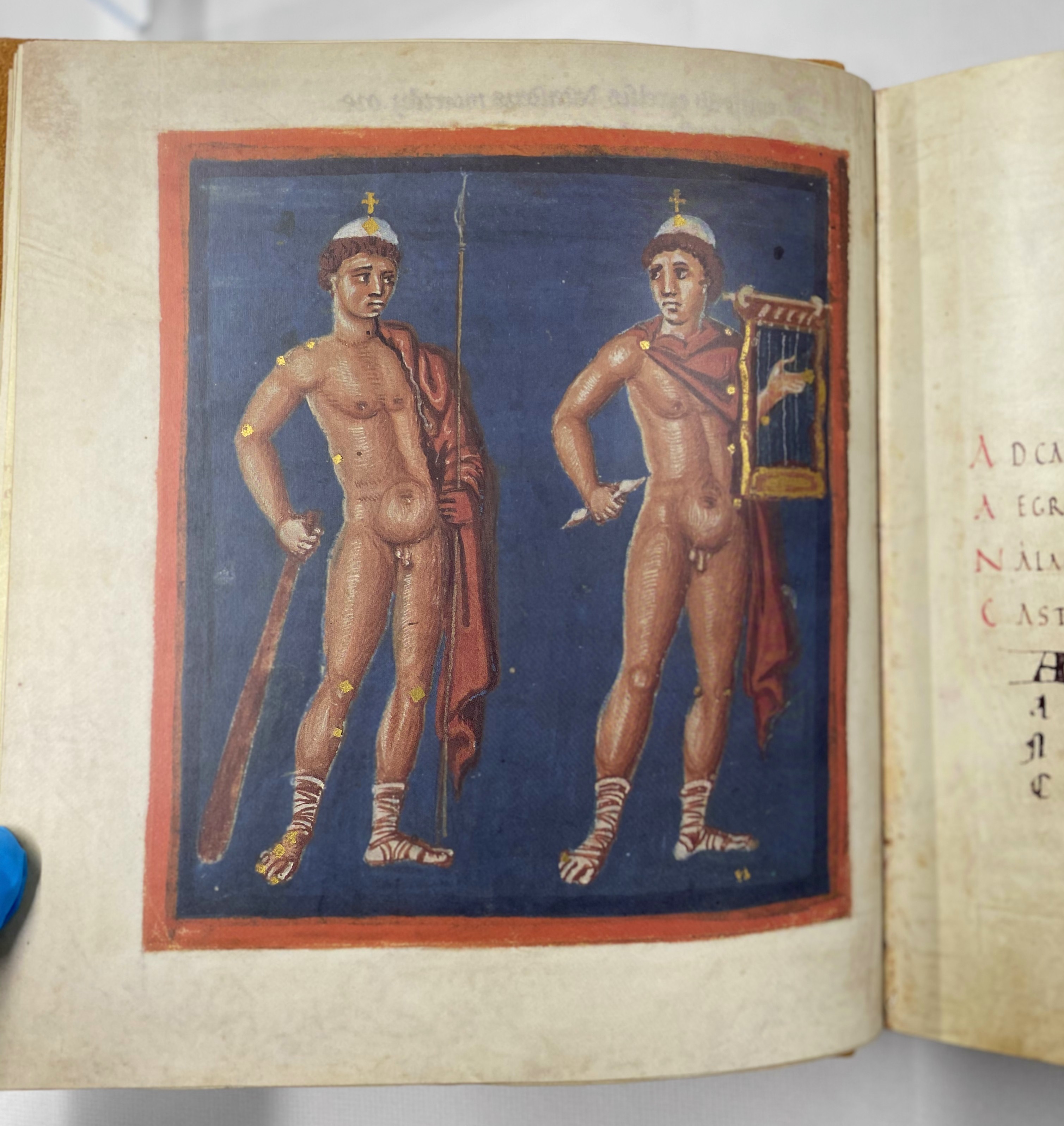
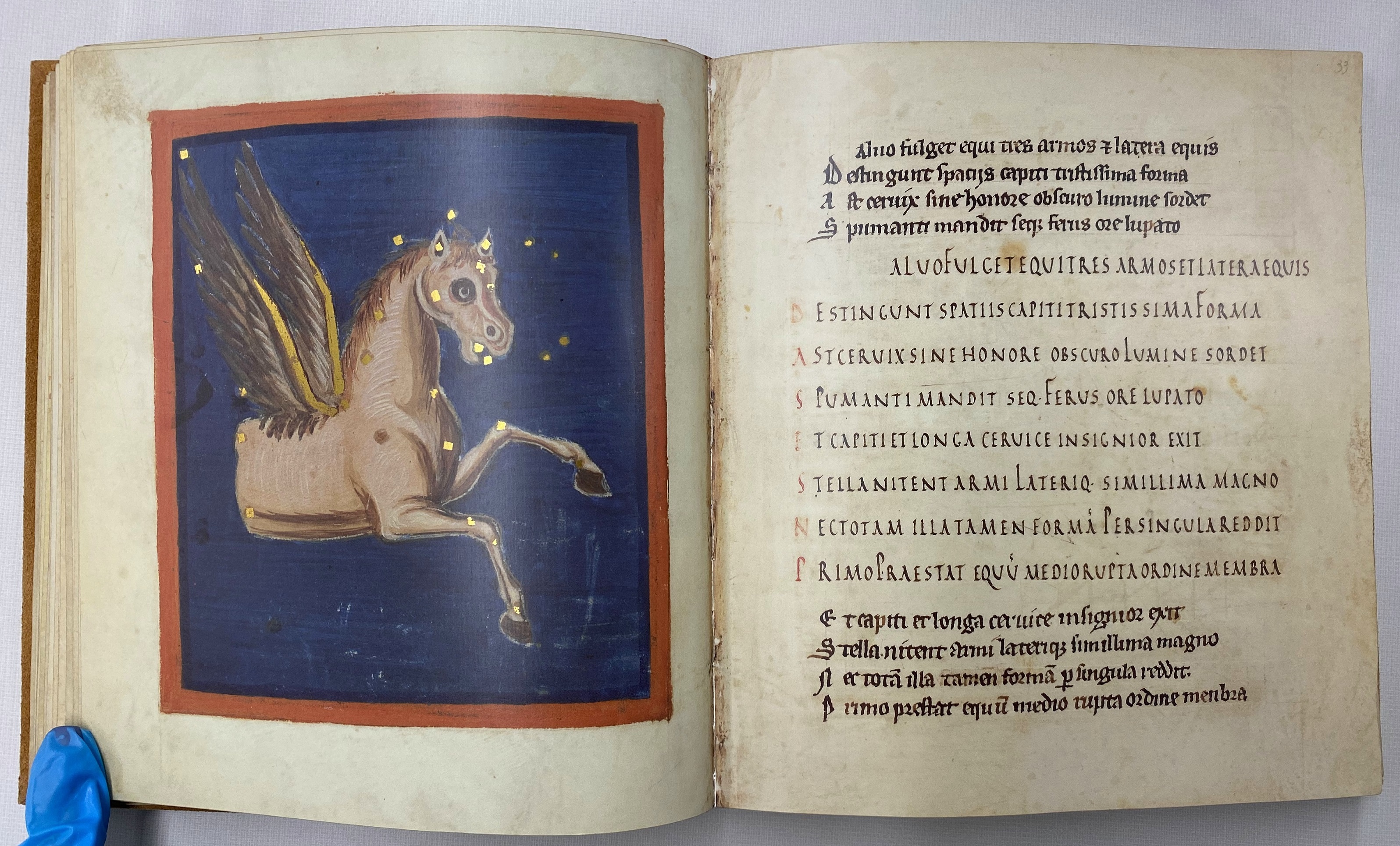
Richly illustrated and carefully transcribed in rustic capitals, this manuscript brought ancient knowledge of the stars to medieval readers in the early ninth century. The text derives from the Phaenomena of Aratus, translated from Greek to Latin by Germanicus in the first century CE; the images of the constellations seem to prioritize aesthetic qualities above scientific accuracy, suggesting the book was used primarily for entertainment. Nevertheless, its lively depictions of the characters from Greco-Roman mythology exemplify the desire of Carolingian aristocrats to revive and promote the culture of the ancient Mediterranean in the early Middle Ages.
Many of the constellations depicted in the Leiden Aratea are still familiar around the world today. These include Gemini, shown with small crosses on their heads as if to balance their heroic nudity with a nod to the Christian faith of the book’s first owners, and the winged horse Pegasus. The original book was in the northern French monastery of St. Bertin in Saint-Omer until the eleventh century and passed through the collections of the Dutch bibliophile Hugo Grotius and Christina, Queen of Sweden before being acquired by Leiden University in 1690. The facsimile captures not only the rich colors and golden highlights of the original, but also the signs of use and wear that the book accumulated over the centuries.
To the best of our knowledge, this manuscript has yet to be fully digitized and made available online. If you would like to bring an open-access digitization to our attention, please contact the UAG at Pitt.
This page has paths:
- Sacred Time Maria-del-Carmen Barrios