Postscripts
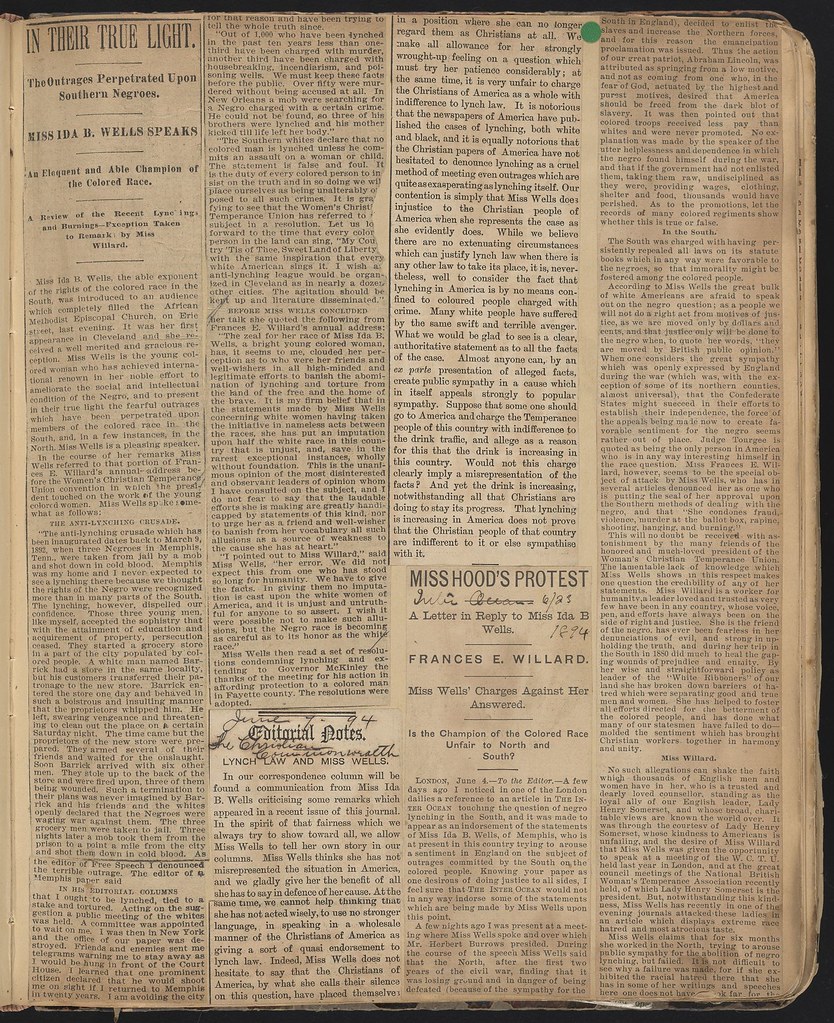
TimelineIn response to pressure from Wells and public opinion, Willard did ensure that the national WCTU and many of its state chapters spoke out against lynching. The WCTU continued to pass anti-lynching resolutions until at least 1900—though the problem of lynching continued for many years after that. Lynching was only made a federal crime in December of 2018.
Willard’s views on race and immigration remained complicated, as her comments on lynching in her final presidential address at the convention of 1897 make clear. [this is blurry and should be rescanned]
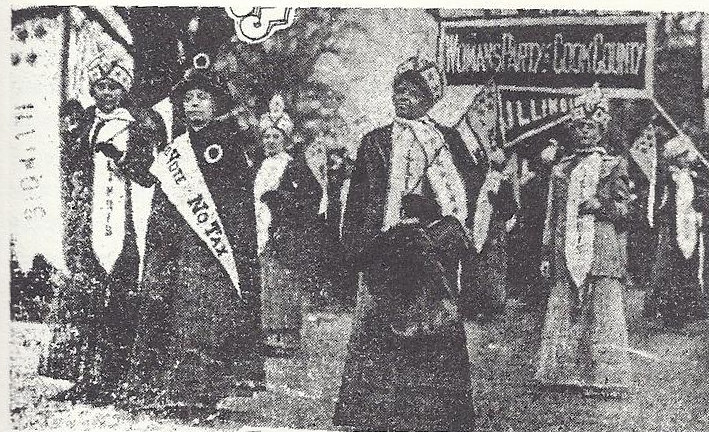
Ida B. Wells went on to have a long and productive career fighting for black civil rights and women’s suffrage and often coming into conflict with both white and black leaders both in issues of substance and her confrontational style. Her activism in the suffrage movement especially brought her into conflict with white leaders who expressed various degrees of personal racism and the use of racist tactics. In 1913, she famously defied a request to march at the back of the women’s suffrage march in Washington, DC—slipping in with the rest of the Illinois delegation.
In her autobiography, written near the end of her life [date] and edited and published posthumously by her daughter Alfreda Duster in the 1970s [check spelling and date], Wells reflected on her conflict with Willard. She recounted a conversation she had with Susan B. Anthony in 1894 about the issue when she was staying with that suffrage leader after her return from England—the thick of the conflict with Willard. Willard and Anthony were themselves friends and allies.
[excerpts from her autobiography--need to see about permission to use this!]
This page has paths:
- Timeline The Center for Women's History and Leadership