Thanks for your patience during our recent outage at scalar.usc.edu. While Scalar content is loading normally now, saving is still slow, and Scalar's 'additional metadata' features have been disabled, which may interfere with features like timelines and maps that depend on metadata. This also means that saving a page or media item will remove its additional metadata. If this occurs, you can use the 'All versions' link at the bottom of the page to restore the earlier version. We are continuing to troubleshoot, and will provide further updates as needed. Note that this only affects Scalar projects at scalar.usc.edu, and not those hosted elsewhere.
1media/truthtelling-header.gif2018-11-09T00:06:19-08:00The Center for Women's History and Leadership396bd2bebf501b08ca215cf721fbba097eb2e1a23042521"Somebody must show that the Afro-American race is more sinned against than sinning."plain2019-02-13T19:27:04-08:00The Center for Women's History and Leadership396bd2bebf501b08ca215cf721fbba097eb2e1a2
Southern Horrors
***If we use Basic Layout + Timeline widget, the pull quotes could be placed in a subhead here***
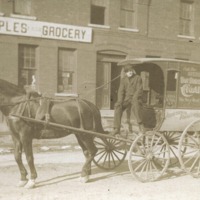
In March of 1892, a white mob in Memphis, Tennessee lynched three black men--Thomas Moss, Calvin McDowell, and William Stewart--following an altercation at their grocery store. Moss and his family were close friends of Ida B. Wells.
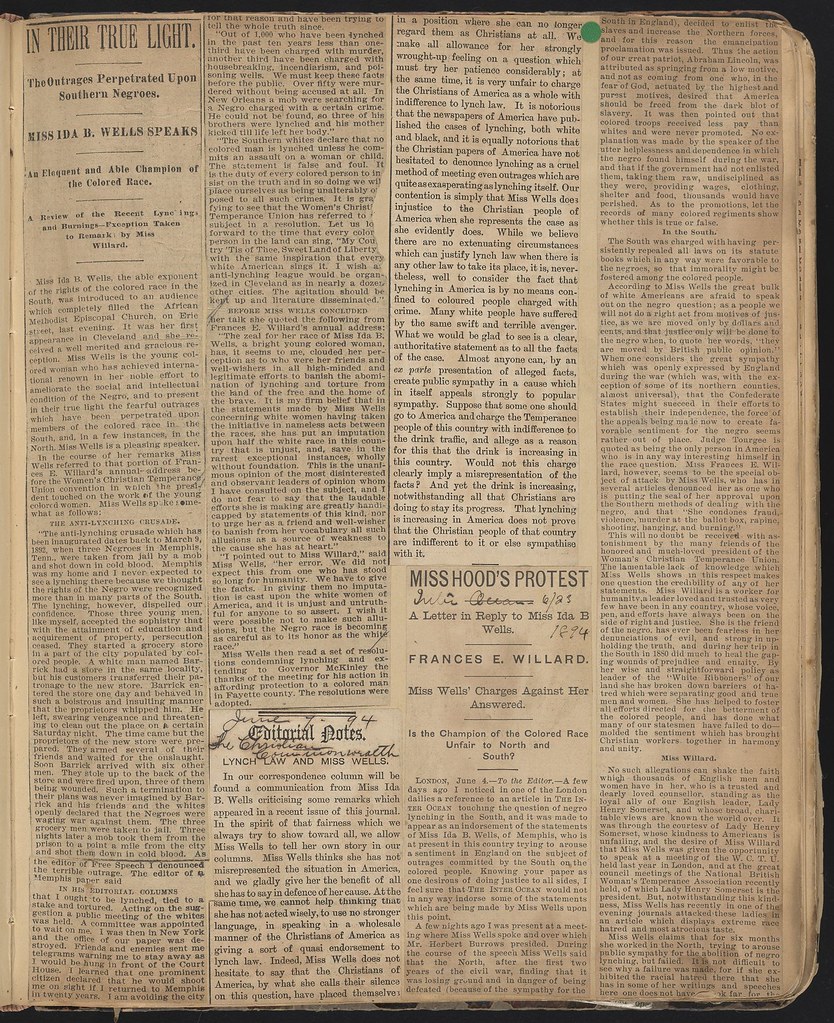
As she grappled with the murders, Wells began to investigate the circumstances surrounding other lynchings. Local newspapers often reported that mobs lynched black men because they had raped white women. But as Wells interviewed witnesses and victims' families, she found evidence that cast doubt on this explanation. Much more often, she found, the allegation of rape was only a pretext. Wells began to conceive of lynchings not as random expressions of mob hatred, but as a way for Southern whites to systematically use violence and fear to oppress black people.
After Wells reported on her findings in the Free Speech, the newspaper she co-owned, a white mob burned the newspaper's offices to the ground and threatened her life. Wells happened to be in New York at the time of the attack. She never returned to Memphis, instead embarking on an international career crusading against lynching.
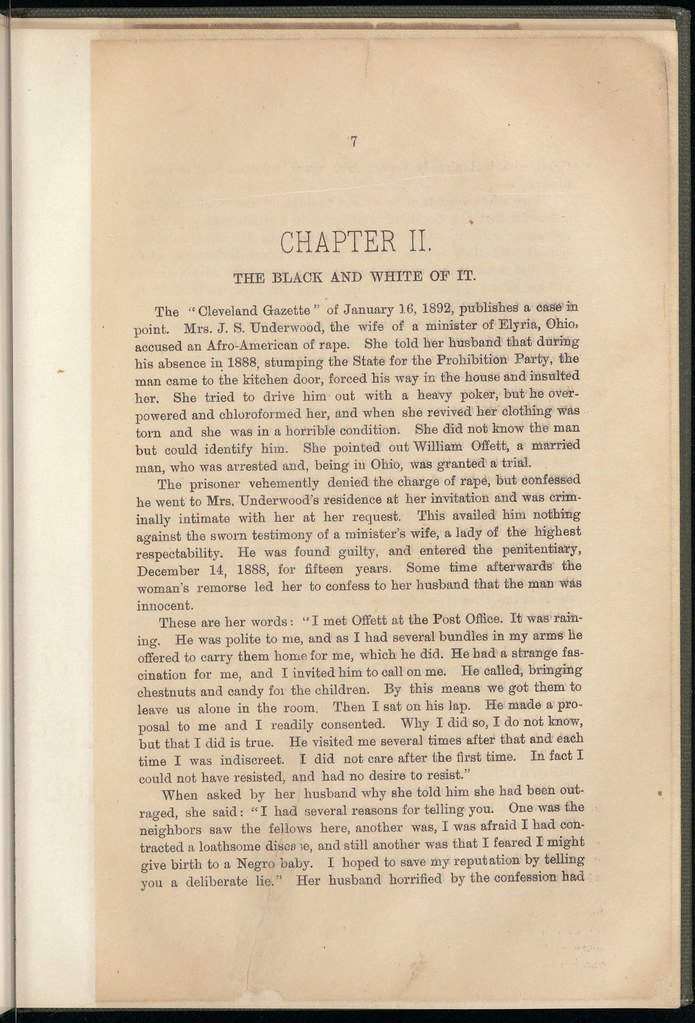
In her pamphlet Southern Horrors: Lynch-Law in All Its Phases (1892), Wells presented some of the evidence she had collected to show that there was often no credible evidence of rape.
In her research, Wells found that fewer than a third of lynching victims had even been charged with rape. She also explained why the charge of rape was so damaging: it made potential allies of black people unwilling to defend them.
Photos of Southern Horrors are taken from New York Public Library digital collections (marked "free to use without restriction") - https://digitalcollections.nypl.org/items/868f8db7-fa74-d451-e040-e00a180630a7#/?uuid=63ce23b0-4abc-0134-cda4-00505686a51c
This page has paths:
12018-08-20T17:48:05-07:00The Center for Women's History and Leadership396bd2bebf501b08ca215cf721fbba097eb2e1a2TimelineThe Center for Women's History and Leadership47timeline7913502019-02-13T20:12:39-08:00The Center for Women's History and Leadership396bd2bebf501b08ca215cf721fbba097eb2e1a2
This page has tags:
1media/truthtelling-header.gif2019-01-08T16:50:49-08:00The Center for Women's History and Leadership396bd2bebf501b08ca215cf721fbba097eb2e1a2Ida B. Wells, Temperance, and "Race Progress"The Center for Women's History and Leadership25"Intemperance is one of the strongest foes to intellectual, material, and moral advancement."plain2019-02-13T19:48:08-08:00The Center for Women's History and Leadership396bd2bebf501b08ca215cf721fbba097eb2e1a2
Contents of this tag:
12018-11-09T00:16:08-08:00The Center for Women's History and Leadership396bd2bebf501b08ca215cf721fbba097eb2e1a2The People's Grocery2Photo of the People's Grocery, the site of the 1892 lynching of Wells's friend Thomas Moss in Memphis that prompted the start of her campaignplain2018-11-09T00:16:42-08:00The Center for Women's History and Leadership396bd2bebf501b08ca215cf721fbba097eb2e1a2
12018-11-06T19:49:12-08:00The Center for Women's History and Leadership396bd2bebf501b08ca215cf721fbba097eb2e1a2Ida B. Wells, Head-and-Shoulder Portrait1Portrait of Ida B. Wells published by I. Garland Penn in the Afro-American Press and its Editorsplain2018-11-06T19:49:12-08:00The Center for Women's History and Leadership396bd2bebf501b08ca215cf721fbba097eb2e1a2
This page references:
12018-11-09T00:16:08-08:00The People's Grocery2Photo of the People's Grocery, the site of the 1892 lynching of Wells's friend Thomas Moss in Memphis that prompted the start of her campaignplain2018-11-09T00:16:42-08:00