Postscript: Ida B. Wells
Crusade for Justice
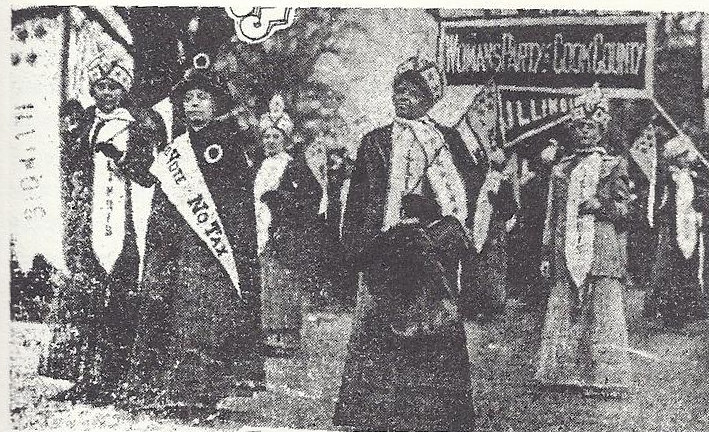
Ida B. Wells went on to have a long and productive career fighting for black civil rights and women’s suffrage. She was a co-founder of the National Association for the Advancement of Colored People (NAACP) and of a Chicago black women's suffrage organization, the Alpha Suffrage Club. Throughout her life, she wrote, lectured, and organized for civil rights and against lynching and segregation.Wells often came into conflict with both white and black leaders both on issues of substance and due to her confrontational style. Wells's activism in the suffrage movement, especially, brought her into conflict with white women who expressed various degrees of personal racism and the use of racist tactics. In 1913, she famously defied an order to march at the back of the women’s suffrage march in Washington, DC—instead slipping in with the rest of the Illinois delegation after the march began.
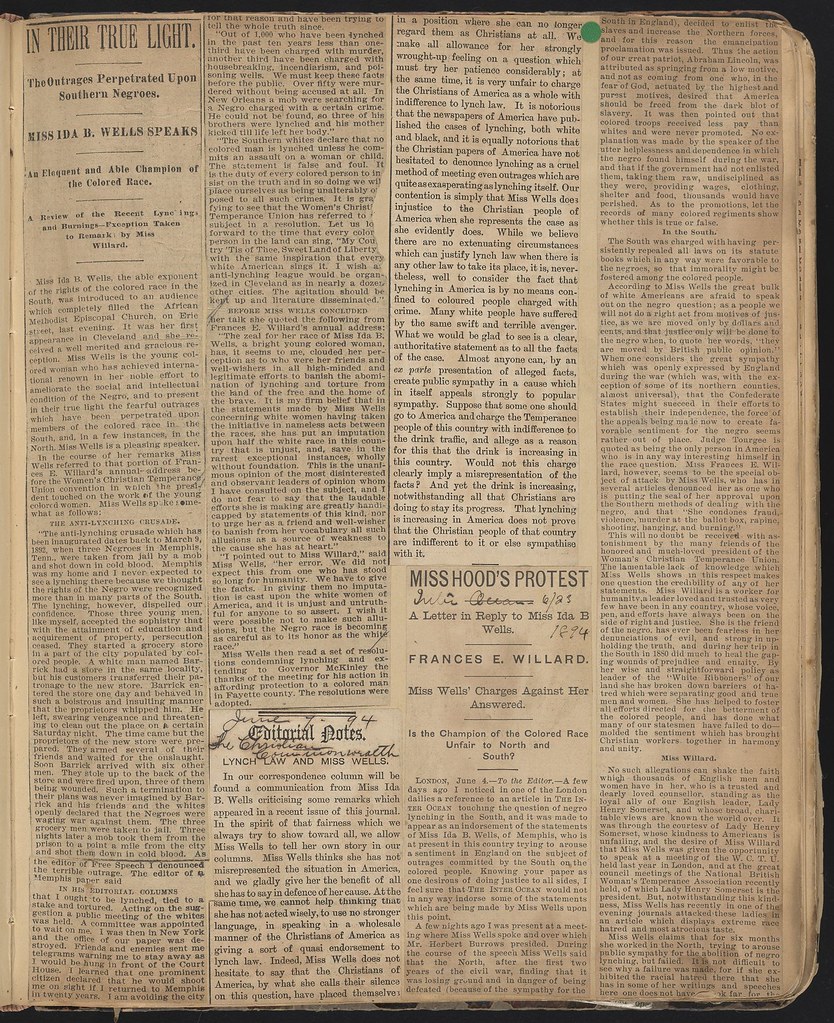
"Miss Willard's Attitude"
Between 1928 and her death in 1931, Wells wrote her autobiography, Crusade for Justice. Her daughter Alfreda M. Duster edited and published it in 1970.In the autobiography, Wells reflected on her conflict with Willard. She had discussed it with the suffrage leader Susan B. Anthony, whom Wells called "a dear good friend." She had been staying with Anthony at her home in Rochester, New York in 1894, just after her return from England--in the thick of the conflict with Willard.
In their conversation, Wells wrote, Anthony drew parallels between her own embrace of "expediency" within the women's suffrage movement and Willard's choices.