Thanks for your patience during our recent outage at scalar.usc.edu. While Scalar content is loading normally now, saving is still slow, and Scalar's 'additional metadata' features have been disabled, which may interfere with features like timelines and maps that depend on metadata. This also means that saving a page or media item will remove its additional metadata. If this occurs, you can use the 'All versions' link at the bottom of the page to restore the earlier version. We are continuing to troubleshoot, and will provide further updates as needed. Note that this only affects Scalar projects at scalar.usc.edu, and not those hosted elsewhere.
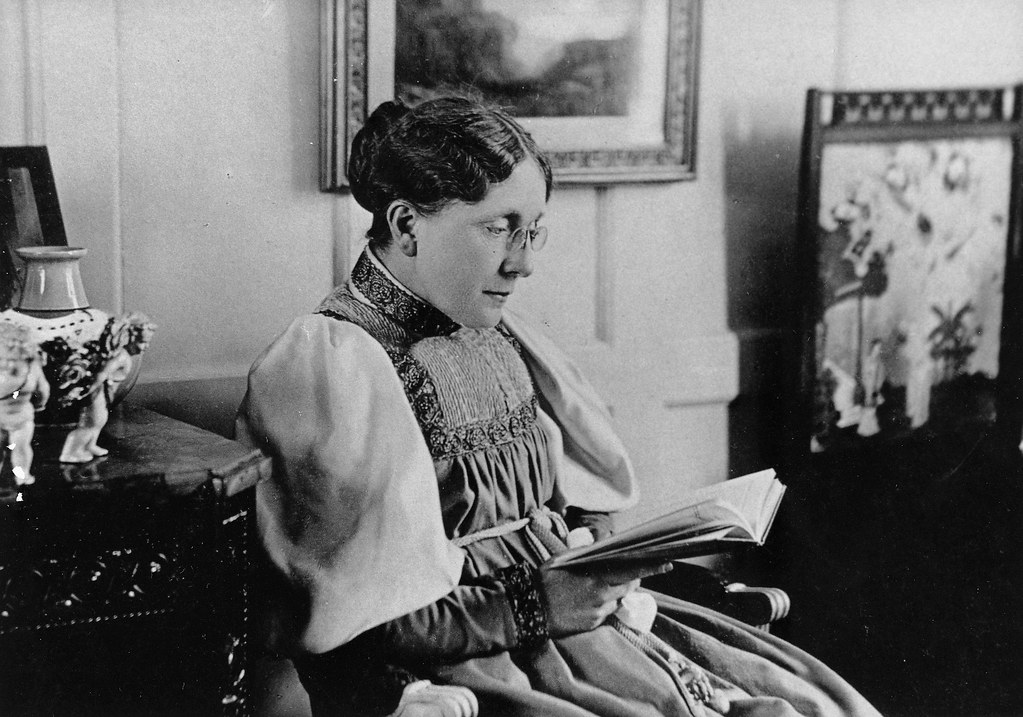
1media/truthtelling-header-2.png2018-11-09T17:10:43-08:00The Center for Women's History and Leadership396bd2bebf501b08ca215cf721fbba097eb2e1a23042512image_header2019-02-01T22:15:01-08:00The Center for Women's History and Leadership396bd2bebf501b08ca215cf721fbba097eb2e1a2The conflict between Willard and Wells had mostly subsided by 1896. In part this can be attributed to Willard’s failing health. She spent much of her time in England with her friend Lady Somerset, and would die shortly thereafter in 1898.
In response to pressure from Wells and public opinion, Willard did ensure that the national WCTU and many of its state chapters spoke out against lynching. The WCTU continued to pass anti-lynching resolutions until at least 1900—though the problem of lynching continued for many years after that. Lynching was only made a federal crime in December of 2018.
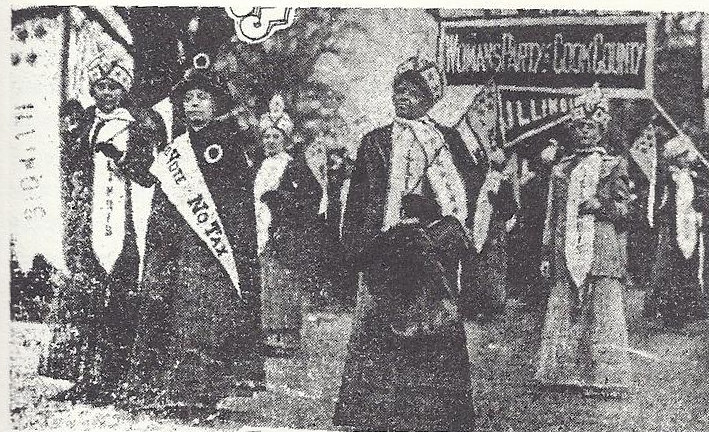
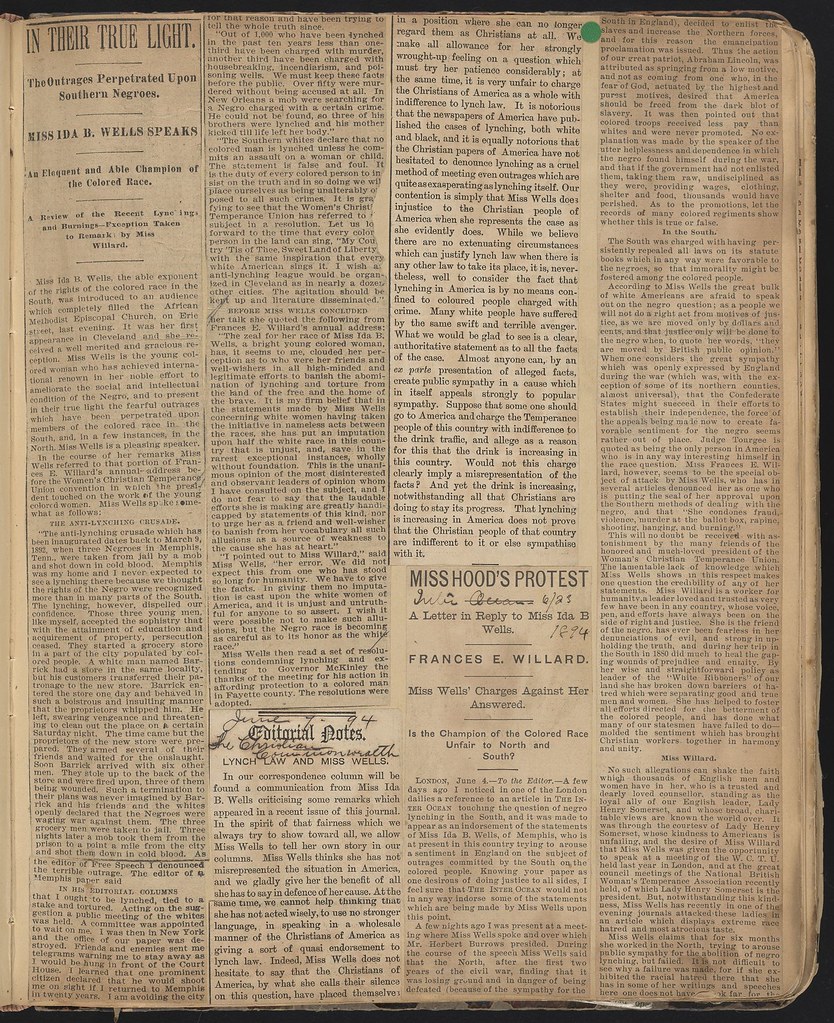
Willard’s views on race and immigration remained complicated, as her comments on lynching in her final presidential address at the convention of 1897 make clear. [this is blurry and should be rescanned] Ida B. Wells went on to have a long and productive career fighting for black civil rights and women’s suffrage. She often came into conflict with both white and black leaders both on issues of substance and due to her confrontational style. Her activism in the suffrage movement especially brought her into conflict with white leaders who expressed various degrees of personal racism and the use of racist tactics. In 1913, she famously defied an order to march at the back of the women’s suffrage march in Washington, DC—instead slipping in with the rest of the Illinois delegation after the march began.
In her autobiography, written near the end of her life [date] and edited and published posthumously by her daughter Alfreda Duster in the 1970s [check spelling and date], Wells reflected on her conflict with Willard. She recounted a conversation she had with Susan B. Anthony in 1894 about the issue when she was staying with that suffrage leader after her return from England—the thick of the conflict with Willard. Willard and Anthony were themselves friends and allies.
[excerpts from her autobiography--need to see about permission to use this and get better quality images]
This page has paths:
12018-08-20T17:48:05-07:00The Center for Women's History and Leadership396bd2bebf501b08ca215cf721fbba097eb2e1a2TimelineThe Center for Women's History and Leadership51timeline7913502019-02-26T13:25:29-08:00The Center for Women's History and Leadership396bd2bebf501b08ca215cf721fbba097eb2e1a2
This page has tags:
1media/truthtelling-header.gif2018-11-08T21:49:18-08:00The Center for Women's History and Leadership396bd2bebf501b08ca215cf721fbba097eb2e1a2Frances Willard and the "Race Problem"The Center for Women's History and Leadership55"So far as I know, I have not an atom of race prejudice."timeline2019-02-13T19:09:03-08:00The Center for Women's History and Leadership396bd2bebf501b08ca215cf721fbba097eb2e1a2
1media/truthtelling-header.gif2019-01-08T16:50:49-08:00The Center for Women's History and Leadership396bd2bebf501b08ca215cf721fbba097eb2e1a2Ida B. Wells, Temperance, and "Race Progress"The Center for Women's History and Leadership25"Intemperance is one of the strongest foes to intellectual, material, and moral advancement."plain2019-02-13T19:48:08-08:00The Center for Women's History and Leadership396bd2bebf501b08ca215cf721fbba097eb2e1a2