Unpinning History: Japanese Posters in the Age of Commercialism, Imperialism, and ModernismMain MenuIntroductionJapan in the Age of Commercialism, Imperialism, and ModernismThe Rise of Tourism and the Era of Ocean LinersThe Rise of Tourism and the Development of Railway NetworksProvocation of Citizenship: Posters for the Ministry of CommunicationsExhibition CultureBijin: Posters with a Beautiful WomanArrival of Modern Commercial DesignBibliographyCollection NoteReuse and Remix this Exhibition
Chochiku wa ne no gotoku, heiwa wa hana no gotoshi, Teishin-shō [Saving is like roots, Peace is like flowers, Ministry of Communications]
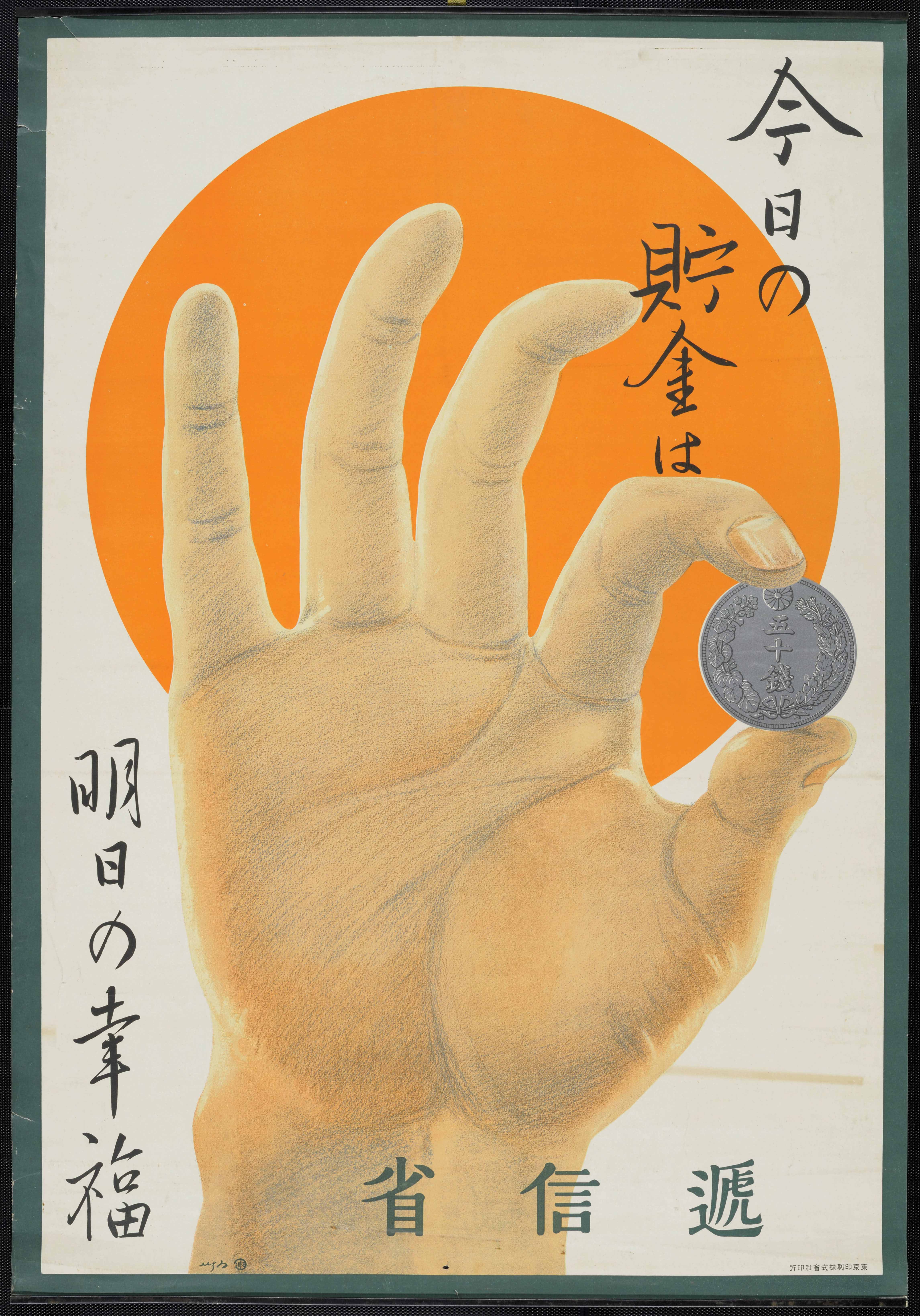
12020-04-29T14:52:04-07:00Anne-Marie Maxwell326ac6eff123bb3f77fb517c66299be8b435b479371406plain2020-11-17T15:25:26-08:00Tyson Gaskill93cb401bee8f73160b4c4378060de7643c42eee9This poster was designed by Sugiura Hisui for the Ministry of Communications’ Postal Savings Bank. As a pioneering graphic designer in Japan, Hisui worked to embrace both traditional and western art as well as modern design within his works. Traces of these styles can be seen in the colors, typography, and the overall visual effect of the poster. The poster aimed to promote awareness among the Japanese population about frugality through the depiction of lily flowers. At first glance, the poster appears to have no connection with money-saving; only after reading the slogan are viewers informed about what is advertised here. Hisui uses a genderless and ageless subject to address everyone rather than targetting an audience like Okano’s poster for the same ministry. Using symbolism such as the color of the rising sun and unification at the root, the poster works as soft propaganda. (Sally Guo)
12020-04-29T17:19:34-07:00Chochiku wa ne no gotoku, heiwa wa hana no gotoshi (Lilies)5Postal savings banksplain2021-05-15T11:27:39-07:00USC Digital LibraryUSC Libraries. East Asian LibraryEarly 1920sTōkyō Insatsu Kabushiki Kaisha = The Tokyo Printing Co.Tokyo, JapanUSC Japanese poster collection: Posters by the Ministry of CommunicationsSigned by: Hisui [Sugiura Hisui] (1876-1965)