Overview of the study
HYPOTHESIS
Frequent café visitors have a higher physical, psychological, social and environmental quality of life, compared to less frequent visitors.
TABLES
GRAPHS
INTERPRETATION
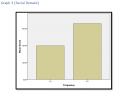
- From the above scores in the respective domains, it is evident that group 2 seems to have scored more in the WHO-QOL test, which can be interpreted that these subjects have a superior quality of life compared to the subjects which constitute group 1. With this result, the hypothesis ‘
- Frequent café visitors have a higher physical, psychological, social and environmental quality of life compared to less frequent visitors’. has been proved.
- The reasons that act as the driving forces leading to this result are numerous. As stated earlier, Cafes are no more places for mere relaxation but have evolved as hosts for formal meetings and activities. Creating an ambiance for casual gatherings be it formal or informal, the cafes have given a lot of exposure to the people who have been active customers to the Cafes.
- At first, their regularity gives them an immense recognition among the peers at cafes who have come together for certain interests and satisfies specific or subjective needs. As a result of this the individual’s social life gains significance. Also, it is a known fact that individuals tend to perform efficiently in relaxed and tranquil atmospheres compared to that of a busy and hectic locations (usually workplaces).
- Cafés always provide such serene ambiance, making it an eventful space for more formal activities. This accounts for an individual’s high quality of life in the Environmental and Social domain. This in turn in proportionate to the physical and psychological health domain, affecting it positively in this context. With this, it is inevitable that the quality of life of people who visit cafes more frequently than the less frequent visitors remains superior in all the four domains.
This page has paths:
- Details of the study Syeda Zainab Akbar