Thanks for your patience during our recent outage at scalar.usc.edu. While Scalar content is loading normally now, saving is still slow, and Scalar's 'additional metadata' features have been disabled, which may interfere with features like timelines and maps that depend on metadata. This also means that saving a page or media item will remove its additional metadata. If this occurs, you can use the 'All versions' link at the bottom of the page to restore the earlier version. We are continuing to troubleshoot, and will provide further updates as needed. Note that this only affects Scalar projects at scalar.usc.edu, and not those hosted elsewhere.
The Evolution of the American DinerMain MenuT. H. Buckley- Come Get Your American DreamFinding success in a new business.The Transition from Horse-Drawn to StationaryWhy Lunch Wagons found themselves abandoning the horse.The Classic American EntrepreneurshipThe appeal of owning a lunch wagon to working-class Americans.The Masters of the Booming Lunch Car IndustryAppealing to the customersThe effort to appeal to a wider customer base.Decline of the American DinerCultural Relics of the Twenty-First CenturyMedia GalleryMedia Used and Collected in the Making of this ProjectCreditsSources Used in ResearchCassidy Nemickcf80a2fbfbf26cc0303a79834a26a4cb79a11a9b
The Original Lunch Wagons
14602097050_319ae2cc27_b.jpgmedia/Palmer (1892).jpg2016-09-22T08:46:35-07:00Cassidy Nemickcf80a2fbfbf26cc0303a79834a26a4cb79a11a9b1152033Where the American Diner found its audience and purpose.image_header2016-11-19T18:49:35-08:00Cassidy Nemickcf80a2fbfbf26cc0303a79834a26a4cb79a11a9bWhat do lunch wagons have to do with American diners?
Everything has its humble beginnings, and the lunch wagons were the humblest beginnings to the diners which have evolved into a cultural icon that many associate with retro Americana.
The American diner and its astonishing effect on American culture, continues to strive well into the twenty-first century. The primary focus of this project is to explore the effects that the evolution of the American diner has had on American culture. In order to do that, it is essential to discuss the history of the lunch wagon.
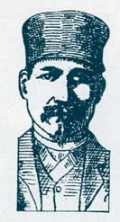
Walter Scott is the first known American pioneer of the lunch wagon. In the late 1800’s the industrial revolution was creating jobs throughout Eastern America for any immigrant that could afford to move to the United States. Along with these jobs, came long tedious and famously inhumane working conditions. By the time that many workers finished working late at night, the available restaurants and bars where they could get something to eat were closed for the night. In 1872 Walter Scott quit his job of peddling papers, purchased a horse, and commandeered a small freight wagon into the first lunch wagon.[1]
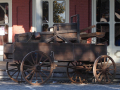
Freight wagons were designed for carrying large amounts of goods in a relatively easy way. By storing his food and supplies onto this freight wagon Walter Scott made transporting his business and constantly moving to find customers easy. As Richard Gutman stated in his book, American Diners then and now, “In what became the hallmark of diner cuisine, Scotty served only homemade items.”[2] By serving only homemade items out of his lunch wagon, Walter Scott not only started the hallmark of lunch wagon food, but also started the trend of all diners serving delicious homemade food to their customers.
Without realizing it, Walter Scott jump-started the bones of the culture of American diners, homemade food.
Within little time, other early American entrepreneurs began to try their hand at the lunch wagon business. Two of these men included Samuel Messer Jones and Charles H. Palmer.
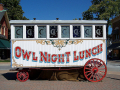
Sam Jones was a mechanical who moved to Massachusetts to start his own lunch wagon business. He continued his success by introducing his night lunch wagon to the city of Springfield Massachusetts, which he named “The Owl”. This name took fire with other lunch wagon entrepreneurs, and soon became a popular name for any lunch wagon selling food in the streets at night.
Charles H. Palmer, was an entrepreneur who eventually purchased the large majority of Sam Jones’ wagon supply before Jones moved to Springfield Massachusetts.[3] The only lunch wagon that Palmer did not purchase from Jones, Jones took with him to Springfield to ignite the lunch wagon craze there.
Palmer was the first man to receive a patent for a lunch wagon design.[4]
By 1888, a new young entrepreneur had entered the lunch wagon business. This 20 year old man was Thomas H. Buckley began building his own lunch wagons, which snowballed into the first known lunch wagon chain.
[1] Richard J.S Gutman, American Diner Then and Now (New York: HarperCollins Publishers, 1993), 14.
[4] Richard J.S. Gutman, The Worcester Lunch Car Company (Charleston: Arcadia Publishing, 2004), 9.
This page has paths:
14602097050_319ae2cc27_b.jpg2016-10-20T09:08:40-07:00Cassidy Nemickcf80a2fbfbf26cc0303a79834a26a4cb79a11a9bThe Evolution of the American DinerCassidy Nemick6splash2016-10-24T14:16:55-07:00Cassidy Nemickcf80a2fbfbf26cc0303a79834a26a4cb79a11a9b
Contents of this path:
14602097050_319ae2cc27_b.jpgmedia/thbuckleycafeinterior.jpg2016-09-22T08:51:02-07:00Cassidy Nemickcf80a2fbfbf26cc0303a79834a26a4cb79a11a9bT. H. Buckley- Come Get Your American Dream23Finding success in a new business.image_header2016-11-14T12:38:23-08:00Cassidy Nemickcf80a2fbfbf26cc0303a79834a26a4cb79a11a9b
This page has replies:
12020-02-11T02:45:51-08:00Sam Harveyd4c88ee35b1c49f1c9a8610709e97b4711dab3feSam HarveySam Harvey1plain2020-02-11T02:45:51-08:00Great Work I'm Also Looking forward to start my new architecture projectSam Harveyd4c88ee35b1c49f1c9a8610709e97b4711dab3fe
This page references:
12016-10-25T18:22:23-07:00Owl Night Lunch, in Greenfield Village in the Henry Ford Museum located in Dearborn, Michigan2Photo by Maia C at https://www.flickr.com/photos/maiac/1462877881/in/photolist-3egCCr-7hoM2X-4sp9gV-9rcfhx-nqy4PW-9dMW8t-a8yyQ3-ofWsHX-nQg4R8-nYsdLp-8WuYtb-quuRZ7-fo2y6K-ofL4Zu-amxJFt-frrN5r-8WuXhu-8WrUjR-8WrUq8-8WrTX6-a6qQFf-8WrU5c-8WuYPb-a6nYrR-49RUTC-qitLjM-nxd1Wp-8WrTea-8WuXCq-8WuX4L-8WrTJF-8WuWKC-8X4Uy6-8a26uN-8WuWS9-8WrTuc-8WrTRF-8WuXSG-8WuWvU-8WuXaS-8WuXos-8WrSG6-hArxJo-aGheQv-eAygUp-8WuWpC-JJbbE-91nnRP-6DSLr5-8ZFTDmedia/1462877881_8b5d67c5e5_z.jpgplain2016-11-14T12:33:01-08:00
12016-10-19T18:17:37-07:00Palmer Wagon Advertisement 18951C.H. Palmer Lunch Wagon Advertisement from 1985 Provided by the Worcester Historical Museummedia/Palmer (Wagon1895)smaller.jpgplain2016-10-19T18:17:38-07:00
12016-10-25T19:22:37-07:00Freight Wagon1Freight Wagon photographed by Jack Snell located at Gold Rush Days Celebration Old Town Sacramento, California in 2012. From, https://www.flickr.com/photos/jacksnell707/10823381764/in/photolist-huqEjq-9Yji4S-HSmKhh-GGZ3pt-4Lgige-djmWbm-ecyVDy-dwzHow-riTEPZ-dzNzko-7eMjYn-ecz2KG-aeHmFp-ecyB1G-dT7Vq3-f9LtfA-ectq7K-eTRry-9hbXZZ-93Fx3J-9ga7ca-rY87cN-93fBfn-9H4J4u-m2YAHc-9rejnx-9YjhW1-8PKPip-9YDwW5-hupVo6-9iszQp-ptUxTL-ecsV5T-dPYwKV-pJ6ZL1-f9wepZ-fzi5u9-9ARSW4-dwzHvu-ecttjv-HWnWDg-ectuqV-9mNioE-9v26UY-9rHXBi-9Qv84y-9hf7pN-92YiMM-a1oVcF-9H1Q6Tmedia/10823381764_3521519923_z.jpgplain2016-10-25T19:22:37-07:00
12016-10-27T09:24:01-07:00Sketch of Walter Scott1Sketch of Walter Scott from the Providence Journalmedia/Walter Scott providence journal.jpgplain2016-10-27T09:24:01-07:00