Scalar's 'additional metadata' features have been disabled on this install. Learn more.
How to Use Scalar: Digital Publishing for Libraries, Archives, and MuseumsMain MenuAbout This ProjectAbout the creators and purpose of this projectWhat Is Scalar?A brief introduction to what Scalar can do as a platform.Scalar in Libraries, Archives, and MuseumsWhy Scalar is a relevant tool for librarians and other information professionals to learn.How to Use ScalarStep-by-step instructions for creating your first Scalar book.More ResourcesAnnotated list of resources with more information on using SclarPaige Szmodisc78c538ae17b32016e9167236f1aa8c213efc288Elizabeth Swihart2a47b61d624c2ba01890fc87ecc1d0c25d5107a3Shenwei Chang5f647018e81e72f2978f28d4dfbea5d53d6dd876
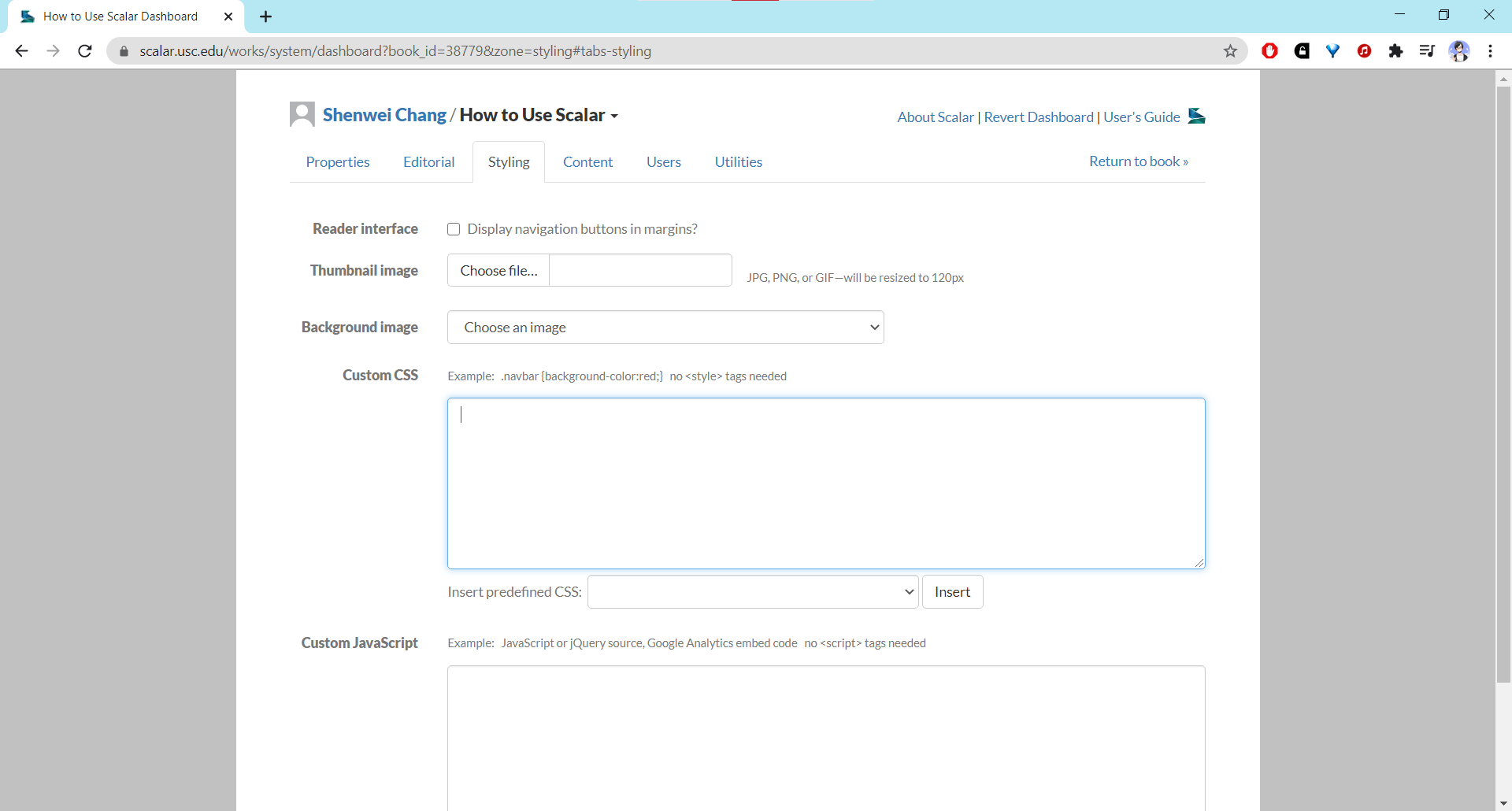
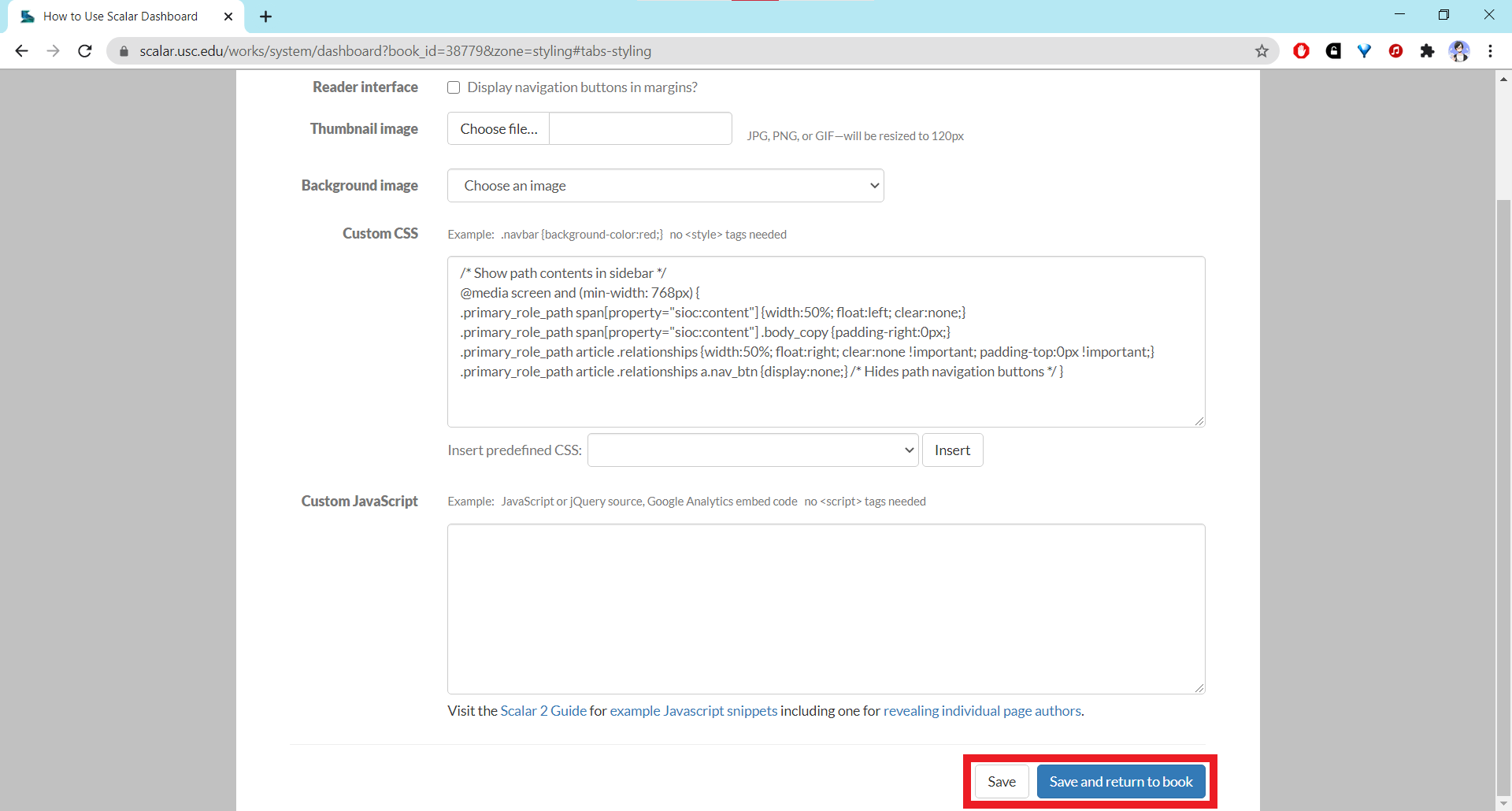
Screenshot of Custom CSS section of Styling tab on dashboard
1media/Screenshot showing CSS code field in dashboard_thumb.png2021-03-20T17:15:56-07:00Shenwei Chang5f647018e81e72f2978f28d4dfbea5d53d6dd876387791Screenshot showing the Custom CSS section of the Styling tab on the dashboardplain2021-03-20T17:15:56-07:00Shenwei Chang5f647018e81e72f2978f28d4dfbea5d53d6dd876
This page is referenced by:
12021-03-18T02:37:44-07:00Using CSS16How to use CSS to customize the appearance of your bookplain2021-03-21T08:14:07-07:00If you want to change the appearance of your book from the default settings, you can use the custom CSS functionality to override the defaults. The CSS can be customized so that the changes are reflected across the entire book, or you can customize the appearance of a particular page.
Customizing the Book
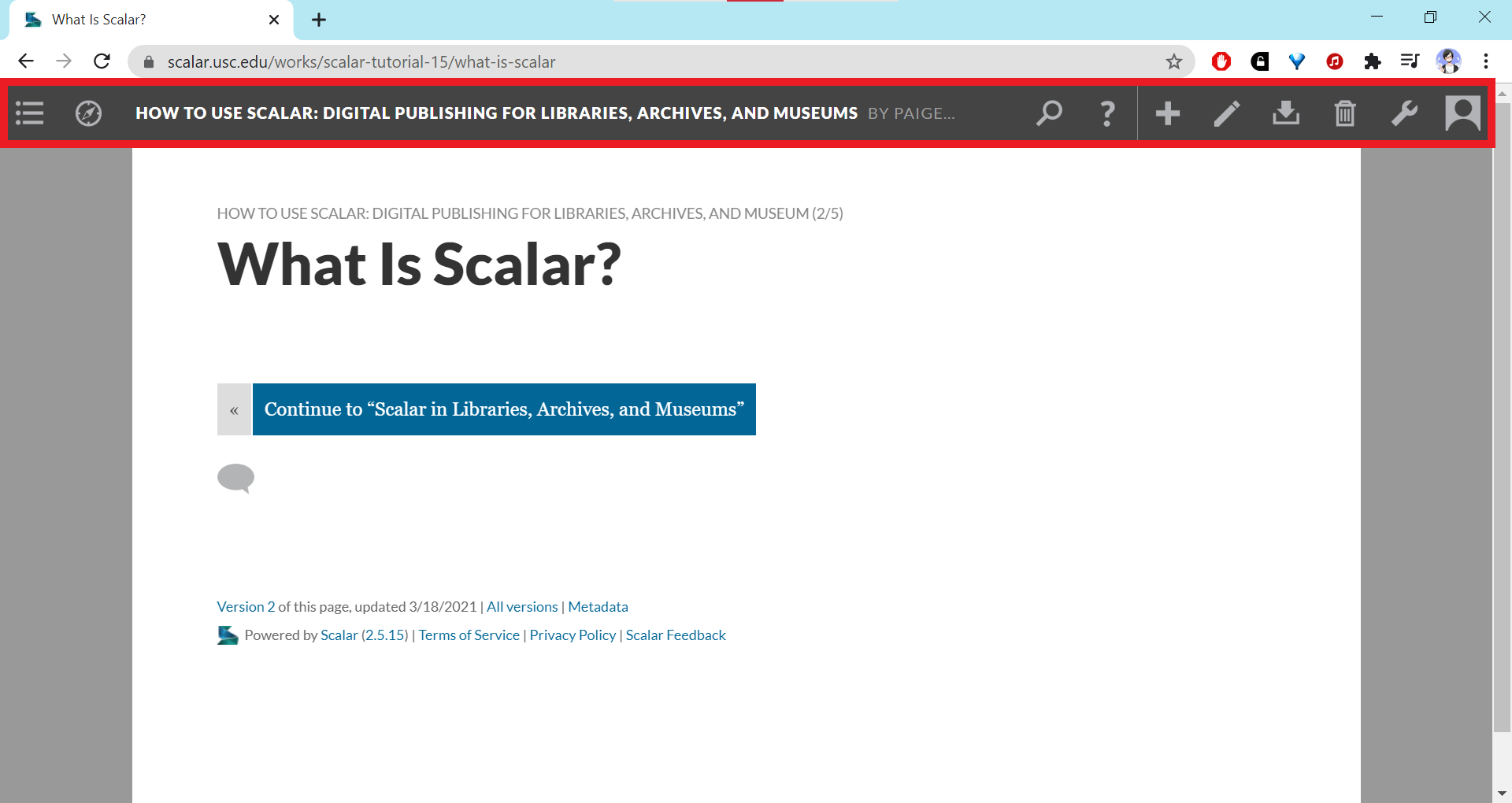
To customize the CSS for the entire book, go to the dashboard by clicking the wrench icon.
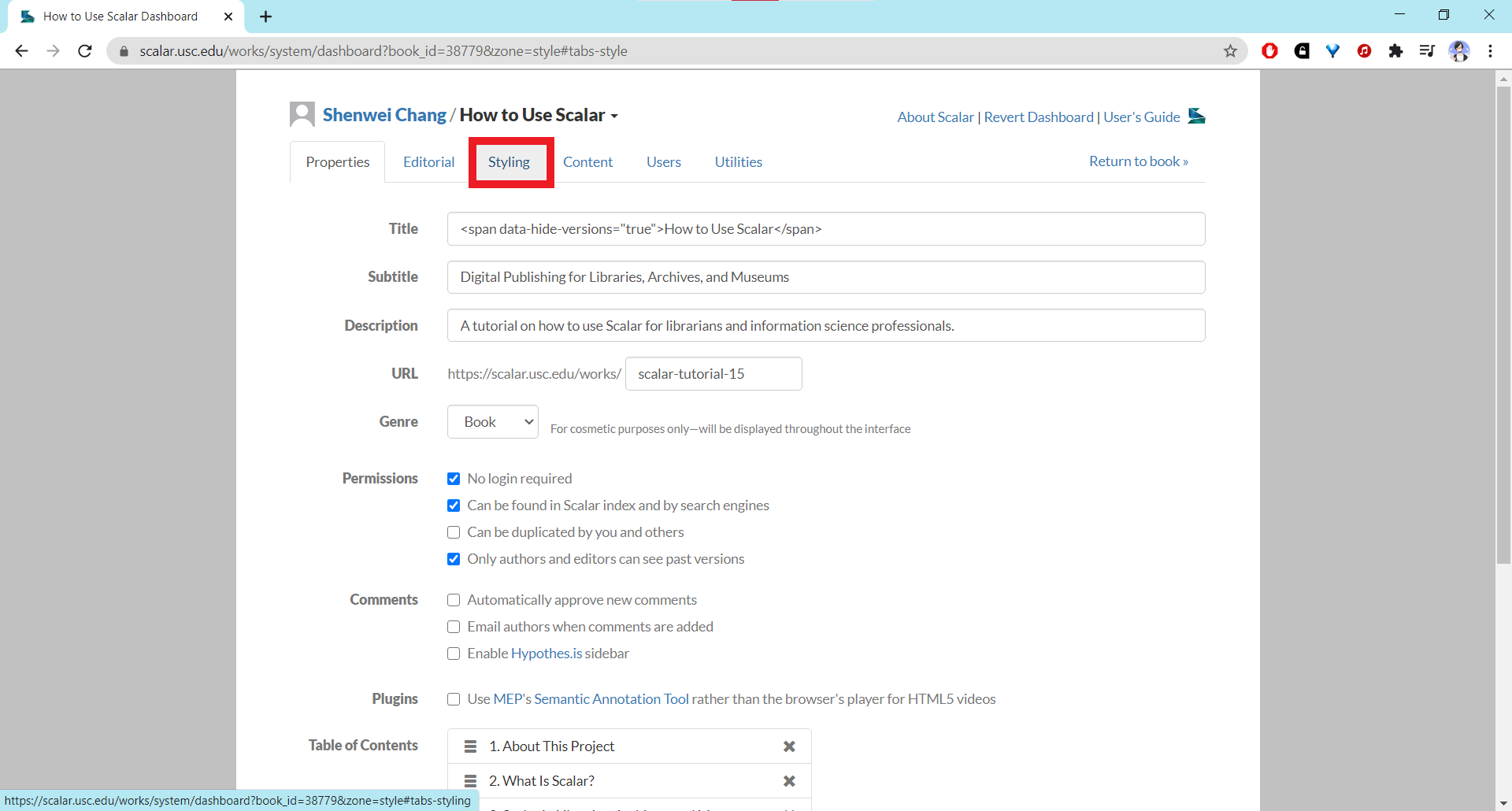
When the dashboard loads there should be a tab labeled Styling. Click on that tab.
Under the Styling tab there should be a section labeled custom CSS. You can type any CSS code directly into the input field without enclosing it in HTML <style> tags.
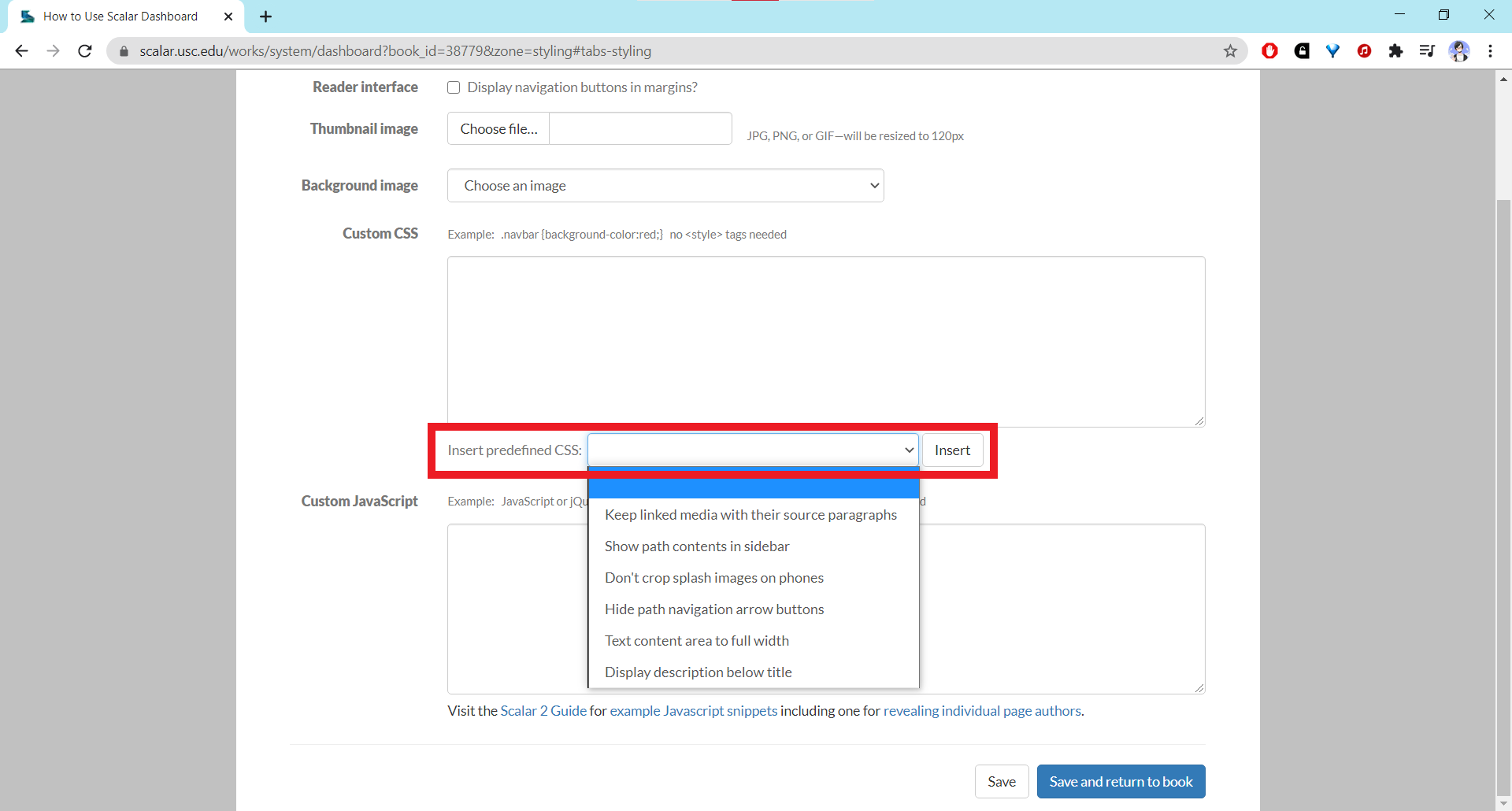
You can also insert predefined CSS provided by Scalar by using the dropdown menu below the main CSS code field. Select the desired option and click the “Insert” button.
The code should appear in the Custom CSS code field. Make sure to save your CSS using the “Save” buttons at the bottom of the page.
The screenshot below shows the effects of applying the “Show path contents in side bar” predefined CSS whose code is shown in the previous step.
Customizing a Page or Element
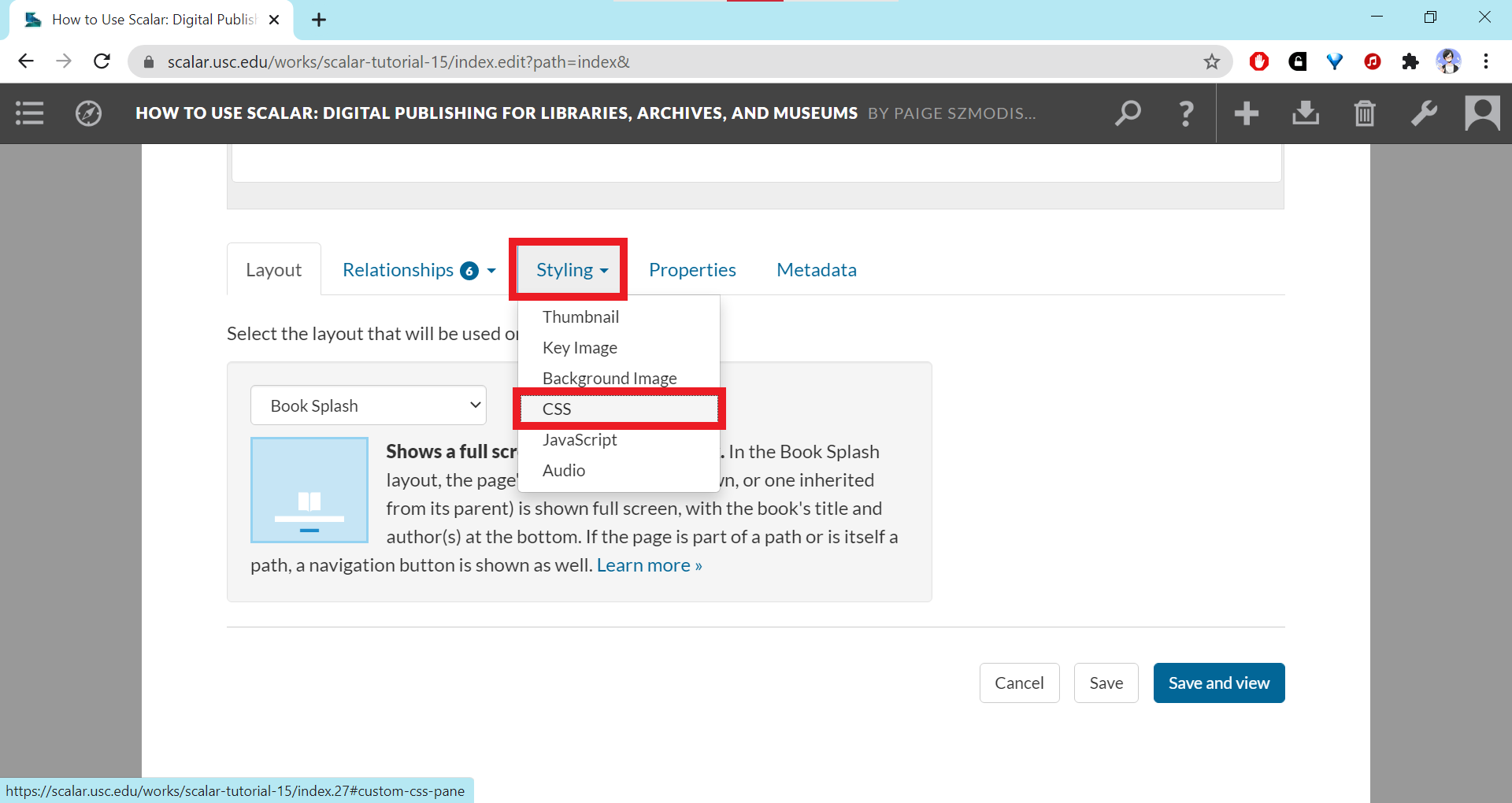
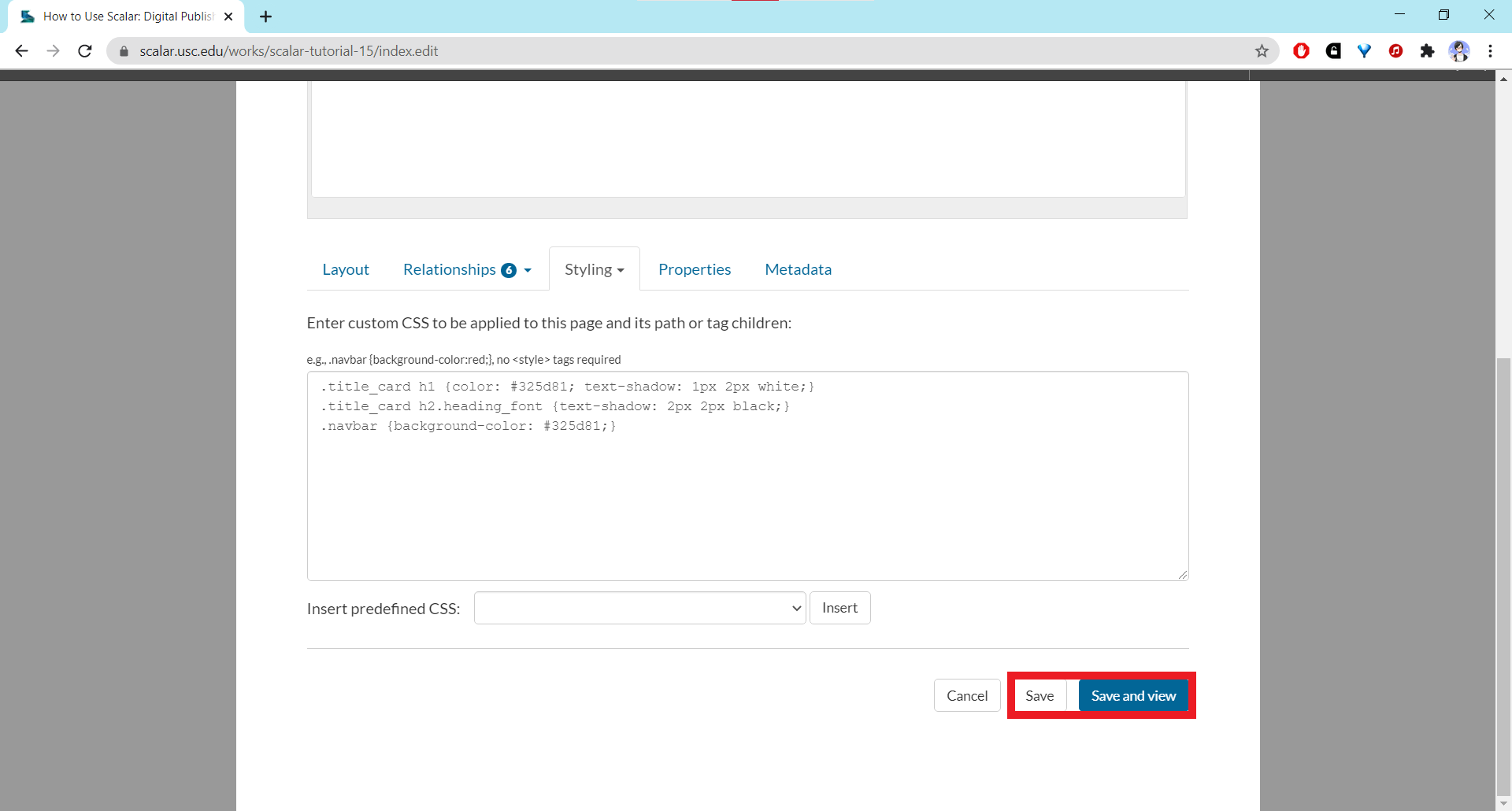
To customize the CSS for a particular page or element, open the editor for the page and click on the Styling tab underneath the text editor field. Locate CSS on the dropdown menu and click on it.
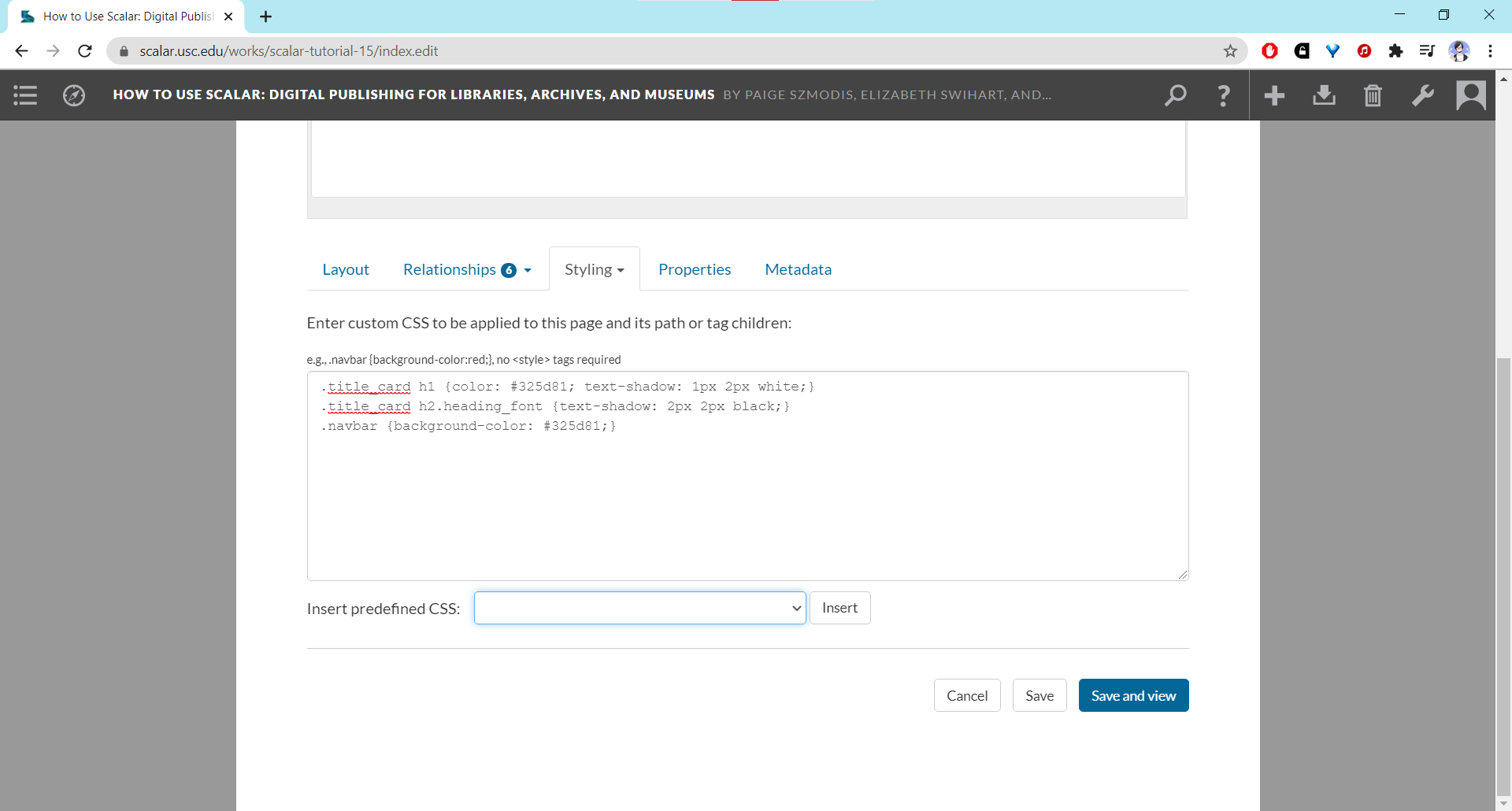
The area under the tabs should refresh to show a CSS input field. As with the CSS input field for the entire book, the CS input field here can also be used without making use of the HTML <style> tags.
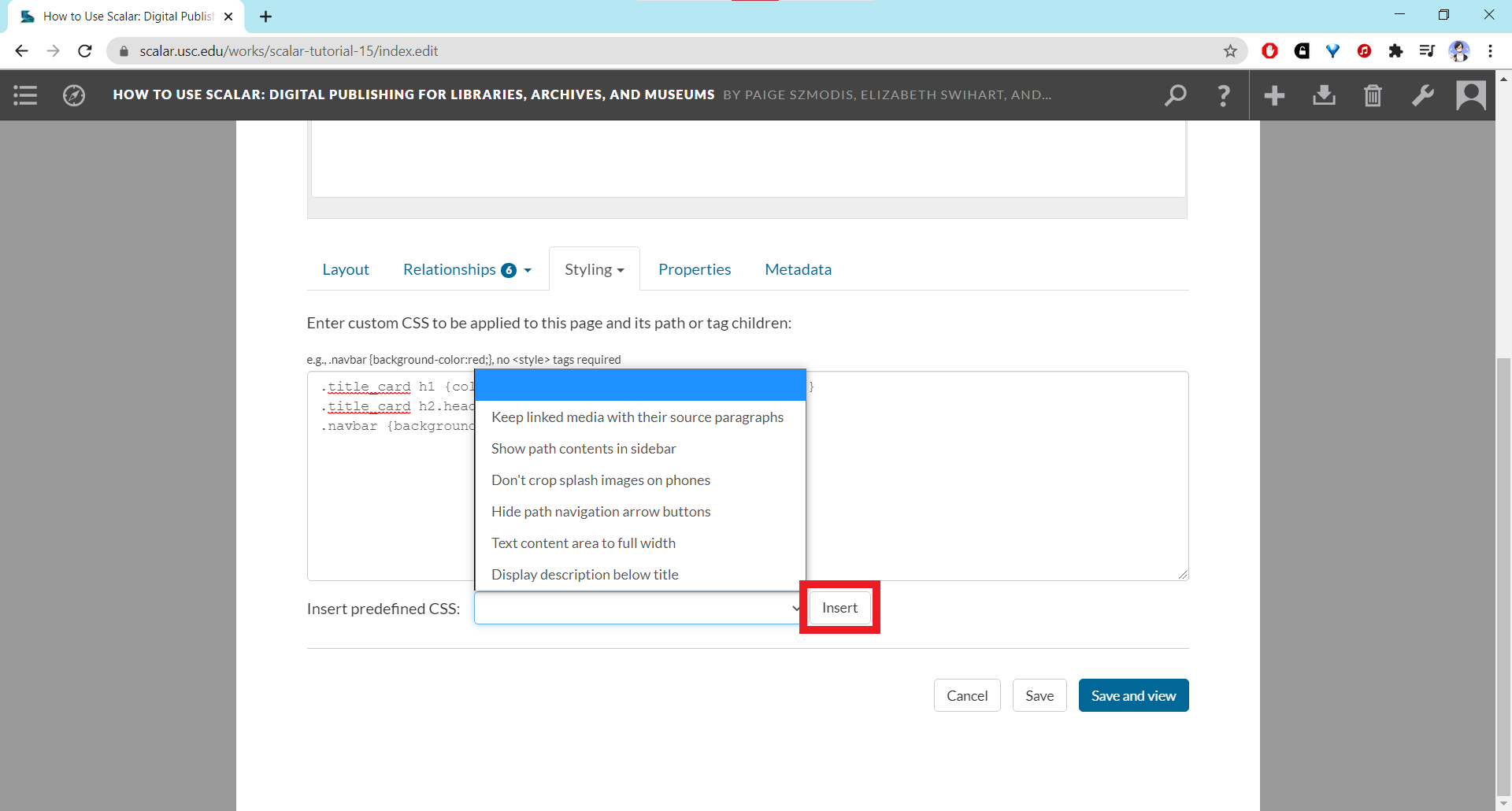
You can also insert predefined CSS using the dropdown menu. Select the desired option and click “Insert.”
The code should appear in the Custom CSS code field. Make sure to save your CSS using the “Save” buttons at the bottom of the page.
The carousel below shows screenshots of the index page before and after the custom CSS is applied. For more tips, check out the Scalar 2 user guide for how to alter the CSS. For those who are familiar with HTML and CSS, further experimenting is encouraged. CSS changes applied to pages that are paths will also apply to the other pages on the same path. Be sure to use the correct selectors for page-specific elements to avoid unwanted aesthetic changes in other parts of the book.