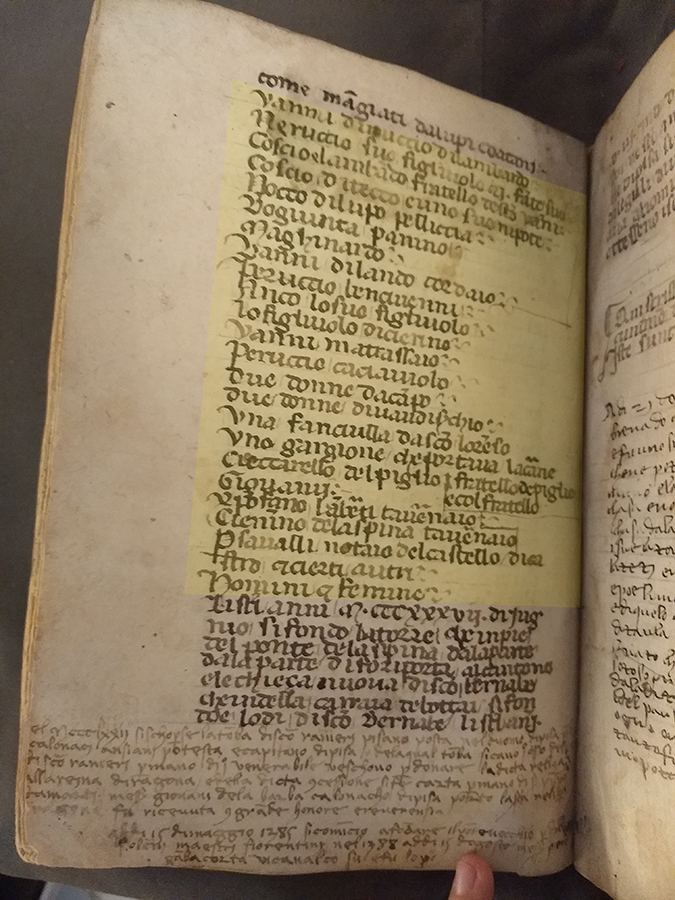
The list speaks of normal citizens of Pisa, including the little son of Cierino (lo filuolo di Cierino), someone who delivers meat (Uno gargione che portava la carne), and Persavalli, a notary of the castle of Castro (Persavalli notaio del castello di castro). It also includes a few women who are named with some level of specificity: Two women from Campo (Due donne da Campo), two women from Val di Serchio (Due donne di Vau di Serchio), and one maiden from Sancto Lorenso (Una fanciulla da Sancto Lorenso). As a group of average Pisans, their presence in the chronicle is remarkable, even moreso for the women of the list. This presence of non-elites, an underrepresented group in medieval history, in the text makes these lines an undeniably important portion of the chronicle. Their representation in the British Library's manuscript makes it an attractive alternative to the RRIISS version.