Thanks for your patience during our recent outage at scalar.usc.edu. While Scalar content is loading normally now, saving is still slow, and Scalar's 'additional metadata' features have been disabled, which may interfere with features like timelines and maps that depend on metadata. This also means that saving a page or media item will remove its additional metadata. If this occurs, you can use the 'All versions' link at the bottom of the page to restore the earlier version. We are continuing to troubleshoot, and will provide further updates as needed. Note that this only affects Scalar projects at scalar.usc.edu, and not those hosted elsewhere.
The Program as Advertisement: Art and Propaganda in Concert and Theater Programs, Exhibition Catalogues, and Brochures in Germany 1913-1961Main MenuArt and the ProgramDocumenting Cultural Events in Germany Before, During, and After the Nazi EraGermany Before World War I: The Munich Folk Theater and its HistoryGermany Before World War I: The Munich Folk Theater and its HistoryWorld War I and the Weimar RepublicConcerts, Opera, and Music Theater Programs in Germany Between 1933 and 1945Song and Choir Sheet Music of the New CommunitySong and Choir Sheet Music of the New Community, contentCulture League of German Jews 1933/4Culture League of German Jews 1933/4Invitations, Posters, and AdvertisementsThe "Great German Art Exhibition" and the "Degenerate Art" ExhibitionThe "Great German Art Exhibition" and the "Degenerate Art" ExhibitionOld Household Goods - Old Folk ArtOld Household Goods - Old Folk ArtA Glimpse from the Outside: German Publications Reviewed by the "Friends of Europe" PeriodicalA Glimpse from the Outside: German Publications Reviewed by the "Friends of Europe" PeriodicalPost-war Germany, 1945-1949Post-war Germany, 1945-1949Wagner Performances in Post-war GermanyWagner Performances in Post-war GermanyExiles Return: Brecht and Weill's Threepenny Opera in Post-war GermanyExiles Return: Brecht and Weill's Threepenny Opera in Post-war GermanyConclusionAdi Nesterebef2239f18cd6ba5c09a0dfc25b13cff6ecbf4c
Cabaret under Nazi Regime
12017-08-11T16:53:23-07:00Adi Nesterebef2239f18cd6ba5c09a0dfc25b13cff6ecbf4c1964110Cabaret under Nazi Regimeplain2017-09-14T16:30:42-07:00Adi Nesterebef2239f18cd6ba5c09a0dfc25b13cff6ecbf4c
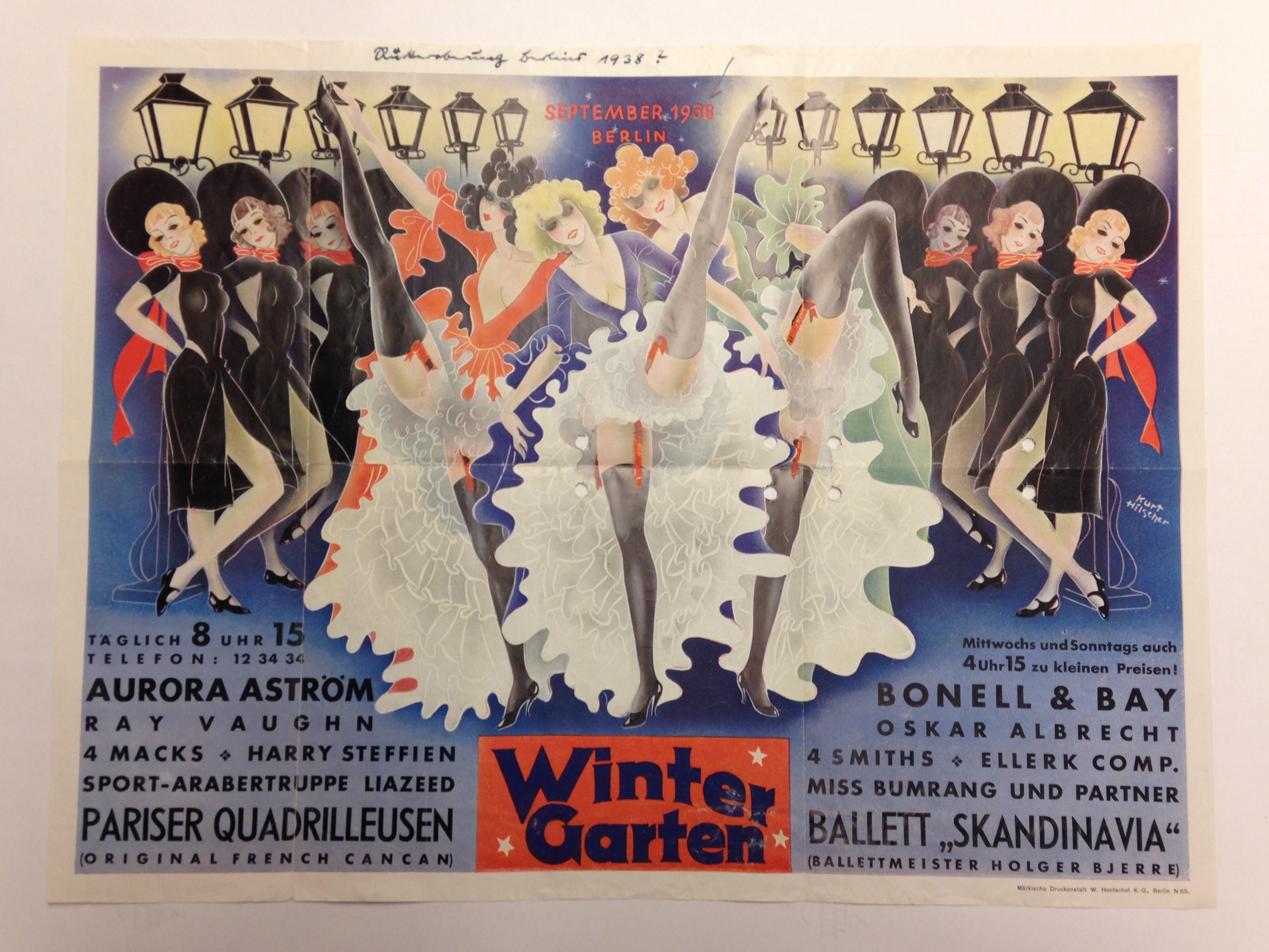
A poster announcing a cabaret evening taking place daily in the Wintergarten Theater in Berlin during September, 1938.
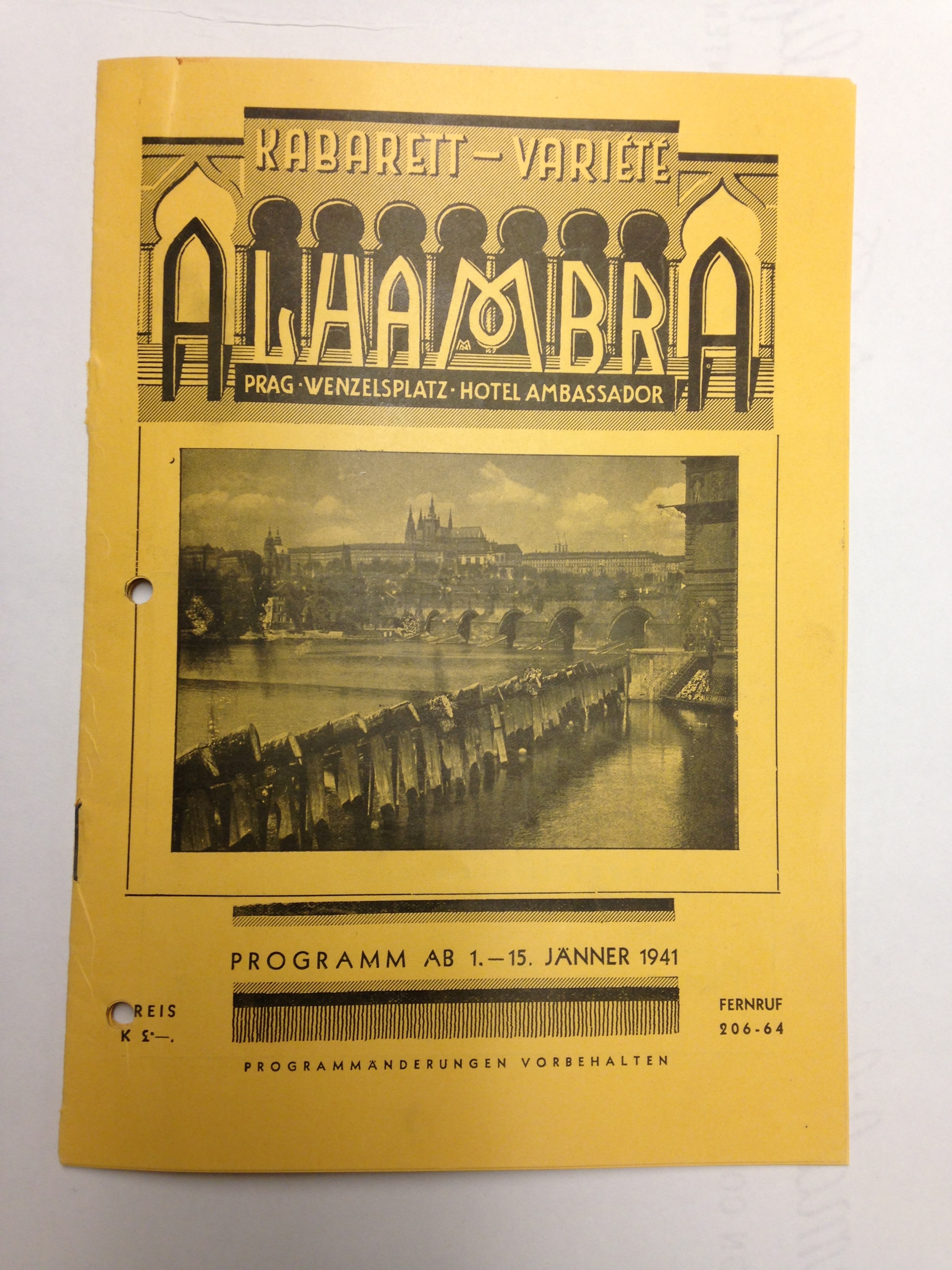
A program for cabaret performances at the Alhambra Theater in Prague from January, 1942. While originally the cabaret served as a means to criticize fascist regimes, this is an example of a cabaret working in the service of the regime rather than subverting it. Among the artists featured in this program is Olly van Dyk who has just recently returned from a tour performing for Nazi soldiers in occupied lands. She and her ensemble members were, according to the program, “always housed in solider quarters and fed from the field-kitchen, which made them feel like soldiers themselves.”
This page has paths:
1media/17 cut for title.jpeg2017-06-26T13:59:07-07:00Adi Nesterebef2239f18cd6ba5c09a0dfc25b13cff6ecbf4cArt and the ProgramAdi Nester60Documenting Cultural Events in Germany Before, During, and After the Nazi Eraimage_header4726062017-09-16T16:38:25-07:00Adi Nesterebef2239f18cd6ba5c09a0dfc25b13cff6ecbf4c