Thanks for your patience during our recent outage at scalar.usc.edu. While Scalar content is loading normally now, saving is still slow, and Scalar's 'additional metadata' features have been disabled, which may interfere with features like timelines and maps that depend on metadata. This also means that saving a page or media item will remove its additional metadata. If this occurs, you can use the 'All versions' link at the bottom of the page to restore the earlier version. We are continuing to troubleshoot, and will provide further updates as needed. Note that this only affects Scalar projects at scalar.usc.edu, and not those hosted elsewhere.
Postcolonial Speculative FictionMain MenuIntroduction to the ProjectCourse TextsOther Course MediaAuthor ResourcesThis page will provide links to authors' websites and other information, such as interviews.Blogs by Dawn HicksBlogs by Matthew HicksBlogs by Kiisha HilliardBlogs by Mary LaffidyBlogs by Chelsea LarymoreRhonda Knight6e1aac8b66b350de4366c4aa7ff320a7de3beb6a
A Spider, a Girl, and a Guitar
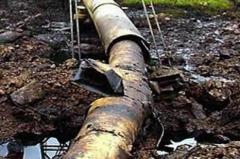
1media/spider_robot_3a.jpg2019-04-08T19:06:01-07:00Matthew Hicks6a557b24a786aa0747938d11b6ae37e5645b8818105818The enslaved and the colonized in Nnedi Okorafor's "Spider the Artist"image_header2019-04-30T22:26:56-07:00Rhonda Knight6e1aac8b66b350de4366c4aa7ff320a7de3beb6aSpider the artist is a mechanical creature, one of many, whose sole purpose is to defend and repair an oil pipeline in Nigeria. Eme is a woman living in poverty in an abusive relationship. Her guitar is her only escape from her physical and emotional despair. When she can, Eme slips away from her house and plays her guitar near a pipeline that runs through her village. Spider was attracted by her guitar playing and built its own stringed instrument. The two develop a sort of relationship in which they have bonded over music.
The irony is that Eme’s husband, Andrew, makes some portion of his income by stealing oil from the pipeline—a dangerous prospect. There’s an interesting interplay between the machine and Eme, who is a member of an economically colonized culture. They engage in a very tender and loving relationship, even though the nature of the machine is to kill humans who get too close to the pipeline. There are many of these mechanical spiders, all a sort of A.I. They don’t seem to have any freewill, yet, spider chooses to befriend Eme. The spiders are slaves, they represent an extension of their masters’ will, the master being the pipeline company that built and ostensibly controls them. Spider the Artist defies that. In fact, Spider saves her life from a spider ambush against oil thieves.
Has Eme stumbled upon a truth that our nation didn’t learn until many years too late, the truth of agency? The prevailing wisdom, once upon a time, was that African slaves were chattel, legally defined as such. They were objects to be used, extensions of their slaveholders’ will. Despite that belief—arguably still held by some—they were thinking and feeling beings. Eme wasn’t in the power position and, consequently, was able to recognize the “humanity” in the victim of control.
In the end, the spiders set a trap for oil thieves. They allow a large group to congregate near a leak in the pipeline and use fire to kill many. Okorafor doesn't make it clear if this is the will of the spiders or the will of the spiders' controllers. In fact, the controllers are never identified. It's clear that the spiders are capable of learning and adapting, but is that what happens here? It seems to me that, probably, the spiders were instructed to do something by the pipeline owners. Maybe they were left to their own devices to decide what to do, but they were told to do something. Spider the Artist makes a choice to save Eme, despite the instructions. He/It demonstrates some level of agency by defying the will of the masters.
This page has paths:
12019-04-30T22:12:19-07:00Rhonda Knight6e1aac8b66b350de4366c4aa7ff320a7de3beb6aBlogs by Matthew HicksRhonda Knight10plain8697712019-05-06T12:01:42-07:00Rhonda Knight6e1aac8b66b350de4366c4aa7ff320a7de3beb6a
12019-03-07T14:01:41-08:00Rhonda Knight6e1aac8b66b350de4366c4aa7ff320a7de3beb6aBlogs about PetrofictionRhonda Knight6plain2019-04-30T23:27:41-07:00Rhonda Knight6e1aac8b66b350de4366c4aa7ff320a7de3beb6a
This page has replies:
12019-05-07T15:57:51-07:00Kiisha Hilliardd91712a2483a528aa121e75983c3454ac050719fHumanizationKiisha Hilliard1plain2019-05-07T15:57:52-07:00You create a distinction between the will of the robots and the will of their masters. The humanization of the spider robots is an interesting perspective. Many works often posit artificial intelligence against humanity, so I like how you show that the assumed issue between the two stems from the creator of the technology. Artificial Intelligence mainly takes on the ideologies and functions provided by their creator. What you eloquently show with Okorafor's work is the way she shows that there is a human part of technology that cannot be influenced by the creator or master. There is a hybridity in the robots with the AI and the humanity. The humanity part allows the robots to make choices. Would you agree that in a way these robots have more choice than the African Slaves that you mentioned?Kiisha Hilliardd91712a2483a528aa121e75983c3454ac050719f
12019-04-08T19:11:25-07:00Nigerian oil pipeline after explosion1http://www.google.com/url?sa=i&rct=j&q=&esrc=s&source=images&cd=&ved=2ahUKEwiz8aLji8HhAhWNr54KHS1oANcQjRx6BAgBEAU&url=http%3A%2F%2Fdunyanews.tv%2Fen%2FWorld%2F288601-12-dead-in-Nigeria-oil-pipeline-explosion&psig=AOvVaw0ag9i7wZEPCknsxev2Cc7s&ust=1554833302112501media/pipeline after explosion.jpgplain2019-04-08T19:11:25-07:00