Thanks for your patience during our recent outage at scalar.usc.edu. While Scalar content is loading normally now, saving is still slow, and Scalar's 'additional metadata' features have been disabled, which may interfere with features like timelines and maps that depend on metadata. This also means that saving a page or media item will remove its additional metadata. If this occurs, you can use the 'All versions' link at the bottom of the page to restore the earlier version. We are continuing to troubleshoot, and will provide further updates as needed. Note that this only affects Scalar projects at scalar.usc.edu, and not those hosted elsewhere.
Postcolonial Speculative FictionMain MenuIntroduction to the ProjectCourse TextsOther Course MediaAuthor ResourcesThis page will provide links to authors' websites and other information, such as interviews.Blogs by Dawn HicksBlogs by Matthew HicksBlogs by Kiisha HilliardBlogs by Mary LaffidyBlogs by Chelsea LarymoreRhonda Knight6e1aac8b66b350de4366c4aa7ff320a7de3beb6a
"Othering" in Nnedi Okorafor's Lagoon
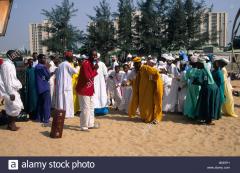
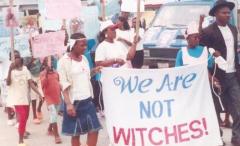
12019-04-08T10:43:23-07:00Matthew Hicks6a557b24a786aa0747938d11b6ae37e5645b88181058119An exploration of some of the ways colonialism has left an imprint on Nigeriaimage_header2021-01-12T18:48:35-08:00Mary Laffidybbaa6fac1a2d68d7d027a0bc645072eb108dbf5c“An alien invasion in Nigeria? Whodathunkit…” This was my first thought when the plot of Nnedi Okorafor’s Lagoon started to become clear. Whoever heard of aliens having any interest in a nonwhite culture? This was the idea at the root of my surprise. Is it racist? Certainly not, I’m not that guy. It is, however, an example of how our implicit biases shape our expectations. The absurdity of the thought occurred to me when I couched it in this way (all irony included for your benefit), “who in the world would write a story about aliens landing on earth and visiting a culture different from mine populated by people who don’t look like me?” What we have here is a case of “othering”, albeit much more benign than what Edward Said discusses in his book, Orientalism. Okorafor addresses this in her book. Often, her characters perform this “othering” to each other, all while trying to jockey for the position of privilege and power: Father Oke, a priest who is apparently a complete fraud, uses his position to obtain wealth and comfort. It’s unclear if he actually believes in his own religion. It seems that there is an explosion of churches in Nigeria in which slapping women suspected of being witches is common practice. There’s also the obvious and problematic remnant of colonialism with a Western pseudo-Christian religion gaining more and more followers in Nigeria. This isn’t a creation for the book, either.
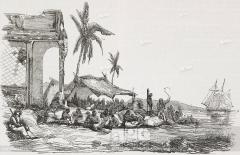
One of the main characters, Adaora, is emblematic of the troubled relationship with the west. She is a Nigerian, born and raised. She is, however, educated in Western fashion as a scientist, a marine biologist. She works as a professor and has rejected the traditional homemaker role of women. She has significant conflict with Father Oke because her husband is a follower of his church. The trio of main characters—named Adaora, Agu, and Anthony—are, very early in the novel, taken into the ocean by aliens. This begs many questions for me. It’s reminiscent of the middle passage because there all taken into the water by a foreign power and emerge changed in significant ways. They seem bound to a fate after the incident, rather than having the agency to choose for themselves. Alternatively, it also seems very similar to Christian baptism ceremony. Either of these have serious post-colonial implications. . Okorafor’s writing evokes many difficult to answer questions about the post-colonial environment in Nigeria, as well as containing many references to the slave trade and middle passage. Okorafor weaves an interesting story which is also very thought provoking because of the connotations involved. She demonstrates how the effects of colonialism and the slave trade have lingering consequences.
Okorafor, Nnedi, Lagoon, Saga Press, 2016. Said, Edward W. Orientalism. Vintage Books, 2004.
This page has paths:
12019-04-30T22:12:19-07:00Rhonda Knight6e1aac8b66b350de4366c4aa7ff320a7de3beb6aBlogs by Matthew HicksRhonda Knight10plain8697712019-05-06T12:01:42-07:00Rhonda Knight6e1aac8b66b350de4366c4aa7ff320a7de3beb6a
This page has replies:
12019-05-04T19:29:49-07:00Dawn Hicks851fbe6ff47c68a2de1a4f5f7b6db729bc4d659aThe choice of usingDawn Hicks1plain2019-05-04T19:29:50-07:00The choice of using Nigeria as the country chosen by high order beings to introduce advance technology was a brilliant move by Okorafor. It turns the idea of who is entitled to receive superior knowledge on its head. When reading about Nigeria, the country sounds chaotic, with cultures colliding, traffic rubbernecking, and people everywhere living out in society. Not like Americans tucked away in front of their TVs. When the aliens introduce themselves in Lagos Nigeria the chaos gets amped. I kept wandering are they going make it or burn it all down? The location is the ultimate reminder that America is not the definition of a Global society.Dawn Hicks851fbe6ff47c68a2de1a4f5f7b6db729bc4d659a
12019-05-04T20:54:36-07:00Mary Laffidybbaa6fac1a2d68d7d027a0bc645072eb108dbf5cMiddle Passage/Christian BaptismMary Laffidy1plain2019-05-04T20:54:36-07:00The idea that Ayodele sucking the three main characters into a tsunami is an allegory for the Middle Passage and even Christian baptism is so interesting to me. The Middle Passage makes sense, but I think there's a stronger claim in the ways that it's similar to baptism. They are fully emerged in water and are permanently changed by a force that is unknown and greater than them. Because they were chosen they have a unique purpose in helping Ayodele peacefully transition to Nigeria and prepare it for colonization. It's very similar to the missionary work expected of baptized Christians. I do have a question though: you propose that these allegories are postcolonial. Do you think that this was purposefully done by Okorafor or maybe just something she unknowingly did? Is it "good" or "bad?"Mary Laffidybbaa6fac1a2d68d7d027a0bc645072eb108dbf5c
12019-05-05T10:54:21-07:00Matthew Hicks6a557b24a786aa0747938d11b6ae37e5645b8818middle passage/baptismMatthew Hicks1plain2019-05-05T10:54:21-07:00Hey Mary! I suspect that the middle passage analogy is made up in my mind, like I was looking for something and found it because of my preconceived expectations. The baptism thing, I think that was an intentional choice by the author. It seems to fit too perfectly to be a coincidence. And they both have strong post-colonial flavor. the baptism does especially. Baptism is a Christian rite, which is to say it is a Western tradition. its very presence in Africa indicates a colonial, or in this case post-colonial, presence.Matthew Hicks6a557b24a786aa0747938d11b6ae37e5645b8818
This page references:
12019-04-08T10:51:05-07:00praying at Bar Beach3https://www.alamy.com/stock-photo/beach-nigeria-africa.htmlmedia/praying at bar beach.jpgplain2019-04-08T11:04:54-07:00
12019-04-08T10:44:51-07:00Slave market in Africa2https://www.agefotostock.com/age/en/Stock-Images/Rights-Managed/DAE-BA032275media/African slave market.jpgplain2019-04-08T11:22:53-07:00