Thanks for your patience during our recent outage at scalar.usc.edu. While Scalar content is loading normally now, saving is still slow, and Scalar's 'additional metadata' features have been disabled, which may interfere with features like timelines and maps that depend on metadata. This also means that saving a page or media item will remove its additional metadata. If this occurs, you can use the 'All versions' link at the bottom of the page to restore the earlier version. We are continuing to troubleshoot, and will provide further updates as needed. Note that this only affects Scalar projects at scalar.usc.edu, and not those hosted elsewhere.
Postcolonial Speculative FictionMain MenuIntroduction to the ProjectCourse TextsOther Course MediaAuthor ResourcesThis page will provide links to authors' websites and other information, such as interviews.Blogs by Dawn HicksBlogs by Matthew HicksBlogs by Kiisha HilliardBlogs by Mary LaffidyBlogs by Chelsea LarymoreRhonda Knight6e1aac8b66b350de4366c4aa7ff320a7de3beb6a
Icon: What happens when you stare into the abyss?
1media/Deeper-into-the-abyss-300x225.jpg2019-04-14T18:46:22-07:00Matthew Hicks6a557b24a786aa0747938d11b6ae37e5645b88181058115Imperialism and exceptionalism in westernersimage_header2019-05-08T02:36:34-07:00Rhonda Knight6e1aac8b66b350de4366c4aa7ff320a7de3beb6aWhoever fights monsters should see to it that in the process he does not become a monster. And if you gaze long enough into an abyss, the abyss will gaze back into you.
Friedrich Nietzsche (pardon the poor translation)
What happens when two soft Westerners arrive in a remote west African village looking for a warlord to write a story about? In Nnedi Okorafor’s story, "Icon", we get an alternative to the story pitched by Western media. Most media and, specifically reporters, would have us believe that they are brave heroes who venture forth into the great unknown on our behalf.
Richard and Nancy, the most suburban white people names an author could think of (despite Richard being Black), have travelled to the darkest reaches of the dark continent to get the aforementioned story.They meet Icon, the warlord in question, who isn’t at all what they expect. What do they expect, you ask? They expect their Americanism to protect them from all harm. They are, after all, from the most exceptional country on earth. Their Americanism should be recognized and respected by all the people of the earth, right? Does not their nationality afford them certain conciliations from all others, like guarantees of safety? Icon introduces them to the harsh and cold reality of the world, a world of violence that is a daily occurrence for him and his army, a way of life. Our journalists find themselves staring into the abyss. -Porn (hyphen porn). They are trying to write a -Porn story. Give the people what they want, right? In this case, it doesn’t turn out quite that way. They suffer from the illusion of American exceptionalism. Icon offers them a glimpse into the abyss. Unfortunately for them, they must become monsters to survive the encounter. Icon demands that they take the life of an innocent person to avoid death themselves. The journalists want to understand death and violence, but when confronted with the reality of it, they balk. They don't actually want to understand it, they want to be tourists in that world.
Journalists engage in -porn journalism all the time. In this case, it’s war porn (don’t google that, you won’t like the results). Strangely, they often have the idea that their Western culture exceptionalism will protect them from harm. Sure, they know intellectually that it’s dangerous, but they don’t internalize it. They don’t stare into the abyss. Some lose their lives in the pursuit, most don’t.. What are we to make of this? We don’t have a magic shield around us, despite what Americanism would have you believe. There are lives out there in the world that our Western culture hasn’t prepared us for and our Western sensibilities cannot fathom. I guess the answer is that if you’re not ready to become a monster, don’t go around monsters…
This page has paths:
12019-04-30T22:12:19-07:00Rhonda Knight6e1aac8b66b350de4366c4aa7ff320a7de3beb6aBlogs by Matthew HicksRhonda Knight10plain8697712019-05-06T12:01:42-07:00Rhonda Knight6e1aac8b66b350de4366c4aa7ff320a7de3beb6a
This page has replies:
12019-05-04T21:03:03-07:00Mary Laffidybbaa6fac1a2d68d7d027a0bc645072eb108dbf5cHyphen PornMary Laffidy1plain2019-05-04T21:03:03-07:00I've read two posts about this short story so far and both of them make me think of completely different things. Your focus on American journalism immediately brought to mind the travel shows on CNN with Anderson Cooper and (RIP) Anthony Bourdain. They seem to only be "showing the facts" and the real lives of people from other countries, but I really want to go to Netflix now and rewatch some of these specials from this perspective (thanks to COM theory/Nietzsche I now realize nothing can be done without bias). Do you think that we can ever portray other cultures accurately without some kind of appropriation or even without a biased, American lens?Mary Laffidybbaa6fac1a2d68d7d027a0bc645072eb108dbf5c
12019-05-07T17:44:20-07:00Kiisha Hilliardd91712a2483a528aa121e75983c3454ac050719fAmerican JournalismKiisha Hilliard1plain2019-05-07T17:44:20-07:00"Icon" presents a problem with American journalism that is present in society. The journalist are so concerned with writing a good story, especially about 3rd world countries, that they are detached from the experiences of the locals. Okorafor does a good job with "Icon" because it takes the journalists off their high horse, and the story makes these characters interact with the locals. No longer can American Journalist stand on the side lines and exoctize what is happening in third world countries. I like your commentary on the hyphen porn because it comments on how American journalist continually exoctize. Icon is making the reporters get their hands dirty, and it puts them on the same field as the locals.Kiisha Hilliardd91712a2483a528aa121e75983c3454ac050719f
12019-05-08T03:31:51-07:00AnonymousFake NewsChelsea Larymore1plain2019-05-08T03:31:51-07:00You bring up some really interesting points about the integrity of American reporters. It's really relevant to what is going on in the media right now with all the claims of "fake news." Reporters often over-exaggerate or even embellish to provide the best story and get the best rating. I am recollecting on the video of the weather reporter appearing as though he cannot stand up straight due to incoming hurricane winds, but then someone walks past him in the background and is having no trouble. Clearly the fake news does not begin and end with political related news. Since it is such a widespread problem, how does the public identify the trustworthy reporters? And if none of them are trustworthy, how can the public keep up with current events? Do we simply ignore current events and go about our lives in ignorance? I don't anticipate answers to these questions, but I do feel like they are worth consideration.Chelsea Larymore
This page references:
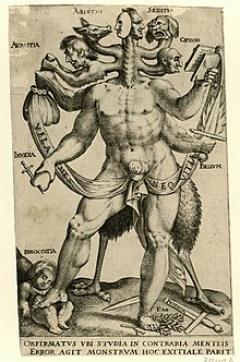
12019-04-14T19:29:23-07:00A polemical allegory presented as a five-headed monster, 1618, engraver unknown2http://www.geheugenvannederland.nl/?/nl/items/RIJK04:RP-P-OB-77.294/&p=1&i=7&st=Remonstranten%20en%20contraremonstranten&sc=%28cql.serverChoice%20all%20Remonstranten%20%20AND%20en%20%20AND%20contraremonstranten%29/media/220px-Arminianism_as_five-headed_monster.jpgplain2019-04-21T10:11:01-07:00