Amr Diab - Nour El Ein عمرو دياب - نور العين
1 2023-03-08T01:06:23-08:00 Marc Thorman f2b57c456bb408491ab2cdffaf869c4905420054 30914 1 Egyptian Pop Song plain 2023-03-08T01:06:24-08:00 Marc Thorman f2b57c456bb408491ab2cdffaf869c4905420054This page is referenced by:
-
1
2018-08-22T19:58:42-07:00
AMERICAN MUSIC IN THE ARAB WORLD DURING THE TWENTIETH CENTURY
92
plain
778654
2026-08-14T12:25:09-07:00
During the 20th century, the music of the Arab world underwent a process of fusion with popular forms of American music. This era of experimentation and openness was spearheaded primarily in Egypt, Lebanon, and Lybia by young people who had grown up in an era of globalization and cultural exchange. Musicians fused Arabic melodies, rhythms, and instruments with jazz, rock, funk, and hip hop, generating international attention.1930 - 1970
Egypt is the cultural center of MENA because of its geographical position and its sheer size. Egyptian music became dominant because of the film industry. From the 1920s through the 1980s Cairo was known as "the Hollywood of the East." The great Egyptian singers of the mid-20th century regularly appeared in films. Movies and state-sponsored radio broadcasts made the Egyptian dialect the most widely understood Arabic variant.
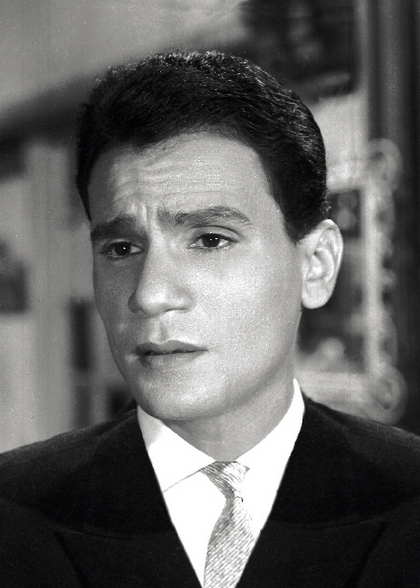
Abdel Halim Hafez sings "Ya Alby Ya Khaly" by Mohammed Abdel Wahab, the "father of modern Egyptian song."
The modern Arab orchestra originated in the 1930s when Wahab began to arrange songs for large ensembles that mixed traditional instruments of the takht with large numbers of violins and other Western string instruments. Wahab is quoted as saying "Foreign influence, adapting to the world renaissance, is necessary for evolution. We must bring western instruments into Eastern music…and new melodies…but also hold to our eastern spirit.” Orchestras provided a lush sonic background for the great tarab singers of the early 20th century. Tarab describes deep feeling, especially states of ecstacy. Tarab singers sometimes spent an hour on a single song, repeating lines of poetry with improvised variations that built up in intensity until listeners were moved to an ecstatic state. Most notably, Umm Kalthum, "the Voice of Egypt," is famous for her rendition of songs by Wahab, such as "Enta Omri".
Wahab also introduced harmony and Western instruments such as saxophone and electric guitar, as well as rhythms from American rock & roll, especially in short songs that were suitable to movies that featured popular singers, such as "Ya Alby Ya Khaly." Hafez's good looks and deep romantic voice were ideal for the new type of romantic style of tarab he introduced in his sixteen classic films.
1970 - 2000
SHAABI
As the 1970s waned so did the tarab style of music and the arrangements pioneered by Wahab. In 1973, Egypt's new president Anwar Sadat instituted an "open door" policy (infitah) that moved culturally toward the West. Electronic instruments and production methods as well as pop styles like disco influenced Shaabi, a working-class form of music, which became popular in Cairo in the 1970s. The word literally means "music of the people" and has its roots in rural song. Shaabi was now the new music, the music of the street, distributed on pirated tapes and CDs. The genre used political commentary and humor to express the difficulties and frustrations of modern Egyptian life. Shaabi sounded new because it had absorbed the then-current American popular musical sounds and styles and mixed them with Egyptian pop.ROCK
Omar Korshid "Ah Ya Zien" from Giant + Guitar album (1974)
Omar Korshid (1945 – 1981) was born in Cairo in 1945 and died in an automobile accident in 1981. "Ah Ya Zien" is a traditional song that Korshid reinterprets in psychedelic surf rock style, utilizing his signature Feder Stratocaster, accompanied by darbuka and synthesizer. Khorshid's musicality in orchestra performances, original songs and film scores was considered revolutionary at the time in the Middle East. His unique style inspired many musicians both in the Middle East and the Americas.
Elias Rahbani "Beat" (1973)Elias Rahbani (1938-2021) was a Lebanese musician, composer, songwriter, orchestra conductor, and reality television personality. He composed more than 2,500 songs, including 2,000 in Arabic. He wrote the soundtrack for more than 25 films and a number of TV series. He composed songs for a number of artists, including his sister-in-law Fairuz. "Beat" features the iconic rock instruments — electric guitars, drum set, electric organ, saxophone — and strong rhythm rooted in rock.
JAZZ
Salah Ragab "Oriental Mood" from Egypt Strut album (1974)
Salah Ragab was an Egyptian drummer, born in the city of Cairo in 1935. As a major in the Egyptian army, Ragab selected musicians from the ranks and eventually formed the Cairo Jazz Band. The band performed original works in addition to music by American jazz greats Count Basie and Dizzie Gillespie, appearing at American University in 1969, then in Alexandria and Cairo.
Fairuz "Wahdon" ("Alone"), title track of 1979 album
Songs and instrumental arrangements the album Wahdon were composed by Faizul's son, Ziad Rahbani. The lyrics to the title song were written by renowned Lebanese poet Talal Haider. Faizul's deeply emotive singing perfectly reflects the melancholy and sense of loss expressed in Haider's poetry. Her vocal style is rooted in the melismatic, microtonal tradition of tarab. The slow soft jazz arrangement consists of violins playing harmony as a background for piano and saxophone, with the deep rich support of electric bass guitar.DISCO AND FUNK
Fairuz "Al Bosta" ("The Bus") (1979)
This song by Ziad Rahbani, originally composed for a 1974 play, also appeared on Wahdon in an upbeat funky arrangement. The lyrics tell a humorous story of a hot, cramped bus ride between the villages of Hamaya and Tannourine. Lyrics of "Al Bosta"
Ahmed Fakroun "Nisyan" ("Forgetfulness") (1977)Libya's indisputable synth-pop legend is Ahmed Fakroun (b. 1953). Fakroun began shaping his own musical language in the 1970s and emerged in the 1970s as a trailblazer of "Arabic electro-pop," blending traditional North African folk and raï rhythms with European synth-pop.
Fakroun is a singer as well as an multi-instrumentalist. He plays the Arab saz, mandol and darbuka, as well as guitar, bass guitar and keyboards. His career came to an abrupt halt after the US bombing of Libya in 1986. Silenced by the regime and banned from traveling, Fakroun retreated to his home studio. In recent years, his catalogue has been rediscovered by DJs and through the reissue label Habibi Funk.
Several compilation albums of disco and funk fusions with Arab music have been recently released, demonstrating the range and popularity of these essential American genres among Arab musicians of the 1970s and 1980s.
The Groovy Sounds of 1970s Lebanon, a vinyl compilation album captures Beirut's "golden age" as the Middle East's entertainment capital.It blends Arabic pop "yeh yeh," oriental jazz, psych-funk, and surf rock by legendary artists.
Oriental Disco & Acid Arab is a compilation album that blends rare 70's and 80's Arab disco, funk, and Acid Arab. It captures a vibrant, hypnotic era of vinyl and cassette culture across MENA.
ARABIC POP
Arabic Pop (Al-Jadid) blends traditional Middle Eastern instrumentation with Western pop melodies. Predominantly sung in Arabic, the genre features themes of romance and danceable beats. It is widely celebrated across the Middle East, North Africa, and the global diaspora. It uses mainly Western instruments, including electric guitars or electronic keyboards as well as traditional Middle Eastern instruments like the oud or darbuka. The majority of the songs are in a minor key, or maqam Nawawand, and the lyrics tend to focus on longing, melancholy, strife, and love.The popularization of Arabic pop was largely due to the emergence of channels broadcasting music videos in the late 1970s. This multimedia technology allowed the easier spread of new perspectives within Arabic music.This visualization of Arab pop was a result of wanting to attract larger audiences and broaden singers' reputations with their younger audiences which further spread Arabic pop music.
Arabic pop remains the backbone of Egyptian music.
Amr Diab Often dubbed the "Father of Arabic Pop," is the best-selling Arabic singer ever. Born in Egypt in 1961, he became popular among the young urban populations of the Middle East and Mediterranean in the 1980's. Diab. In much of his music he blends Egyptian and Western instruments and styles. He revolutionized the genre in the 1980's and 1990's by incorporating Spanish and electronic elements. "Habibi ya nour el ain" combines Arabic lyrics and the rhythms of Arab music with flamenco and accordion. Also in the video are dafs (frame drums) of the Middle East and North Africa. Diab was the first Egyptian singer to make use of music videos. His adopting Western fashions set standards for millions of Egyptian youths in the 1980s and 1990s. He has sold more than 50 million albums and appeared in 13 films. As an international star he tours the Middle East continuously, embarks on international tours, and is known for spectacular private events as well as massive stadium shows.Nancy Ajram (b. 1983), "the Queen of Arabic Pop," is one of the most famous female voices in the world today. She is known for her upbeat, highly commercialized pop hits. Ajram had sold nearly 50 million records as of 2026, ranking third best selling female artist in Lebanese history. Her 2026 world tour featured concerts in Newark, Detroit, the Los Angeles Dolby Theatre, and Telecuma, CA. Ajram is also Goodwill Ambassador for UNICEF in the Middle East and North Africa.
MODERN ARABIC POP
Saad Lamjarred (b. 1985) is a Moroccan singer-songwriter, actor, multi-instrumentalist, dancer, and record producer. His official music video for "LM3ALLEM" has received over 1 billion views on YouTube . . . Lamjarred moved to the US in 2001 and cites this as one of the main sources of inspiration for his music, crediting the experience for exposing him to western music and having a defining effect on his style and the type of artist he wanted to identify as. [https://en.wikipedia.org/wiki/Saad_Lamjarred]