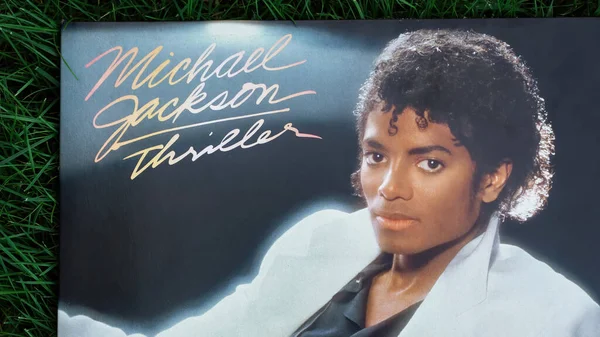
"Black Or White"
The song’s sonic characteristics, such as its fusion of sounds common in pop, rock, and hip-hop genres, reflect the theme of racial unity. The iconic guitar riff played at the beginning provides a taste of hard rock, which is a form of presentation that differs significantly from Jackson’s most popular songs, such as “Billie Jean” or “Smooth Criminal,” which both feature initial sounds and instruments that are not emblematic of rock. From the onset, Jackson’s cross-genre style mirrors his message of breaking boundaries; blending rock guitar with a pop beat challenges segregation musically, much like the song’s overarching message of confronting racial and cultural divisions (Buskin 2004). Furthermore, the distinct mix of the aggressive guitar riff signifies the tension inherent in racial issues in America during Jackson’s era. This tension is reflected in American realities like the persistent effects of redlining and mortgage discrimination, which, despite being outlawed, continued to shape housing communities in America (Williams 2018). Additionally, the upbeat tempo and major chords that persist throughout create an energetic and positive atmosphere of sound, perhaps reflecting Jackson’s optimism in America’s societal attitude to make the shift away from systemic racial discrimination. By incorporating multiple genres, particularly with a rap and hip-hop segment in the middle of the song with comments on systemic racism in America, Jackson suggests that music could, much like race, can and will transcend boundaries.
Furthermore, Jackson’s lyrics in “Black Or White” are both direct and universal to social issues and are intentionally crafted to break down racial barriers not just in America but, more broadly, on a global stage. Jackson states that “it don’t matter if you’re Black or white,” which prompts a simple reflection to audiences with a straightforward and direct call for racial equality, distilling an extremely complex issue into one single statement; however, not to the extent where it forces listeners, but it asks them to confront their own biases and prompts them to disregard preconceptions about race. Jackson follows this by featuring a rap, breaking the smooth pop melody and introducing more socially charged language like “I ain’t scared of no sheets; I ain’t scared of nobody,” a reference to the KKK (Hopper 2023). Furthermore, this rap section not only serves as a distinguished mark of American culture but also a change in tone; references specifically to racial violence in America are a stark contrast to the song’s generally more optimistic tone. Jackson thus politicizes his work by embedding social critiques in his mainstream pop song, and, beyond just a message, he also extends his appeal to those that can attest to the issues he sheds light on through lyrical style.
In addition to lyrical and creative genius, “Black Or White” was a well-timed released during a period of heightened racial justice movements and global humanitarianism. Prompted by the advances of accessible technology, it created more opportunities for cultural exposure and knowledge on issues overseas. Four years prior to producing the song, Jackson co-wrote “We Are the World,” a song that prompted global humanitarian effort and fundraising for famine relief in Africa, but it also carried the more general message of worldwide unity (Vogel 2018). The success of this U.S.A. for Africa project may have greatly influenced Jackson’s decision to use his music as a platform for politicized and positive messages for social justice (Buskin 2004). Additionally, the song’s accompanying music video also featured a sequence of morphing faces across global races and cultures, sparking conversations about racial identities. The videography’s seamless transitions make differences in race seem extremely minimal, emphasizing how we share a fundamental identity of being human. While many reviewers were critical of Jackson, viewing this production as an attempt to address his own racial identity, the broader message that was likely intended was a universal call for harmony and compassion (Vogel 2018). This choice to release this song at arguably the peak of his fame urged conversations on race and social progress into mainstream pop culture.
Jackson’s “Black Or White” is a significant mark on music as a platform for beneficially social and progressive messages because it was more than a song; it was a political and cultural intervention at a time when race relations, specifically in America, were at the forefront of social issues. The song leaves listeners reevaluating their views on race, leveraging his platform for the broader American public to spread his message as a social statement supplementing a pop anthem: promoting unity in a country and in a world that is divided by racial and cultural tension. While political themes were not new in music, Jackson made addressing racial inequality and social justice mainstream. Thus, he set a precedent for future artists to follow in his footsteps, such as Beyonce and Kendrick Lamar, who similarly use their platforms to politicize music, share their story, and promote social causes.
This page has paths:
- Home Kainoa Wagatsuma