Thanks for your patience during our recent outage at scalar.usc.edu. While Scalar content is loading normally now, saving is still slow, and Scalar's 'additional metadata' features have been disabled, which may interfere with features like timelines and maps that depend on metadata. This also means that saving a page or media item will remove its additional metadata. If this occurs, you can use the 'All versions' link at the bottom of the page to restore the earlier version. We are continuing to troubleshoot, and will provide further updates as needed. Note that this only affects Scalar projects at scalar.usc.edu, and not those hosted elsewhere.
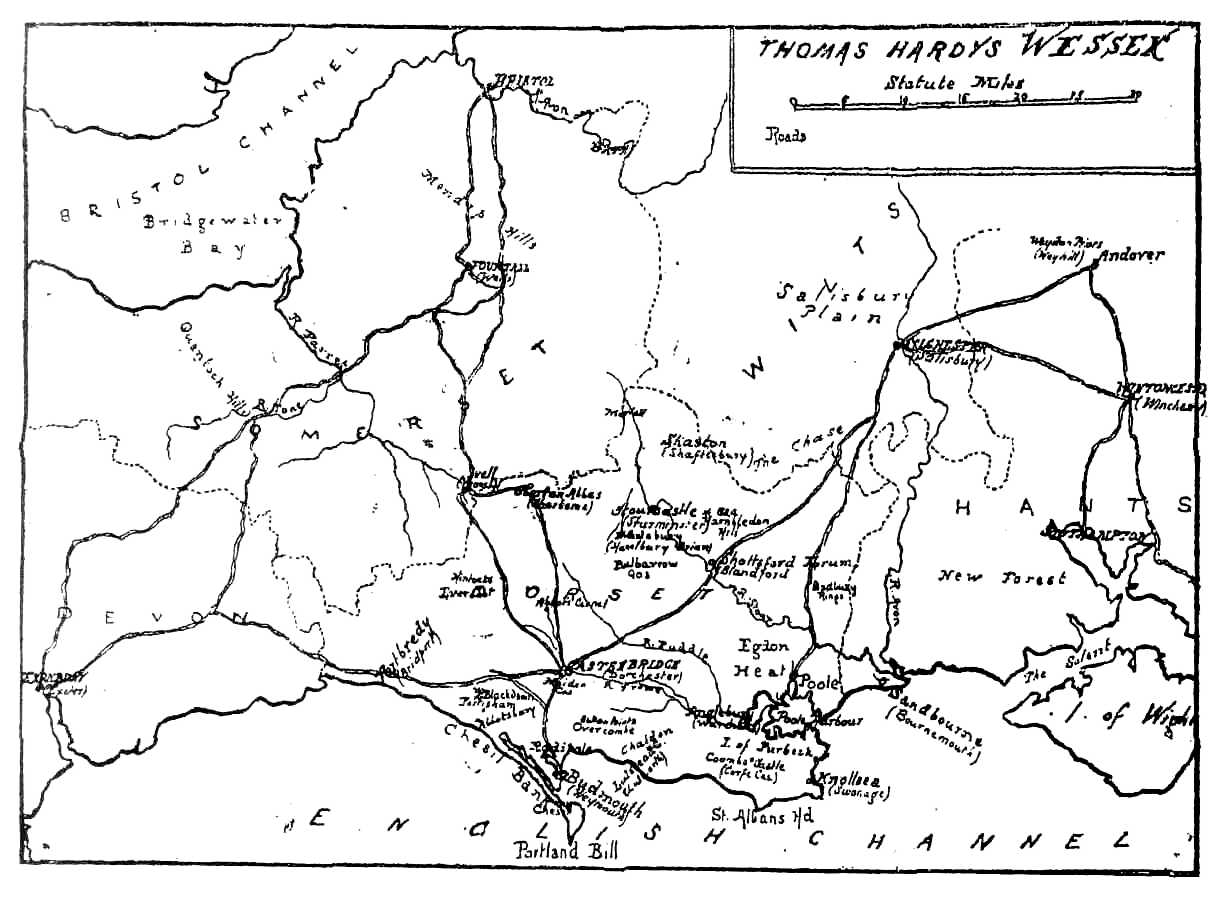
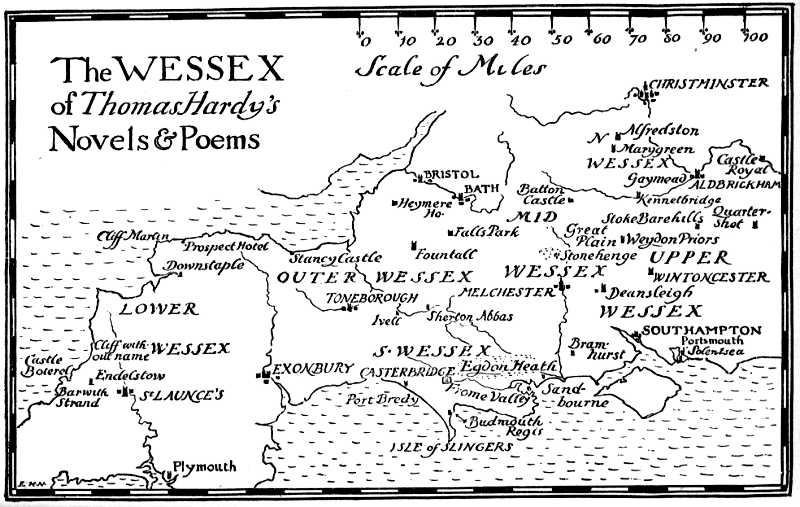
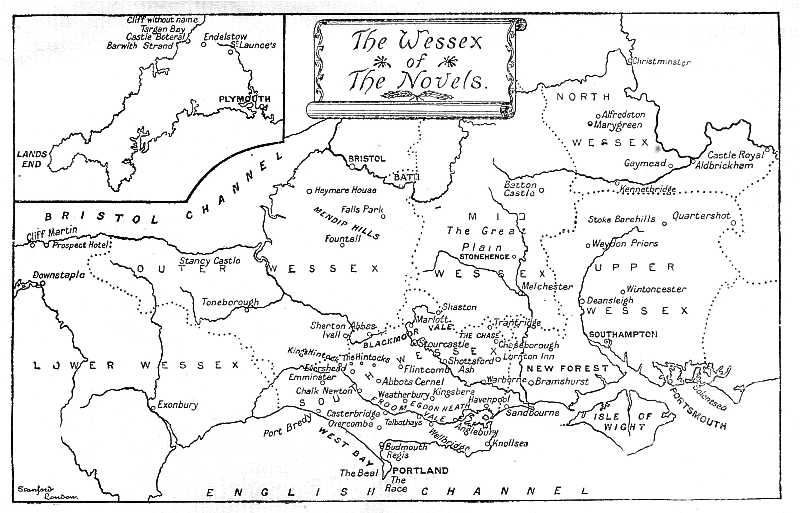
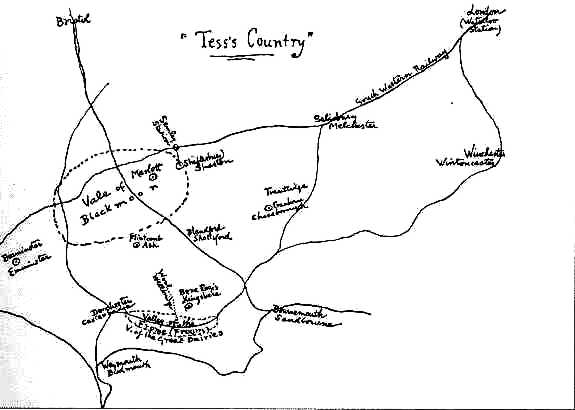
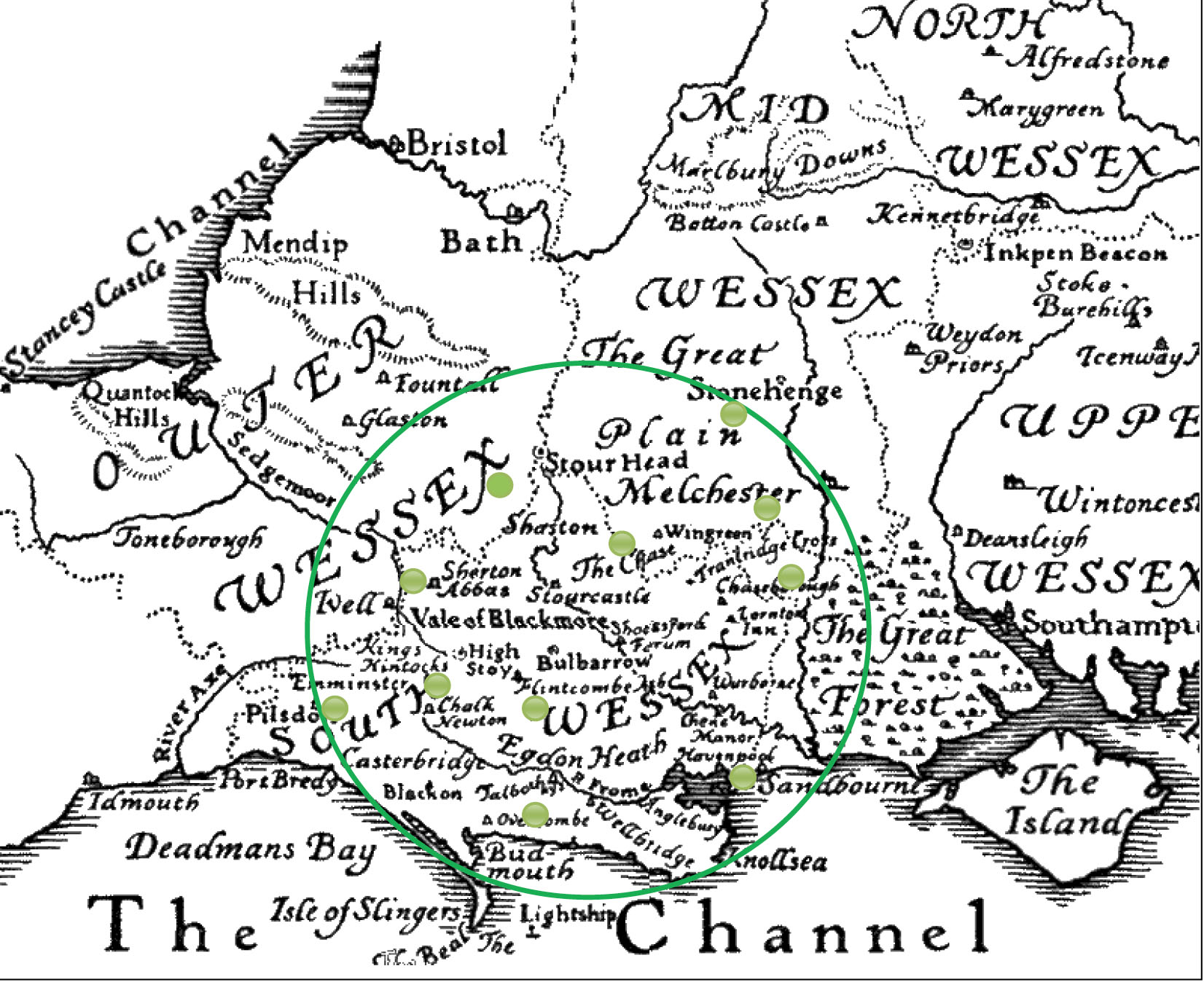
Hardy's Wessex map portraying the idea of a circular and enclose setting.
12015-12-19T21:14:23-08:00Erica Y. Hayes3f35a1fa1745d530e0a3ef5bcdf163a79f5e850072962Hardy's Wessex map portraying the idea of a circular and enclosed setting. From Tess on the Road Ways and Paths as Spatial Elements in the plot of Hardy's Tess of the d'Urbervillesplain2015-12-19T21:39:52-08:00Erica Y. Hayes3f35a1fa1745d530e0a3ef5bcdf163a79f5e8500
This page is referenced by:
1344f14.png2015-12-09T16:07:22-08:00Map versions of Wessex19plain2016-06-22T19:25:41-07:00
The following map was taken from Silvia García Bencomo's "Tess on the Road: Ways and Paths as Spatial Elements in the Plot of Hardy's Tess of the d'Urbervilles." In her article, she concludes Hardy employs the landscape, its roads and paths, to represent the various circular phases of Tess's life. Told within a circular narrative structure, García Bencomo argues Tess is trapped within the conventions of her social environment and cannot escape her tragic fate.