This page was created by Chase B Barrows.
Big Data and Analytics
1 2022-12-09T12:44:51-08:00 Chase B Barrows c8efee2a59ef44bcff278e0eab0b717e551f7214 41992 1 How Industrial Big Data and modern analytics has been used to leverage better decision making processes in the broad field of Industry image_header 2022-12-09T12:44:51-08:00 Chase B Barrows c8efee2a59ef44bcff278e0eab0b717e551f7214Page
| resource | rdf:resource | https://scalar.usc.edu/works/learn-business/index |
| type | rdf:type | http://scalar.usc.edu/2012/01/scalar-ns#Composite |
| is live | scalar:isLive | 1 |
| banner | scalar:banner | https://www.ge.com/digital/sites/default/files/2018-08/header-analytics-machine-learning-GE-mine-grinder-3200x1404.jpg |
| was attributed to | prov:wasAttributedTo | https://scalar.usc.edu/works/learn-business/users/32436 |
| created | dcterms:created | 2022-12-09T12:44:51-08:00 |

Version 1
| resource | rdf:resource | https://scalar.usc.edu/works/learn-business/index.1 |
| versionnumber | ov:versionnumber | 1 |
| title | dcterms:title | Big Data and Analytics |
| description | dcterms:description | How Industrial Big Data and modern analytics has been used to leverage better decision making processes in the broad field of Industry |
| content | sioc:content | The topic I chose to research was Big Data and the accompanying Analytics that inherently come with collecting Big Data. Specifically I focused on the use of Big Data in the Industrial context. Today there is what is known as the Internet of Things, or IoT. This is the ever growing network of internet connected devices that both produce and consume data. Things like your phone and smart watches connect you to the internet. The modern car receives and produces massive amounts of Data. Even refrigerators, thermostats, and doorbells create data. All this data can be collected and sifted through in order to find patterns that in turn create more efficient systems, and modern Industry is no different. GE is at the forefront of what is known as the Industrial Internet of Things,or IIoT. Like a car produces data, so do wind turbines, jet engines, and natural gas power plants. Because of advancement in the price of computing power, speed and infrastructure of data communication, and software compatibility and advancement, this data can now be collected, analysed, and used to make data driven decisions to increase efficiency of production and function. Moore'slaw has produced computer chips twice as fast for the same price every 18 months for the last 50 years. This exponential growth is just one peaice of the puzzle that has allowed for such in depth data collection. An example how GE has leveraged new technologies and abilities is by creating created ‘smart trains’. Simply by adding an internet enabled device to locomotive engines that track their operations patterns can begin to be discerned. By understanding in more detail the relationship between fuel use, acceleration, and terrain gradients, the fuel efficiency can be greatly improved. Using relatively cheap devices to report data back to GEs data centers allows for efficiency gains and savings for all of its customers operating their train engines. Increases in efficiency like the locomotive can be less than 1% in relative efficiency but can lead to billions of dollars saved in the long run. This sort of savings can be applied to many industries and means that if a business isn't leveraging Big Data yet, it soon will be. |
| default view | scalar:defaultView | image_header |
| was attributed to | prov:wasAttributedTo | https://scalar.usc.edu/works/learn-business/users/32436 |
| created | dcterms:created | 2022-12-09T12:44:51-08:00 |
| type | rdf:type | http://scalar.usc.edu/2012/01/scalar-ns#Version |
This page is referenced by:
-
1
2022-12-09T12:44:51-08:00
Big Data and Analytics
1
How Industrial Big Data and modern analytics has been used to leverage better decision making processes in the broad field of Industry
image_header
2022-12-09T12:44:51-08:00
The topic I chose to research was Big Data and the accompanying Analytics that inherently come with collecting Big Data. Specifically I focused on the use of Big Data in the Industrial context. Today there is what is known as the Internet of Things, or IoT. This is the ever growing network of internet connected devices that both produce and consume data. Things like your phone and smart watches connect you to the internet. The modern car receives and produces massive amounts of Data. Even refrigerators, thermostats, and doorbells create data. All this data can be collected and sifted through in order to find patterns that in turn create more efficient systems, and modern Industry is no different.
GE is at the forefront of what is known as the Industrial Internet of Things,or IIoT. Like a car produces data, so do wind turbines, jet engines, and natural gas power plants. Because of advancement in the price of computing power, speed and infrastructure of data communication, and software compatibility and advancement, this data can now be collected, analysed, and used to make data driven decisions to increase efficiency of production and function. Moore'slaw has produced computer chips twice as fast for the same price every 18 months for the last 50 years. This exponential growth is just one peaice of the puzzle that has allowed for such in depth data collection. An example how GE has leveraged new technologies and abilities is by creating created ‘smart trains’. Simply by adding an internet enabled device to locomotive engines that track their operations patterns can begin to be discerned. By understanding in more detail the relationship between fuel use, acceleration, and terrain gradients, the fuel efficiency can be greatly improved. Using relatively cheap devices to report data back to GEs data centers allows for efficiency gains and savings for all of its customers operating their train engines.
Increases in efficiency like the locomotive can be less than 1% in relative efficiency but can lead to billions of dollars saved in the long run. This sort of savings can be applied to many industries and means that if a business isn't leveraging Big Data yet, it soon will be.
This page references:
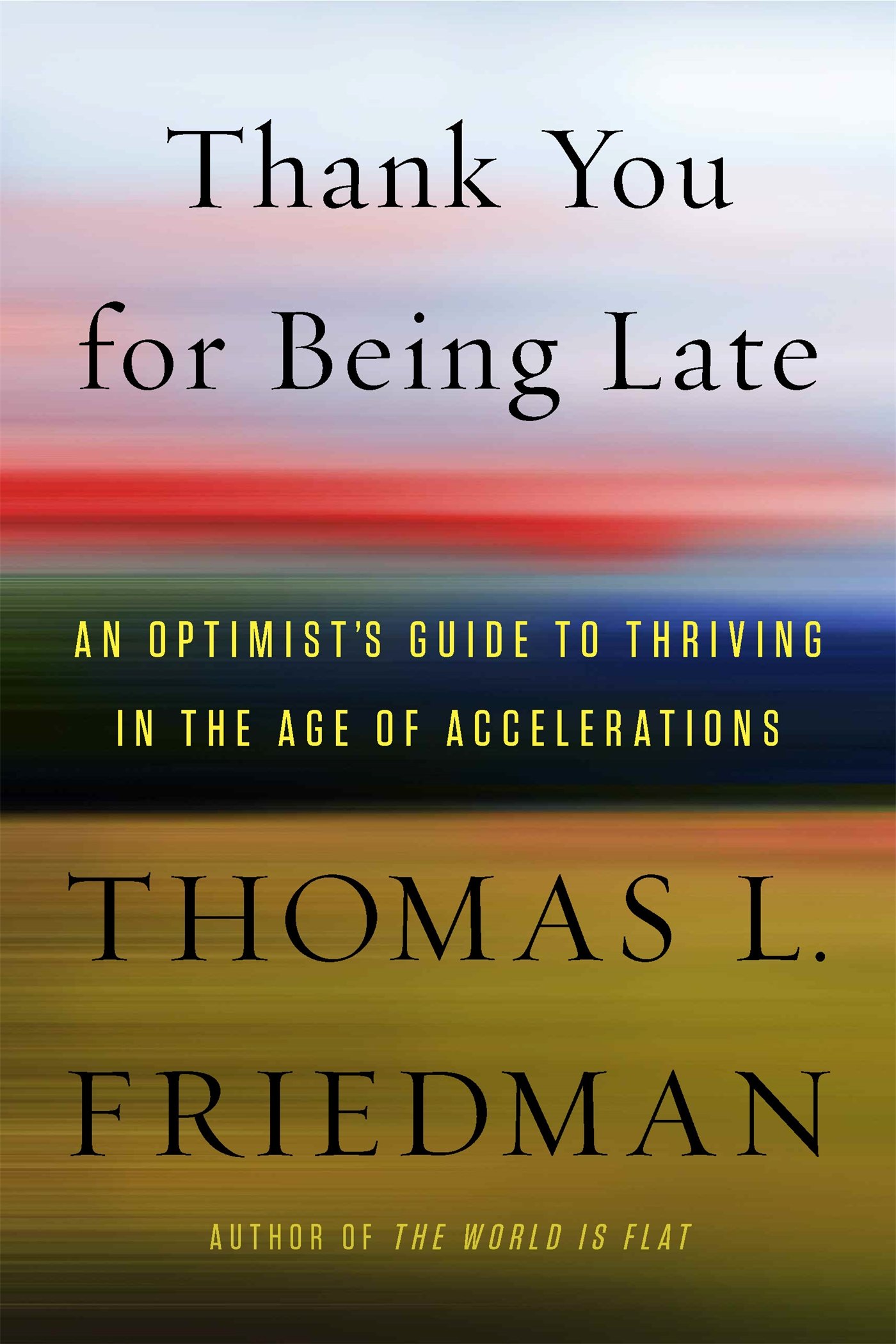
- 1 2022-12-09T12:44:51-08:00 Friedman, Thomas L. Thank You for Being Late: an Optimist's Guide to Thriving in the Age of Accelerations. Picador, 2017. 1 A large portion of this book explains the technical aspect of how Big Data and Analytics have been able to enter the modern landscape of what's possible. It describes the multiple layers of software advancement, hardware advancement, and cultural and economic shifts that has culminated to a breaking point where cloud computing and learning algorithms will affect nearly every aspect of our lives in the future. Some of the topics covered is Moore’s law, Qualcomm's ability to create a digital internet network, and the implications of leveraging technology with the worker instead of against them. This resource is a great foundation for understanding what Big Data is and how it is even possible. plain 2022-12-09T12:44:51-08:00
- 1 2022-12-09T12:44:51-08:00 GE Analytics Tool, Predix 1 GE uses a data tool called Predix. It is more than just data prediction but steps into the realm of automation through the input of industrial data. One way Predix functions is it can be used to build a digital model of a real world system. A natural gas turbine in real life will have a reflective digital model. In conjunction with a never ending stream of data flowing out of the real world system the digital model can show points of inefficiency at a level no human engineer or mechanic could even dream of. This tool has been so useful for GE’s industrial business model that the software itself has become a product. https://www.ge.com/digital/iiot-platform/machine-learning-analytics plain 2022-12-09T12:44:51-08:00
- 1 2022-12-09T12:44:51-08:00 GE Digital: Digital Industrial Transformation 1 This Video describes GE’s advanced system of Big Data analytics in the world of industry. They have bulut their products with the ability to report back on how they are performing. Things like airplanes engines now send back streems of information back to GE to be collected and analysed. A single mid range flight across Europe can produce over 1 terabyte of data. The analysis of this data provides insights that allow for efficiency gains to be made. Even small efficiency gains such as a 1% increase in fuel efficiency will save Billions of dollars in the long run. plain 2022-12-09T12:44:51-08:00
- 1 2022-12-09T12:44:51-08:00 Big Data and Analytics 1 How Industrial Big Data and modern analytics has been used to leverage better decision making processes in the broad field of Industry image_header 2022-12-09T12:44:51-08:00
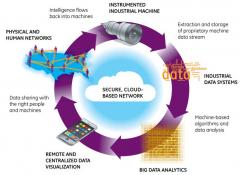
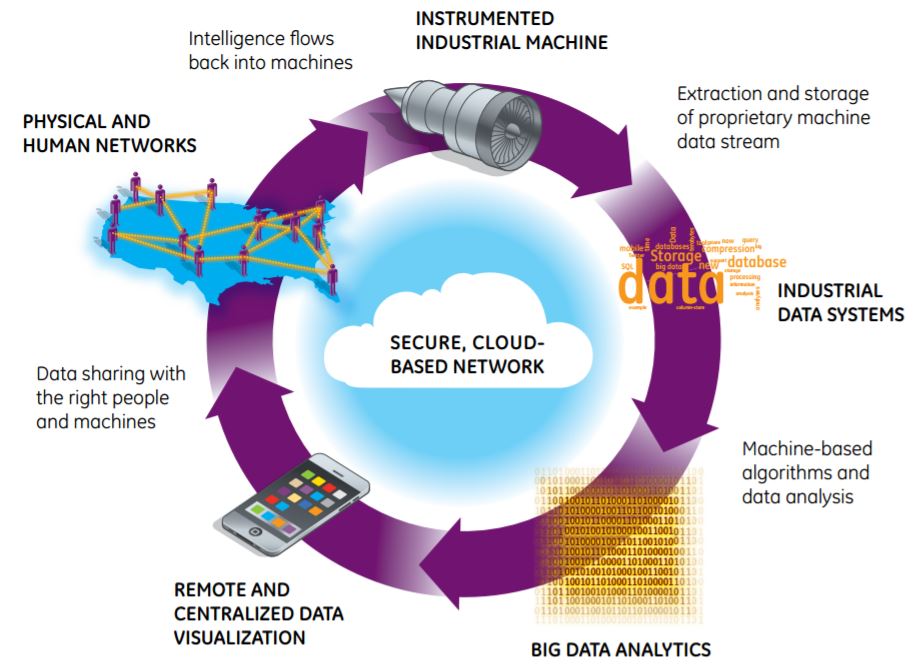
- 1 2022-12-09T12:44:51-08:00 Industrial Internet of Things 1 Here is a visualization of GE’s network. Instrumented devices such as wind turbines, airplane engines, and power plants send data back to cloud computing services at or in partnership with GE. Tools that only get better with passing time, such as machine learning, predictive analytics, and digital modeling are applied to the massive amounts of data, and patterns are discerned. More tools, such as GE’s own Predix proprietary software program allow for the visualization of these patterns that are then used to steer the direction of decisions making that will result in an increase in efficiency down the line. https://comarkcorp.com/wp-content/uploads/2016/12/comark3.jpg plain 2022-12-09T12:44:51-08:00
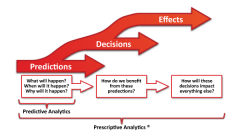
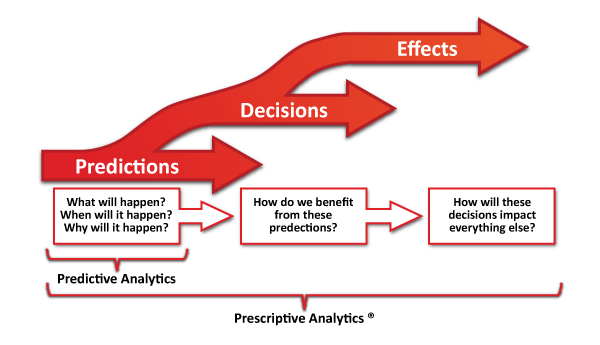
- 1 2022-12-09T12:44:52-08:00 Phases of Analytics 1 One of GE’s strong suit in their Data Analytics tool bag is their ability to not only predict what might happen in the near or far future through pattern recognition but to also use these patterns to prescribe different decisions. The idea is that a digital model of devices and a model of the system in which those devices exist allows seeing how decisions impact everything else. Classic predictive analytics is sort of reactionary. It may allow for patterns to be spotted that requires a reactive decision. With enough data, like GE has, outcome from future decision can start to be accurately modeled. By Modaniel - Own work, CC BY-SA 4.0, https://commons.wikimedia.org/w/index.php?curid=36478653 plain 2022-12-09T12:44:52-08:00