Thanks for your patience during our recent outage at scalar.usc.edu. While Scalar content is loading normally now, saving is still slow, and Scalar's 'additional metadata' features have been disabled, which may interfere with features like timelines and maps that depend on metadata. This also means that saving a page or media item will remove its additional metadata. If this occurs, you can use the 'All versions' link at the bottom of the page to restore the earlier version. We are continuing to troubleshoot, and will provide further updates as needed. Note that this only affects Scalar projects at scalar.usc.edu, and not those hosted elsewhere.
HIGH ART HIPOCRISY: Intersections of Cartoons and Fine Art
Main Menu
Introduction
The Birth of the Newspaper
Comics: Taking Over the Sunday Supplement
Comics in the Early 1900s
The 1913 Armory Show
Showtime! New York City, Chicago, and Boston
The Critiques and The Comics
The Pop Art Movement, Roy Lichtenstein, and Comic Books
Deconstructing Perspectives of Lichtenstein’s Work: Pro-Appropriation or Pro-Cartoonist?
The Rise of 1940s Comic Books in the Late 20th Century
Comics in Museums
The MoMA “High and Low” Show
Art Spiegelman’s Response to MoMA High and Low
Comics in Museums Today
Abstract Comics
Cora's Curation of Abstract Comics
Conclusion
References
Cora Hernandez
ca60d402b432a51ad192c7a6d79f42e30854c48e
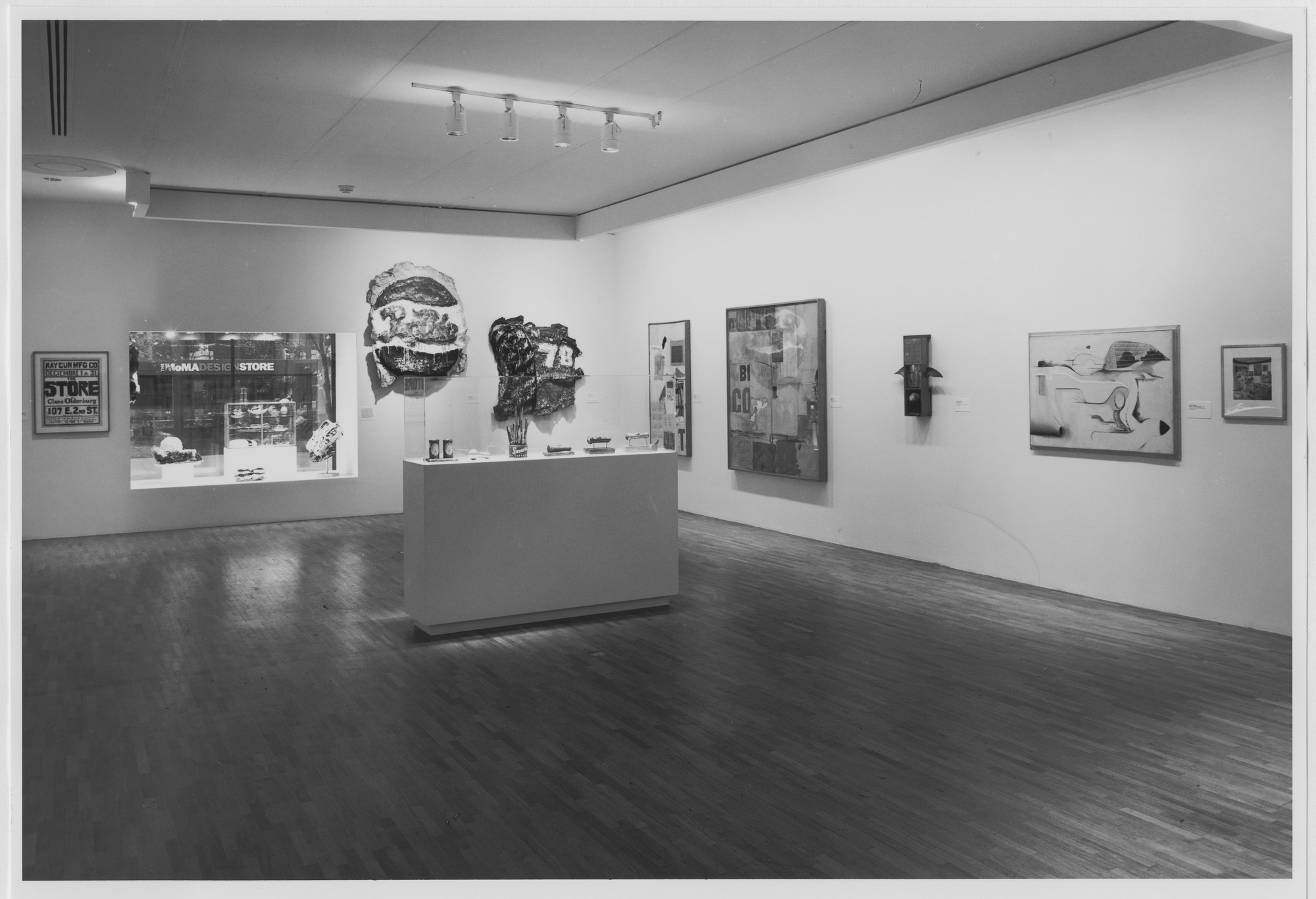
Image from inside the MoMA "High and Low" Exhibition
1 media/advertising_thumb.jpg 2024-08-14T08:30:08-07:00 Cora Hernandez ca60d402b432a51ad192c7a6d79f42e30854c48e 45671 2 Image from inside the Advertising section at MoMA "High and Low" Exhibition plain 2024-08-14T08:37:56-07:00 Cora Hernandez ca60d402b432a51ad192c7a6d79f42e30854c48eThis page is referenced by:
-
1
2024-08-13T21:29:30-07:00
The MoMA “High and Low” Show
4
plain
2024-08-14T08:37:36-07:00
In 1990, the Museum of Modern Art had been planning a show that would focus on the key differences between highbrow and lowbrow culture in the 19th and 20th centuries. The exhibition would be given the nickname of the MoMA High and Low Show, but the official title given to the exhibition was High and Low: Modern Art and Popular Culture. The exhibition was organized and curated by Kirk Varnedoe, who worked in the Painting and Sculpture Department of the MoMA and Adam Gopnik, who was an art critic for The New Yorker magazine.
Together, Varnedoe and Gopnik, organized an exhibition that they believed to be a factual and contextual tracing of the lineage between lower commercialized culture, popular culture, and modern art. Starting from art and culture from the late 1800s and early 1900s, they would make their way throughout the 20th century to the current state of art in New York City in 1990. The curators aimed to focus on painting and sculpture within the exhibition, but chose to highlight four particularly important areas of mass visual culture. Those areas were graffiti, caricature, comics, and advertising. The curators began the show by displaying many different post-impressionist and Cubist works. One of the first points is how post-impressionist and some of the first modern artists used textual elements in their abstract-Cubist drawings and paintings. Artists such as Georges Braque, Pablo Picasso, and Juan Gris all incorporated textual elements into their works, whether it be hand-drawn lettering or newspaper clippings that were pasted onto the canvas. Curators were hoping to make the point that early print materials such as newspapers were used in the creation of modern art techniques.
The next point the High and Low exhibition aimed to make was the impact of graffiti on modern art and highbrow culture. They began by providing examples of early rock and wall inscriptions from the 1800s. Graffiti from this time shows many different types of illustrations, some of textual elements, some of human-like figures, some of male genitalia. Then, they move onto a modern artist’s perspective on graffiti, showcasing work from artists such as Marcel Duchamp, Brassaï, Jackson Pollock, Joan Miró, Robert Rauschenberg, and Cy Twombly. The graffiti-esque abstract work from the modern artists presented is reminiscent of early graffiti illustration from the 1800s, and makes a fair comparison between the two styles of art.
After discussing graffiti, the MoMA High and Low Show moves onto caricature, opening the discussion with works from Leonardo da Vinci and other popular Renaissance era caricature works. The exhibition moves all the way through the Renaissance era into the Baroque and Romantic eras, highling caricature artists such as James Gillray, Honoré Daumier, and William Blake. These caricature artists from the Baroque and Romantic eras illustrated and designed work for local newspapers, which were a newer phenomenon at the time. The exhibition demonstrates how caricature evolved through the Baroque and Romantic periods into the Realism, Impressionism, Post-Impressionism, Art Nouveau, and Cubist periods of work that we know and love. The exhibition mentions and highlights work from the most influential 19th and 20th century artists, such as Pablo Picasso (who by far has the largest amount of work featured), Juan Gris, Constantin Brancusi, Jean Dubuffet, and a few more. Lineages between pre-modern caricature style art and modern styles of caricature art are apparent and well presented in this section.
The next section is the comics section of the exhibition. Starting with work from Rodolphe Töpffer in 1829 and including work from early cartoon-style caricature artists such as J.J. Grandville and John Tenniel, the exhibition moves through the evolution of comics through caricature art fairly quickly. They highlight late 19th and early 20th century cartoonists such as Richard F. Outcault, Winsor McCay, Cliff Sterrett, Bud Fisher, and George Herriman. Curators pull excerpts from the most famous newspaper comic strips such as Dream of a Rarebit Fiend, Mutt and Jeff, and Krazy Kat. The curation moves through comic strip inspired art from artists such as Picasso and Miró into the rise of comic books as popularized commercial American culture. They give examples of comic book art, from cartoonists like Milton Caniff, Bob Kane, and Chester Gould. Then, the curators compare the cartoon and comic artworks with modern Pop and Abstract Expressionist artwork. They start with an abstract work from Jasper Johns titled Alley Oop, and then show the comic strip by the same name that Johns used as inspiration for his painting. Work from modern artists such as Andy Warhol, Roy Lichtenstein, and Claes Oldenberg is shown. Interestingly enough, the High and Low exhibition included the cartoonists that Lichtenstein appropriated material from, and at least in the artist catalogue, showed side-by-side comparisons of the work. Lastly, the curators showcase popular comics magazines such as Weirdo and MAD, and the infamous work of 20th century illustrators and artists Robert Crumb and Philip Guston.
The advertising section of the High and Low aims to demonstrate how early advertising techniques translated into modern art, specifically movements such as Cubism, Surrealism, Abstract Expressionism, and Pop Art. Elements of commercial advertising can be traced throughout art movements starting in the 1800s, especially when the rise of commercial advertising started in the early 1900s. In the early 1900s, advancements in commercial advertising via commercial goods inspired artists to use actual commercial goods and products as elements of their artworks. Famous modern artists such as Andy Warhol, Marcel Duchamp, Jasper Johns, Roy Lichtenstein, Ed Rushca, Claes Oldenberg, and Jeff Koons were all featured in the advertising section of the High and Low exhibition. This section of the exhibition is exceptionally illuminating in showing the origins and inspirations of many 20th century modern artists.
Although High and Low: Modern Art and Popular Culture had good intentions by demonstrating the lineages between popular culture and modern art, many believe the show was contextually unsound and exclusionary against modern artists of the time. Firstly, many critics of the High and Low exhibition believed that labeling forms of popular culture such as graffiti, cartoons and comics, advertising materials, etc, as exclusively lowbrow culture, is wrong. Although the curators were correct in stating that modern art movements began because of lowbrow culture, they failed to explain exactly why lowbrow culture is definitively labeled as lowbrow, and why hierarchies of taste exist within our culture. Instead of addressing the socio-economic reasoning in the difference between lowbrow and highbrow culture, the curators completely ignore this as an element of the exhibition. Secondly, many modern artists during the time of this exhibition felt extremely excluded by the MoMA curators. Many important modern artists from the 80s and 90s didn’t make it into the exhibition, including work from: Nam June Paik (all film/video art was completely excluded from the exhibition), Cindy Sherman, Francesca Woodman (little to no photography was included in the exhibition, either), Jean-Michel Basquiat, Keith Haring (one of the most influential modern graffiti artists), and many more. Although one or two of these artists were briefly mentioned in the Contemporary Reflections section of the exhibition’s catalogue statement, many still felt that leaving these artists out of the exhibition itself was a big mistake by the curators.