Thanks for your patience during our recent outage at scalar.usc.edu. While Scalar content is loading normally now, saving is still slow, and Scalar's 'additional metadata' features have been disabled, which may interfere with features like timelines and maps that depend on metadata. This also means that saving a page or media item will remove its additional metadata. If this occurs, you can use the 'All versions' link at the bottom of the page to restore the earlier version. We are continuing to troubleshoot, and will provide further updates as needed. Note that this only affects Scalar projects at scalar.usc.edu, and not those hosted elsewhere.
HIGH ART HIPOCRISY: Intersections of Cartoons and Fine Art Main MenuIntroductionThe Birth of the NewspaperComics: Taking Over the Sunday SupplementComics in the Early 1900sThe 1913 Armory ShowShowtime! New York City, Chicago, and BostonThe Critiques and The ComicsThe Pop Art Movement, Roy Lichtenstein, and Comic BooksDeconstructing Perspectives of Lichtenstein’s Work: Pro-Appropriation or Pro-Cartoonist?The Rise of 1940s Comic Books in the Late 20th CenturyComics in MuseumsThe MoMA “High and Low” ShowArt Spiegelman’s Response to MoMA High and LowComics in Museums TodayAbstract ComicsCora's Curation of Abstract ComicsConclusionReferencesCora Hernandezca60d402b432a51ad192c7a6d79f42e30854c48e
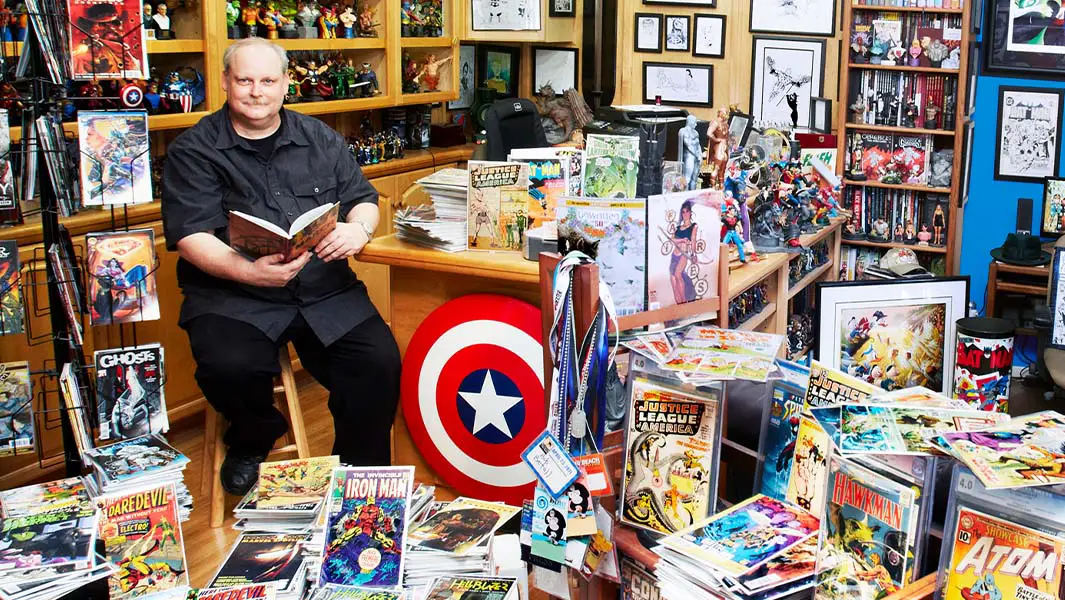
Bob Bretall, who holds the largest personal collection of comic books in the world
1media/bob-surrounded-by-comics-757145_thumb.webp2024-08-14T12:03:50-07:00Cora Hernandezca60d402b432a51ad192c7a6d79f42e30854c48e456711Bob Bretall, who holds the largest personal collection of comic books in the worldplain2024-08-14T12:03:51-07:00Cora Hernandezca60d402b432a51ad192c7a6d79f42e30854c48e
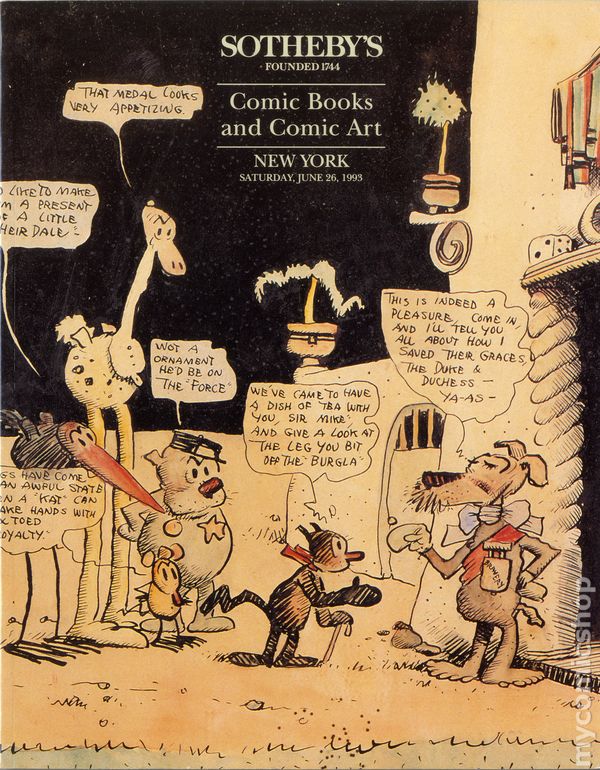
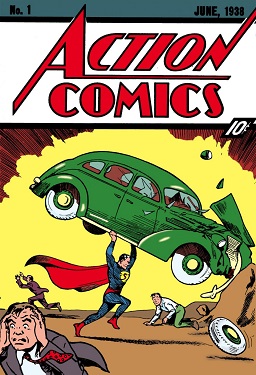
Due to the rise of Pop Art in the 1960s and the popularization of commercialized goods and illustration, there was a rise in the demand for nostalgic 1940s comic books throughout the later half of the 20th century. In his book, Comics Versus Art (2012), Canadian art educator and author Bart Beatty discusses why 1940s comic books had a resurgence in the 60s. He claims that 40s comics gained popularity again in the 60s for many reasons, including research and academic purposes, (both Pop Artists and colleges/universities studying technique and social attitudes in 40s comics) and also personal reasons, such as nostalgia (Beatty 153). Private collectors and companies dominated the comic book market throughout the 60s, 70s, and 80s. Private collectors and companies would buy comic books, determine their quality and condition, and assign them a grade. Based on this grade, they would then determine how much a comic is worth. Some collectors would only collect for monetary reasons, and many comic book enthusiasts would shame those people. In the 1990s, the comic book market got so intense that New York City auction houses wanted in on the buying and selling of the most popular American comics. Famous art auction houses, such as Sotheby’s and Christie’s, started holding auctions for old famous and influential comic books. By the time the auction houses had started having comic book auctions, original comics from big names such as Marvel and D.C. Comics were worth a lot of money. For example: In 1979, Marvel Comics #1 was worth roughly $13,000. In 2001, when sold by an auction house, the same comic was worth $350,000. Action Comics #1 (the first Superman comic book) sold for $4,200 in 1977. In 1995 it sold for $125,000, and in 2008, it sold for $475,000. Today, it is estimated to be worth an enormous $6 million. However, one must remember that even though comics were occupying the same space as modern art when being auctioned, they still weren’t being thought to be the same standard as traditional and modern art. During Sotheby’s 1991 comic book auction, they didn’t display the comics as art, as the books were wrapped in plastic and available for the public to handle. Even though comic books were considered to be extremely valuable, they were still not considered to be fine art.