Thanks for your patience during our recent outage at scalar.usc.edu. While Scalar content is loading normally now, saving is still slow, and Scalar's 'additional metadata' features have been disabled, which may interfere with features like timelines and maps that depend on metadata. This also means that saving a page or media item will remove its additional metadata. If this occurs, you can use the 'All versions' link at the bottom of the page to restore the earlier version. We are continuing to troubleshoot, and will provide further updates as needed. Note that this only affects Scalar projects at scalar.usc.edu, and not those hosted elsewhere.
HIGH ART HIPOCRISY: Intersections of Cartoons and Fine Art Main MenuThe Birth of the NewspaperComics: Taking Over the Sunday SupplementComics in the Early 1900sThe 1913 Armory ShowShowtime! New York City, Chicago, and BostonThe Critiques and The ComicsThe Pop Art Movement, Roy Lichtenstein, and Comic BooksDeconstructing Perspectives of Lichtenstein’s Work: Pro-Appropriation or Pro-Cartoonist?The Rise of 1940s Comic Books in the Late 20th CenturyComics in MuseumsThe MoMA “High and Low” ShowArt Spiegelman’s Response to MoMA High and LowComics in Museums TodayAbstract ComicsCora's Curation of Abstract ComicsConclusionReferencesCora Hernandezca60d402b432a51ad192c7a6d79f42e30854c48e
Origins of Printing Methods and Satirical Illustrations
In 1450, broadsheets were the newest form of media. They were large, thin pieces of paper that were used for printing paper media such as The Gutenberg Bible. Broadsheets were the main method of mass printing from 1450 to 1800, and were mainly used to print religious materials for Western European Colonies.
Martin Luther, the founder of the Lutheran Church, used broadsheets to counter the word of the Catholic Church. The Catholics followed suit, and started to use broadsheets to create materials that were anti-Lutheran. Both churches were known to create anti-semetic propaganda with broadsheets. Later on in the 1700s, further development of printing technology allowed for etching on copper plates, which not only sped up the process, but also allowed for better quality prints. Etching technology allowed for artists to make high quality prints of their works, with many artists trying new styles of drawing and caricature.
Some artists used humor to make their prints stand out, including 18th century artist William Hogarth who was known for his sequential copper plate engravings, in which he mixed caricature and human comedy with moral message. Hogarth’s 1732 works A Harlot's Progress and Marriage A-La-Mode inspired many and are considered by some to be early examples of comics. In America, political events and movements inspired cartoons such as Benjamin Franklin’s, Join or Die, a call to action for young men to join the armed forces. In parts of Europe, similar creations were being made. Francisco de Goya created large caricature works such as his tapestry cartoons (1775 - 1792) , and James Gillray made work such as John Bull’s Progress in 1793. These types of works were first named “comical cuts,” then given the name “comicals," and then finally given the name we know and love today, the comics.
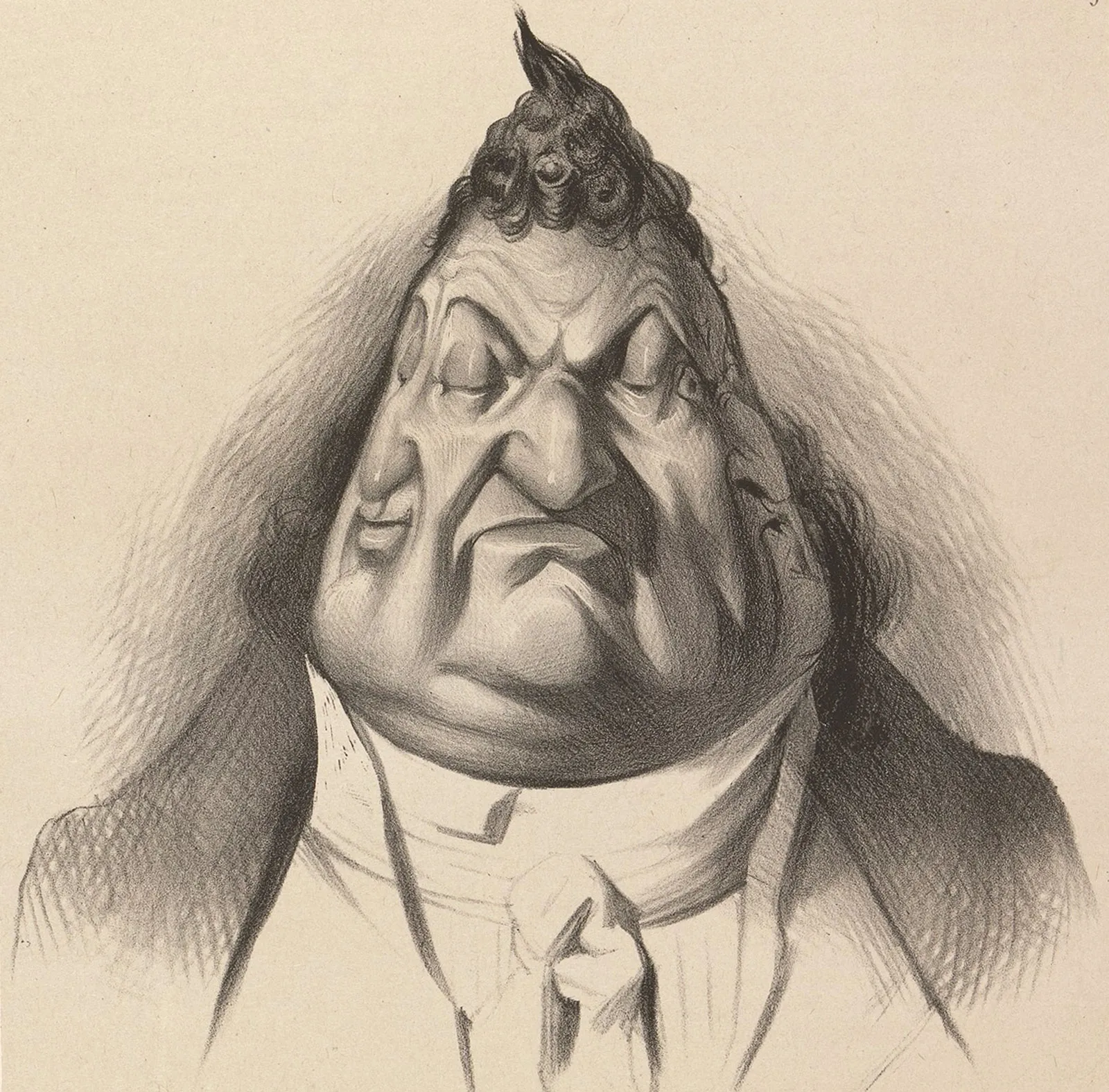
Rodolphe Töpffer, a teacher, author, and illustrator from Switzerland, created picture stories from 1827 to 1844. His name and creations are widely credited in the origins of comic art, as they share distinct characteristics with modern comics, sinistrodextral (left to right) reading format and textual elements under the illustrators. In 1820, lithography gained popularity as it allowed for even higher quality images and a more efficient method of printing. Lithography allowed Töpffer's picture stories and comics to be spread throughout Europe and America. Lithography also allowed 19th century artists such as Honoré Daumier to pit his famous caricature work into print. One of his most important works, a caricature of King Louis Phillipe, was created with a lithograph. This allowed the caricature to be reprinted into journals such as La Caicature.
This page has paths:
1media/URLF TITLE PAGE 2.jpeg2024-08-05T15:27:32-07:00Cora Hernandezca60d402b432a51ad192c7a6d79f42e30854c48eFINE ART HIPOCRISYCora Hernandez22plain2024-08-14T12:24:03-07:00Cora Hernandezca60d402b432a51ad192c7a6d79f42e30854c48e
Contents of this path:
12024-08-06T19:07:30-07:00Cora Hernandezca60d402b432a51ad192c7a6d79f42e30854c48eThe Birth of the Newspaper14plain2024-08-16T08:35:10-07:00Cora Hernandezca60d402b432a51ad192c7a6d79f42e30854c48e
12024-08-06T19:13:28-07:00Cora Hernandezca60d402b432a51ad192c7a6d79f42e30854c48eComics: Taking Over the Sunday Supplement17plain2024-08-16T08:30:26-07:00Cora Hernandezca60d402b432a51ad192c7a6d79f42e30854c48e
12024-08-06T19:23:49-07:00Cora Hernandezca60d402b432a51ad192c7a6d79f42e30854c48eComics in the Early 1900s15plain2024-08-16T08:27:44-07:00Cora Hernandezca60d402b432a51ad192c7a6d79f42e30854c48e
This page references:
1media/1e_URLF_thumb.jpeg2024-08-07T22:17:50-07:00URLF 1 E1"A Harlots Progress" by William Hogarth media/1e_URLF.jpegplain2024-08-07T22:17:50-07:00
1media/1m_URLF_thumb.webp2024-08-07T22:18:42-07:00URLF 1M1Caricature portrait of King Louis Phillipe by Honoré Daumiermedia/1m_URLF.webpplain2024-08-07T22:18:43-07:00