Scalar's 'additional metadata' features have been disabled on this install. Learn more.
Herbarium: Medicinal Plants as Information
Main Menu
Introduction
Student Projects
Worthy Worts: Comprehensive Comparison of the Histories, Structures, and Therapeutic Uses of Plants in the Scrophulariaceae and Asteraceae Families
In order to better understand the “worts'” categorization, an analysis of the plants within the Scrophulariaceae family (Scrophularia californica, Scrophularia scorodonia, and Galvezia juncea) and two plants within the Asteraceae family (Artemisia douglasiana and Artemisia campestris) was conducted. Through research thus far, it was found that these aforementioned plants share structural similarities in terms of aspects that include venation of the leaves. The most prominent common denominator of the wort category is that they all have therapeutic uses. Among the historical therapeutic uses found in the literature are anti-inflammatory, anti-viral, and antioxidant uses. These benefits have been utilized from societies ranging from the American Indians to the Europeans. -By Chris Leung, Catly Do, Fady Tawfik, and Sean Jamali.
Exploring the Sages: Medicinal Properties and Appearances of Artemisia Californica and Salvia Apiana
Both plants Artemisia Californica and Salvia apiana under the category of sages play important roles in maintaining the growth of their local ecosystems with similar habitats, medicinal properties, and flowering appearances during the times of collection. However, they also share important differences in their flowering and growth patterns as well as the active agents used for their medicinal properties. In analyzing the similarities and differences between these two plants regarding appearances, climate, medicinal properties, and growth patterns, the similarities in how they are able to provide and support their local ecosystems is the big picture idea that can be understood. - By Stephanie Bottomley, Rasika Obla, Tony Ong, and Balpreet Sond.
Tea Time: Exploring the Medicinal Properties of Bark-Use Plants from a Traditional Ecological Knowledge Context
This page discusses three different plants that contain significant medicinal properties in their bark and have been historically used by indigenous communities throughout North America: Populus tremuloides, Frangula californica subsp. californica, and Amelanchier alnifolia. These species will be compared on a global scale by examining the bark-based applications of two related species from Africa and East Asia: Dovyalis caffra and Rhaphiolepis umbellata. Despite their phenotypic differences and the differences in their medicinal properties, all five of these plants have been used to help relieve symptoms of communicable and chronic diseases through the direct digestion of tea like remedies made from the boiled bark of these plants. -By Saja Zidan, Maha Ulhaq, Kate Santoso, Gillian, Miller, Anna Jovin, and Luc Lorain
The History, Comparison, and Analysis of Parasitic Plants
Our project presents the process of collecting and researching the special characteristics of parasitic plants. We explore each plant's respective medical practices and compare them to epiphytic plants that are similar to our original plants of interest. In each project, we individually explain how the plants were collected, identified, translated, and classified. The contextual reasons behind this process are also presented and connected to the general unique characteristics of parasitic plants. Each page provides a collection of media images that visually represent the main plant of interest, the epiphytic plant, the historical materia medica image, and the individual journal observations that we made of our respective plants. We offer comparative analysis and highlight important parts of each specimen throughout these photos. - By Khang Vo, Jessica McLaughlin, Alastair Sterns, and Dania Alkoraishi
Combating Coughs: The Respiratory Remedies across North America
Bioprospecting and the application of materia medica have played central roles in the remedy of physical ailments in humans throughout history. From ancient cultures utilizing extracts from leaves and roots to modern medicinal practices extracting medicinal properties from plants to put into pills and other therapies, materia medica has and remains a relevant and growing practice. Here, we examine various plants from North America and their varied characteristics, though they share similar medicinal properties.- By Raymond Ko, Mari Williams, Elizabeth Pham, Julia Tang, Cienna Henry Milton, and Emma Barrall
Antiseptics in Nature: An exploratory analysis of Coptis trifolia and Larrea tridentata
The following research studies common properties of plants used as potential antiseptic medicinal use. Explained more in depth later on, the first page introduces the plant Coptis trifolia, and its common characteristics with a similar plant, Thalictrum fendleri. The second page studies Larrea Tridentata found at the UCLA Herbarium and its living species at the UCLA Botanical Garden. The pages also examine other species found at the UCLA Botanical Garden, with references of possible characteristics which may allude to the specificity and uniqueness of the plants and objects. These three species studied share a common use as an antiseptic. - By Neha Shetty, Simran Athwal, Mariah Ghodrat, Madeline Huttie, and Liam Kordmahale-Izaddoust
Plant Specimen and their Alias : Exploring the Identity of Plants with Animal in the Name
Lycium torreyi and Equisetum laevigatum, both plant species with an animal in their name, were explored for their characteristics and relationship to their respective animals. Through extensive research, we deduce several similarities and differences between our plants that led us to an understanding of why each plant earned their colloquial name, or alias. Lycium torreyi and Equisetum laevigatum, alias Wolfberry and Smooth Horsetail, respectively, have several commonalities and differences to their corresponding animal including physical and character traits as well as their medicinal qualities. Images, observations and outside research portray the many queries and answers to their common name. By Frieda Anastopulos, Alexa Hernandez, Denise Llera, Chelsea Okoro, Grace Randall
Precious Polygonaceae: Insight into the Historical Collection and Therapeutic Uses of Polygonum, Eriogonum, and Rumex Genera
This comparative analysis took to exploring six species under the Polygonaceae plant family, half of which are housed in the UCLA Herbarium and half of which are located in the Mildred E. Mathias Botanical Garden at UCLA. Although they shared a meaningful commonality, these plants fell under a total of three genuses, which seems to explain their differences in morphology - as observed in the physical herbarium specimen sheets and the botanical garden visit - and utility, as unveiled by various Materia Medica entries. However, with an understanding of both historical and modern collection processes, this analysis also postulated that such differences could relate to how these plants were collected and their associated metadata. - By Moryel Yashar, Lexie Baughman, Nicole Cohen, Yair Tabibi, Tabetha Sanchez, and Leah Tabibi
Bidens pilosa, Crataegus douglasii, and Urtica dioica effects on Cardiovascular System
Bidens pilosa, Crataegus douglasii, and Urtica dioica are medicinal plants that have been found to contain a myriad of bioactive compounds, such as flavonoids, antioxidants, and polyphenol compounds. These compounds are known to have significant effects on the cardiovascular system by primarily targeting systolic hypertension. Plant extracts and their derivatives ameliorate oxidative stress, hyperlipidemia, and hypertension associated with cardiovascular disease. This association is due to the characteristics of anti-inflammatory, vasorelaxant, and antiviral activity within the specimen. These medicinal outcomes are elicited to prevent the onset of cardiovascular diseases risk factors. Overall, Bidens pilosa, Crataegus douglasii, and Urtica dioica play a crucial role in cardioprotective effects and health benefits. - By Salma Fawzi, Anaeli Guzman, Rere Huang, Lilliane Martin, Isabel Nakoud, and Sriha Srinivasan
A History and Analysis of Antiviral Medicinal Plants
Medicinal plants vary wildly among cultures around the world, and proper identification, collections, and bioprospecting of these plants expand upon modern medicine and provide new possibilities of drugs. Exploration of historical materia medica, preserved herbarium specimens, and observation of plants both in adaptations and chosen environment allow for the discovery of new medical leads. Three plants in particular, Eclipta prostrata, Astragalus nuttallii var. Nuttallii, and Sambucus canadensis, have historically been documented and used in medicine for their antiviral properties. Through the process of observation as well as investigation of historic cultural uses, much can be learned about these medicinal plants that carry these critical properties. - By Allison Wang, Joanne Kwak, Nina Do, Nicolo Villasis, Sabrina Huang, and Hamza Mojadidi
Tabetha Nicole Sanchez
e93aa456bf1fa2a9aac6c7025b6e934476fc9bbb
Saja Zidan
8c6e75518e3a22769670a28aed10603345e7e636
Liam Izaddoust
3dff8aaaf7eb5ff335d69d055a03a71c67ce59de
Gillian Miller
c7cf3824cbbdb9f34cf3ecb5f2fba97904e6d484
Madeline Huttie
ed37d79b143b74ce4a1679ca7e866298243829f6
Kate Santoso
8984ce8d3e506b5432eac435ad9c764c0b4f2e7f
Simran Athwal
e48f42f59698aecdbea4875ccb493c2ee4fc87b4
Theresa Denise Llera
d93e0c138cc959dcd12215f164bacda878732f73
Lexie Baughman
8e25a77aa976a9ae7f3f53b2f31421fb9623fd7e
Emma Barrall
6d3b9f7a229731a4e981ad708558ce97a3994423
Neha Shetty
a3a6cc6d9c1c75b477ae8cc6996064c5f66f7e53
Salma Fawzi
e0cbc3d703665a7bf086845c5bd8f89cae742c30
Julia Tang
3b35a59e6bde4dd1523cba084d5b3c40f07bf765
Luc Lorain
de2c39cfbf034abd100fb226cd0b59b275d83658
Alastair Sterns
d894b924bb371978267b9b868ef3c3d92c0a0127
Tony Ong
c238c9ee398b21719363ef42a97c130f2dfbd383
Hamza Yusuf Mojadidi
9a6364479e06a5d9023a16fae37739e3ced2196d
Anna Jovin
1322c3d9ab970731a2a5376a43b7e0b48568c62b
Grace Randall
496fc3be58dbc74294eacf99a668736e074278c1
Isabel Nakoud
46e81ad443c40ffaa2a2cde4dd2365f823e8a43c
Mariah_Ghodrat_Three-leaf Goldthread
27b9afa8f7290e32b44e9d7be679c16c0575e046
Catly Do
3ade270a73b6b804ebea6c28142c6a74ba8c2e0b
Khang Vo
cd5c51849b921aef6fcf4a9b188c546ea4981515
Dania Alkoraishi
670ccb4d23e37d957a057cf55a73aba2a6ee7670
Jessica McLaughlin
ba307299f043f94b58b5c44c6c96c7749ac69d59
Moryel Yashar
10371b80dc53ee92566a2fccaf1cc9fa6abf3407
Balpreet Sond
e1b2ff8f727432755fd8e0ee4cdc25b36a5da9f4
Alexa Hernandez
7d5cc6e0132c0716c5705c86198ac7f32cef7efe
Christopher Leung
98ab99380db3ab4d8b47a22fcdf8f1aa34d645eb
Allison Wang
238ea84044521900ce895655130f58c6d710d045
Nina Do
dddda182094f75579255eb38be7e30462a81f3d0
Joanne Kwak
035f00d5f05f3c560601b008cd0ae71d45b78461
Nicolo Villasis
dbccff0b57b484782698998ea9f94f9890232b48
Sabrina Huang
95135d9ef0c46b16243bd55f6ca3fa9825936cb5
Yair Tabibi
078fed945287deb72c47d884b791a31f6b31eab5
Nicole Cohen
77b59277f6b2a55cc085a928224030c702d38cf4
Leah Tabibi
8157be92ce0bcd1008035166dd8fa23af104a1fb
Sriha Srinivasan
6a9d5a1a3347c92ef2d18502d9dd9c480c918758
Cienna Henry Milton
267442b093ae31dabe4878cb2035067e12901d73
Anaeli Guzman
f70e7e906f4babfe75a06cc23a6c8a385746de88
Elizabeth Pham
05e44d566f6da2c854378c3924371ba385bcbb60
Sean Jamali
10632a3d6ddff769f427d90bc38602c862c1cb4d
Stephanie Bottomley
dc6780b4d6b9b68630c7632dc772a90913d40a05
Mari Williams
784cd1ed101f2f4533366c947629463486c8415a
Frieda Anastopulos
11ba0713eb388e7d0a47d8b1a50440a5638fd93d
Rasika Obla
945abb18cc766d679f42803536dc22ebe1fafb19
Rere Huang
d6c58a941332cd93b724ce557b7ff05eff1ea9e9
Raymond Ko
84a7beaf92e727b1f545d35d622be2144696e3dc
Lilliane Martin
0901a468e043d7ea9dfedad0679d1e81bf4f2f02
Chelsea Okoro
433df3eac8f2ffcef84c2a50d6f3f846758bb522
Fady Tawfik
f47ca6140616c8672c6da67dedc132e251f1c751
Chien-Ling Liu Zeleny
b41fb6e9789888538ccab835b41e1a49b128a7bf
Galvezia juncea
1 media/Photo of Plant copy_thumb.jpg 2022-03-02T11:41:03-08:00 Christopher Leung 98ab99380db3ab4d8b47a22fcdf8f1aa34d645eb 40021 2 plain 2022-03-02T12:24:21-08:00 Catly Do 3ade270a73b6b804ebea6c28142c6a74ba8c2e0bThis page has annotations:
- 1 2022-03-02T13:02:09-08:00 Catly Do 3ade270a73b6b804ebea6c28142c6a74ba8c2e0b Flower structure of Galvezia juncea Catly Do 2 plain 2022-03-02T13:02:16-08:00 Catly Do 3ade270a73b6b804ebea6c28142c6a74ba8c2e0b
- 1 2022-03-02T12:28:19-08:00 Catly Do 3ade270a73b6b804ebea6c28142c6a74ba8c2e0b Height and sunlight exposure of Galvezia juncea plant Catly Do 2 plain 2022-03-02T12:28:25-08:00 Catly Do 3ade270a73b6b804ebea6c28142c6a74ba8c2e0b
- 1 2022-03-02T12:29:14-08:00 Catly Do 3ade270a73b6b804ebea6c28142c6a74ba8c2e0b Stem of Galvezia juncea plant Catly Do 2 plain 2022-03-02T12:29:18-08:00 Catly Do 3ade270a73b6b804ebea6c28142c6a74ba8c2e0b
- 1 2022-03-02T12:39:51-08:00 Catly Do 3ade270a73b6b804ebea6c28142c6a74ba8c2e0b Origin of stems of Galvezia juncea plant Catly Do 2 plain 2022-03-02T12:39:55-08:00 Catly Do 3ade270a73b6b804ebea6c28142c6a74ba8c2e0b
This page is referenced by:
-
1
media/5 Collected Items.jpeg
2022-02-23T11:28:52-08:00
Worthy Worts: Comprehensive Comparison of the Histories, Structures, and Therapeutic Uses of Plants in the Scrophulariaceae and Asteraceae Families
22
In order to better understand the “worts'” categorization, an analysis of the plants within the Scrophulariaceae family (Scrophularia californica, Scrophularia scorodonia, and Galvezia juncea) and two plants within the Asteraceae family (Artemisia douglasiana and Artemisia campestris) was conducted. Through research thus far, it was found that these aforementioned plants share structural similarities in terms of aspects that include venation of the leaves. The most prominent common denominator of the wort category is that they all have therapeutic uses. Among the historical therapeutic uses found in the literature are anti-inflammatory, anti-viral, and antioxidant uses. These benefits have been utilized from societies ranging from the American Indians to the Europeans. -By Chris Leung, Catly Do, Fady Tawfik, and Sean Jamali.
structured_gallery
1132979
2022-03-08T18:43:20-08:00
Worts refer to a broad lineage of plants hailing from the medieval times. The term wort was derived from the English word, “wyrt,” which referred to any plant, root, or herb. Therefore, plants that were labeled with “wort” in the name were believed to have medicinal uses, with “-wort” serving as a suffix after the word for the body part or purpose the plant was expected to be useful for. Some of the most well-known species in the wort family include St. John’s Wort, a leafy herb that has been used to treat internal and external ailments since the Greek Empire, and the common mugwort, a historical staple of East Asian medicine that continues to be used to this day for homeopathic remedies.
Within the wort family, there are various plant species that significantly differ in structure and prospective use. Our group was interested in investigating two families that fall under the “worts” category: the Scrophulariaceae and Asteraceae families. By examining the physical structures, medicinal functions, and histories of multiple plants within these two families, the aim is to better understand the similarities and differences of worts.
First off is an analysis of the Scrophulariaceae family through the lens of three different plants: Scrophularia californica, Scrophularia scorodonia, and Galvezia juncea. To start off, Scrophularia californica, also known as “California figwort,” belongs to the broader Scrophulariaceae family of flowering plants commonly known as figworts. The sample of Scrophularia californica from CCH2 analyzed was collected by N.M. Gauss on May 6, 1961 in the Santa Monica Mountains in California along Potrero Road in Long Grade Canyon. Scrophularia californica has a variety of medicinal active agents and medical uses. The primary active agents in the plants are iridoids, which have anti-inflammatory properties and phenylpropanoids that provide antioxidant and antibacterial benefits. Similarly to many other species in the figwort family, Scrophularia californica is frequently used topically for inflammation such as stings, bites, rashes, and burns.
Next is the Scrophularia scorodonia, which is a sister species of Scrophularia californica. The colored engraving that was analyzed was created by James Sowerby in London, England on November 1, 1810. The sketch is highly detailed, with the author including subtle elements such as the small fuzz-like extensions of the main stem and veins on the leaves. The image was created to show the intricacies of the plant and enable others to identify it if they were to encounter it in the wild. As for the uses of the Scrophularia scorodonia plant, researchers have found that chemicals, such as angoroside A/C/D, acteoside, isoacteoside, and scorodioside, all contribute to the plant’s antiviral and anti-inflammatory properties (Pasdaran and Hamedi).
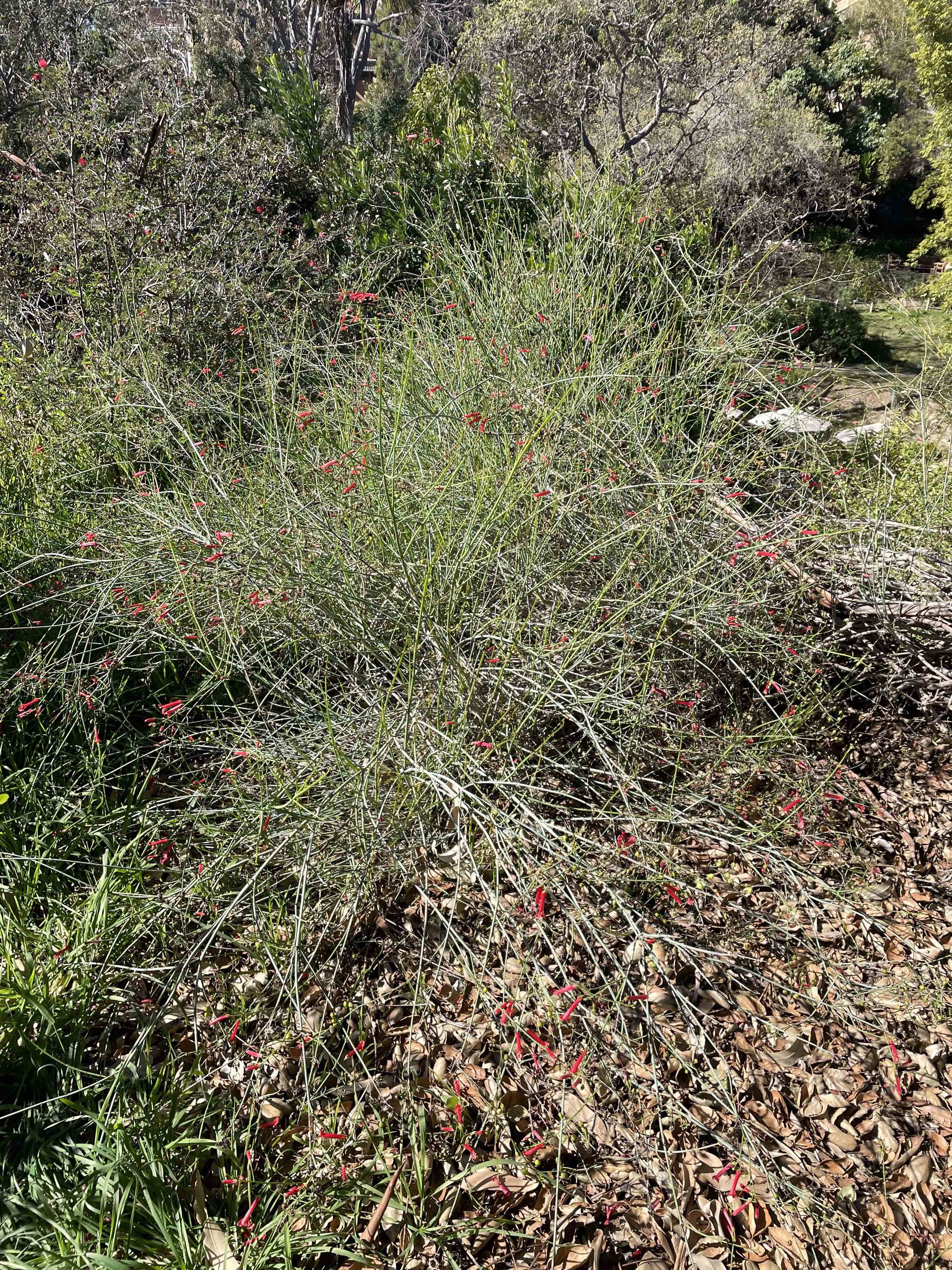
The last plant within the Scrophulariaceae family analyzed was the live specimen of Galvezia juncea located in the Mildred E. Mathias Botanical Garden, commonly known as the Cedros Island Snapdragon. The organism was low to the ground, standing at about three feet tall, and originated from Baja California, suggesting that it prefers low-water, sunny, dry climates. The bright red color is easy to notice, which suggests that the plant heavily relies on pollination from animals/insects. The small opening of the flower suggests that the pollination agents have small beaks/small bodies in order to reach the flowers' pollen, which is supported by further research indicating the plant attracts hummingbirds. While there are no explicit medicinal uses for Galvezia juncea, other snapdragon species have been used in countries such as Russia for edible oils extracted from their seeds. Snapdragons also have anti-inflammatory, stimulant compounds present in their leaves and flowers, which are applied as poultices to treat inflammation such as skin tumors and ulcers. The flowers have also been consumed since they are a great source of vitamins and green dye can also be gathered from the leaves and stems.
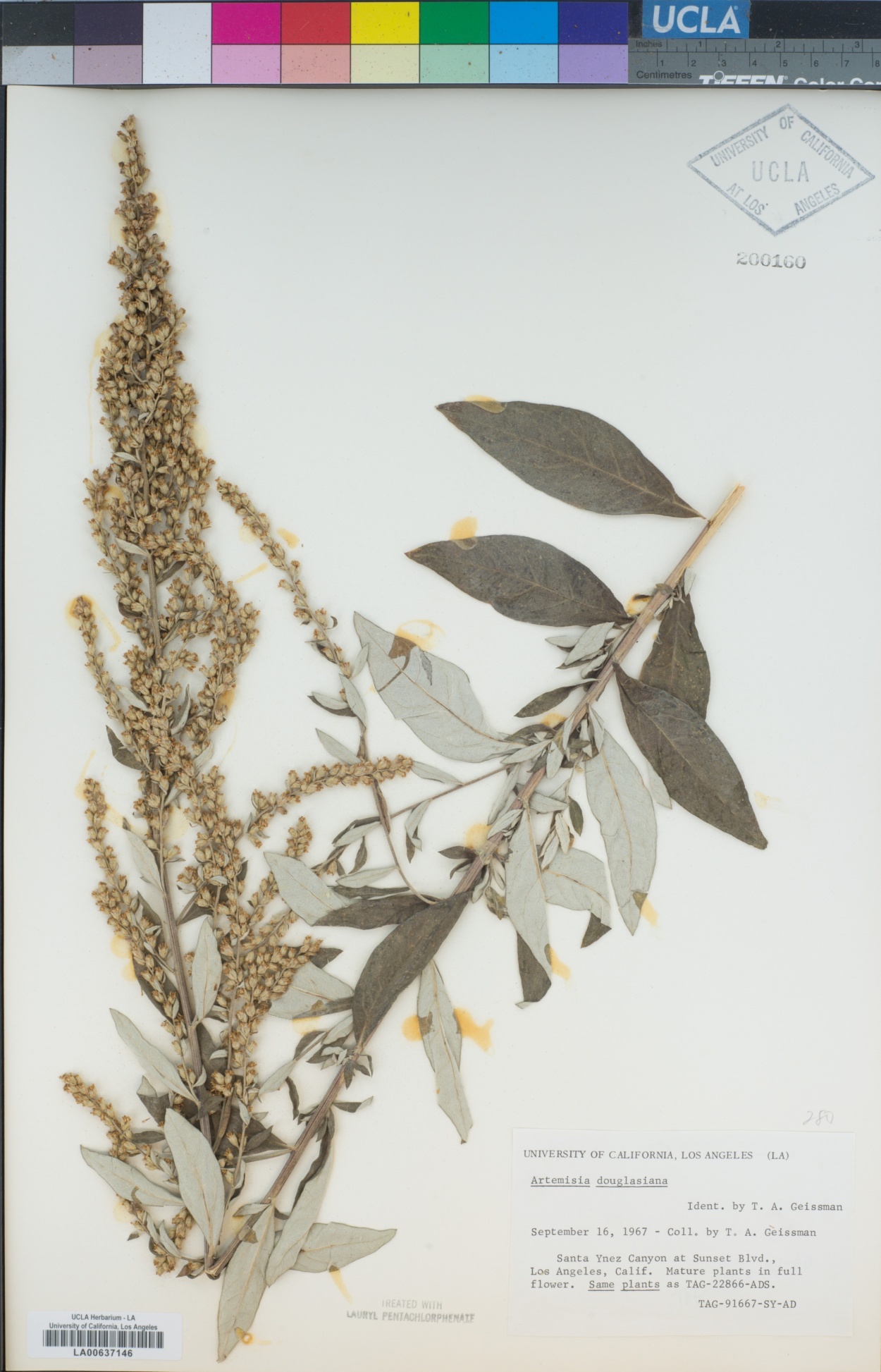
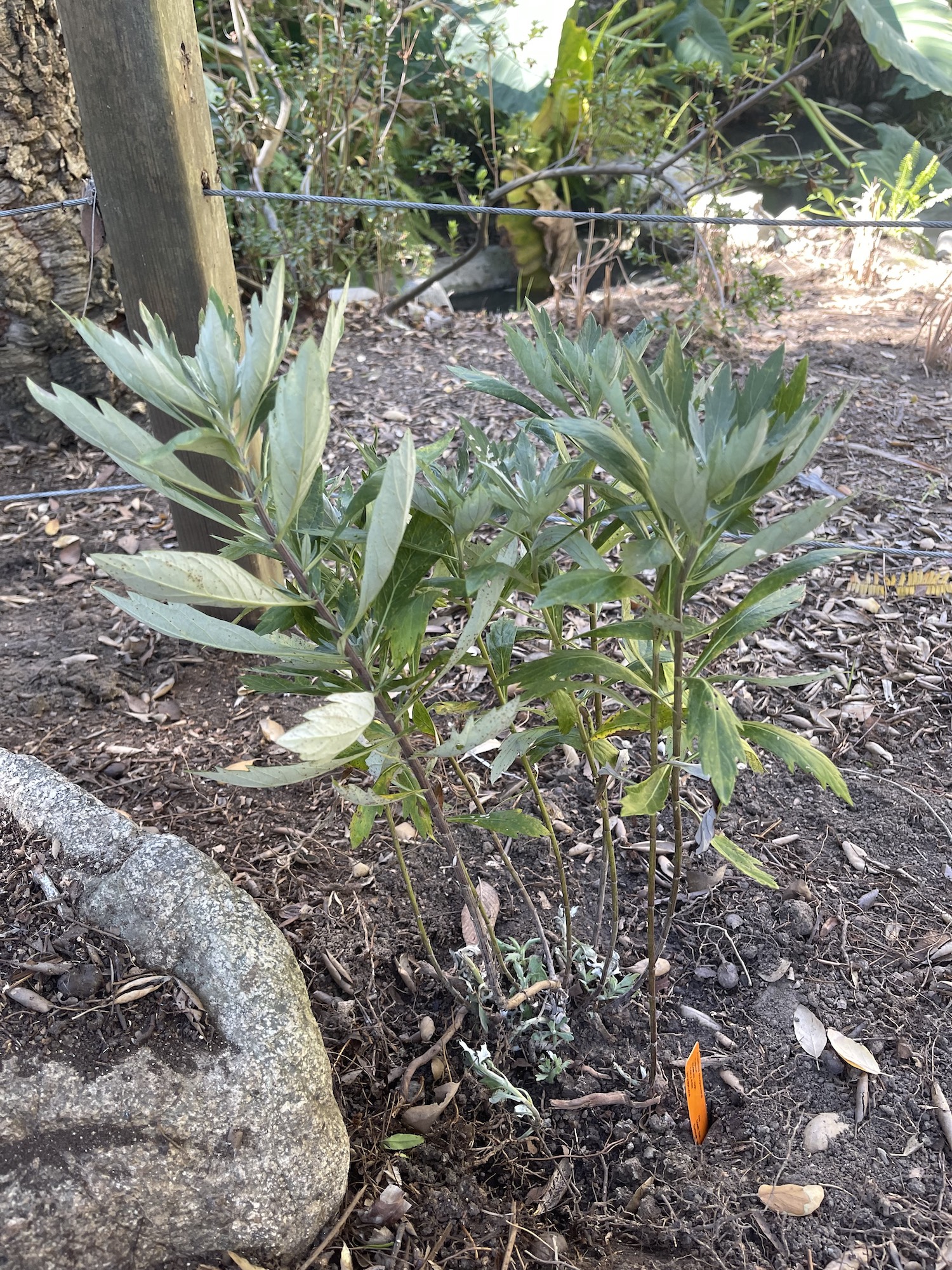
Second is an examination of the two plants within the Asteraceae family: Artemisia douglasiana and Artemisia campestris. Artemisia douglasiana represents the plant from the UCLA Herbarium and the Botanical Garden. The plant from the historical Materia Medica is called Artemisia campestris (mugwort) and belongs to the same genus as the UCLA Herbarium and Botanical Garden specimen: Artemisia douglasiana (California mugwort). Artemisia campestris particularly illustrates the flowering stem, leaves, roots and floral segments of the mugwort. The herbarium specimen displays Artemisia douglasiana as a mature plant in full flower while the botanical garden specimen does not display any seedlings or flowers. The botanical garden leaves from Artemisia douglasiana differ in branching from the leaves of Artemisia campestris as they appear to be noticeably thicker. With regards to the UCLA Herbarium, the plant was collected from Santa Ynez Canyon at Sunset Blvd at Santa Monica Mountains on September 16,1967 by T. A. Geissman. The specimen was treated under Lauryl pentachlorophenate, a chemical preservant. The historical plant, on the other hand, is called Artemisia campestris and was engraved by the engraver James Sowerby during the latter half of the 18th century, particularly on August 1, 1796 in London. The significance of this image can be attributed to the artist James Sowerby, who was a naturalist that attempted to be an heir to Carl Linnaeus’s taxonomic throne. The plants’ contextual uses can be further traced back to their medicinal properties. Historically, Artemisia campestris is considered a medicinal halophytic shrub and is commonly spotted in coastal sand dunes, especially throughout the sand dunes of the European Atlantic coast, as well as in the Santa heights area in the Americas. Before settlers arrived in the Americas, Artemisia douglasiana (California mugwort) was used by Native Americans, namely the Chumash and Cahuilla. The majority of the medicinal value of the plant tends to revolve around the leaves of the plant. Nervous and Spasmodic affections, such as rashes caused by poison oak and headaches, were treated through the use of water in which the leaves of Artemisia douglasiana have been simmering. Additionally, this tea was used by Native Americans to provide benefits in the treatment of female period pains, rheumatism and gout. The teas produced with the leaves and or the stems of Artemisia douglasiana and other similar plants have also been known to be used by the Europeans as an anti-diabetic, anti-inflammatory and antipyretic (fever reducer).
Overall, the research reveals multiple similarities across these two families. For example, Scrophularia californica (California figwort) and the Artemisia douglasiana (California mugwort) share similarities relevant to the location because they are both native to the state of California. Furthermore, the term figwort refers to an usage of plants in treating hemorrhoids, while the term mugwort refers to an Eurasian perennial herb with leaves useful in folk medicine. Thus, one can clearly see the relevance of medicinal and therapeutic usage in the origins of naming these plants.
WORKS CITED
“Artemisia Campestris.” 2021. Wikipedia. Wikimedia Foundation. May 13. https://en.wikipedia.org/wiki/Artemisia_campestris#:~: text=Artemisia%20campestris%20is%20a%20branching ,rocky%20slopes%2C%20and%20waste%20areas.Ekiert, Halina, et al. “Significance of Artemisia Vulgaris L. (Common Mugwort) in the History of Medicine and Its Possible Contemporary Applications Substantiated by Phytochemical and Pharmacological Studies.” Molecules, vol. 25, no. 19, 2020, p. 4415., https://doi.org/10.3390/molecules25194415.“Figwort (Scrophularia Scorodonia): Flowering Stem and Floral Segments. Coloured Engraving after J. Sowerby, 1810.” Wellcome Collection, https://wellcomecollection.org/works/ez9k8u9p. Accessed 18 Feb. 2022.Hamedi, Pasdaran. 2022. Taylor and Francis Online. Accessed March 8. https://doi.org/10.1080/13880209.2017.1397178.“James Sowerby.” 2021. Wikipedia. Wikimedia Foundation. April 17. https://en.wikipedia.org/wiki/James_Sowerby.“James Sowerby.” 2022. The Linnean Society. Accessed January 31. https://www.linnean.org/learning/biomedia/art-in-science/james-sowerby.Klemow, Kenneth M. “Medical Attributes of St. John's Wort (Hypericum Perforatum).” Herbal Medicine: Biomolecular and Clinical Aspects. 2nd Edition., U.S. National Library of Medicine, 1 Jan. 1970, https://www.ncbi.nlm.nih.gov/books/NBK92750/.“Medicinal Herbs Snapdragon Antirrhinum Majus.” 2022. Medicinal Herbs: SNAPDRAGON - Antirrhinum Majus. Accessed March 8. http://www.naturalmedicinalherbs.net/herbs/a/antirrhinum-majus=snapdragon.php.N. M. Gauss. 2022. CCH2 Portal detailed Collection Record Information. Accessed March https://www.cch2.org/portal/collections/individual/index.php?occid=5217088&clid=0.Pereira, Catarina et. al. 2018. “Health Promoting Potential of Herbal Teas and Tinctures from Artemisia Campestris Subsp. Maritima: From Traditional Remedies to Prospective Products.” Nature News. Nature Publishing Group. March 16. https://www.nature.com/articles/s41598-018-23038-6#:~:text=The%20species%2C%20A.,anti%2Dinflammatory%20and%20antipyretic16.“Plants With ‘Wort’ In Their Name – What Are Wort Plants.” Gardening Know How, https://www.gardeningknowhow.com/garden-how-to/info/what-does-wort-mean.htm. Accessed 22 Feb. 2022.Staff, Freak of Natural. 2021. “Snapdragon: Uses and Benefits.” Freak of Natural. August 31. https://freakofnatural.com/snapdragon/.Sowerby, James. (engraver). 1796. “Mugwort (Artemisia campestris).” Wellcome Collection,24960i.T. A. Geissman. 2022. CCH2 Portal detailed Collection Record Information. Accessed March 8. https://www.cch2.org/portal/collections/individual/index.php?occid=5210983&clid=0.
.jpg)