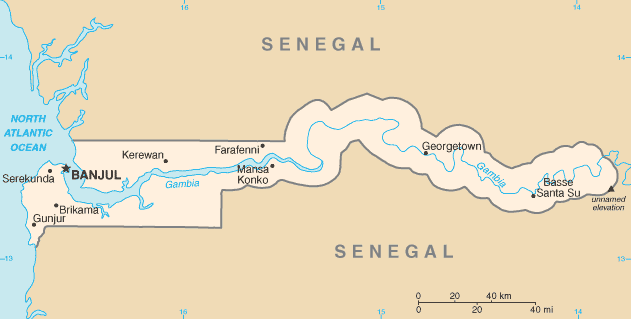
Gambia
The Gambia is the smallest country in Africa that is almost entirely surrounded by Senegal in the western region of Africa. The Gambia is mainly known for its river, which is also the main source of resources for not only the country, but for some surrounding countries as well. However, the river doesn’t contain a huge amount of resources. Some of the resources from the river and the country include fish, clay, silica sand, titanium, tin and zircon. The natural resources in Gambia are necessary for day to day life, the economy doesn’t rely on these resources for money such as other countries like Sierra Leone or Nigeria. Fish is the main resource in Gambia, with the vast majority of their exports to other countries coming from fishing. The Gambia relies heavily on their river for food and water sources. The river is mainly used as a transportation method for resources in Western Africa, in addition to being the countries’ main water source. For being such a small country, the resources in this country hold little to no value, since their economy doesn’t rely on the natural resources. Being such a little country, the significance of these resources varies very drastically from other countries who rely on resources more than they do. Also, The Gambia has very few exploited mineral deposits. Some amounts of clay, sand, and silica are can be extracted for human use. The Gambian government has been granted licenses to explore offshore areas for possible petroleum and natural gas usage, but these actions have not yet provided the country any production and/or money. Overall, the Gambia is a very unique country when it comes to natural resources because they don’t have many, but the ones they do have are very important to sustain life in the country.
This page has paths:
- West African Natural Resources Jennifer Coronado