Thanks for your patience during our recent outage at scalar.usc.edu. While Scalar content is loading normally now, saving is still slow, and Scalar's 'additional metadata' features have been disabled, which may interfere with features like timelines and maps that depend on metadata. This also means that saving a page or media item will remove its additional metadata. If this occurs, you can use the 'All versions' link at the bottom of the page to restore the earlier version. We are continuing to troubleshoot, and will provide further updates as needed. Note that this only affects Scalar projects at scalar.usc.edu, and not those hosted elsewhere.
Feeding a CrowdMain MenuWelcome to our exploration of youth and elders civil rights work in the food movementThis page is our starting place for figuring out how to share food in the formal settings of a course or community event2018 Draft Recipes PageHere is where we're collecting draft recipes for ESTD 3330 spring 2018ReadingsCalendar of spring 2017 readings beyond The Color of Food:Comfort & Action FoodsWays we think about stress or grief eating, contrasted with action-supportive eatingCalendar home pageVideo Highlights from the Art of Food in Frogtown and Rondo collectionAs presented at Hamline in March 2017Hewitt Avenue HU Garden ProjectOur raised bed school garden at Hamline U CampusNeighbor Plants ProjectRecipes and foraging tips for edible weedsContributor BiographiesFood and Society Workshop0826c60623ca5f5c8c1eb72fc2e97084d0c44cf8
Fish that will kill you / fish that you will kill
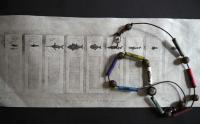
12018-03-02T21:19:16-08:00Food and Society Workshop0826c60623ca5f5c8c1eb72fc2e97084d0c44cf8153464Woodblock print, stories, and recipes from 2003 to 2018plain2018-03-16T19:38:04-07:00Food and Society Workshop0826c60623ca5f5c8c1eb72fc2e97084d0c44cf8Fifteen years ago, I became fascinated by fish as a food source: fish fats were being hailed as a significant resource for responding to stress- and diet-based inflammation, and yet fish were endangered and filled with toxins. This project explored these tensions as an entry point to considering relational eating, and led to a larger project on relating the pleasures and perils of eating.
In the Art of Food in Frogtown and Rondo, fish usually comes up in one of two contexts: fishing and fried fish. Fried fish, like chicken, is often considered an excellent accompaniment to greens. Tilapia (one of the only "vegetarian" fishes, and hence a less expensive farmed fish) is often used for this in bought food -- and in homemade food, several people use fish they've caught.
In this recipe story, I'd like to ask community members to help come up with at least three fish recipes that correspond to three videos that I've really appreciated in terms of their telling stories about the habitat and social ecology of fish (especially as food) where I live:

This page has paths:
12018-03-02T21:16:10-08:00Food and Society Workshop0826c60623ca5f5c8c1eb72fc2e97084d0c44cf8Equitable Proteins and Healthy FatsFood and Society Workshop2Draft recipe stories developed in Feeding a Crowd 2018plain2018-03-02T21:19:19-08:00Food and Society Workshop0826c60623ca5f5c8c1eb72fc2e97084d0c44cf8
12018-03-02T21:55:02-08:00Kathy's Live Bait1This short documentary introduces a beloved bait shop on the east side of Saint Paul, where fishermen and women from diverse backgrounds all come to get the supplies and knowledge they need to fish the urban lakes, streams, and rivers of the Twin Cities. Toua Xiong, owner of Kathy's Live Bait, reflects on what he's learned from his mentor Richard Gimpl about running a bait shop business, as well as what he teaches other customers who are newcomers to this country. Directed by Colin Kloecker and Allison Herrera, this film was originally broadcast on Twin Cities Public Television's new TV Takeover program. Kathy's Live Bait is also part of a new multimedia storytelling project Works Progress is developing called Dear River, a collective love letter to the Mississippi.plain2018-03-02T21:55:02-08:00
12018-03-02T21:55:03-08:0010,000 Ways to Eat a Carp1An experimental video created by Janaki Ranpura, Molly Balcom Raleigh, and Shanai Matteson.plain2018-03-02T21:55:03-08:00
12018-03-02T22:01:42-08:00Rivers Beneath the City: Connecting Your Neighborhoods to the Mississippi1Rivers of rain water and snow melt flow below ground carrying pollution from city streets and sidewalks directly to the Mississippi River. This video includes a first look at the historic Trout Brook Storm Sewer System, which is about 100 years old. Capitol Region Watershed District owns, operates and maintains the system and works with residents to keep our communities, lakes and rivers clean.plain2018-03-02T22:01:42-08:00