Scalar's 'additional metadata' features have been disabled on this install. Learn more.
Exploding Tongues: Language, Art, and the Russian Avant-gardeMain MenuBack to Futurism: Russian Artist BooksIntroductory Page by Chris GilmanBookENDS: A Working Theory of Textuality as Cultural Dominant, 1912-An Introduction and Conclusion to a Semester's Investigation into the Book Arts as an Avant-garde PracticeBook Case StudiesCollaborative Research by Case StudiesBig Bang: Timeline of Russian Avant-Garde Book Arts and Their Cultural ImpactsA Timeline of Russian Avant-Garde Book Arts and Their Cultural ImpactsCoaRse CaLIBrationARTS 227 "Introduction to Letterpress Printing" (Pedersen) and CSLC134/RUSN334 "Exploding Tongues" (Gilman)NthOlogyA limited edition collaborative book arts project by students of ARTS 227 (Pedersen) and CSLC 134/RUSN 334 (Gilman), Spring, '17MANIFESTERS (AB & Kelly): A portfolio of process and productsAppendix: A Path Through Russian Avant-Garde BooksChristopher Gilman1985b99a2acd541caa12a10c3ebf6896565283abDexter Blackwell92e005ca94195f836c6089cf147faff4c74fa79eZoe Foster-La Duc1c8954189fb3ee4ab6e36bfb90fae86777eab97Stephen Heim7069d17c035042745c96bc6c7619096cd7b33da4Kelly Kirklande1805e502570d093d70f00df18f145c99290d0a3Ian Lehineb028c384a69e4b92166e7791b002fa3f2cee5818Timothy Lewis13880d3d99b4b71ce85be63e69a6d44e38853d68Jmedina29ac3fc10003fb639ac412984b59b01a5b826e161Taylor Robinsonaa08dd3939f1f1c6162c5518ae531385e51659afEvan Sarafian042e10782d9a6d3f0001a4b35abb02f58ad84684Craig Dietrich2d66800a3e5a1eaee3a9ca2f91f391c8a6893490ILiADS (Institute for Liberal Arts Digital Scholarship)
12016-11-01T09:41:33-07:00Christopher Gilman1985b99a2acd541caa12a10c3ebf6896565283abRepresentations of LoveChristopher Gilman2Chagall's relevance, explainedplain2016-11-01T09:43:33-07:00Christopher Gilman1985b99a2acd541caa12a10c3ebf6896565283ab
12016-11-01T09:48:57-07:00Christopher Gilman1985b99a2acd541caa12a10c3ebf6896565283abPlay in Chagall's WorldChristopher Gilman2Long-winded analysis of two figuresplain2016-11-01T09:51:02-07:00Christopher Gilman1985b99a2acd541caa12a10c3ebf6896565283ab
This page has tags:
12016-11-15T09:04:04-08:00Christopher Gilman1985b99a2acd541caa12a10c3ebf6896565283abTrans-media Connections in the Russian Avant-gardeChristopher Gilman24A visual analysis of two distinct products among friendsstructured_gallery2016-11-15T10:19:54-08:00Christopher Gilman1985b99a2acd541caa12a10c3ebf6896565283ab
This page is referenced by:
12016-11-01T12:17:13-07:00The End of the Beginning: Soviet Constructivism and Theory of Non-Art11Page one of the Narrative of Russian Avant-gardevisconnections2016-11-01T12:49:03-07:00Lorem ipsum dolor sit amet, euismod nominati no sed. Vel mentitum reformidans cu. Delenit denique mea an, novum conceptam eos no, ex latine docendi verterem mei. Ei aliquip albucius referrentur vel. Mel ei mollis recteque moderatius, aeterno debitis an eam.
In alii vitae vel. Usu id congue virtute principes, diam debet sed id. Harum blandit intellegat ex his, qui ex mollis inermis, mel simul soleat utroque ad. Euismod voluptatum pri at, cum quodsi aperiam equidem ut. Ex omittam delicata ullamcorper has, vix perfecto contentiones ne, an mutat detracto pertinacia mea.
Lorem ipsum dolor sit amet, euismod nominati no sed. Vel mentitum reformidans cu. Delenit denique mea an, novum conceptam eos no, ex latine docendi verterem mei. Ei aliquip albucius referrentur vel. Mel ei mollis recteque moderatius, aeterno debitis an eam.
In alii vitae vel. Usu id congue virtute principes, diam debet sed id. Harum blandit intellegat ex his, qui ex mollis inermis, mel simul soleat utroque ad. Euismod voluptatum pri at, cum quodsi aperiam equidem ut. Ex omittam delicata ullamcorper has, vix perfecto contentiones ne, an mutat detracto pertinacia mea.
Lorem ipsum dolor sit amet, euismod nominati no sed. Vel mentitum reformidans cu. Delenit denique mea an, novum conceptam eos no, ex latine docendi verterem mei. Ei aliquip albucius referrentur vel. Mel ei mollis recteque moderatius, aeterno debitis an eam.
In alii vitae vel. Usu id congue virtute principes, diam debet sed id. Harum blandit intellegat ex his, qui ex mollis inermis, mel simul soleat utroque ad. Euismod voluptatum pri at, cum quodsi aperiam equidem ut. Ex omittam delicata ullamcorper has, vix perfecto contentiones ne, an mutat detracto pertinacia mea.
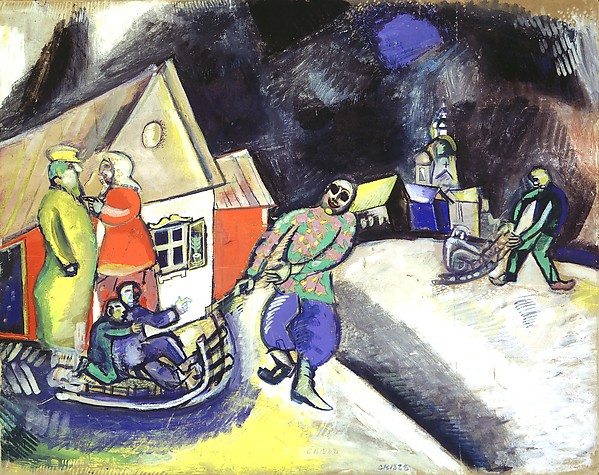
12016-11-01T10:49:32-07:00Marc Chagall and the Colors of Early Russian Modernism10An essay on the Russian Painter Marc Chagall's use of colorstructured_gallery2016-11-17T10:47:18-08:00Marc Chagall was an early An early modernist, he was associated with several major artistic styles and created works in virtually every artistic medium, including painting, book illustrations, stained glass, stage sets, ceramic, tapestries and fine art prints.
Art critic Robert Hughes referred to Chagall as "the quintessential Jewish artist of the twentieth century" (though Chagall saw his work as "not the dream of one people but of all humanity"). According to art historian Michael J. Lewis, Chagall was considered to be "the last survivor of the first generation of European modernists". For decades, he "had also been respected as the world's preeminent Jewish artist". Using the medium of stained glass, he produced windows for the cathedrals of Reims and Metz, windows for the UN, and the Jerusalem Windows in Israel. He also did large-scale paintings, including part of the ceiling of the Paris Opéra.
Before World War I, he traveled between St. Petersburg, Paris, and Berlin. During this period he created his own mixture and style of modern art based on his idea of Eastern European Jewish folk culture. He spent the wartime years in Soviet Belarus, becoming one of the country's most distinguished artists and a member of the modernist avant-garde, founding the Vitebsk Arts College before leaving again for Paris in 1922.
12016-11-01T10:57:09-07:00Photography as Painting: Lessons from the Soviet 1920s8A close visual comparative analysis of two masterpieces of the Russian Avant-gardestructured_gallery2016-11-14T14:59:15-08:00 An early modernist, he was associated with several major artistic styles and created works in virtually every artistic medium, including painting, book illustrations, stained glass, stage sets, ceramic, tapestries and fine art prints.
Art critic Robert Hughes referred to Chagall as "the quintessential Jewish artist of the twentieth century" (though Chagall saw his work as "not the dream of one people but of all humanity"). According to art historian Michael J. Lewis, Chagall was considered to be "the last survivor of the first generation of European modernists". For decades, he "had also been respected as the world's preeminent Jewish artist". Using the medium of stained glass, he produced windows for the cathedrals of Reims and Metz, windows for the UN, and the Jerusalem Windows in Israel. He also did large-scale paintings, including part of the ceiling of the Paris Opéra.
Before World War I, he traveled between St. Petersburg, Paris, and Berlin. During this period he created his own mixture and style of modern art based on his idea of Eastern European Jewish folk culture. He spent the wartime years in Soviet Belarus, becoming one of the country's most distinguished artists and a member of the modernist avant-garde, founding the Vitebsk Arts College before leaving again for Paris in 1922.An earlymodernist, he was associated with several major artistic styles and created works in virtually every artistic medium, including painting, book illustrations, stained glass, stage sets, ceramic, tapestries and fine art prints.
Art critic Robert Hughes referred to Chagall as "the quintessential Jewish artist of the twentieth century" (though Chagall saw his work as "not the dream of one people but of all humanity"). According to art historian Michael J. Lewis, Chagall was considered to be "the last survivor of the first generation of European modernists". For decades, he "had also been respected as the world's preeminent Jewish artist". Using the medium of stained glass, he produced windows for the cathedrals of Reims and Metz, windows for the UN, and the Jerusalem Windows in Israel. He also did large-scale paintings, including part of the ceiling of the Paris Opéra.
Before World War I, he traveled between St. Petersburg, Paris, and Berlin. During this period he created his own mixture and style of modern art based on his idea of Eastern European Jewish folk culture. He spent the wartime years in Soviet Belarus, becoming one of the country's most distinguished artists and a member of the modernist avant-garde, founding the Vitebsk Arts College before leaving again for Paris in 1922.An earlymodernist, he was associated with several major artistic styles and created works in virtually every artistic medium, including painting, book illustrations, stained glass, stage sets, ceramic, tapestries and fine art prints.
Art critic Robert Hughes referred to Chagall as "the quintessential Jewish artist of the twentieth century" (though Chagall saw his work as "not the dream of one people but of all humanity"). According to art historian Michael J. Lewis, Chagall was considered to be "the last survivor of the first generation of European modernists". For decades, he "had also been respected as the world's preeminent Jewish artist". Using the medium of stained glass, he produced windows for the cathedrals of Reims and Metz, windows for the UN, and the Jerusalem Windows in Israel. He also did large-scale paintings, including part of the ceiling of the Paris Opéra.
Before World War I, he traveled between St. Petersburg, Paris, and Berlin. During this period he created his own mixture and style of modern art based on his idea of Eastern European Jewish folk culture. He spent the wartime years in Soviet Belarus, becoming one of the country's most distinguished artists and a member of the modernist avant-garde, founding the Vitebsk Arts College before leaving again for Paris in 1922.