Scalar's 'additional metadata' features have been disabled on this install. Learn more.
Simulation of Life: How E-Lit Creates EmpathyMain MenuIntroductionSEPARATIONBy: Annie AbrahamsENTRE VILLEBy: JR CarpenterGALATEABy: Emily ShortWorks CitedThe collective sources used to make this bookAbout the AuthorsBackground information about the brilliant young minds behind this bookJohn Dominicos9db8de8b31a2cbc0231de37afdb30d1ff481a6e6Macin Sheeder7fe718065819f618eca588a54be47c69481f46b7Brianna Van Zanten3b57b6434c38050908281555a711a591b323afdc
Separation Work
12018-11-18T17:44:58-08:00Brianna Van Zanten3b57b6434c38050908281555a711a591b323afdc321111Screenshotplain2018-11-18T17:44:59-08:00Brianna Van Zanten3b57b6434c38050908281555a711a591b323afdc
This page is referenced by:
1media/Screen Shot 2018-11-16 at 2.40.02 PM.png2018-11-16T04:18:54-08:00SEPARATION23By: Annie Abrahamsimage_header2018-11-19T04:29:49-08:00Separation, created by Annie Abrahams, simulates the life of those who struggle with Repetitive Strain Injury (RSI). This software is proven to assist the recovery and avert the symptoms. It instructs users to click every time they are ready to read another word on the screen. The first page that pops up introduces readers with a little bit of background of what RSI actually is. It is easily found in the work space with the use of a computer at a desk. It is paced word by word to keep it slow and to slow it down because it is the only way to avert the pain stemming from this injury. Several times a notification will pop up on the screen to let the user know they are clicking too hard or too fast which means the reader would have to start the paragraph over again. The paragraph consists of a poem style of writing while touching on the topic of separation within human beings. After the completion of a mini-paragraph, an exercise will appear instructing the reader to participate. Each exercise is to simulate a break.
Separation adds to the theme of empathy because it pushes the reader to be in the shoes of those who suffer form this injury. The author understands the user may not actually feel the pain of RSI but works for understanding and shared feelings.
Click on "simulate a break" to see an example of an exercise. Click on "(RSI)" to learn more about it. Click on "Annie Abrahams" to hear directly from the author.
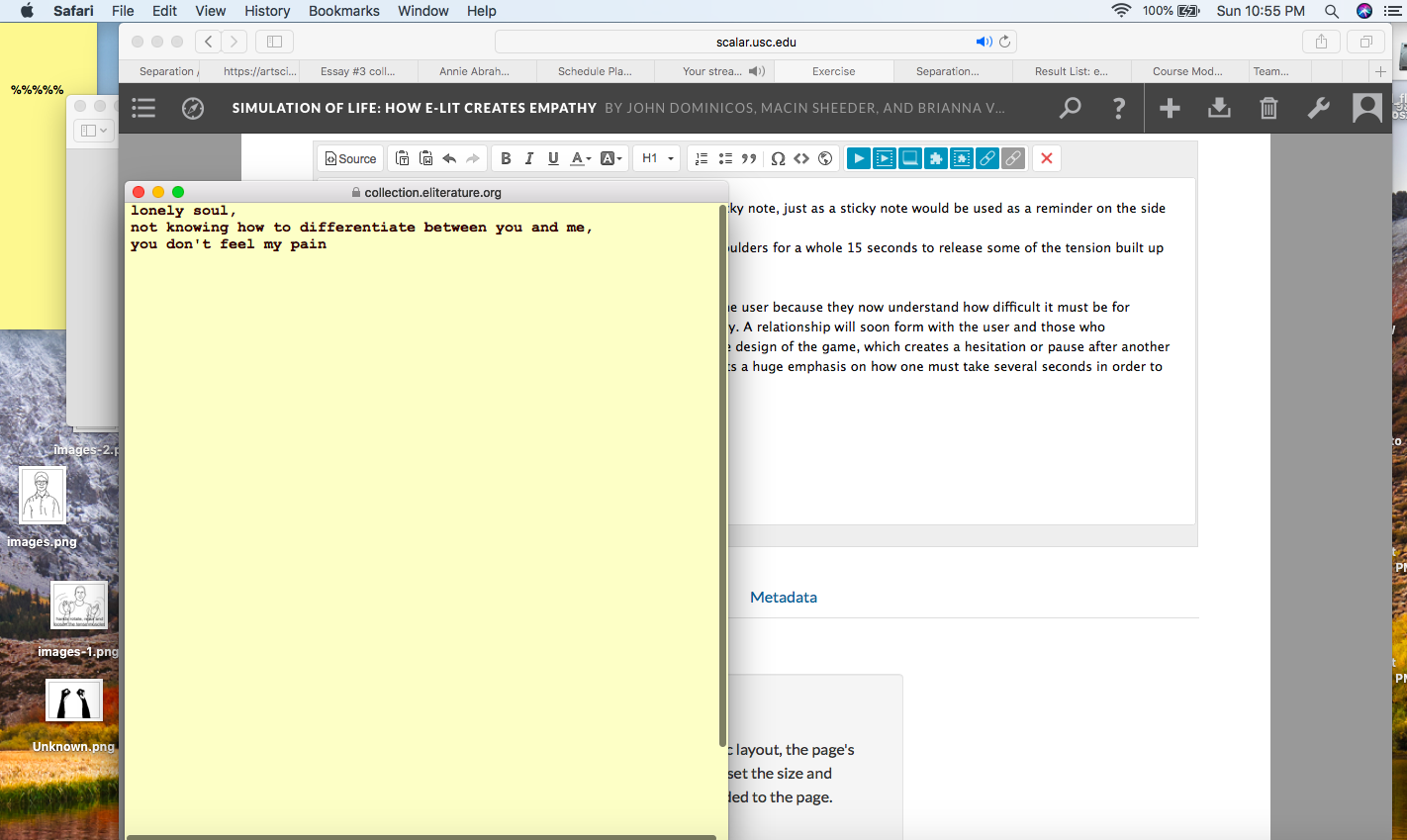
12018-11-19T02:14:21-08:00Exercise8a direct exampleplain2018-11-19T05:09:00-08:00*The entire software program pops on the screen as a large sticky note, just as a sticky note would be used as a reminder on the side of a desk.*
There were very little directions given to the reader. They will figure out they need to mirror the experiences of the pained people described in the poem.
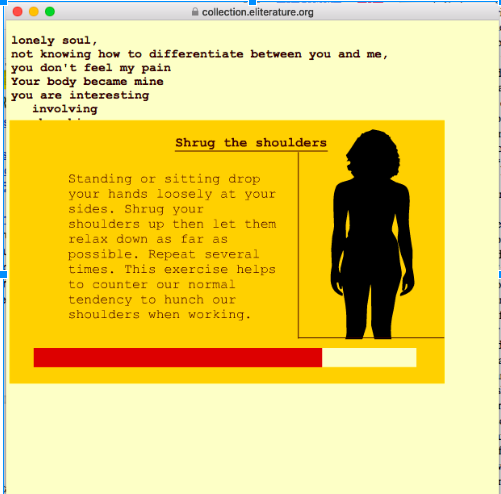
For example, one exercise is asking for user to shrug their shoulders for a whole 15 seconds to release some of the tension built up within their arms. TRY ME .Labeled as "Shrug the shoulders".
Image asking for the user to "show the pain"-this presents pure empathy because its main goal to make others feel what people suffer from. Straight from the simulation of what RSI recovery feels like. Even though you don't feel the pain, the computer specifically asks the user to show the pain to get as close to the emotional standpoint as a patient.
By the end of the exercise a sense of empathy is built within the user because they now understand how difficult it must be for people in the shoes of those who suffer from this chronic injury. An inevitable relationship will soon form with the user and those who suffer. One of the other factors that adds to the empathy is the design of the game, which creates a hesitation or pause after another task is completed. Extending the break in-between actions puts a huge emphasis on how one must take several seconds in order to heal from the injury sustained.