Thanks for your patience during our recent outage at scalar.usc.edu. While Scalar content is loading normally now, saving is still slow, and Scalar's 'additional metadata' features have been disabled, which may interfere with features like timelines and maps that depend on metadata. This also means that saving a page or media item will remove its additional metadata. If this occurs, you can use the 'All versions' link at the bottom of the page to restore the earlier version. We are continuing to troubleshoot, and will provide further updates as needed. Note that this only affects Scalar projects at scalar.usc.edu, and not those hosted elsewhere.
Drum magazine black identity contruction: Analyese of black identity.Main MenuIntroductionAn overview of the project, reasons behind the concept as well as the content included in the project pOrigins of Drum magazineprovides an onverview of the history of the publication from its early days in the 1950s to what it has become in the 21st century , modern day South AfricaPolitics of Hairconsiders how black women in particular are influnced when it comes to hairstyles. the magzines protrays hair in a certain which is influnced by globalisation throughout the erasConclusionA wrap up of what was discussed as well as a comment on the present reprsentation of women on the covers of Drum magazinelist of sourcesDetail list of the sources consultedTshepo Mashimbyief84287922703634506ffefa0de6a6c77f9bb9e5Tshepo
Drum Magazine Cover analysis
12016-10-03T02:39:36-07:00Tshepo Mashimbyief84287922703634506ffefa0de6a6c77f9bb9e51132112Detail anaylsis of magazine covers which fisrt appaeared in the 1950s. these covers provide the basis for for my aurgment which relates to gender represenatation which subsequently influnced the black community as well as shapes the way how one view women in that period.visconnections3244922017-01-16T06:47:38-08:00Tshepo Mashimbyief84287922703634506ffefa0de6a6c77f9bb9e5IntroductionAn overview of the project, reasons behind the concept as well as the content included in the project p
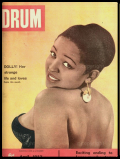
For centuries the depiction of women has never been favourable, women are illustrated as mere objects to be analysed, sexualised and measured by men. Drum magazine as one of the leading publications to document the black people in the 1950s, they also followed international trends that depict women in positions that were not equal to their male counterparts.
The western and African tradition often considered the male voice to be stronger than that of the women and The mid-twentieth century construed an identity that meant “some young men to express their manhood through the subordination of women” (Clowes 2008:185). Women rights were not taken for granted therefore it not surprising that their covers chose to focus on how their beauty and physical appearance rather than their intellectual capabilities. When male figures appear on the cover their either displace for their ability to take care of their family and exert control of women or the appear as a result of the political affiliation of which it made it seem like women had no desire to take action of the current political situation that affected black people at that time. The popularity of Drum in the 1950s meant that it played a key role in delivering social commentary on the depiction of black people in and around Johannesburg.
The year 1956 is an important year in the South African calendar, as it marks the year in which the women’s march to the Union Buildings to offer the grievance to the ruling party of the unfair treatment of women as well as to demand equal rights in the society. The depiction of women before the event took place was set out and men usually took the leadership role when it came to struggling for political emancipation, therefore this particular march changed the idea of women being submissive instead women took charge of equality across the racial spectrum despite societal norms.the April 1956 cover illustrate the roles, according to male standards, that women should occupy.in which women should take domestic roles in the household and leadership role, however on the ground many women initiate change and took action to fight injustice.this cover might mislead the readers that women were indeed not seen as mere objects rather as one to be taken seriously. A majority of the covers either had women depicted with a male figure or the covers depicted women within a sexual context. Some research indicates that women were as equally involved in the acquisition of freedom behind the scenes, however, they never got to be in the spotlight as their male counterparts. According to Hooks (2000;3), contemporary movement from its inception, they were not individuals who became the “stars” of the movement, who attracted the attention of mass media and this is a crucial distinction to how the patriarchal norms have been ingrained within the society.
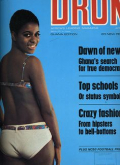
The magazine took a different direction at the beginning of the dawn of democracy, instead of operating on a "black conscious" aura during the apartheid era, it managed to re-brand itself as a publication that celebrates tabloid culture. it is evident that that global trend has influenced the re-positioning the magazine, as the publication, embrace other magazine standards of "good" journalism and abandoned current affairs news. the magazine cover below is a recent example how the publication looks today, from female representation to the text and glossy imagery are all used to entice readers, all speak to consumerism which has nothing to do with social issues. articles all includes tips to improve your life (from beauty to lifestyle) as well as general questions from readers, none of them addresses social ills that plague the nation.
This page has paths:
12016-09-21T05:51:55-07:00Tshepo Mashimbyief84287922703634506ffefa0de6a6c77f9bb9e5Origins of Drum magazineTshepo Mashimbyi6provides an onverview of the history of the publication from its early days in the 1950s to what it has become in the 21st century , modern day South Africavisradial3277612017-01-16T06:27:04-08:00Tshepo Mashimbyief84287922703634506ffefa0de6a6c77f9bb9e5
12016-10-13T06:35:33-07:00Tshepo Mashimbyief84287922703634506ffefa0de6a6c77f9bb9e5Black identity and Drum magazine influnce on the societyTshepo Mashimbyi7A content analyses of Drum magazince covers and its influence it had the Black identity constructionimage_header3244902016-10-15T07:14:45-07:00Tshepo Mashimbyief84287922703634506ffefa0de6a6c77f9bb9e5
12016-09-21T05:47:35-07:00Tshepo Mashimbyief84287922703634506ffefa0de6a6c77f9bb9e5IntroductionTshepo Mashimbyi9An overview of the project, reasons behind the concept as well as the content included in the project pvisconnections3244912017-01-14T16:21:44-08:00Tshepo Mashimbyief84287922703634506ffefa0de6a6c77f9bb9e5
1media/march 1956.jpg2016-09-21T05:58:07-07:00Tshepo Mashimbyief84287922703634506ffefa0de6a6c77f9bb9e5Politics of HairTshepo Mashimbyi9considers how black women in particular are influnced when it comes to hairstyles. the magzines protrays hair in a certain which is influnced by globalisation throughout the erasvisradial3244932017-01-16T07:02:06-08:00Tshepo Mashimbyief84287922703634506ffefa0de6a6c77f9bb9e5
12016-10-03T04:31:58-07:00Tshepo Mashimbyief84287922703634506ffefa0de6a6c77f9bb9e5list of sourcesTshepo Mashimbyi6Detail list of the sources consultedvisindex3310622016-10-14T04:56:00-07:00Tshepo Mashimbyief84287922703634506ffefa0de6a6c77f9bb9e5
12016-09-21T06:10:06-07:00Tshepo Mashimbyief84287922703634506ffefa0de6a6c77f9bb9e5ConclusionTshepo Mashimbyi5A wrap up of what was discussed as well as a comment on the present reprsentation of women on the covers of Drum magazinevisconnections3277632016-10-14T05:37:35-07:00Tshepo Mashimbyief84287922703634506ffefa0de6a6c77f9bb9e5
Contents of this path:
1media/march 1956.jpg2016-09-21T05:58:07-07:00Tshepo Mashimbyief84287922703634506ffefa0de6a6c77f9bb9e5Politics of Hair9considers how black women in particular are influnced when it comes to hairstyles. the magzines protrays hair in a certain which is influnced by globalisation throughout the erasvisradial3244932017-01-16T07:02:06-08:00Tshepo Mashimbyief84287922703634506ffefa0de6a6c77f9bb9e5
12016-10-03T04:31:58-07:00Tshepo Mashimbyief84287922703634506ffefa0de6a6c77f9bb9e5list of sources6Detail list of the sources consultedvisindex3310622016-10-14T04:56:00-07:00Tshepo Mashimbyief84287922703634506ffefa0de6a6c77f9bb9e5
This page has replies:
12016-10-13T06:35:33-07:00Tshepo Mashimbyief84287922703634506ffefa0de6a6c77f9bb9e5Black identity and Drum magazine influnce on the societyTshepo Mashimbyi7A content analyses of Drum magazince covers and its influence it had the Black identity constructionimage_header3244902016-10-15T07:14:45-07:00This books aims to celebrate the legacy Drum magazine has created in the History of South African publication industry.Drum magazine has played a huge role in documenting Black lives in the townships and also journalism. The magazine included articles that relates to the black community ,whether it is the harsh reality of the Apartheid era or celebrating black excellence, inspiring hope to new upcoming black journalist, Drum documented all stories which subsequently impacted the black identity. Female representation on the magazine covers during the 1950s is one crucial element to how society viewed women.Women were depicted for their physical appearance rather then highlighting their intellectual capabilities compared to their male counterparts. the issue of black hair is a major issue as hair styles displayed in their media might be in conflict with ones own ethnic identity. The publication has continued to evolve in the 21st century, as it changed to celebrating tabloid culture compared to the how previously it related their articles to documenting the harsh reality of life during the apartheid era. This book will discuss these issues in detail by discussing the origins of the publication , the analyses of Drum magazine covers and politics of black hair .key authors such as Clowes and Vanessa king will be used to apply their knowledge and elaborate the topics further.Tshepo Mashimbyief84287922703634506ffefa0de6a6c77f9bb9e5